 Lynden Siding
 Siding Looks Fine Until It Doesn't
Most siding failure in Whatcom County doesn't announce itself. There's no single storm that takes a wall down. Instead, moisture finds a small opening — a nail hole, a caulk joint that shrank, a seam where two boards meet — and it works quietly behind the surface for years. By the time a homeowner in Lynden notices soft spots, bubbling paint, or a musty smell near an exterior wall, the damage underneath is usually well established. Understanding what's actually happening behind that siding is the first step to catching problems early or avoiding them altogether.
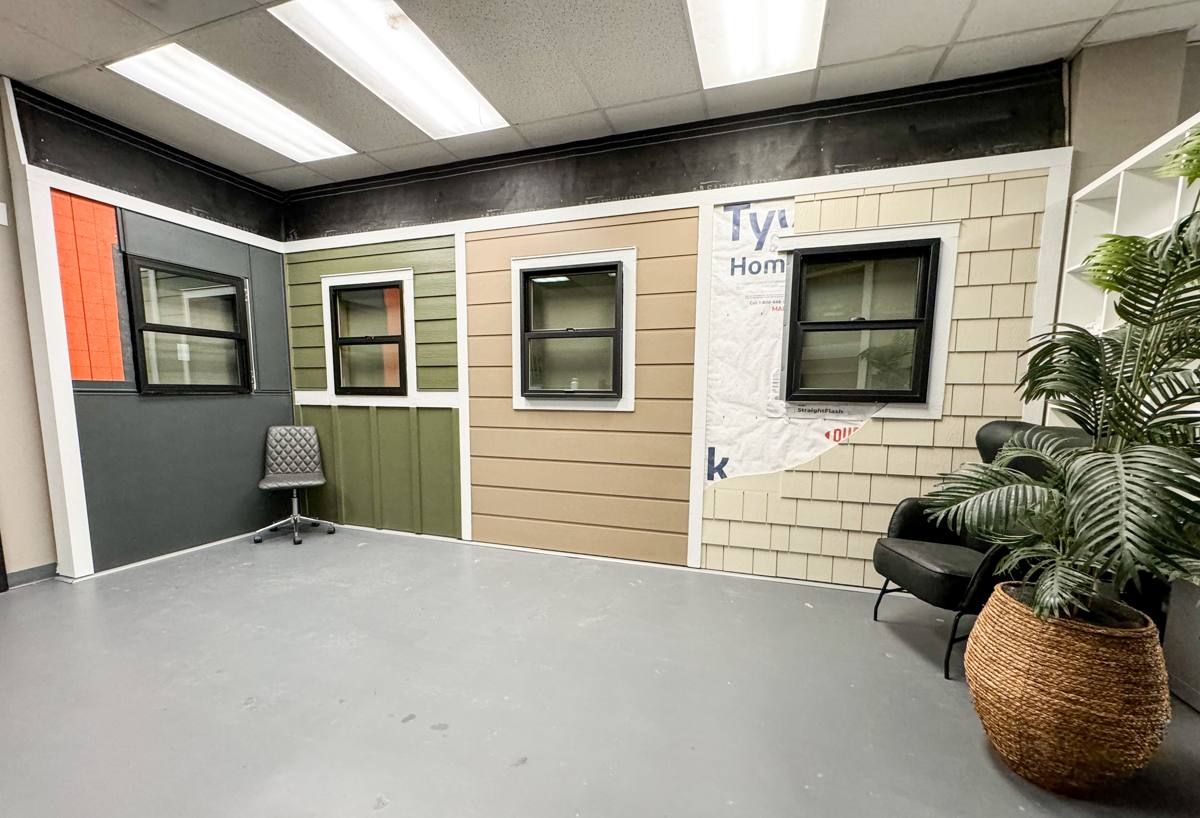
Why Lynden's Climate Is Especially Hard on Siding
Whatcom County sits in a spot that stacks several moisture stressors on top of each other. It's worth understanding each one, because they don't just add up — they compound.
Marine Air and Salt Exposure
Proximity to Puget Sound and the Strait of Georgia means siding here deals with salt-laden air even well inland. Salt is hygroscopic — it pulls moisture out of the air and holds it against a surface longer than plain rainwater would. On fasteners and any exposed wood fiber, that means more time spent wet, which is exactly the condition rot and corrosion need.
Driving Rain
Lynden doesn't just get rain, it gets wind-driven rain off the water and out of the Fraser Valley. Driving rain hits siding at an angle instead of falling straight down, which pushes water into laps, joints, and seams that were only ever designed to shed water moving downward. This is where poor flashing details and butt joints without proper sealing turn into entry points.
Long Moss and Shade Season
Much of Whatcom County sees extended stretches of overcast, damp weather, and plenty of homes sit under mature tree cover. That combination keeps north-facing and shaded walls perpetually damp and creates ideal conditions for moss and algae to establish on siding surfaces. Moss isn't just cosmetic — it holds water against the material far longer than an open, sun-exposed wall would ever experience, and it can work into micro-gaps at seams and fastener heads.
What's Actually Happening Behind the Wall
Once moisture gets past the visible surface of siding, several things start happening simultaneously, and they feed each other.
- Wood-based substrates absorb and swell. If the siding or the sheathing behind it is wood-based, repeated wetting and drying cycles cause the fibers to swell, then shrink as they dry. Over time this cycle breaks down the material's structure from the inside.
- Paint and caulking lose their grip. Moisture trapped behind a painted surface pushes outward as it tries to evaporate, which is why you often see bubbling, peeling, or cracked paint before you see anything else. It's a visible symptom of an invisible problem.
- Fasteners corrode. Nails and screws exposed to persistent moisture — especially with salt in the air — corrode faster than their rated lifespan. A corroded fastener loses holding power, which lets siding shift, which opens new gaps for water.
- Mold and rot organisms establish. Wood-decay fungi need sustained moisture to take hold. Once established behind a wall, they don't need much light or airflow to keep working, and they're often active for a long time before any smell or visible sign reaches the interior.
- Insulation loses R-value. Wet insulation performs dramatically worse than dry insulation. A moisture problem that starts as a siding issue often shows up later as an unexplained jump in heating costs.
The Order of Failure
Most siding failures follow a recognizable sequence: a small breach develops (caulk failure, a cracked board, a poorly sealed seam), moisture gets behind the cladding, the water-resistive barrier or building paper either does or doesn't stop it from reaching the sheathing, and if it doesn't, the sheathing and framing start absorbing moisture. Left unaddressed, this can take years to become visible from the outside — which is exactly why so many homeowners are surprised by the extent of damage once a contractor opens up a wall.
Signs Worth Walking Your House to Check
A slow walk around the exterior a couple of times a year catches most problems while they're still cheap to fix. Look for:
- Soft or spongy spots when you press on siding, especially near the bottom courses and around window and door trim
- Peeling, bubbling, or discolored paint, particularly on north-facing or shaded walls
- Visible gaps at butt joints, corners, or where siding meets trim
- Persistent moss or algae growth that keeps coming back after cleaning
- Streaking or dark staining running down from seams or fastener heads
- A musty smell near exterior walls on the interior, especially in closets or behind furniture placed against outside walls
- Visible warping, cupping, or separation of boards
Not All Siding Materials Handle This the Same Way
Moisture behavior is one of the biggest differences between siding products, and it's a major reason we standardized on James Hardie fiber cement rather than installing a mix of products.
| Material | Moisture Behavior | Relevant Risk in This Climate |
|---|---|---|
| Untreated or primed wood (spruce, cedar) | Absorbs water directly into the fiber; swells and shrinks with each cycle | Rot risk is high given Lynden's rain frequency and moss-friendly shade |
| Vinyl | Doesn't absorb water itself, but panels aren't a sealed system — water travels behind them at seams and can be trapped there | Traps moisture against sheathing without showing surface signs |
| LP SmartSide (engineered wood) | Wood-based core with a resin-treated surface; performs well when perfectly maintained but is vulnerable at any cut edge or breach | Edge and seam sealing has to be flawless and re-checked over time in this much rainfall |
| Fiber cement (James Hardie) | Non-combustible, dimensionally stable — doesn't swell, shrink, or absorb water the way wood-based products do | Far more forgiving of the marine air, driving rain, and shade this region delivers |
This is exactly why we made fiber cement our standard rather than offering a menu of products with very different moisture tolerances. We'd rather install one material we can stand behind fully than install something we know is more sensitive to the specific climate our customers live in.
Why James Hardie Is What We Install
Fiber cement doesn't solve every moisture problem on its own — installation detail, flashing, and water-resistive barriers still matter enormously. But the material itself gives a home a real advantage in this climate. It's dimensionally stable, so it isn't cycling through swell-and-shrink the way wood-based sidings do. It's non-combustible. And James Hardie's HZ5 product line is specifically engineered for climates with heavy moisture exposure, which describes Whatcom County about as well as any region in the country. Add in the factory-applied ColorPlus finish, which is baked on under controlled conditions rather than field-painted, and you get a finish that's more consistent and more resistant to the kind of moisture-driven paint failure described above. The transferable warranty backing the product is also worth understanding on its own terms — it's a meaningful part of what you're buying, not just marketing language.
What Correct Installation Actually Prevents
Material choice only matters if the installation respects it. The details that separate siding that lasts from siding that fails early include:
- Proper flashing at every window, door, and roofline intersection
- Correct fastener spacing, type, and depth so boards aren't over- or under-driven
- A continuous, correctly lapped water-resistive barrier behind the siding
- Adequate clearance between siding and grade, decks, or roof lines
- Sealed and back-primed cut ends where boards are trimmed on site
A high-quality material installed with shortcuts on any of these points can still fail early. This is worth saying plainly, because it's the honest answer to "will new siding fix my moisture problem" — it depends as much on the installer's attention to these details as it does on the product itself.
When Repair Makes Sense vs. When Replacement Does
Not every sign of moisture damage means a full re-side. A localized soft spot caught early, isolated to one board or one section near a downspout or flashing failure, can sometimes be repaired without touching the rest of the wall. But moisture problems that show up in multiple locations, that have been present long enough to reach the sheathing, or that trace back to a systemic issue with the original installation (missing flashing, no water-resistive barrier, widespread failed caulk joints) usually mean replacement is the more honest recommendation — patching a symptom without addressing the underlying entry points just delays the same problem.
If you're noticing any of the signs above, or you'd just like an honest read on how your siding is holding up against Lynden's rain and moss season, we're happy to come take a look. There's no pressure and no cost for the estimate — just a straight answer about what we see.