 Lynden Siding
 Siding Built for Ferndale's Coastal-Edge Climate
Ferndale sits close enough to Bellingham Bay and the Strait of Georgia that homes here deal with a version of Whatcom County weather that's a notch harsher than towns further inland. You get the same marine-driven rain systems that soak Lynden and the rest of the county, but with an added layer of salt-laden air moving in off the water, plus the wind that comes with living near open shoreline and flat farmland. Add in the long, gray, low-sun stretch from October through April, and you have a climate that is genuinely tough on exterior building materials, especially anything with wood content or a coating that isn't built to shrug off both moisture and salt.
We're a Lynden-based crew, and Ferndale is well within our regular service area — close enough that we're not treating it as an out-of-town add-on. We know the difference between a north Bellingham job and a Ferndale job, and between a Ferndale job on a wooded lot versus one out toward the flats near the water. That local familiarity matters when you're deciding what siding product actually belongs on a house in this specific pocket of the county.
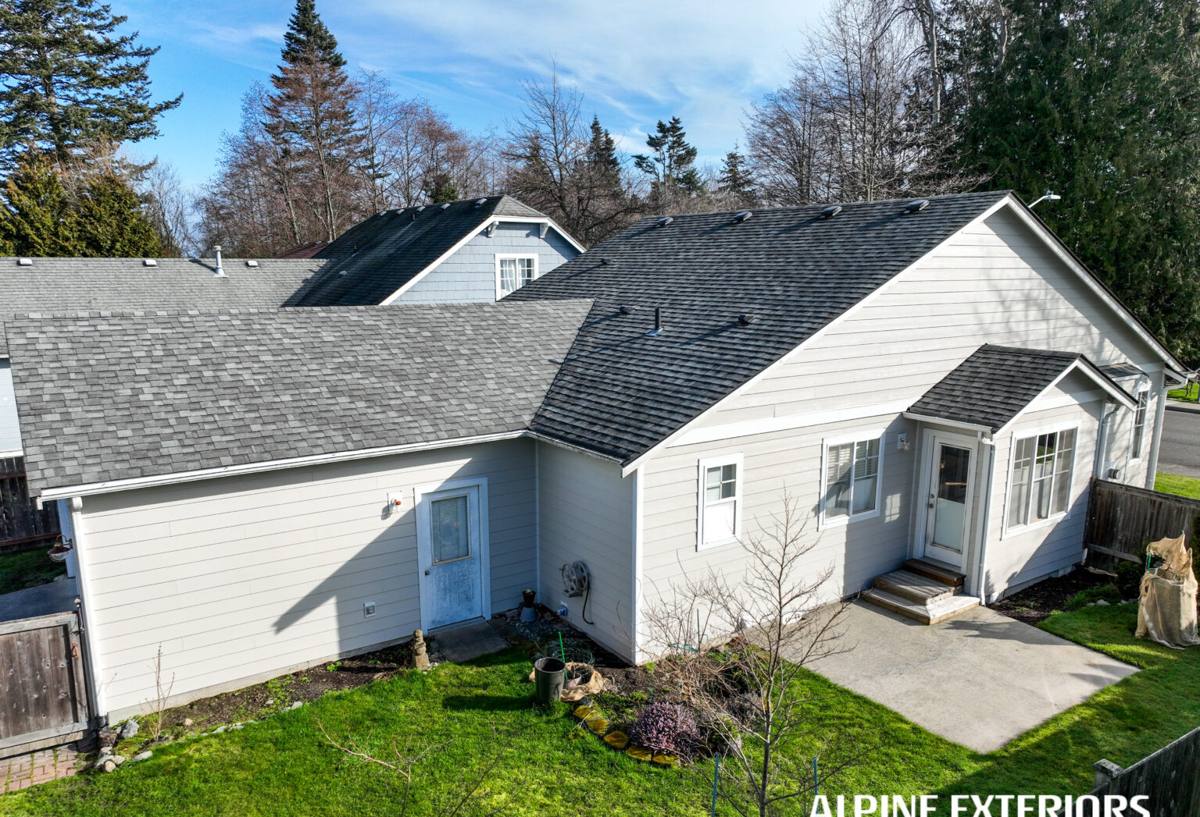
What Ferndale Homes Actually Face
Salt Air and Wind-Driven Moisture
Proximity to the Strait means a steady low-level exposure to salt in the air, especially on homes closer to the water or on higher, more exposed lots. Salt air accelerates the breakdown of many coatings and fasteners over time, and it's part of why we're selective about which siding systems and hardware combinations we'll put on a Ferndale home.
Driving Rain
Pacific frontal systems don't just drop rain straight down here — they push it sideways into wall assemblies, particularly on west- and southwest-facing elevations that catch the prevailing weather. That means seams, butt joints, and trim transitions take more direct water exposure than they would in a drier inland climate, and any weak point in the water-management details of a siding system gets tested repeatedly every winter.
Moss, Mildew, and a Long Damp Season
Whatcom County's wet season runs long, and Ferndale's tree cover and low-lying, moisture-holding terrain in places give moss, algae, and mildew plenty of time to take hold on shaded or north-facing walls. Once organic growth gets a foothold on a porous or wood-based surface, it holds moisture against the material and speeds up decay underneath — a slow problem that often isn't obvious until you're looking at soft trim or a stained, degraded panel.
Temperature Swings and UV
Summers bring real sun exposure even here, and the freeze-thaw cycles of a Pacific Northwest winter put stress on any material or coating that isn't dimensionally stable. Siding that expands, contracts, or absorbs moisture unevenly is more likely to crack, cup, or separate at the joints over a 10-15 year span in this climate.
Why We Only Install James Hardie Fiber Cement
We made a deliberate call as a company: we install James Hardie fiber cement siding, and we don't install vinyl, LP SmartSide, Cemplank, Allura, primed spruce, or cedar. That's not a marketing angle — it's a standard we hold because of what we've seen these products do (and not do) in exactly this kind of climate.
Vinyl is affordable and low-maintenance in the sense that it doesn't need painting, but it's a petroleum-based product that can warp or become brittle over time, and it doesn't hold up as well against sustained wind-driven rain and temperature swings as fiber cement does. Wood products — cedar and primed spruce — look great initially, but wood is exactly the material that struggles most against moss, mildew, and driving rain over a multi-decade timeline; it needs consistent recoating and caulking to keep water out, and coastal-adjacent moisture makes that maintenance burden heavier, not lighter. LP SmartSide is an engineered wood product, which means it shares some of wood's moisture sensitivity at cut edges and joints unless installation and maintenance are followed to the letter. Cemplank and Allura are also fiber cement, technically similar to Hardie in composition, but we've standardized on Hardie specifically for its ColorPlus factory-applied finish, its HZ5 climate-engineered product line built for wetter regions, and the strength of its transferable warranty when installation is done to spec.
None of this means the other products are junk — plenty of homes around the country wear them fine. It means that for this specific climate, with this specific mix of salt air, driving rain, and moss pressure, fiber cement is the material we're willing to put our name behind and warranty.
James Hardie: What's Actually on the Wall
James Hardie siding is fiber cement — a mix of cement, sand, and cellulose fibers pressed into planks, panels, or shingle-style pieces. It's non-combustible, which matters for insurance considerations and general home safety, and it's dimensionally stable, meaning it doesn't expand and contract with moisture the way wood does. For a climate that swings between soaked winters and dry summer stretches, that stability is a real practical advantage — fewer cracked caulk lines, fewer nail pops, less warping at the joints.
HZ5 Product Line
Hardie's HZ5 line is engineered for regions like the Pacific Northwest that see prolonged moisture exposure and freeze-thaw cycling. It's formulated to resist moisture-related damage better than the standard HZ10 line built for milder, drier climates — an important distinction when you're this close to the water.
ColorPlus Technology
Rather than a site-applied paint job, ColorPlus finishes are baked on at the factory in a controlled environment, which gives a more consistent, durable finish than field painting can typically achieve. That matters directly for salt-air exposure, since factory-cured finishes tend to hold color and resist fading and chalking longer than site-applied coatings.
Profiles We Work With
- HardiePlank lap siding — the most common choice, available in several exposure widths and textures (smooth or cedar-textured)
- HardiePanel vertical siding — often used for accent sections, gables, or a modern board-and-batten look
- HardieShingle — a shingle-style profile for homes wanting a more traditional Pacific Northwest look without the maintenance of real cedar shingles
- HardieTrim — matching trim boards for corners, window and door surrounds, and fascia
How a Replacement Project Actually Works
A siding replacement isn't just pulling off old material and nailing up new panels. The sequence matters, especially in a climate where the wall assembly behind the siding has to manage moisture correctly for decades.
- On-site assessment — we look at the existing siding, trim, flashing, and any signs of trapped moisture or rot in the sheathing before quoting anything
- Tear-off — removal of old siding and damaged trim, with the underlying sheathing exposed for inspection
- Sheathing repair — any soft, rotted, or water-damaged sheathing gets addressed before anything new goes up; covering over a problem doesn't make it go away
- Weather-resistive barrier — a correctly lapped and sealed house wrap or building paper goes down to manage bulk water and vapor
- Flashing details — windows, doors, and any wall penetrations get properly flashed, which is where a huge share of long-term water intrusion problems originate if skipped or done poorly
- Hardie installation — planks, panels, or shingles installed to manufacturer spec, including correct fastener type, spacing, and clearance from grade and roof lines
- Trim and caulking — factory-finished trim installed and sealed at the joints most exposed to driving rain
- Final walkthrough — a check of the completed work against what was scoped and quoted
Installation quality is not a minor detail with fiber cement — Hardie's own warranty coverage depends on installation following their published specifications, including fastener placement, gapping, and clearances. A rushed or improperly detailed install can undercut even the best material.
Comparing Siding Options for a Ferndale Home
| Material | Moisture/Salt-Air Resistance | Maintenance | Typical Lifespan Here |
|---|---|---|---|
| James Hardie fiber cement | Strong — HZ5 line engineered for this climate | Low; occasional wash, no repainting for many years with ColorPlus | 30+ years with correct install |
| Vinyl | Fair; can warp/become brittle under wind and temperature stress | Low, but limited repair options if damaged | 15-25 years, variable |
| Cedar | Weak without diligent upkeep; absorbs moisture, prone to moss/rot | High — recoating, caulking, moss treatment | 15-20 years without heavy maintenance |
| Primed spruce / engineered wood | Moderate; vulnerable at cut edges and unsealed joints | Moderate to high; needs consistent sealing | 15-25 years, install-dependent |
This table reflects general tendencies, not guarantees — any material can underperform with poor installation, and any material can outperform its average with excellent upkeep. But averaged across a coastal-adjacent Whatcom County climate, fiber cement's advantages are consistent enough that it's the product we stand behind.
Roofing, Windows, and Decks — The Rest of the Exterior Envelope
Siding doesn't work in isolation. A roof that's shedding water improperly, windows that are leaking at the flashing, or a deck that's trapping moisture against the house all put extra load on the siding around them. We handle roofing, windows, and decks alongside siding work because Ferndale's climate stresses the whole exterior envelope together, not one component at a time. If we're replacing siding and notice a roofing or window flashing issue that's feeding moisture into the wall, we'll flag it rather than sidestep it — patching siding around an unresolved water source just delays the same problem.
Why a Local Crew Matters Here
Being based in Lynden means we're regularly working Whatcom County homes, not flying in from out of the region for a one-off bid. We know how Ferndale's proximity to the water changes exposure compared to a more inland Lynden or Everson lot, and we account for that in material selection and detailing rather than applying a one-size-fits-all approach. A local crew is also easier to reach if a warranty question or a maintenance question comes up years down the line — we're not a name you found once and never hear from again.
What to Check Before Hiring Any Siding Contractor
- Are they licensed and insured to work in Washington State?
- Do they specialize in one well-understood siding system, or install "whatever the customer wants" without a stated standard?
- Will they inspect and address sheathing and moisture issues before covering them up?
- Do they follow manufacturer installation specs closely enough to keep the material warranty intact?
- Can they explain, in plain terms, why they recommend a specific product for your specific home and location?
Getting Started
If your Ferndale home's siding is showing moss staining, soft or cracking trim, fading that won't wash off, or you're just planning ahead for a replacement, we're happy to come take a look. We'll walk the exterior with you, point out what we're actually seeing — not a sales script — and give you a straightforward, no-pressure estimate for a James Hardie fiber cement system built for this stretch of Whatcom County. Use the form below to request your free estimate.