 Lynden Siding
 Why a Single "Per Square Foot" Number Doesn't Tell You Much
Ask five siding contractors in Whatcom County for a ballpark price and you'll get five different answers, and none of them will mean much until someone actually looks at the house. Siding replacement cost isn't one number — it's the sum of several separate decisions, each of which can swing the total by thousands of dollars. A homeowner in Lynden with a simple one-story rambler and sound sheathing underneath is going to pay a very different price than a homeowner two streets over with a two-story home, complex rooflines, and rot hiding behind the old siding. Understanding what actually drives the number helps you read a quote intelligently instead of just comparing bottom lines.
This page walks through the real cost drivers in order of how much they typically matter, with honest ranges rather than invented figures. The goal isn't to scare you into overpaying — it's to help you understand what you're buying so a low bid and a high bid actually mean something when you compare them.
The House Itself: Size, Height, and Complexity
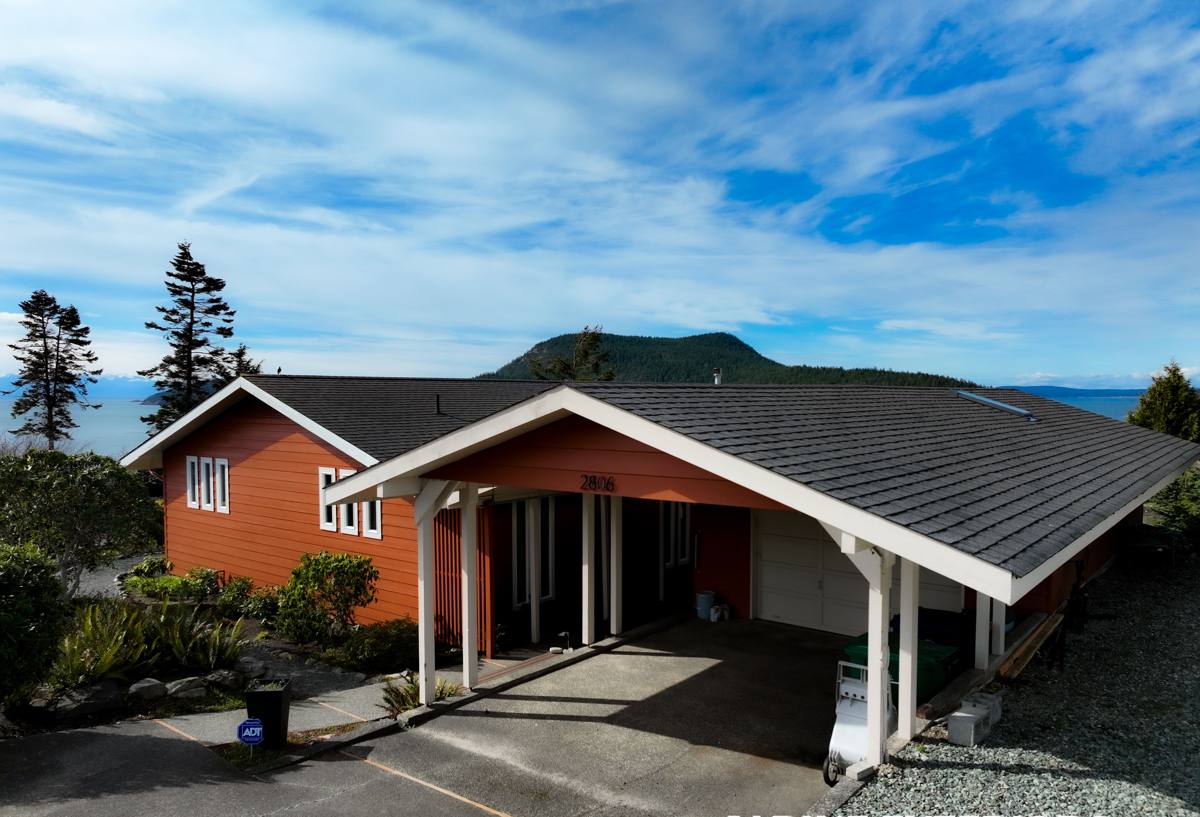
The most obvious driver is square footage of wall area, but square footage alone undersells the real variable, which is complexity. A simple rectangular footprint with a single story goes up fast. A home with dormers, bump-outs, multiple gables, and a lot of trim and window casing takes far more time to cut, fit, and flash correctly — and labor is the majority of most siding jobs, not material.
Story Height and Access
Two-story and three-story sections require staging, scaffolding, or lift equipment, and crews move slower and more carefully at height. That adds cost that has nothing to do with the material itself.
Trim, Corners, and Architectural Detail
Every window, door, corner board, and roofline transition is a place where siding has to be cut precisely and flashed correctly. Homes with a lot of architectural detail cost more to side well — and this is exactly where corners get cut on lower bids, since sloppy trim work is hard for an untrained eye to spot once paint is on it.
What's Underneath the Old Siding
This is the cost driver that surprises the most homeowners, because it's invisible until demolition starts. Whatcom County's rain load means a meaningful share of the homes we open up have some degree of sheathing damage, especially around old window flashing, deck ledgers, and anywhere caulk was doing a job it was never designed to do long-term.
Tear-Off vs. Overlay
A full tear-off — removing old siding down to the sheathing — costs more up front than siding over the existing material, but it's the only way to actually see and fix what's underneath. Overlaying traps whatever moisture problems already exist and buries them for the next owner to discover. We don't recommend it as a way to save money on a full replacement.
Rot Repair and Sheathing Replacement
If a contractor finds soft or delaminated sheathing, replacing it is not optional, and it's also not something an honest bid can fully predict before opening the wall. A fair contract handles this with a clear per-sheet or per-hour repair rate disclosed up front, not a surprise change order with no explanation.
Material Choice and What It Actually Costs You Over Time
Material is often the smaller piece of the total bid compared to labor, but it's the piece that determines how much you'll spend again in five, ten, and twenty years. This is where the real cost comparison lives.
| Material | Upfront Cost | Installation Sensitivity | Moisture Behavior | Realistic Maintenance |
|---|---|---|---|---|
| Vinyl | Lowest | Low — forgiving to install | Doesn't rot itself, but traps moisture behind it if not flashed correctly | Fades, warps in heat, brittle in cold; frequent replacement of damaged panels |
| Primed spruce / wood lap | Low-moderate | High — paint and caulk quality determines lifespan | Absorbs water at end grain and cut edges; prone to rot in a wet climate | Repainting cycle every 5-8 years, ongoing caulk and rot inspection |
| Engineered wood (LP SmartSide type) | Moderate | Moderate-high — edges and joints must be sealed exactly to spec | Wood-based core is vulnerable at cut edges and butt joints if moisture gets in | Requires diligent joint and edge maintenance to protect the warranty |
| Fiber cement (James Hardie) | Moderate-higher | Moderate — correct fastening and flashing matter, but the material itself is stable | Non-combustible, dimensionally stable, holds up to sustained wet-climate exposure | Factory ColorPlus finish reduces repainting; periodic caulk/inspection only |
Why We Standardized on One Product
We install James Hardie fiber cement exclusively, and it's worth explaining why rather than just stating it. Vinyl is inexpensive and low-maintenance in the short term, but it's a petroleum product that expands, contracts, and can crack or warp under the temperature swings and UV exposure our region actually sees, and it can't be painted to refresh it — you replace it. Wood and engineered-wood products depend heavily on paint, caulk, and edge-sealing being done perfectly and maintained forever; in a climate with this much sustained rain and humidity, that's a maintenance burden most homeowners underestimate when they're comparing sticker prices. Fiber cement costs more going in, but it's dimensionally stable, doesn't feed moisture into a wood-based core, and comes from the factory with a finish designed to hold color for years without repainting. For a house that has to survive Whatcom County winters for decades, we think that trade-off is the right one, and it's why it's the only product we put our name behind.
Labor and Installation Quality
Even the best siding product fails early if it's installed wrong. Fiber cement in particular has manufacturer installation specs — fastener placement, gapping, flashing details, and caulking at penetrations — that determine whether the warranty is even valid. A cheaper bid that skips proper flashing details or rushes trim work isn't actually a lower-cost option; it's a deferred cost that shows up as a callback or a premature repair.
What Good Labor Looks Like on a Quote
- Clear scope: tear-off vs. overlay stated explicitly, not left ambiguous
- Named flashing and house-wrap details, not just "siding installed"
- A stated rate for sheathing repair if rot is found, so there's no blank-check surprise
- Manufacturer-specific installation (HardieZone system requirements for our climate)
- A clear timeline and crew size, so you know whether it's one crew for two weeks or a rotating subcontractor situation
Local Climate: Why Whatcom County Homes Need a Different Standard
Lynden sits close enough to Puget Sound and the Strait of Georgia that salt-laden air is a real factor on fasteners, flashing, and any material that isn't built to handle it. Add driving rain off the water and a moss season that stretches long into the year on north-facing walls and shaded roof lines, and you have a climate that's genuinely harder on a building envelope than a lot of the country. This isn't marketing language — it's the reason moisture management matters more here than in a drier climate, and it's a real cost driver, because it means flashing details and rainscreen gapping aren't optional extras, they're the difference between siding that lasts and siding that fails at the seams in twelve years instead of forty.
Moss and North-Facing Walls
Shaded, north-facing walls in Lynden hold moisture longer after rain events, which accelerates any weakness in the assembly behind the siding. This is part of why we default to a full tear-off on older homes — it's the only way to confirm the wall behind those shaded elevations is actually sound.
Permits, Disposal, and the Line Items People Forget
A full siding replacement in Whatcom County typically requires a building permit, and disposal of old siding — especially if it's an older cementitious or wood product — adds a real cost that some bids leave out to look competitive. Ask whether permit fees and debris haul-away are included in the number you're comparing, because "the same job" quoted two different ways isn't the same job if one excludes disposal and the other includes it.
Getting a Quote You Can Actually Compare
The most useful thing you can do before calling contractors is walk your own house and note what you see: how many stories, roughly how much trim and window detail, any visible staining or soft spots near ground level or under windows, and whether you're leaning toward tear-off or want to understand your options. That lets any contractor give you a more grounded first estimate instead of a guess based on square footage alone.
If you're comparing bids, ask each contractor the same specific questions — tear-off or overlay, which flashing details are included, what the rot-repair rate is, and which siding line and installation system they're quoting — rather than just comparing the bottom-line number. A lower bid that's silent on those details usually isn't actually a lower price; it's an incomplete one.
If you'd like an honest look at your home and a straightforward, no-pressure estimate, we're happy to walk the property with you and explain exactly what we see and what it would take to do the job right.