 Lynden Siding
 Sumas sits right up against the Canadian border in the northeast corner of Whatcom County, a small farming and border-crossing community that gets the same wet, marine-influenced weather as the rest of the county but with its own local wrinkles — cold air draining down from the foothills in winter, damp low ground near the Sumas River, and long stretches of gray, moisture-heavy months that are hard on any home's exterior. If you own a home in or around Sumas, you already know the drill: siding, trim, and roofing take a beating here that homes in drier parts of the state simply don't deal with.
We're a Lynden-based exterior contractor that works throughout Whatcom County, including Sumas, and we've built our business around one simple idea — install products that actually hold up to this climate, and install them correctly. That's why we standardized on James Hardie fiber cement siding for every siding job we do, and why we back it up with roofing, window, and deck work that's built to the same standard.
What Sumas Homes Are Up Against
Whatcom County's climate is defined by moisture — long rainy seasons, high humidity even on dry days, and a moss and algae season that can stretch for most of the year on shaded, north-facing walls. Sumas adds a few local variables to that mix. It's inland from the salt water of Bellingham Bay and the Strait of Georgia, but the region still sees salt-laden air move through on weather systems, and combined with driving rain off the foothills, exterior surfaces here are almost never given a real chance to fully dry out between storms.
That constant damp-dry cycling is what actually damages a home's exterior over time. It's not one big storm that causes problems — it's years of siding, trim, and fascia boards staying just wet enough, just long enough, for wood fibers to swell, paint to fail, and moss and mildew to take hold. Homes tucked under tree cover or facing north tend to show it first, but eventually it catches up to every exposed surface.
Where the Damage Shows Up First
- Bottom edges of siding boards near grade, where splash-back keeps material wet longest
- North- and west-facing walls that get the least sun exposure to dry out
- Trim around windows and doors where caulk joints break down and let moisture behind the siding
- Roof valleys and eaves where moss buildup traps moisture against shingles
- Deck ledger boards and fascia where wood-to-wood contact holds water
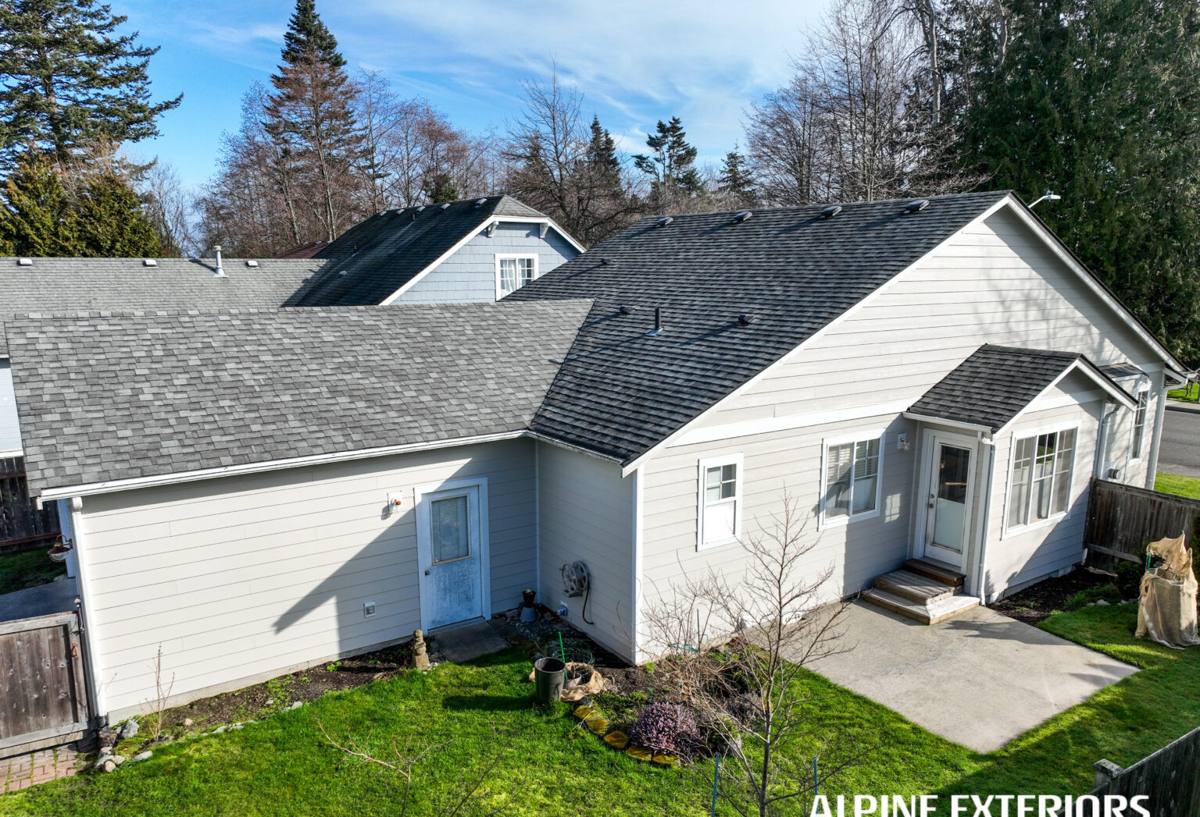
Why We Only Install James Hardie Siding
We get asked fairly often why we don't offer vinyl, LP SmartSide, or one of the other fiber cement brands like Cemplank or Allura. The honest answer is that after years of doing exterior work in this exact climate, we decided we didn't want to keep replacing or repairing siding that wasn't built for what Whatcom County throws at it.
Vinyl siding is inexpensive and low-maintenance in a general sense, but it's a plastic product — it expands and contracts with temperature swings, it can crack in a hard freeze, and it doesn't hold paint if a homeowner ever wants to change the color down the road. LP SmartSide is a wood-strand product with a resin-treated core, and it performs reasonably well when installation and caulking are perfect and stay perfect, but any wood-based siding is inherently more vulnerable to long-term moisture exposure than a cement-based product — and in a climate where surfaces rarely get a long dry stretch, that's a real trade-off, not a hypothetical one. Primed spruce and cedar are traditional choices with genuine visual appeal, but both require an ongoing maintenance commitment — repainting, recaulking, and moisture monitoring — that most homeowners underestimate when they choose them.
James Hardie fiber cement is a cement-and-cellulose composite. It doesn't absorb water the way wood-based products do, it won't rot, it's non-combustible, and it holds paint — including Hardie's own factory-applied ColorPlus finish — far longer than site-applied paint on wood siding typically lasts. It was also engineered in regional formulations, including an HZ5 product line built specifically for the kind of freeze-thaw and moisture cycling we get in the Pacific Northwest. That's the product we put our name behind.
How the Major Siding Options Compare
| Material | Moisture Resistance | Maintenance | Fire Resistance | Typical Lifespan |
|---|---|---|---|---|
| James Hardie Fiber Cement | Excellent — won't rot or swell | Low — factory finish holds up for years | Non-combustible | Decades with proper install |
| Vinyl | Good, but seams and edges can let water behind panels | Low, but can't be repainted easily | Melts/deforms under heat | 15-25 years typical |
| LP SmartSide | Fair — resin-treated wood strand, moisture-sensitive at cut edges | Moderate — caulking and paint upkeep matter | Combustible (treated) | Variable, install-dependent |
| Cedar / Primed Spruce | Fair to poor without diligent upkeep | High — regular repainting and sealing | Combustible | Variable, upkeep-dependent |
What Correct Hardie Installation Actually Involves
Fiber cement siding is only as good as its installation. A big part of why homeowners see problems with any siding product — Hardie included — traces back to shortcuts during install, not a flaw in the material itself. On every Hardie job we do, that means proper flashing at every window, door, and penetration; correct fastener placement and spacing per Hardie's published specs; a rain screen or drainage plane behind the siding so moisture that does get behind the panels has somewhere to go; and factory-cut, factory-primed edges wherever possible to reduce field cutting and exposed raw edges.
We also pay close attention to butt joints and caulking details, since those are the spots most likely to let water intrude over time if they're rushed. On a Sumas home, where wall assemblies deal with sustained damp periods, getting the drainage plane and flashing details right is arguably more important than the siding material itself.
Our Siding Project Process
- On-site inspection of existing siding, trim, and any moisture or rot damage
- Honest assessment of what can be repaired versus what needs full replacement
- Written estimate covering Hardie board selection, ColorPlus color options, and trim details
- Removal of old siding and inspection of sheathing for hidden moisture damage
- Installation of a proper drainage plane, flashing, and Hardie panels to manufacturer spec
- Final walk-through and warranty paperwork
Roofing, Windows, and Decks — The Rest of the Envelope
Siding is only one piece of a home's defense against Whatcom County weather. We also handle roofing, window replacement, and deck construction, because a house that has new siding but an aging roof or leaking window flashing is still going to have moisture problems — they'll just show up somewhere else.
Roofing
Roof moss growth is one of the most common calls we get from homeowners in this part of the county. Moss holds moisture against shingles and shortens roof life significantly if it's left to spread. We assess roof condition as part of any exterior evaluation, and if a roof is nearing the end of its service life, we'll say so plainly rather than let it become the next problem after new siding goes up.
Windows
Old, poorly sealed windows are a major source of both energy loss and water intrusion around the frame. When we replace siding near existing windows, we check flashing and seals as a matter of course, and we can handle full window replacement where it makes sense as part of a broader exterior project.
Decks
Decks in this climate take a similar beating to siding — constant damp cycling, moss on the surface, and ledger board connections that are a common spot for hidden rot if they weren't flashed correctly when built. We build and repair decks with the same attention to moisture management we apply to siding work.
Why a Local Crew Matters in Sumas
Sumas is a small community, and it doesn't always get the same attention from larger regional contractors based further south or in bigger metro areas. Being based in Lynden means we're a short drive away, we understand the specific weather patterns of northern Whatcom County, and we're not stretching a big-city crew thin across a wide service area. That matters for scheduling, for follow-up if a warranty question comes up, and for simply understanding what a home in this part of the county is actually dealing with.
What to Look For When Hiring an Exterior Contractor
Whether you work with us or someone else, a few things are worth checking before you sign a contract for siding, roofing, or deck work:
- Proper Washington state contractor licensing and insurance, verifiable through the state's L&I lookup
- Manufacturer training or certification if you're installing a specific branded product like James Hardie
- A written estimate that spells out materials, flashing details, and scope — not just a total price
- Willingness to explain why they recommend one product over another, not just push whatever they stock
- Local references or a track record of work in your specific climate zone
Planning a Project in Sumas
Most exterior projects in this area start the same way — a homeowner notices moss buildup, a soft spot in the siding, or a window that's letting in more draft than it used to. From there, timing usually depends on the scope of work and the season, since exterior work is easiest to schedule and execute during drier stretches of the year, though repairs and assessments can happen any time.
If you're noticing signs of wear on your home's siding, roof, windows, or deck, we're happy to come take a look. We'll give you a straight assessment of what's going on and what your options are — no pressure, no upsell. Reach out for a free estimate using the form below.