 Lynden Siding
 Everson's Exterior Challenge: Rain, Moss, and Moisture That Never Really Lets Up
Everson sits in the Nooksack River valley just outside Lynden, in the northern reach of Whatcom County. It's a part of Washington where the marine air off the Salish Sea meets low-lying farmland and river bottom, and the result is a climate that's tough on exterior building materials in a very specific way. It's rarely dramatic weather — no hurricanes, no hailstorms — but it's relentless. Long stretches of drizzle, heavy fog off the river, and a wet season that can run from October well into May mean siding here spends most of the year damp, not dry.
That combination of driving rain, salt-tinged marine air, and shade from mature trees and low winter sun angles is exactly what feeds moss and mildew growth on north-facing walls, under eaves, and anywhere air doesn't circulate well. Homeowners in this area know the pattern: siding that looks fine in August can be streaked green by February. Over years, that cycle of wet-dry-wet doesn't just affect appearance — it's what breaks down materials that aren't built to handle sustained moisture exposure.
Why We Standardized on One Siding Product
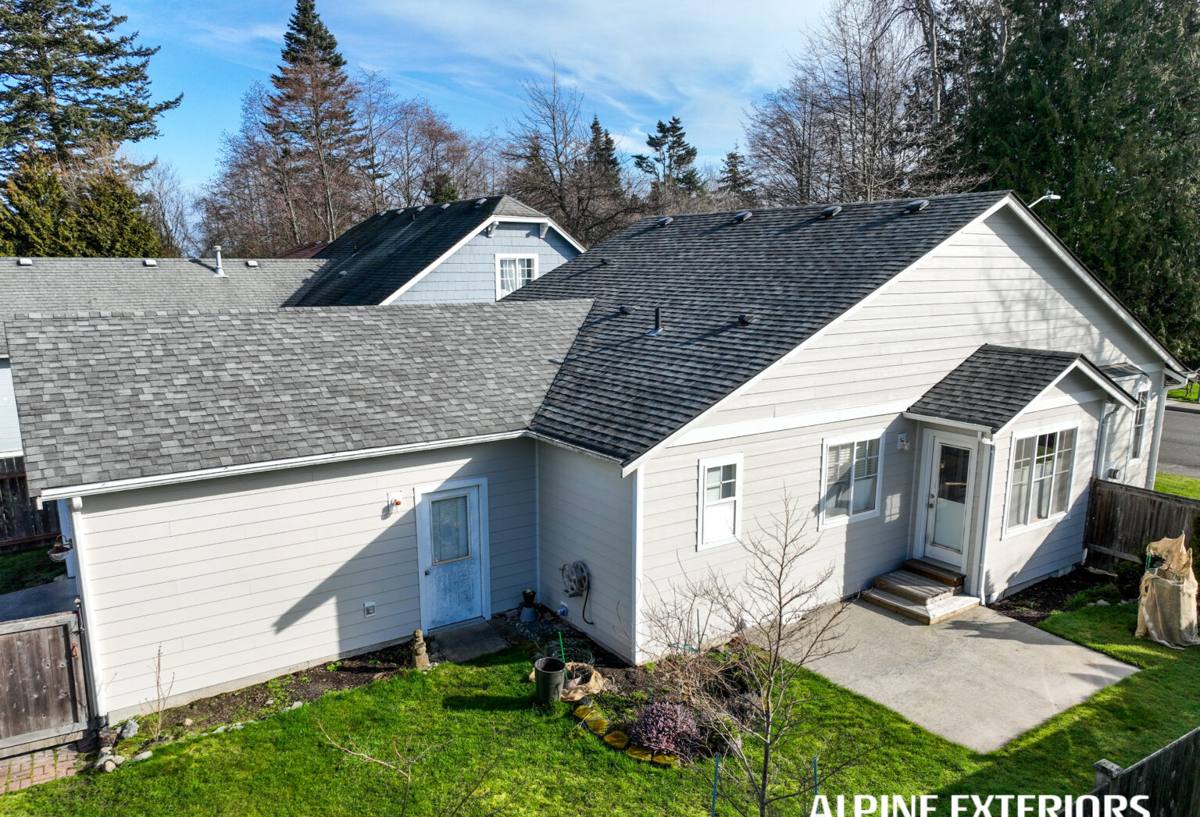
We install James Hardie fiber cement siding exclusively. Not because it's the only decent product on the market, but because after years of exterior work in Whatcom County's climate, it's the one we're willing to put our name behind. Fiber cement doesn't absorb water the way wood-based products do, it doesn't warp or delaminate under repeated wet-dry cycles, and it's non-combustible — a real consideration as wildfire smoke and drier late summers become more common even in western Washington.
We don't install LP SmartSide, vinyl, Cemplank, Allura, primed spruce, or cedar. Each of those has a legitimate place in the industry and each has homeowners who are happy with it. But we've made a professional decision to specialize, and specializing means saying no to products whose long-term performance in this specific climate — sustained damp, moss pressure, driving rain off the valley — doesn't match what we're willing to warranty our workmanship against.
What Makes Hardie Different Here
- Fiber cement composition resists moisture absorption, which matters when siding is wet more months than it's dry
- ColorPlus factory-applied finish is baked on under controlled conditions, rather than field-painted, which holds up better against UV and repeated moisture cycling
- HZ5 and similar climate-engineered product lines are formulated for exactly the freeze-thaw and moisture conditions the Pacific Northwest produces
- Non-combustible core, which some insurers now factor into premiums
- A transferable warranty structure that adds resale value if you sell the home
What Siding Replacement Actually Involves
Replacing siding isn't just swapping old boards for new ones. Done right, it's an opportunity to fix what's underneath before it's covered up again for another 30-plus years. Our process typically includes:
- Tear-off and inspection — removing existing siding and checking the sheathing, framing, and flashing underneath for rot, moisture damage, or past shortcuts
- Moisture barrier and flashing correction — installing or correcting weather-resistive barrier and window/door flashing, which is often where older homes in wet climates actually fail
- Repairs to sheathing or framing — replacing anything compromised before it's sealed behind new siding
- Hardie installation to manufacturer spec — correct fastening, clearances, and joint treatment, which affects both appearance and warranty validity
- Trim, caulking, and paint touch-up — finishing details that determine how clean the final result looks
That second step is the one that gets skipped by less careful crews, and it's the one that matters most in a climate like this. Siding that looks brand new over rotted sheathing or bad flashing is a problem waiting to resurface in a few years.
Moss, Mildew, and the Long Wet Season
Moss isn't just cosmetic. On wood-based siding products, sustained moss and algae growth holds moisture against the surface, which accelerates rot at seams, butt joints, and fastener penetrations. On the north and west-facing walls common in this valley — the sides that get the least direct sun and the most driving rain — that cycle repeats every winter. Fiber cement doesn't stop moss from growing on its surface (nothing fully does in this climate), but it doesn't feed on that moisture the way organic or wood-fiber-based products can, so the material itself isn't degrading underneath the growth.
Homeowners can help by keeping gutters clear, trimming back vegetation that shades walls and blocks airflow, and having a periodic gentle wash done on north-facing exposures. None of that replaces good material choice, but it extends the life of any siding, including Hardie.
James Hardie Compared to Other Common Siding Choices
| Product | Moisture Behavior | Maintenance | Typical Lifespan Here |
|---|---|---|---|
| James Hardie fiber cement | Does not absorb or swell; stable through wet-dry cycles | Occasional wash, factory finish holds color | 30+ years with proper install |
| Vinyl | Doesn't rot, but can warp/crack in temperature swings and fade over time | Low, but color is not repairable if it fades | 20-25 years typical |
| Wood-based composite (LP SmartSide, similar) | Wood-fiber core is more moisture-sensitive at cut edges and joints | Requires diligent caulking/paint maintenance | Highly install and maintenance dependent |
| Cedar | Natural material, absorbs moisture, prone to moss and rot in shaded/wet areas | Regular staining/sealing required | Variable, often shorter in high-moisture zones |
This isn't a claim that other products fail on arrival — plenty perform fine in drier climates or with diligent upkeep. It's simply why, for a valley that stays damp most of the year, we've chosen to build our business around the one option we've seen hold up most consistently with the least ongoing maintenance burden.
It's Not Just Siding — The Whole Exterior Works Together
Siding doesn't work in isolation. A roof that's shedding water improperly, windows that aren't flashed correctly, or a deck ledger board that's trapping moisture against the house all affect how the siding around them performs. We handle roofing, windows, decks, and siding as one exterior system rather than treating them as separate trades, which matters when so many of the real problems in older Everson and Lynden homes show up at the transitions — where roof meets wall, where a window is set into siding, where a deck attaches to the house.
When we're on-site for a siding project, we're also looking at those adjacent details, because a great siding job can still fail early if the roof above it or the window flashing next to it is letting water in.
Why a Local Crew Matters
A crew that works Whatcom County year-round knows which exposures on a house take the worst of the weather, how the wet season actually behaves month to month, and what correct flashing and clearance details look like for this specific climate — not a generic install spec written for a drier region. That local knowledge shows up in small decisions: where to add extra flashing attention, which walls need closer inspection for hidden moisture damage, how to sequence a project around the rainy season rather than fighting it.
It also means accountability. A local company is still here next year, and the year after, if a warranty question comes up.
Signs It May Be Time to Replace Your Siding
- Persistent green or black staining that returns quickly after cleaning
- Soft or spongy spots when you press on siding, especially near the bottom edge or around windows
- Visible warping, buckling, or gaps at seams
- Paint that's peeling or bubbling rather than just fading
- Interior signs like musty smells or discoloration on walls that back up to exterior siding
- Siding that's original to a home built more than 25-30 years ago
What Drives Cost on a Siding Replacement Project
| Factor | Why It Matters |
|---|---|
| Home size and wall complexity | More corners, gables, and trim detail mean more labor and material cuts |
| Condition of sheathing underneath | Rot or moisture damage found during tear-off adds repair scope |
| Siding profile and color selection | Lap width, shingle-style panels, and custom colors vary in material cost |
| Access and site conditions | Steep lots, limited access, or extensive landscaping can affect labor time |
| Trim and detail work | Window and door trim, fascia, and corner treatments add finish-level cost |
Every home is different, and the only way to get a real number is a walk-through of the actual house. We're happy to talk through broad ranges once we've seen the specific project.
If you're in Everson, Lynden, or elsewhere in Whatcom County and dealing with siding that's showing its age against this valley's wet, moss-prone climate, we're glad to come take a look. There's no pressure and no cost for an estimate — just an honest assessment of what your home needs and what your options actually are.