 Lynden Siding
 Custer sits in that stretch of Whatcom County where the weather never quite makes up its mind. You get the marine air rolling in off the Strait, moss creeping across anything that stays shaded and damp too long, and a rainy season that can feel like it runs from October straight through May. Homes out here take a steady beating from moisture, not a dramatic one — and steady beats dramatic when it comes to what actually wears out a house. If you're looking into siding, roofing, windows, or decks for a home in the Custer area, this page covers what the climate does to exterior materials, how we approach the work, and why we've standardized on one siding product instead of offering a menu of options.
What Custer's Climate Actually Does to a House
Whatcom County's exterior materials deal with three things constantly: moisture, salt-tinged air, and biological growth. None of these are exotic problems — they're just relentless. A siding product, a roof, or a set of trim boards doesn't usually fail here because of one storm. It fails because it spent years absorbing small amounts of water it never fully dried out from, or because algae and moss took hold in a shaded corner and started holding moisture against the surface year-round.
A few specifics worth understanding if you own a home in this area:
- Driving rain pushed by wind doesn't just wet the surface of your siding — it tests every seam, lap joint, and penetration around windows and doors.
- Salt air, even well inland from the coastline, accelerates corrosion on fasteners, flashing, and metal trim if they aren't rated for it.
- Moss and algae thrive in the shaded, north-facing, and tree-covered spots common to Custer's rural and semi-rural lots, and they hold moisture against whatever they're growing on.
- Long wet stretches mean materials that absorb water need real time to dry before the next rain arrives — and a lot of exterior products just don't get that window.
None of this means a house in Custer is doomed to rot or fail. It means material choice and installation quality matter more here than they would in a dry climate, because the margin for error is smaller.
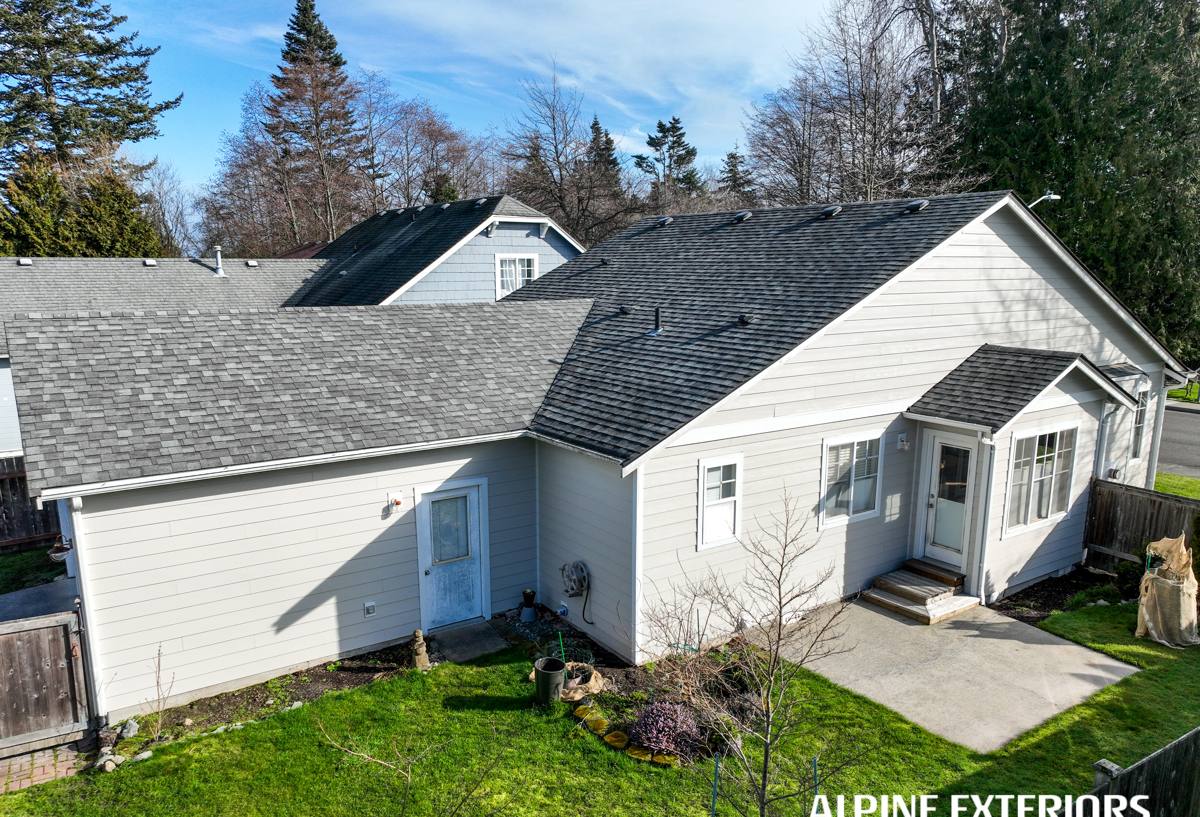
Why We Install Only James Hardie Fiber Cement Siding
We get asked fairly often why we don't offer vinyl, LP SmartSide, or one of the other fiber cement brands like Cemplank or Allura. The honest answer is that we made a standard for ourselves based on what holds up in this specific climate over the long run, and we'd rather install one product well than several products at varying levels of confidence.
What We Ask a Siding Product to Do
In a climate like Whatcom County's, we want a siding material that:
- Doesn't expand and contract dramatically with temperature and moisture swings
- Resists moss, mildew, and algae growth without constant homeowner maintenance
- Holds its factory finish for years without repainting
- Is genuinely non-combustible
- Comes with a warranty structure that's transparent about what's covered
James Hardie fiber cement checks each of those boxes better than the alternatives we've evaluated, which is why it's the only siding product we put on homes.
Why Not the Others
Vinyl siding is inexpensive and low-maintenance in mild climates, but it's a petroleum-based product that expands and contracts more than fiber cement, and in a wind-driven rain environment, its seams and laps are more forgiving of poor installation than they should be. Wood-based composite siding like LP SmartSide performs reasonably when installed and maintained exactly to spec, but it's still an engineered wood product at its core — meaning cut edges, seams, and any breach in the factory coating are entry points for moisture, and moisture is the one thing this region doesn't run short of. Other fiber cement brands, including Cemplank and Allura, are chemically similar to Hardie, but we've standardized on Hardie specifically for its ColorPlus factory finish, its climate-engineered HZ5 product line built for wet climates like ours, and the depth of its installation network and warranty backing in the Pacific Northwest. Primed spruce and cedar are traditional choices with real visual appeal, but they require ongoing painting, caulking, and vigilance against rot that most homeowners underestimate until they're a few years in.
None of these products are junk. They're reasonable choices in the right context. We simply decided that for the homes we put our name behind in this climate, we'd rather commit to the product with the best long-term track record for our conditions than offer a lineup and let price alone drive the decision.
James Hardie: The Product System, Not Just the Board
James Hardie fiber cement is a mix of cement, sand, and cellulose fiber, engineered to be dimensionally stable and resistant to moisture, fire, and pests. The HZ5 product line is specifically formulated for climates like the Pacific Northwest's — freeze-thaw cycles, sustained damp weather, and coastal-influenced air. ColorPlus Technology is the factory-applied finish system, baked on under controlled conditions rather than field-painted, which means better fade resistance and a longer stretch before the siding needs repainting.
Hardie siding comes in several formats — lap siding in various exposures, vertical panel siding, and shingle-style siding — which gives us flexibility to match a home's existing architecture or help a homeowner change its look during a full replacement. The warranty on the product is transferable, which matters to Custer homeowners who may sell in the years after installation.
Comparing Common Siding Materials
| Material | Moisture Behavior | Maintenance | Fire Rating | Typical Finish Life |
|---|---|---|---|---|
| James Hardie Fiber Cement | Dimensionally stable, resists water intrusion at the material level | Low — occasional wash | Non-combustible | 15+ years before repaint (ColorPlus) |
| Vinyl | Doesn't absorb water but seams/laps are moisture-vulnerable points | Low, but can crack or warp with age | Combustible, can deform under heat | Color fades over time, not repaintable easily |
| LP SmartSide / Engineered Wood | Vulnerable at cut edges and coating breaches | Moderate — needs caulk/paint upkeep | Combustible | Varies with maintenance diligence |
| Cedar / Primed Spruce | Absorbs moisture, prone to rot without upkeep | High — regular painting and sealing | Combustible | 5-7 years before repaint typically needed |
Roofing, Windows, and Decks for Custer Homes
Siding is only part of how a home in this climate keeps water out. Roofing is the first line of defense against the driving rain and moss accumulation common in the shaded, tree-lined parts of Custer — a roof that's holding moss or losing granules is usually sending water somewhere it shouldn't be, and it doesn't take long for that to affect the wall assembly underneath. Windows are the other major seam in a home's envelope; older or poorly flashed windows are a common source of the kind of slow moisture intrusion that damages framing long before it's visible from inside. Decks in this region deal with their own version of the same problem — standing water, moss on horizontal surfaces, and ledger board connections that need to be flashed correctly to keep water from tracking into the house framing. We handle all four of these trades because they're connected: a siding job done without attention to the roof-to-wall transition or window flashing just moves the water problem instead of solving it.
What Correct Installation Actually Involves
A siding product is only as good as its installation, and this is where a lot of the real-world performance difference shows up. Correct James Hardie installation in a climate like ours includes:
- Proper weather-resistive barrier and rain-screen or drainage plane behind the siding so any incidental moisture can escape
- Correct nailing pattern and fastener spacing per Hardie's published installation guide
- Proper flashing at every window, door, and roof-to-wall intersection
- Correct clearance between the bottom of the siding and grade, decks, or roofing to avoid wicking moisture
- Sealed or capped cut ends where required, since exposed cut edges are the one place fiber cement can absorb water
Skipping any of these doesn't usually cause an obvious problem in year one. It shows up in year five or ten, as moisture damage behind the siding that's expensive to trace and repair. This is a large part of why we care about installation crew training as much as we care about the product itself.
A Quick Checklist Before You Hire Anyone for Exterior Work
- Ask what siding brand and product line they install, and why
- Ask whether they're a manufacturer-certified or preferred installer
- Ask how they handle flashing at windows, doors, and roof lines — not just the siding itself
- Ask about warranty terms for both the material and the labor, and whether the material warranty is transferable
- Get a written scope that specifies drainage plane, fastening method, and clearances — not just "siding replacement"
- Ask how they handle moss and algae-prone areas of your specific lot
Why a Local Crew Matters in Custer
A lot of exterior problems in this region aren't generic — they're specific to how a particular lot sits relative to tree cover, wind exposure, and drainage. A crew that works Whatcom County regularly has already seen how moss builds up on a north-facing wall shaded by evergreens, how wind-driven rain behaves on a lot that's more exposed, and which details tend to get missed on homes built in different eras around Lynden and the surrounding area. That familiarity shows up in the small decisions — where to add extra flashing, how much drainage gap to leave, which details need extra attention on an older home versus new construction — that don't show up on a basic estimate but matter a great deal ten years down the road.
If you're weighing a siding, roofing, window, or deck project for a home in the Custer area, we're happy to come take a look and talk through what your house specifically needs. There's no pressure and no cost to get an estimate — just a straight assessment of where things stand and what your options are.