 Lynden Siding
 Blaine's Exterior Climate: Salt Air, Driving Rain, and a Long Moss Season
Blaine sits right on the water at the top of Whatcom County, close enough to Semiahmoo Bay and the Strait of Georgia that salt-laden air is a daily fact of life for homes here, not an occasional coastal event. Add in the wind-driven rain that rolls in off the Pacific through fall and winter, plus a shaded, damp growing season that lasts most of the year, and you get an exterior environment that is genuinely harder on a house than most inland Washington towns experience. Siding, trim, and roofing in Blaine work against a combination of salt exposure, sustained moisture, and shade-driven moss and algae growth that few products are actually engineered to handle long-term.
We're a Lynden-based crew that works throughout Whatcom County, including Blaine and the surrounding coastal neighborhoods. We don't parachute in from out of the area for a single job and disappear — we know what this climate does to a house over ten, twenty, thirty years, because we see it on homes we've worked on and homes we've inspected that other contractors built.
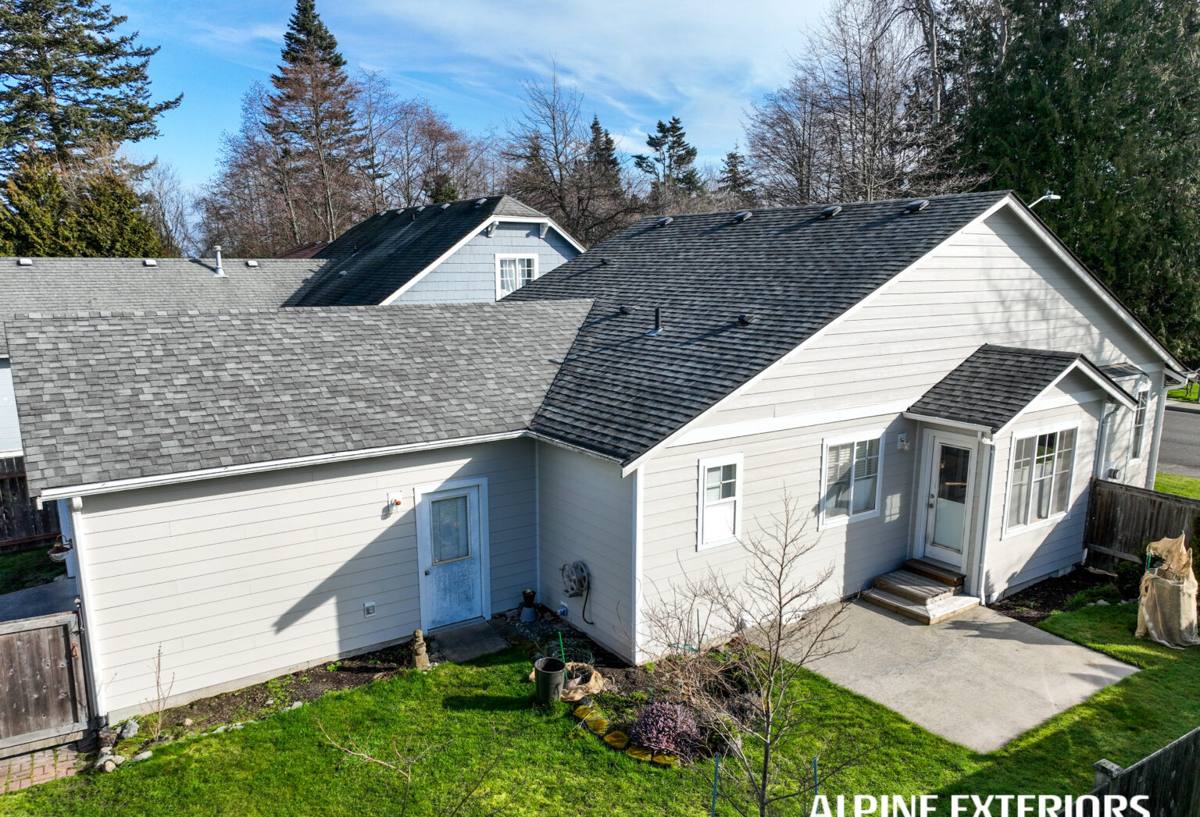
Why Salt Air Changes the Math on Siding Materials
Salt air isn't just an inconvenience for paint jobs. It accelerates corrosion in fasteners and metal flashing, and it interacts badly with certain siding materials over time — softening finishes, breaking down caulk and sealant joints faster, and giving mold and mildew a head start wherever moisture gets trapped. Homes closer to the water in Blaine tend to show wear on their exteriors years before comparable homes further inland, which is exactly why material choice matters more here than it does in a lot of the county.
This is also why we don't treat every siding material as interchangeable. Some products that perform fine in a drier or more sheltered location start showing their weaknesses fast in a salt-air, high-rainfall environment like Blaine's.
What Tends to Go Wrong First
- Caulking and joint sealant drying out, cracking, or failing at seams exposed to salt air and UV
- Paint and factory finishes chalking, fading, or peeling faster than their rated lifespan
- Moisture wicking into edges and cut ends of wood-based or engineered wood products
- Persistent moss and algae staining on north- and shade-facing walls
- Corrosion at fasteners, flashing, and trim details that weren't detailed for a coastal environment
Why We Install Only James Hardie Fiber Cement Siding
We made a decision early on to stop installing a mix of siding products and standardize on James Hardie fiber cement for every siding job we take on, including here in Blaine. That's not a marketing angle — it's a practical response to what we kept seeing on coastal Whatcom County homes.
Products like vinyl, LP SmartSide, and primed wood siding all have real strengths, and plenty of houses around the country wear them just fine. But each carries trade-offs that matter more in a salt-air, high-moisture climate: vinyl can warp and become brittle with age and temperature swings, engineered wood products rely on their outer coating staying intact to keep moisture out of the wood substrate underneath, and traditional wood and primed spruce need a maintenance commitment — regular repainting and caulking — that most homeowners underestimate until the siding is already showing damage. Cemplank and Allura are also fiber cement, and fiber cement as a category is the right call for this climate; we simply standardized on Hardie specifically for its manufacturing consistency, factory-applied finish, and the depth of its product engineering for different climate zones.
James Hardie fiber cement is non-combustible, doesn't rely on a surface coating to keep water out of a wood core, and is manufactured with a ColorPlus factory finish that's baked on and warranted against fading and peeling — which matters directly in a salt-air environment where field-applied paint tends to break down faster. Hardie also engineers specific product lines for different climate zones, including formulations built for the wetter, milder Pacific Northwest. For a coastal town like Blaine, that combination of moisture resistance, finish durability, and non-combustible material is what we're willing to put our name behind.
The James Hardie System We Install
Hardie isn't a single product — it's a system of siding, trim, and soffit designed to work together, and we install it as a complete system rather than mixing in other brands for trim or accent pieces.
| Hardie Product | Common Use | Why It Fits Blaine |
|---|---|---|
| HardiePlank lap siding | Primary wall siding | Most common profile, factory-finished, engineered for wet Pacific Northwest conditions |
| HardieShingle | Accent siding, gable ends | Adds texture without introducing a separate, less durable material |
| HardieTrim | Corner boards, window and door trim | Matches the siding's moisture resistance at the joints where water intrusion usually starts |
| HardieSoffit | Eaves and overhangs | Vented options help manage moisture in attic and roof assemblies |
ColorPlus finishes come in a range of factory colors backed by Hardie's finish warranty, which is worth asking about directly — it covers different things than the substrate warranty, and homeowners are often surprised by the distinction.
Moss, Algae, and North-Facing Walls
Because so much of Blaine and the surrounding Whatcom County coastline stays shaded and damp for long stretches of the year, moss and algae growth on siding and roofing is less a maintenance nuisance and more a predictable seasonal reality. Fiber cement doesn't feed mold and mildew the way wood-based products can, but no siding material is immune to surface growth in a climate this wet. Good design choices — proper flashing, adequate roof overhangs, and siding installed with the right clearances and drainage gaps — make a real difference in how much moss and staining a wall develops over time. This is part of why installation quality matters as much as the material itself.
Beyond Siding: Roofing, Windows, and Decks for a Coastal Property
Siding doesn't work in isolation. On a Blaine property, the roof, windows, and any exterior decking all face the same salt air and driving rain, and problems in one area often show up as damage in another — a failing roof valley or worn flashing can drive water behind siding that's otherwise in good shape. We handle roofing, window replacement, and decking alongside siding work, which lets us look at a home's exterior as one connected system rather than patching one component while ignoring what's happening around it.
For decks especially, coastal exposure and near-constant moisture put real demands on material choice and fastener selection — the same salt-air corrosion concerns that affect siding fasteners apply to deck hardware and framing connectors.
What a Siding Replacement Project Looks Like
- On-site assessment of existing siding, trim, flashing, and any moisture or rot found during removal
- Review of Hardie product lines, profiles, and ColorPlus color options for the home
- Written estimate covering material, labor, disposal of old siding, and any trim or flashing repair needed
- Removal of old siding and inspection of the sheathing underneath for hidden water damage
- Installation of house wrap or weather-resistive barrier, flashing, and the Hardie system per manufacturer specification
- Final walkthrough and warranty paperwork
That sheathing inspection in step four matters more than people expect. In a climate like Blaine's, it's not unusual to find water damage behind old siding that wasn't visible from the outside — catching it during a siding replacement, rather than years later, is one of the real advantages of a full tear-off over a re-side.
What Affects the Cost of a Siding Replacement
| Factor | How It Affects Cost |
|---|---|
| Home size and wall complexity | More square footage, corners, and dormers mean more material and labor |
| Extent of hidden damage | Rot or moisture damage found under old siding adds repair scope before new siding goes up |
| Trim and accent details | Shingle accents, extra trim work, and custom color matching add time and material |
| Access and site conditions | Tight lots, multi-story walls, or landscaping obstacles affect labor time |
| Tear-off vs. re-side | Full removal costs more upfront but avoids trapping moisture behind new siding |
We won't quote a number without seeing the house, but we're always upfront about what's driving the price on a given estimate rather than leaving it as a black box.
Choosing a Contractor for a Coastal Home
- Ask what siding material they install and why — and be skeptical of a contractor who installs "whatever you want" without a stated standard
- Confirm they're licensed and insured to work in Washington, and ask to see proof
- Ask how they handle flashing and moisture barrier detailing, not just the visible siding
- Ask whether they inspect sheathing during tear-off and how they handle unexpected damage
- Ask about warranty coverage — both the manufacturer's and the contractor's workmanship warranty
- Look for a contractor with an actual presence in Whatcom County, not just a service-area listing
A coastal property is not the place to gamble on a low bid from a contractor unfamiliar with what salt air and sustained rain actually do to a building envelope. Installation detailing — flashing, gaps, fastener spacing — affects how a siding system performs here as much as the material choice does.
If you're weighing a siding replacement, a roof, new windows, or a deck project on your Blaine property, we're happy to come take a look and put together a straightforward, no-pressure estimate. Use the form below to get in touch.