 Lynden Siding
 Wiser Lake: A Different Kind of Exposure
Wiser Lake sits just outside Lynden in Whatcom County, and homes around it deal with a mix of conditions that a lot of siding products simply aren't built for. You've got moisture coming from two directions — humidity and standing dampness off the lake itself, plus the marine-influenced weather systems that roll through this corner of Washington off the Pacific and the Strait of Georgia. Add in mature tree cover around much of the lake, and you've got shaded, slow-drying wall surfaces for a good chunk of the year. That combination is exactly what accelerates rot, paint failure, and moss growth on exterior materials that aren't engineered for it.
We've worked on homes throughout the Lynden area long enough to know that "coastal Whatcom County weather" isn't a marketing phrase — it's a real, measurable stress on siding, trim, and roofing. Salt-tinged air, driving rain that gets pushed sideways during winter storms, and a moss season that can run eight or nine months out of the year all show up in the condition of exterior materials here faster than they would in a drier inland climate.
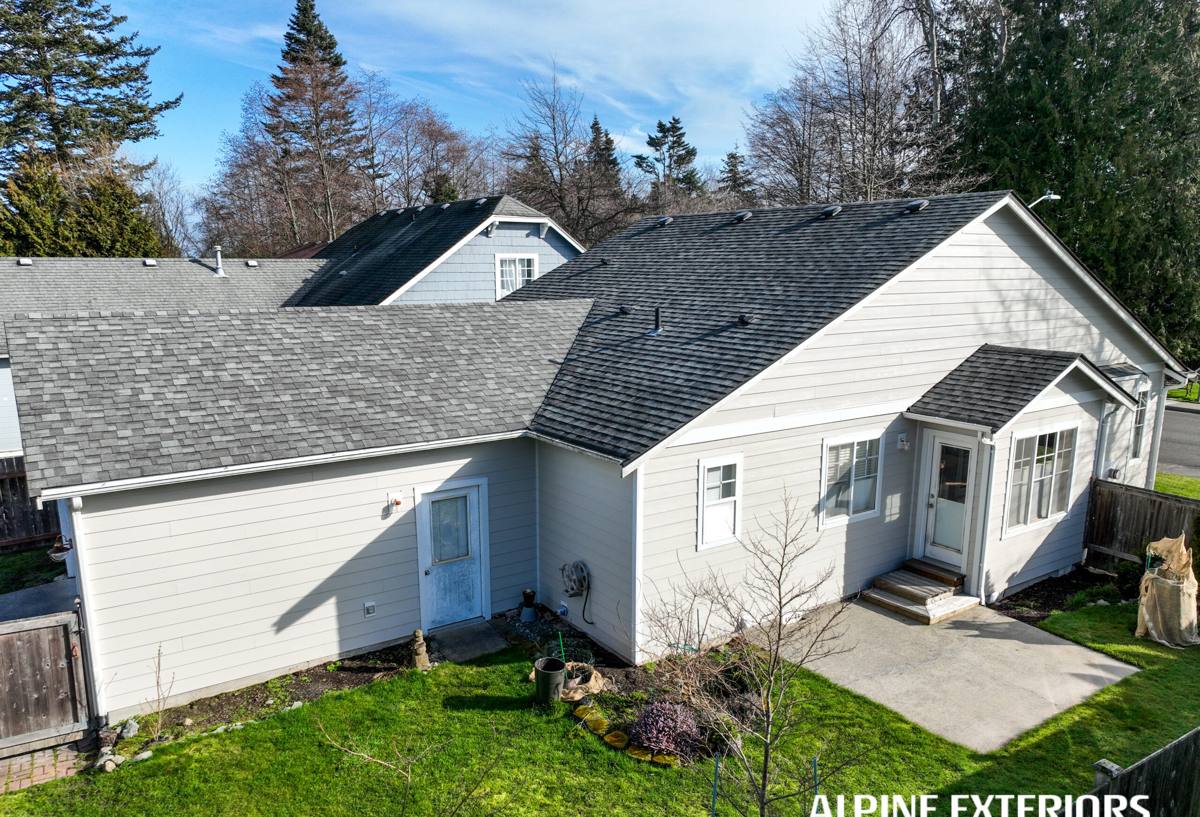
What This Climate Actually Does to Siding Over Time
Moisture Intrusion
Driving rain doesn't just wet a wall surface — it pushes water into seams, laps, and fastener points. Over years, that repeated wetting is what causes wood-based siding to swell, delaminate, or rot from the inside out, often before any damage is visible from the ground.
Moss and Organic Growth
Shaded, north-facing walls near the lake stay damp longer after every rain. Moss and algae need exactly that — moisture and shade — and once they establish on a porous or textured surface, they hold water against the material and accelerate whatever decay process is already underway.
Salt-Influenced Air
Whatcom County isn't oceanfront, but marine air moving inland off the Strait carries fine salt content that settles on exterior surfaces. On metal fasteners and lower-grade coatings, that accelerates corrosion and finish breakdown over time — a slow effect, but a cumulative one.
Why We Only Install James Hardie Fiber Cement
We made a deliberate decision as a company: we install James Hardie fiber cement siding, and nothing else. Not vinyl, not LP SmartSide, not Cemplank or Allura, not primed spruce or cedar. That's not a sales pitch — it's a standard we hold because of what we've seen these materials do (and not do) in exactly the kind of climate Wiser Lake sits in.
Fiber cement is non-combustible and dimensionally stable, meaning it doesn't swell, warp, or rot the way wood-based products can when they take on repeated moisture. James Hardie's ColorPlus finish is baked on at the factory under controlled conditions, which gives it better fade and moisture resistance than field-applied paint — a real advantage in a climate that keeps surfaces damp for extended stretches. Hardie also engineers specific product lines (their HZ5 and HZ10 systems) for different climate zones across the country, so the boards installed here are matched to Pacific Northwest moisture exposure rather than a generic national spec.
We're not going to tell you other products are worthless — vinyl is inexpensive and low-maintenance in the right application, and engineered wood has genuine fans. But we've chosen not to install them because, on homes exposed to this region's rain and moss cycles, we don't think they hold up as well over a 20-plus-year ownership horizon, and we'd rather stand behind one product system we trust completely than offer several we have reservations about.
Beyond Siding: The Rest of the Exterior Envelope
Siding doesn't work in isolation. Around Wiser Lake, we regularly see homes where the roof, windows, and siding are all aging on roughly the same timeline, and it makes sense to look at the whole exterior envelope together rather than patching one component while the others keep failing quietly behind it.
Roofing
A roofing system that's shedding water properly protects the siding below it — a failing roof edge or clogged gutter line is one of the most common causes of localized siding rot we find on inspections.
Windows
Window flashing and trim are where a huge share of water intrusion problems start. When we replace siding, we check window integration closely, because bad flashing under new siding just hides a leak instead of fixing it.
Decks
Lake-area properties tend to lean on outdoor living space, and a deck that's failing or poorly flashed against the house can drive moisture straight into the wall assembly behind it.
Handling all four trades under one roof means we're not pointing fingers between contractors when something at a transition point — a window head, a deck ledger, a roof-to-wall junction — needs attention.
What a Siding Replacement Project Looks Like
- On-site evaluation of existing siding, trim, and any moisture or rot issues, including a look at roofline and window flashing conditions
- Honest assessment of whether full replacement or targeted repair makes sense
- Removal of old siding and inspection of the sheathing and weather barrier underneath
- Repair of any damaged sheathing before new material goes on — this step gets skipped by less careful crews and it's where problems hide
- Installation of James Hardie panels or lap siding to manufacturer spec, including correct fastening, clearances, and flashing details
- Final walkthrough and cleanup
That sheathing inspection step matters more here than in a lot of climates. If moisture has already gotten behind old siding on a lake-adjacent home, covering it up with new material without addressing what's underneath just delays the same problem.
What Drives the Cost of a Project
Every home is different, but these are the factors that most affect what a siding project runs around Wiser Lake and the greater Lynden area:
| Factor | Why It Matters |
|---|---|
| Home size and wall complexity | More square footage and more corners, dormers, or gables mean more labor and material cuts |
| Condition of existing sheathing | Rot or moisture damage found during tear-off adds repair scope before new siding can go on |
| Siding profile chosen | Lap siding, panel siding, and shingle-style Hardie products carry different material and labor costs |
| Trim and detail work | Window and door casings, corner boards, and fascia detailing add time regardless of siding brand |
| Site access | Lakefront lots, slopes, and mature landscaping can affect staging and equipment access |
We walk every property in person before giving a number, because estimating a Wiser Lake home from a photo or a satellite image misses the details — slope, tree cover, and existing damage — that actually determine cost.
Choosing a Contractor for Lake-Area Work
Not every exterior contractor is set up to handle the moisture-sensitive details that matter here. Before hiring anyone for siding, roofing, window, or deck work near Wiser Lake, it's worth asking:
- Are they licensed and insured to work in Washington, and can they show proof without you having to ask twice?
- Do they inspect and repair sheathing before installing new siding, or just cover what's there?
- Can they explain how they handle flashing at windows, rooflines, and deck ledgers — not just the siding field itself?
- Do they install one siding system they stand behind, or several, and can they explain why?
- Will they put the manufacturer's warranty terms in writing, and is it transferable if you sell the home?
- Are they familiar with this specific area's moisture and moss conditions, or working from a generic regional playbook?
A crew that's used to working in drier or more sheltered parts of the county may not catch the same things a crew familiar with lake-adjacent, shaded properties will.
Living With Your Siding After Installation
Fiber cement is low-maintenance, not no-maintenance. A rinse-down once or twice a year keeps moss and organic buildup from getting a foothold, especially on shaded sides of the house. Keeping gutters clear and trees trimmed back from wall surfaces goes a long way toward keeping the moss season from becoming a year-round issue. Because James Hardie's ColorPlus finish is factory-applied, you're not repainting on the same cycle you'd face with field-painted wood siding — but it's still worth a periodic walk-around to catch any caulking or trim issues early, before a small gap turns into a moisture problem.
Let's Take a Look at Your Home
If you're around Wiser Lake and dealing with aging, moss-covered, or moisture-damaged siding, we're happy to come out, walk the property, and give you a straight assessment — no pressure, no obligation. Fill out the form below for a free estimate.