 Lynden Siding
 Serving Maple Falls from Our Lynden Base
Maple Falls sits in the rural, forested reaches of Whatcom County, and homes out this way live a different exterior life than a house downtown. Longer stretches of shade, heavier tree cover, higher humidity under the canopy, and wide temperature swings between summer afternoons and cold, damp winters all put steady pressure on whatever is nailed to the wall. Our crew is based in Lynden, and we've built our schedule and our routes to make sure Maple Falls homeowners get the same attention and the same standards as anyone closer to town.
This page covers how the local climate affects siding out here, what we install and why, and what the process looks like when you're ready to replace worn siding, roofing, windows, or decking.
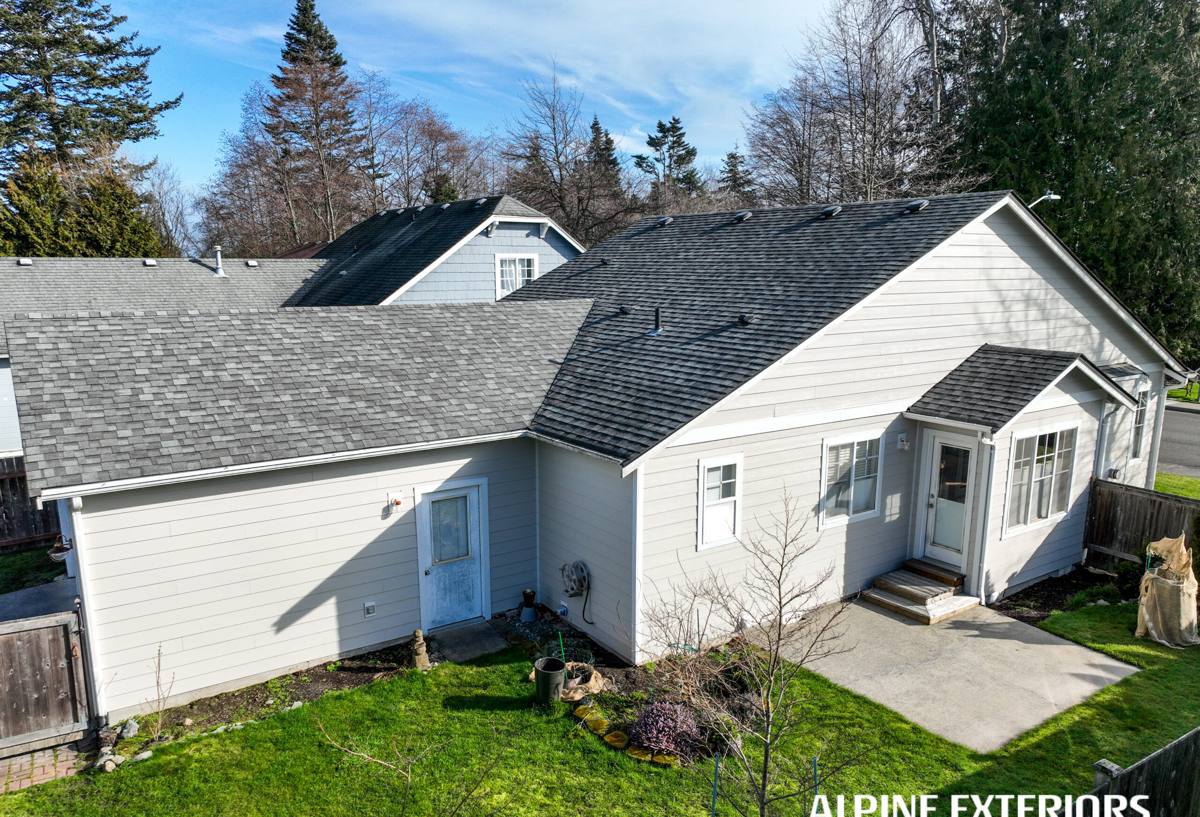
What the Climate Does to Siding in This Area
Moss, Shade, and Moisture
Whatcom County has a long wet season, and properties with tree cover or north-facing walls hold onto that moisture far longer than an open, sunny lot. That means a longer moss and algae season, more time for siding surfaces to stay damp, and more opportunity for water to find its way into any gap, crack, or failed caulk joint. Wood-based products are especially vulnerable here — moisture that sits against untreated or improperly sealed edges is exactly what causes rot, delamination, and swelling over time.
Driving Rain and Wind-Driven Wet
Rain in this part of Washington doesn't always fall straight down. Wind-driven rain pushes water sideways into seams, corners, and butt joints, which is why installation detail — proper flashing, correct overlaps, sealed penetrations — matters as much as the material itself. A great product installed poorly will fail in the same spots as a mediocre product; the difference shows up years later, not on install day.
Temperature Swings and Regional Exposure
Whatcom County homes see real freeze-thaw cycling in winter and warm, dry stretches in summer, and that expansion-and-contraction cycle stresses caulk lines, fasteners, and any material prone to swelling and shrinking with moisture content. Closer to the water, some Whatcom County homes also deal with salt-laden air that accelerates corrosion on fasteners and finishes — it's a factor we account for across the region even where it's a lighter touch than it is right on the coast.
Why We Install James Hardie Fiber Cement — and Nothing Else
We made a deliberate decision as a company to install only James Hardie fiber cement siding. We don't install vinyl, LP SmartSide, Cemplank, Allura, primed spruce, or cedar. That's not a marketing line — it's a standard we hold because of what we've seen play out on real homes in this climate over time.
Fiber cement is cement, sand, and cellulose fiber. It doesn't rot, it doesn't feed pests, and it isn't fuel for a fire the way wood-based siding is. In an area with a genuine moss season and long wet stretches, a material that doesn't absorb and hold water the way wood products can is a meaningful advantage, not a marketing point. Hardie's ColorPlus finish is baked on at the factory under controlled conditions, rather than field-applied, which gives it better fade and chip resistance than a job-site paint job — important when a home sits under tree cover and doesn't get the sun exposure that helps some finishes cure and hold color.
Built for This Climate, Specifically
James Hardie engineers different product lines (HZ5, HZ10) for different climate zones across the country, accounting for regional moisture and temperature patterns rather than shipping one generic board everywhere. That climate-specific engineering, paired with a factory finish and a strong transferable warranty, is why we standardized on it instead of carrying multiple product lines with different failure points and different maintenance demands.
Why We Say No to the Alternatives
We're not going to tell you a competing product is garbage — that's not honest, and it's not our place. What we will tell you is why we personally won't put our name on it:
- Vinyl siding is affordable and low-maintenance, but it can warp or become brittle in temperature extremes, and its appearance and lifespan don't hold up the way factory-finished fiber cement does.
- LP SmartSide and similar engineered wood products perform reasonably when installation and caulking are perfect and stay perfect for decades — a big ask in a wet, mossy climate. Moisture intrusion at a compromised seam behaves differently in wood-based substrates than in cement-based ones.
- Cemplank and Allura are also fiber cement, and reasonable products in their own right — but we've standardized our crews, tooling, warranty relationships, and installation training around one manufacturer so we can guarantee consistency on every job.
- Primed spruce and cedar are attractive natural materials, but they demand ongoing maintenance — recoating, caulking, moisture monitoring — that most homeowners underestimate until the first signs of rot show up at trim edges and butt joints.
Every one of those products has a legitimate place in the market. We simply decided, as a company, which trade-offs we were and weren't willing to build our reputation on.
More Than Siding: The Full Exterior Envelope
Siding doesn't work in isolation — it's one piece of a home's exterior envelope, along with the roof, windows, and any attached decking. We handle all four, which matters because a lot of the failures we see start where two of these systems meet: a roofline that doesn't shed water properly onto the wall below, a window that's failed at the flashing, or a deck ledger that's trapping moisture against the house.
Roofing
Roof condition directly affects how water moves across your siding. A gutter or roof edge that dumps water in the wrong spot will shorten the life of even the best siding installation, so we look at the roof whenever we're evaluating siding.
Windows
Old or poorly flashed windows are one of the most common sources of hidden water intrusion behind siding. When we replace siding, we check window flashing and seals as a matter of course — it's often cheaper to address at the same time than to reopen the wall later.
Decks
Attached decks create a ledger connection directly into the house structure, and in a wet climate that joint needs proper flashing and separation to avoid feeding moisture straight into the wall cavity behind your siding.
What Cost Depends On
Every home is different, and we'll never quote a number without seeing the house, but these are the factors that move the price up or down on most projects in this area:
| Factor | Why It Matters |
|---|---|
| Home size and wall complexity | More corners, gables, and trim details mean more cutting, fitting, and labor time |
| Extent of underlying damage | Rotted sheathing or framing found once old siding comes off adds repair scope |
| Siding profile and accessories | Lap width, trim style, and soffit/fascia work all affect material and labor cost |
| Access and site conditions | Steep lots, tree cover, or limited equipment access can add time |
| Scope beyond siding | Bundling window, roof, or deck work at the same time can be more efficient than separate projects |
Our Process on a Maple Falls Project
- An in-person walkthrough of the exterior, including a look at trouble spots you've already noticed and areas that tend to hide problems, like behind attached decks and around window trim.
- A written estimate that spells out material, scope, and timeline — no verbal-only pricing.
- Removal of old siding, with an honest look at the sheathing and framing underneath before anything new goes on.
- Correct installation of James Hardie fiber cement to manufacturer specification, including flashing, fastening, and joint treatment appropriate for this climate.
- A final walkthrough with you before we consider the job done.
Why a Local Crew Matters Out Here
Maple Falls isn't a place where a contractor should be guessing at conditions from a photo. A crew that's used to working across Whatcom County understands how a shaded, tree-covered lot behaves differently than an open one three miles away, and shows up prepared for it — the right moisture barriers, the right expectations for a longer wet season, and no surprises about how long a proper tear-off and reinstall actually takes in this weather. Being based in Lynden means we're not driving in from out of the area for a one-off job and then disappearing if a warranty question comes up later.
Signs It's Time to Talk About Siding
- Visible moss or algae buildup that returns quickly after cleaning
- Soft spots, bubbling, or a "give" when you press on the siding
- Peeling or fading paint that keeps coming back within a year or two of repainting
- Warping, buckling, or gaps opening up at seams and corners
- Visible rot or staining near the bottom edge of walls or around window trim
- Rising heating bills that suggest the wall assembly isn't performing the way it should
If you're seeing any of these on a home in or around Maple Falls, it's worth having someone look before small issues turn into structural repair costs.
If you'd like an honest, no-pressure look at your siding, roof, windows, or deck, our Lynden crew is glad to come out and walk the exterior with you. There's no cost and no obligation to get a clear picture of where things stand — just fill out the form below to get started.