 Lynden Siding
 Metal Roofing Built for Abbotsford's Climate
Homes in and around Abbotsford, BC sit in one of the wettest, mossiest corners of the Pacific Northwest. Long stretches of driving rain, humid air off the Fraser Valley, and short winter days that never quite dry a roof out all add up to conditions that are hard on conventional roofing. Add in the salt-laden air that moves through the region during coastal weather systems, and you've got a climate that rewards roofing materials chosen and installed with those specific stresses in mind. A metal roof, done correctly, is one of the better answers to that combination of moisture, moss, and weathering.
We're based just across the line in Lynden, Washington, and we've been doing exterior work in this shared Whatcom County and Fraser Valley climate for years. The weather doesn't stop at the border, and neither do the roofing problems it causes. This page is about what a metal roof needs to do for an Abbotsford home, what a correct installation actually involves, and why local, hands-on experience with this specific climate matters more than a glossy brochure.
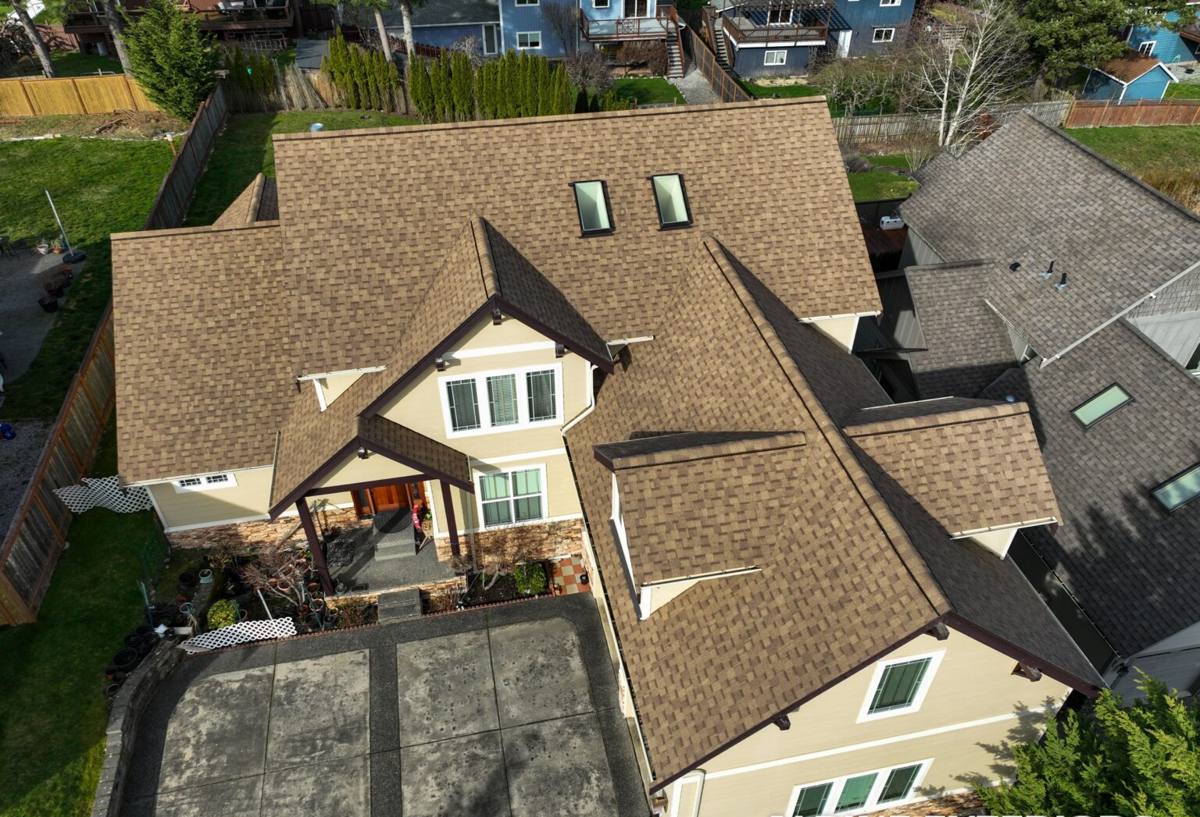
What This Climate Does to a Roof
Moss and Organic Growth
The long moss season here isn't a minor cosmetic issue. Moss holds moisture against roofing materials, works into seams and laps, and on shingle or wood roofs it can lift edges and accelerate rot underneath. Metal roofing gives moss far less to grab onto, and a properly installed system sheds water fast enough that moss has a much harder time establishing itself in the first place.
Driving Rain and Wind-Driven Moisture
Rain in this region rarely falls straight down. Wind-driven rain gets pushed sideways and upward under eaves, around vents, and into any gap in flashing or fastening. A metal roof isn't automatically immune to this — a poorly flashed valley or a rushed penetration detail will leak on a metal roof just as readily as on any other. The material only performs as well as the installation behind it.
Salt Air and Corrosion
Coastal-influenced air carries fine salt content that can accelerate corrosion on unprotected or poorly coated metal, particularly at cut edges, fasteners, and dissimilar-metal contact points. This is a material selection and detailing issue as much as anything — the right coatings, fastener types, and edge treatments make a real difference over the life of the roof.
Temperature Swings and Freeze-Thaw
While this area doesn't see extreme cold, it does see repeated freeze-thaw cycling through the winter months. Trapped moisture that freezes and expands is a common cause of hidden damage under roofing materials that don't ventilate or drain well.
Metal Roofing Options We Install
Not every metal roofing product is the right fit for every home or budget. Here's how the main options compare for a wet, moss-prone climate like this one.
| System | Best For | Moss & Moisture Performance | Trade-Offs |
|---|---|---|---|
| Standing seam | Homes wanting a clean, modern line and maximum weathertightness | Excellent — concealed fasteners, continuous panels, minimal seams for water to find | Higher material and labor cost; requires precise installation |
| Metal shingles / shakes | Homes wanting a traditional look with metal's durability | Very good, though more seams and laps than standing seam | More exposed fastener points to detail correctly |
| Corrugated / exposed-fastener panel | Outbuildings, shops, budget-conscious projects | Good if maintained; exposed fasteners need periodic checking | Fasteners can loosen or corrode over time if not the right grade |
For most primary residences in this area, we lean toward standing seam or a quality metal shingle system, specifically because they minimize the exposed seams and fastener points that give moisture and moss an entry point over a Pacific Northwest winter.
What a Correct Installation Actually Involves
A metal roof is only as good as the layers underneath it that most homeowners never see. This is where a rushed or inexperienced install shows up as a leak two or three winters later, not on day one.
Underlayment and Moisture Barrier
Given how much rain this climate delivers, we treat the underlayment as a real second line of defense, not an afterthought. A synthetic, high-temperature-rated underlayment with properly lapped and sealed seams is standard practice for us on metal roofing in this region.
Ventilation
Metal roofs need to breathe. Trapped attic moisture condensing against the underside of cold metal panels is a common cause of hidden rot and mold in this climate. Correct ridge, soffit, and where needed, mechanical ventilation keeps that moisture moving out rather than sitting against your roof deck.
Flashing and Penetrations
Valleys, chimneys, vents, and skylights are where the vast majority of roof leaks originate, on any roofing material. Metal roofing has specific flashing details — closure strips, proper overlap direction, and compatible metals to avoid galvanic corrosion — that differ from asphalt shingle practice. This is not an area to cut corners or use a one-size-fits-all approach.
Fastening
Fastener type, spacing, and expansion allowance all matter more on a metal roof than most other systems, since metal panels expand and contract with temperature more than shingles do. Fasteners that are too tight, wrong-gauge, or the wrong metal for the panel will fail early, especially in salt-influenced air.
Our Process, Start to Finish
We keep the process straightforward and honest, from the first look at your roof to final cleanup.
- On-site assessment — We look at your existing roof structure, decking condition, ventilation, and any problem areas before recommending a system.
- Honest estimate — You get a clear, written estimate that explains what's included: materials, underlayment, flashing, and labor. No pressure, no games.
- Material selection — We walk through panel or shingle style, gauge, and finish options suited to your home and budget.
- Installation — Deck inspection and repair as needed, underlayment, flashing, panel or shingle installation, and ventilation work, done in the sequence that keeps your home protected the whole time.
- Final walkthrough and cleanup — We check every seam and penetration before we consider the job done, and we clean the site thoroughly.
Cross-Border Service: Why It Matters
Lynden sits close to the border crossing that connects Whatcom County to the Abbotsford and Fraser Valley area, and we've built our scheduling and logistics around working comfortably on both sides. That matters for a few practical reasons: we're familiar with sourcing and coordinating materials for a Canadian job site, we plan around border crossing times so your project stays on schedule, and we understand that Abbotsford homeowners want the same straightforward, no-surprises process a Lynden homeowner would expect. You're not dealing with a contractor unfamiliar with cross-border logistics figuring it out on your project.
What Affects the Cost of a Metal Roof Here
Metal roofing typically costs more upfront than asphalt shingles, though the gap has narrowed in recent years and the lifespan and lower long-term maintenance often offset the difference over time. The main factors that move the price on a given home are:
- Roof size, pitch, and complexity (number of valleys, dormers, and penetrations)
- System type — standing seam generally costs more than corrugated or exposed-fastener panel
- Panel gauge and coating quality, which affect both appearance and corrosion resistance
- Condition of the existing roof deck and whether repair or replacement is needed underneath
- Ventilation upgrades required to meet current best practice
- Access and site conditions, including roof height and steepness
We walk through each of these during the estimate so you understand exactly what's driving the number, rather than getting a flat quote with no explanation behind it.
Maintenance and Long-Term Care
One of the real advantages of a correctly installed metal roof in this climate is how little routine maintenance it needs compared to asphalt or wood. That said, "low maintenance" isn't "no maintenance." We recommend homeowners keep gutters and valleys clear of needles and debris, especially heading into the wet fall and winter months, and have the roof looked at periodically for any fastener or sealant wear at penetrations. Catching a small issue early is far cheaper than dealing with hidden moisture damage years down the line.
Why Hire a Crew That Already Works This Area
Roofing crews unfamiliar with this specific climate sometimes apply installation practices better suited to drier regions — underventilated assemblies, underlayment choices that aren't rated for our rainfall volume, or flashing details that don't account for how aggressively wind-driven rain behaves here. That approach can look fine for a season or two before problems show up. Working this climate consistently means we've seen where roofs actually fail here, not just where a manufacturer's install guide assumes they might.
If you're considering a metal roof for your Abbotsford home, we're happy to take a look and give you a straightforward, no-pressure estimate. There's no obligation — just an honest assessment of what your roof needs and what it would take to get it done right. Use the form below to get started.