 Lynden Siding
 Aldergrove Sits Right in the Path of Pacific Northwest Weather
Aldergrove is close enough to Lynden that a lot of the same weather patterns that wear down siding, roofing, and decks on the Washington side of the border show up here too. That's not a coincidence — the Fraser Valley and northern Whatcom County share the same marine air mass, the same wet winters, and the same long stretch of low sun and standing moisture that defines exterior maintenance in this corner of the continent. Homes here don't fail because of one dramatic storm. They wear down slowly, from repeated exposure, until a homeowner notices paint peeling in the same spot every year or moss creeping across a north-facing roof slope that never quite dries out.
We're based just across the border in Lynden, and Aldergrove falls naturally into our service area. We know this climate because we work in it every week, not because we read about it.
What the Local Climate Actually Does to a House
Salt Air and Moisture
Aldergrove isn't right on saltwater the way some Whatcom County coastal areas are, but moist marine air still moves through the Fraser Valley regularly, and it carries fine salt and mineral content that settles on exterior surfaces. Combined with high humidity, that moisture accelerates corrosion on fasteners, trim, and unprotected wood, and it keeps painted surfaces damp longer between rain events than homeowners further inland typically deal with.
Driving Rain
This region gets a lot of rain, but the bigger issue for siding and windows isn't total rainfall — it's wind-driven rain that hits walls at an angle instead of falling straight down. Driving rain finds every gap in flashing, every poorly sealed joint, and every seam where water-resistant barrier wasn't lapped correctly. A siding system that looks fine in a showroom can fail in a few wet seasons if the water management behind it wasn't installed to spec.
Moss and Prolonged Dampness
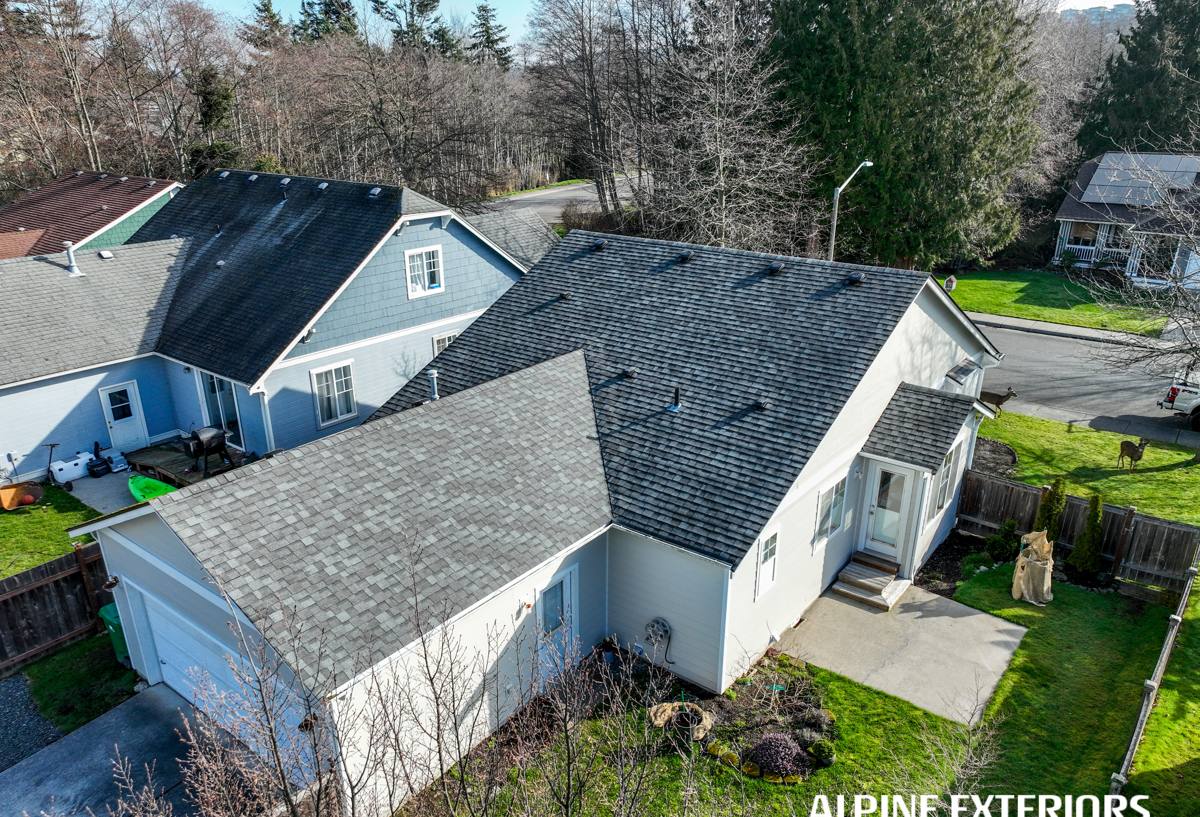
Long, mild, wet winters mean surfaces stay damp for extended stretches, and that's exactly what moss and algae need to take hold. Roofs, especially north-facing slopes and areas shaded by mature trees, are the most visible casualty, but moss and mildew also creep onto siding, deck boards, and fascia. Beyond the cosmetic problem, sustained moisture against wood-based products is what drives rot, and it's a major reason we steer homeowners away from wood-adjacent siding products in this climate.
Cross-Border Logistics: What It Means to Hire a Washington-Based Crew
Homeowners in Aldergrove sometimes ask how a Lynden-based contractor handles work so close to the border. The honest answer is that it's a normal part of doing business in this corridor — plenty of contractors, suppliers, and tradespeople move between Whatcom County and the Fraser Valley regularly. What matters for you as a homeowner is that the logistics are handled deliberately: scheduling that accounts for border crossing times, material planning that avoids delays, and clear communication about timelines up front rather than surprises mid-project. If you're gathering quotes, it's fair to ask any contractor directly how they handle crossing, permitting in your municipality, and payment — a straight answer is a good sign, and vague reassurance is worth pushing on.
Why We Install Only James Hardie Fiber Cement Siding
We don't install vinyl, LP SmartSide, Cemplank, Allura, or primed wood siding, and that's a deliberate standard, not an oversight. Each of those products has legitimate strengths, but in a climate that stays wet for months at a time, we've seen where they struggle: engineered wood siding relies on a factory coating and careful field sealing to keep moisture out of its wood-fiber core, and any breach — a missed caulk joint, a poorly flashed penetration — gives moisture a path in. Vinyl is inexpensive and low-maintenance in mild weather, but it flexes with temperature swings, can crack in a hard freeze, and doesn't offer the same fire resistance or long-term color stability. Cedar and primed spruce look great initially but require an ongoing maintenance commitment — refinishing, caulking, and moisture monitoring — that most homeowners underestimate until the bills start.
James Hardie fiber cement is cement, sand, and cellulose fiber — it doesn't rot, it doesn't feed moss the way wood does, and it holds up to repeated wet-dry cycles without swelling or delaminating. The ColorPlus factory finish is baked on under controlled conditions, which gives it better UV and fade resistance than a field-applied paint job, and Hardie's HZ5 product line is engineered specifically for climates with freeze-thaw cycles and sustained moisture exposure — conditions that describe this region well.
Material Comparison for This Climate
| Material | Moisture Behavior Here | Maintenance Burden | Fire Resistance |
|---|---|---|---|
| James Hardie fiber cement | Doesn't absorb or swell; stable through wet winters | Low — occasional wash, repaint on a long cycle if desired | Non-combustible |
| Vinyl | Sheds water but can trap moisture behind it if installed poorly | Low, but can crack/fade over time | Combustible, can warp near heat |
| Engineered wood (LP/similar) | Vulnerable at seams and cut edges if not sealed correctly | Moderate — regular caulk and coating inspection | Treated, but wood-based |
| Cedar / primed wood | Absorbs moisture readily; needs to dry between rain events | High — refinishing and moisture monitoring ongoing | Combustible |
Roofing in a Moss-Prone Climate
Roofs in and around Aldergrove take the brunt of the moss problem because they're the most exposed, most shaded, and most horizontal surface on the house. Beyond material choice, ventilation and underlayment quality matter enormously here — a roof deck that can't breathe traps moisture underneath the shingles, which shortens its life regardless of how good the shingles themselves are. We look at ridge and soffit ventilation, ice-and-water shield placement at vulnerable transitions, and flashing details around chimneys and valleys, since those are the spots that fail first in a wet climate. Regular moss treatment and gutter maintenance extend a roof's life considerably, but they're not a substitute for proper installation underneath.
Windows: Sealing Out Driving Rain
Window failures in this region are rarely about the glass — they're about the flashing and sealing around the frame. Wind-driven rain pushes water sideways against window openings, and if the flashing wasn't lapped correctly with the water-resistant barrier during installation, water works its way behind the trim and into the wall assembly, sometimes for years before it shows up as a stain or soft spot indoors. When we replace windows, we treat the flashing and integration with the siding system as being just as important as the window unit itself — a great window installed with poor flashing detail will still leak.
Decks: Built for Standing Water and Long Winters
Decks in this climate deal with the same prolonged dampness that drives moss growth on roofs, plus the added stress of standing water pooling on horizontal surfaces. Proper slope for drainage, gapping between boards, and ledger flashing where the deck meets the house are the details that determine whether a deck lasts fifteen years or thirty. Composite decking has become popular here precisely because it doesn't absorb water the way wood does, but even composite decks need correct joist spacing and ventilation underneath to avoid trapping moisture against the structure.
What to Look for When Hiring a Contractor in This Area
- Ask specifically how they detail flashing at windows, doors, and roof-to-wall transitions — this is where most water damage in this climate actually starts
- Confirm what siding, roofing, and decking materials they install, and ask them to explain the trade-offs honestly, not just recite marketing points
- Get a clear answer on warranty coverage — both manufacturer warranty and the contractor's own workmanship warranty
- Ask how they handle scheduling and logistics if you're near the border, so there are no surprises about timelines
- Request references or examples of similar work in a comparable climate, not just a portfolio of finished photos
- Make sure any quote breaks down materials, labor, and scope clearly enough that you can compare it against other bids
A Straightforward Approach to Your Project
Every property in Aldergrove is a little different — sun exposure, tree cover, wind direction, and how close a home sits to standing water or low-lying ground all change how the exterior ages. We walk the property, look at what's actually happening on your siding, roof, windows, and deck, and give you a straight assessment of what needs attention now versus what can wait. We're not going to recommend replacing something that has years of life left in it just to sell a bigger job.
If you're noticing moss buildup, peeling paint, soft spots near windows, or a deck that never quite dries out between rains, it's worth having someone take a look before those small signs turn into structural repairs. We'd be glad to walk your property in Aldergrove and put together a free, no-pressure estimate — no obligation, just a clear picture of where things stand.