 Lynden Siding
 Storm Damage Roof Repair Built for Acme
Acme sits in the wooded foothills east of Lynden, in Whatcom County, where the roofline takes a different kind of beating than it does out on the flats. Big timber stands close to a lot of homes out here, wind funnels down through the valley during winter storms, and the tree cover that makes the area beautiful also means more falling limbs, more debris on the roof, and more shade holding moisture against the shingles long after a storm passes. When wind, rain, or a falling branch damages a roof in Acme, the fix needs to account for all of that, not just patch the hole and move on.
This page covers storm damage roof repair specifically for homes in and around Acme — what the local climate does to a damaged roof if repairs are delayed, what an honest repair actually involves, and how our process works from the first call to the final inspection.
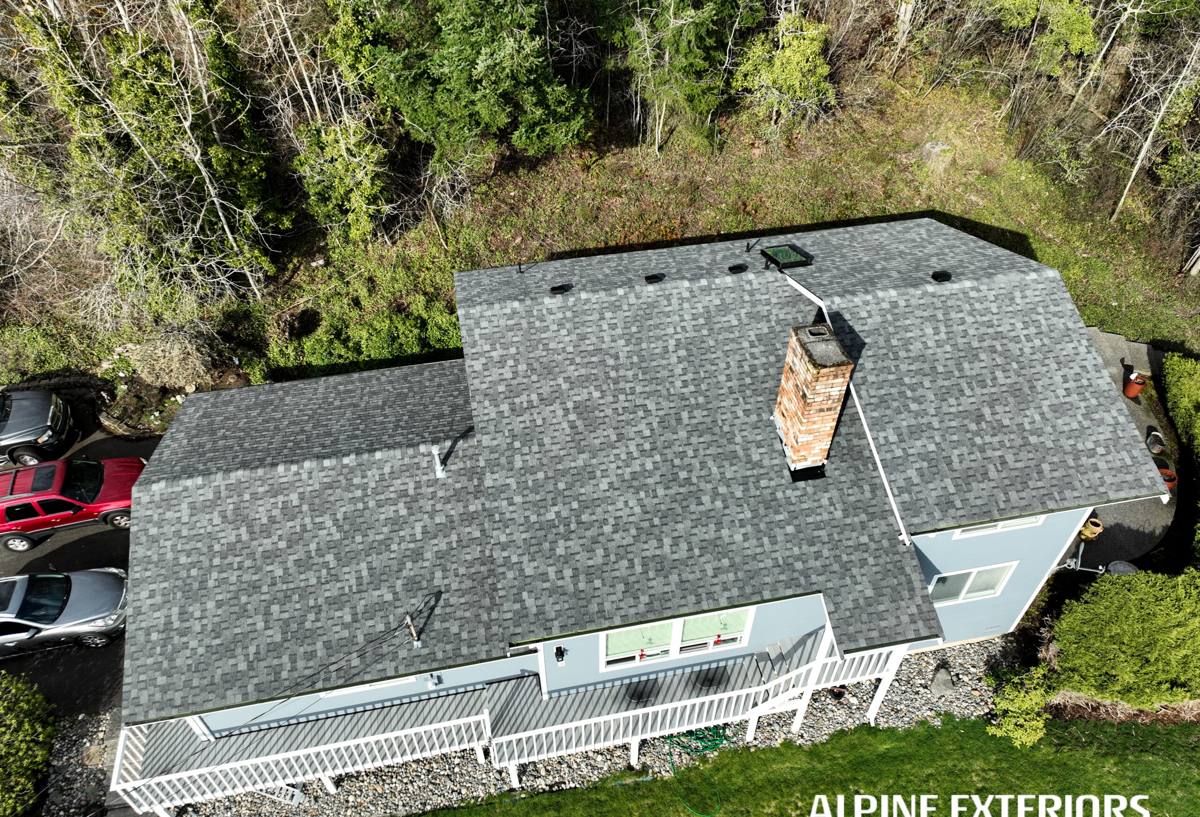
What Whatcom County Weather Does to a Damaged Roof
A storm-damaged roof in this part of Washington doesn't sit and wait patiently for a repair appointment. Driving rain, a long moss season, and the marine-influenced air that moves through Whatcom County all work against an open roof the moment its protection is compromised.
Driving Rain Finds the Gaps
Wind-driven rain doesn't behave like a straight-down shower. It gets pushed sideways and upward under lifted shingles, around cracked flashing, and into any gap a storm has opened up. A hole that looks minor from the ground can let water travel several feet under the roof deck before it shows up as a stain on a ceiling inside the house. The longer a storm-damaged roof goes uncovered, the more of that lateral water intrusion happens.
Moss Season Is Long Here
Whatcom County's moss season runs long compared to drier parts of the state, and Acme's tree cover and shade only extend it. Storm damage — a torn shingle, exposed felt, a cracked ridge cap — gives moss and moisture an easy foothold it wouldn't otherwise have. Once moss gets established at a damage point, it holds water against the roofing material and accelerates the very deterioration the storm started. A repair that doesn't address the surrounding moss and debris is only a partial fix.
Salt Air and Coastal Influence
Whatcom County roofs, even well inland from the water, still deal with the corrosive effects of marine air moving in off the Sound. Exposed nail heads, damaged flashing, and any bare metal a storm has scraped clean are more prone to rust and premature failure in this environment than they would be in a drier inland climate. Storm repairs need to protect those points, not just cover them.
Signs Your Acme Roof May Have Storm Damage
Storm damage isn't always obvious from the driveway. Some of it only shows up once you know where to look, and some of it only shows up inside the house well after the wind has died down.
- Shingles that look lifted, curled, or missing entirely, especially on the side of the roof that faced the wind
- Granules collecting in gutters or at the base of downspouts after a storm
- Bent, creased, or missing flashing around chimneys, vents, and skylights
- Fresh scrape marks, gouges, or bare patches where a branch or debris made contact
- Soft spots or noticeable sagging when walking the roof or viewing it from an attic
- Water stains on ceilings or upper walls that appear after a heavy rain
- Daylight visible through the roof deck from inside the attic
- Moss or dark streaking concentrated around one specific area rather than spread evenly
If you notice any of these after a wind event or a falling branch, it's worth getting the roof looked at before the next round of driving rain moves through.
Quick Patch vs. a Correct Storm Repair
Not all storm repairs are built the same. A quick patch stops the immediate leak; a correct repair addresses the damage, the surrounding material that took secondary stress, and the underlying deck and flashing so the same spot doesn't fail again next season.
| Factor | Quick Patch | Correct Repair |
|---|---|---|
| Scope | Covers the visible hole or tear only | Inspects and repairs surrounding shingles, felt, and flashing |
| Deck condition | Assumed sound, not checked | Checked for soft spots or water damage before re-covering |
| Flashing | Often left as-is | Replaced or resealed if bent, rusted, or displaced |
| Matching materials | Whatever is on hand | Matched to existing shingle type, color, and exposure |
| Longevity | Months to a couple years | Matches the expected life of the surrounding roof |
| Best suited for | Emergency tarp-down or temporary coverage | Permanent storm damage repair |
Both have a place. A quick patch or tarp is exactly the right call in the hours after a storm, when the priority is keeping water out of the house. But it should always be followed by a proper inspection and repair, not treated as the finished job.
What a Correct Storm Damage Repair Involves
1. A Full Inspection, Not Just the Damaged Spot
Wind and falling debris rarely damage just one shingle. We check the full slope the damage occurred on, plus adjacent slopes, since wind uplift and impact can loosen fasteners and shift shingles well beyond the obvious damage point.
2. Deck and Underlayment Check
If water has been getting in — even for a short time — the roof deck underneath needs to be checked for soft spots, staining, or delamination. Covering damaged decking with new shingles just hides a problem that will resurface.
3. Flashing and Fastener Review
Flashing around chimneys, vents, and roof-to-wall transitions takes a disproportionate share of storm stress. Given the marine air common to this part of Whatcom County, we look closely at exposed metal and fasteners for early corrosion, not just physical damage.
4. Matching Materials and Proper Tie-In
A repair should blend into the existing roof, both visually and functionally. That means matching shingle type and color where possible and tying new material into the old correctly, with proper overlap and sealing, so water sheds the way it's supposed to at every seam.
5. Debris and Moss Cleanup
Given how long moss season runs here, we clear moss, needles, and debris from the repair area and surrounding roof rather than working around it. Repairing a damaged spot while leaving moss established a foot away just sets up the next problem.
Our Process for Acme Homeowners
- Initial call and photos. We get a sense of the damage and how urgent it is — an active leak gets prioritized differently than a cosmetic issue.
- Emergency coverage if needed. If the roof is actively leaking or a hole is open to the weather, we can tarp or temporarily cover it to stop water intrusion while a full repair is scheduled.
- On-site inspection. We walk the roof, check the deck from the attic side where accessible, and document the full extent of the damage — not just what's visible from the ground.
- Clear explanation and estimate. You get a straightforward explanation of what's damaged, what needs to be done, and why — along with a written estimate before any repair work starts.
- Repair. We complete the work with matched materials and proper technique, addressing the deck, flashing, and surrounding roofing as needed, not just the original damage point.
- Final walk-through. We show you what was done and answer any questions before we consider the job finished.
Storm Damage and Insurance
Many storm damage repairs are covered by homeowners insurance, particularly damage from wind or falling limbs. We can provide the documentation and photos an adjuster typically needs, but we're not a public adjuster and don't handle the claim itself — that's between you and your insurance company. What we can do is give you an honest, itemized assessment of the damage and the repair needed, which makes the claims conversation a lot easier on your end.
Why a Crew That Already Works Acme Makes a Difference
Acme's mix of tree cover, terrain, and distance from Lynden's core means roofs here take different kinds of storm damage than roofs on open lots closer to town. A crew that regularly works this area already understands the debris load these roofs deal with, the extended moss season the shade creates, and how driving rain off a wind event tends to find its way under improperly repaired shingles. That familiarity means less guesswork on the inspection and a repair that's built for the conditions the roof will actually face again, not a generic patch.
It also means a faster response. Storm damage isn't something that benefits from sitting on a waitlist for a crew that has to drive in from out of the area — the sooner a compromised roof gets covered and properly repaired, the less secondary damage from water intrusion you're dealing with.
Get a Free, No-Pressure Estimate
If a recent storm has left your Acme home with a damaged roof — or you're not sure whether what you're seeing is storm damage or normal wear — we're happy to take a look and give you a straight answer. Use the form below to request a free estimate, no pressure and no obligation.