 Lynden Siding
 Roofing in a Border Climate: What Aldergrove Homes Are Up Against
Aldergrove sits in the Fraser Valley lowland, just across the Aldergrove–Lynden border crossing from Whatcom County. That geography matters more than most homeowners realize when it comes to roofing. Marine air pushes in from the Strait of Georgia and Puget Sound and rides inland across the valley, carrying moisture and a fine load of salt with it. Combine that with a long, wet shoulder season and shaded, tree-lined lots common in this area, and you get a climate that is genuinely hard on a roof: driving rain that tests every flashing detail, humidity that never fully lets a roof dry out between storms, and a moss season that can run from late fall through spring.
None of that means roofing here is impossible to get right — it means the margin for error is smaller. A roof built to a generic spec, without attention to ventilation, underlayment quality, and moss-resistant details, will show its age in Aldergrove years before it should. A roof built correctly for this climate holds up the way it's supposed to.
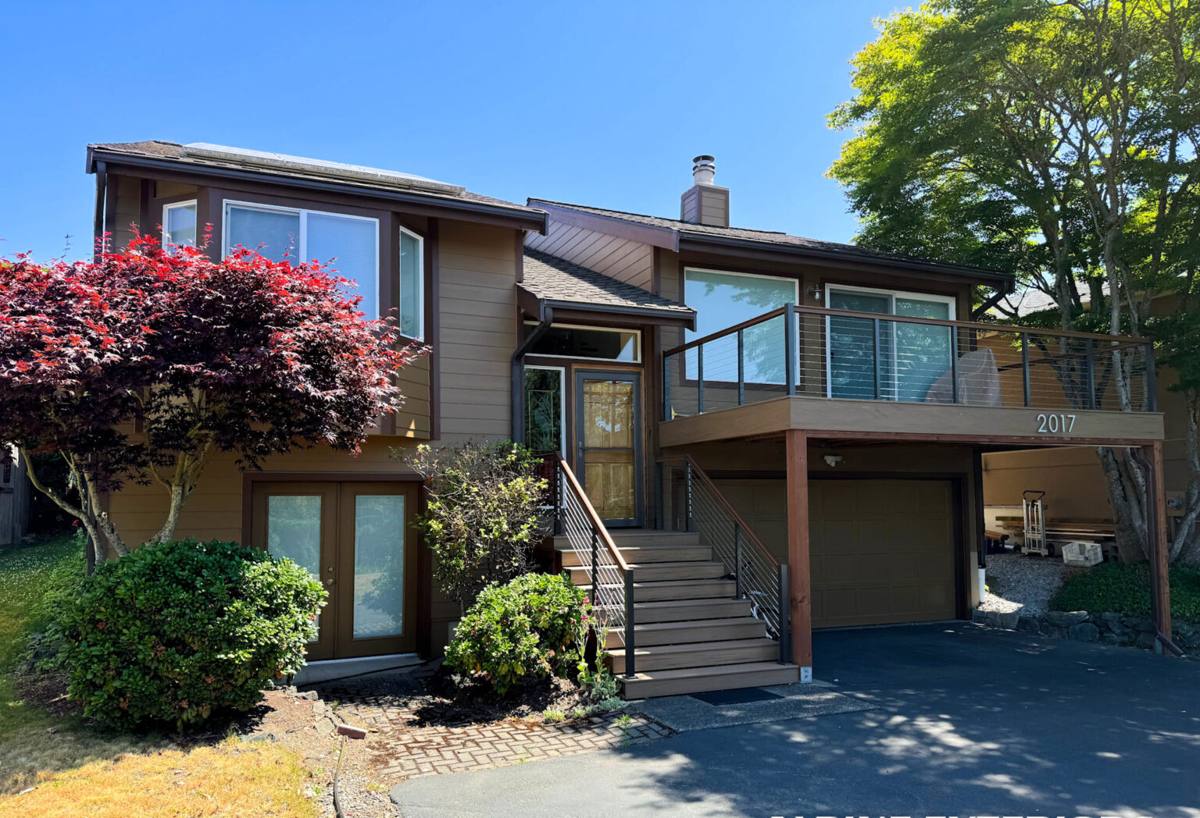
Signs an Aldergrove Roof Needs Full Replacement, Not Another Repair
Repairs make sense when the problem is isolated — a damaged flashing detail, a handful of lifted shingles after a windstorm. Full replacement becomes the honest recommendation when the roofing system itself, not just a section of it, is failing.
Warning signs worth taking seriously
- Granule loss heavy enough that you're finding grit in the gutters every season, not just after a new roof's first year
- Shingles that are curling, cupping, or cracking across multiple slopes rather than one localized area
- Moss or algae staining that keeps coming back within a season or two of cleaning, a sign the surface is holding moisture longer than it should
- Soft spots or sag felt when walking the roof, which usually points to deck damage underneath
- Daylight or water staining visible in the attic, especially near valleys, chimneys, or skylights
- A roof approaching or past the manufacturer's expected service life for its material and local exposure
If you're seeing two or more of these at once, patch repairs tend to become a recurring expense rather than a fix. That's usually the point where replacement is the more honest answer for your wallet, not just ours.
What a Correct New Roof Installation Actually Involves
A roof is a system, not a single product. Shingles get the attention, but in this climate the layers underneath and around them are what determine whether the roof performs for its full expected life.
The layers that matter most here
Underlayment is the first line of defense once wind-driven rain gets past the surface layer — and in a climate with sustained driving rain, that happens more often than people assume. We install synthetic or self-adhered underlayment rated for the exposure, with ice-and-water shield style membrane at eaves, valleys, and any low-slope transitions where water tends to pool or back up.
Flashing is where most roof leaks actually originate, not in the field of the shingles themselves. Chimneys, skylights, sidewalls, and valley intersections all need properly stepped and counter-flashed details, not just caulk covering a gap. Caulk is a maintenance item; correct flashing geometry is a permanent fix.
Ventilation is the piece most often shortchanged on lower-quality installs, and it's the one that determines whether moss and moisture problems come back within a few years. A balanced intake-and-exhaust system keeps the attic and roof deck at a consistent temperature and moisture level, which reduces condensation on the underside of the deck and slows moss growth on top.
Fasteners and nailing pattern sound minor but aren't — correct nail placement and count is what keeps shingles from lifting in the wind gusts that come through the valley during winter storms.
Roofing Material Options for This Climate
There's no single "best" roofing material — the right choice depends on your home's roof pitch, your budget, and how much moss and moisture resistance you want to build in versus manage with maintenance.
| Material | Typical Lifespan | Moss & Moisture Behavior | Trade-offs |
|---|---|---|---|
| Architectural asphalt shingle | 25–30 years | Good with algae-resistant granules and proper ventilation | Best value; needs periodic moss treatment on shaded slopes |
| Standard 3-tab asphalt | 15–20 years | More prone to early granule loss in sustained wet exposure | Lowest upfront cost, shortest service life here |
| Metal (standing seam or panel) | 40–50+ years | Sheds moisture fast; very moss-resistant on adequate pitch | Higher upfront cost; needs correct underlayment for noise/condensation |
| Cedar shake | 20–30 years with upkeep | Attractive but absorbs moisture; needs regular treatment to resist moss and rot | Highest maintenance burden in this climate; we're candid about that upkeep before you commit |
We'll walk through which of these fits your roof's pitch, sun exposure, and budget honestly — including talking you out of a product if it's not a good match for how shaded or exposed your particular roof is.
Ventilation and Moss: The Two Issues That Define Roofs in This Region
Moss doesn't damage a roof by itself so much as it holds moisture against the surface, and moisture is what breaks shingles down early. On a new installation, the goal is to reduce the conditions moss needs to establish in the first place: balanced ventilation to keep the deck drier, algae-resistant shingle granules on shaded slopes, and attention to any tree cover that keeps parts of the roof from ever fully drying between rains.
What we build in during installation
- Ridge and soffit ventilation sized to the attic volume, not a generic one-size product
- Algae-resistant shingle lines on north-facing or heavily shaded slopes where moss pressure is highest
- Proper valley and gutter detailing so water and debris don't pool and hold moisture against the roofing surface
- Guidance on realistic moss maintenance intervals for your specific roof, rather than a blanket recommendation
None of this eliminates the need for occasional moss treatment or cleaning — nothing does in this climate — but it dramatically extends the time between treatments and protects the roof's service life in the meantime.
Our Installation Process, Start to Finish
1. On-site inspection and honest assessment
We look at the deck, the current ventilation setup, flashing points, and the overall condition before recommending replacement over repair. If repair is genuinely the right call for your roof, we'll say so.
2. Clear scope and material selection
You'll get a written scope covering tear-off, deck repair allowances if needed, underlayment type, flashing details, and the shingle or metal system chosen — no vague line items.
3. Tear-off and deck inspection
Old roofing comes off down to the deck so we can actually see what's underneath, including any rot or soft sheathing that needs to be addressed before new material goes down. Covering up deck problems is how roofs fail early.
4. Underlayment, flashing, and ventilation installation
This is where the real weatherproofing happens, done to the details described above rather than rushed to get to the visible shingle layer.
5. Final roofing material installation
Installed to manufacturer spec and the nailing pattern appropriate for this area's wind exposure.
6. Cleanup and final walkthrough
Site cleared of debris and old materials, with a walkthrough so you understand what was done and what maintenance, if any, to expect going forward.
Cost Factors for a New Roof in Aldergrove
We don't quote prices without seeing the roof, but these are the factors that actually move the number up or down, so you know what you're paying for when you get a quote.
| Factor | Why It Matters |
|---|---|
| Roof size and number of planes | More material, more flashing details, more labor hours |
| Pitch and accessibility | Steeper or harder-to-access roofs take longer and require more safety setup |
| Deck condition underneath | Rot or soft sheathing found at tear-off needs repair before new roofing goes on |
| Material choice | Asphalt, metal, and cedar carry very different material and labor costs |
| Ventilation upgrades needed | Bringing an older attic up to proper intake/exhaust balance is a real line item, not an afterthought |
| Layers of existing roofing | Multiple layers of old roofing add tear-off time and disposal cost |
Why a Crew That Already Works Aldergrove Matters
Aldergrove is close enough to Lynden that we cross at the Aldergrove–Lynden border crossing regularly for jobs on both sides — this isn't a one-off trip out of our normal service area. That matters practically: we already understand the material and moisture exposure homeowners in this part of the valley deal with, we're not learning the local climate on your roof, and scheduling and material delivery across the border is something we've worked out logistics for, not something we're figuring out for the first time on your project.
A crew that only occasionally works this side of the border may not think twice about ventilation sizing or moss-prone shading — the kind of detail that only shows up as a problem two or three years after the crew has moved on. We'd rather get it right the first time.
A Practical Checklist Before You Hire
- Ask for a written scope that names the underlayment, flashing approach, and ventilation plan — not just "new roof installed"
- Confirm the deck will be inspected at tear-off, not covered over
- Ask how ventilation will be sized for your specific attic, not a standard part number
- Ask about moss-resistant shingle options for shaded slopes if your roof has heavy tree cover
- Get clarity on warranty coverage for both materials and workmanship, and what voids each
- Ask whether the crew has worked in this specific climate zone before, and for how long
If you're weighing a new roof for your Aldergrove home, we're happy to take a look and give you a straight assessment — no pressure, no inflated urgency. Use the form below to request a free estimate.