 Lynden Siding
 Siding Replacement in Blaine: A Different Climate Than a Few Miles Inland
Blaine sits right up against the water at the northern edge of Whatcom County, and that location changes what siding has to survive. A few miles inland around Lynden, siding mostly has to shed rain and resist the region's long wet season. In Blaine, you add salt-laden air blowing off the water, wind-driven rain that hits walls at an angle instead of running straight down, and a moss and algae season that stretches for most of the year in shaded, north-facing exposures. None of that is exotic or extreme weather — it's just steady, cumulative exposure that wears out the wrong siding faster than homeowners expect.
That combination is exactly why siding replacement in Blaine deserves more thought than picking whatever's cheapest at the yard. The material, the installation details, and the contractor's familiarity with this specific stretch of coastline all matter more here than they would on a dry, sheltered lot.
What Salt Air and Driving Rain Actually Do to Siding
Salt Air
Airborne salt is corrosive to exposed metal fasteners, trim flashing, and any hardware that isn't properly protected or coated. It also accelerates the breakdown of some paint films and coatings, which is one reason a factory-cured finish holds up differently than a coat of paint applied on site in the field.
Driving Rain
Wind off the water doesn't just fall on a house — it pushes rain sideways into laps, seams, and butt joints. Siding systems that rely on caulk alone to keep water out, rather than proper lap geometry and a correctly installed weather-resistive barrier behind them, are the first to show staining, swelling, or rot at those joints.
Moss and Algae
Shaded walls, especially north- and west-facing elevations near trees or close to neighboring structures, stay damp longer here than in drier parts of the county. Porous or absorbent siding materials hold that moisture and give moss and algae something to grow on. Non-porous materials with a durable factory finish resist it far better.
What a Correct Siding Replacement Involves
Replacing siding is not just pulling off old boards and nailing up new ones. In a coastal-influenced area like Blaine, the details behind the siding matter as much as the siding itself.
Tear-Off and Wall Inspection
Once the old siding is off, the sheathing underneath gets inspected for soft spots, staining, or rot — problems that are often invisible until the siding comes down. Any damaged sheathing gets repaired or replaced before anything new goes up. Skipping this step is one of the most common ways a siding job fails early.
Weather-Resistive Barrier
A correctly installed and lapped weather barrier (housewrap or equivalent) is the actual waterproofing layer of the wall assembly — the siding is the first line of defense, not the only one. In a driving-rain environment, gaps, tears, or improperly lapped seams in this layer are where water gets in.
Flashing at Every Penetration
Windows, doors, hose bibs, vents, and any other wall penetration need proper flashing that directs water back out and down, never trapping it behind the siding. This is one of the most frequently rushed steps on lower-quality jobs, and it's usually where callbacks come from.
Fastening and Fastener Selection
Corrosion-resistant fasteners, installed at the correct spacing and depth for the specific siding product, matter more in salt-air exposure than in most inland installs. Fasteners driven too deep or too shallow — or the wrong fastener for the material — are a slow, hidden failure point.
Why We Only Install James Hardie Fiber Cement
We've made a deliberate decision to install one siding system: James Hardie fiber cement. We don't install vinyl, LP SmartSide, Cemplank, Allura, primed spruce, or cedar. That's not a marketing position — it's based on what holds up when you install a lot of siding in this climate and go back to see how it performs years later.
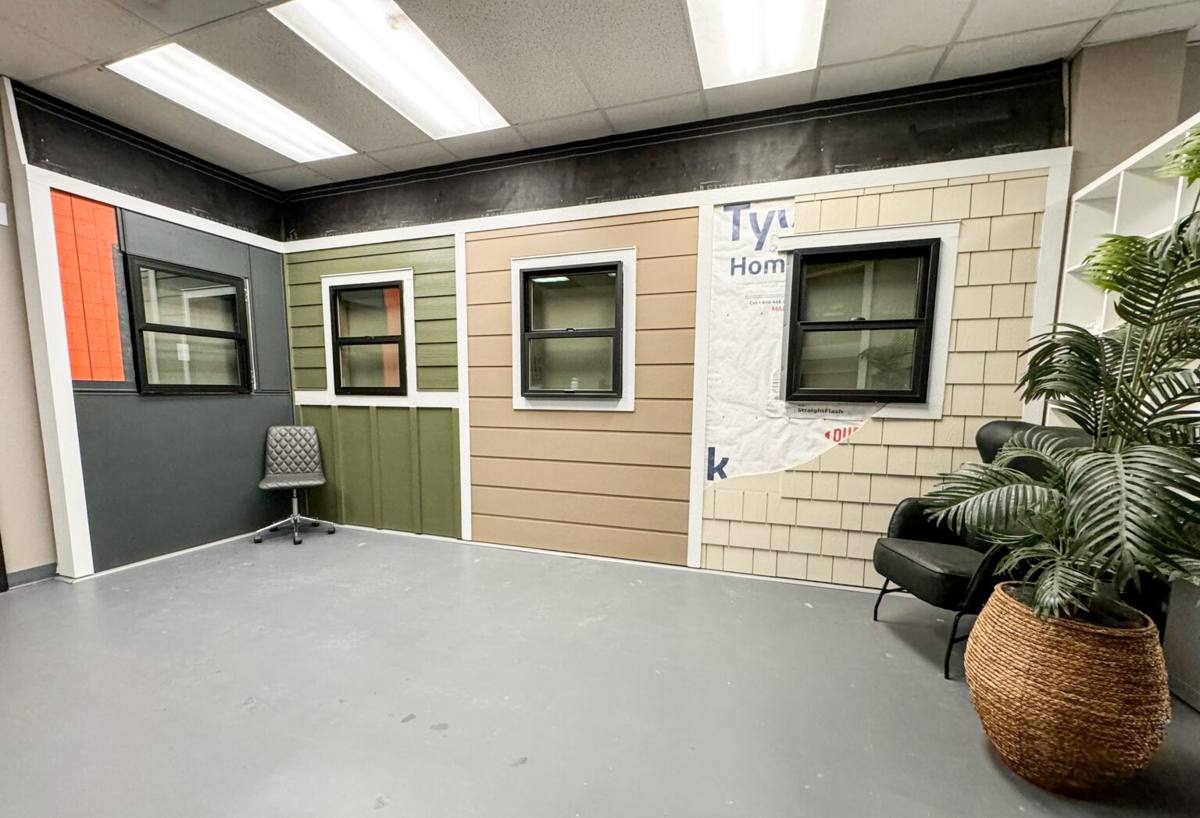
Fiber cement is non-combustible and dimensionally stable, meaning it doesn't expand, contract, warp, or absorb moisture the way wood-based or wood-composite products can. Hardie's ColorPlus finish is baked on at the factory under controlled conditions, which gives it more consistent coverage and better fade and wear resistance than a field-applied paint job — a real advantage against sun, salt air, and driving rain over the life of the siding. Hardie also builds region-specific HZ product lines engineered for climate zones like the Pacific Northwest, and backs the material with a strong, transferable warranty.
That doesn't mean every other product is a bad product. Vinyl is inexpensive and low-maintenance in the right setting. Wood has a natural look many homeowners genuinely prefer. LP SmartSide and other engineered wood products have their own fan base. Our position is narrower than "those are bad" — it's that after installing siding across this region, we don't think they're the right long-term investment for the moisture and salt exposure homes here deal with, and we'd rather install one system well than several systems adequately.
| Factor | Vinyl / Engineered Wood | James Hardie Fiber Cement |
|---|---|---|
| Moisture behavior | Can warp, swell, or trap moisture depending on product and install quality | Dimensionally stable, engineered to resist moisture-related damage |
| Finish durability | Field-applied paint or factory coatings vary in salt-air fade resistance | Factory-cured ColorPlus finish built for consistent long-term color hold |
| Fire resistance | Vinyl can soften or melt under heat; wood products are combustible | Non-combustible fiber cement |
| Typical warranty | Varies widely by product and manufacturer | Strong, transferable manufacturer warranty |
| Upfront cost | Generally lower | Higher upfront, positioned as a long-term investment |
Our Process for a Blaine Siding Replacement
- Walkthrough and assessment. We look at the current siding, the wall condition where accessible, exposure direction, and any problem areas you've already noticed.
- Honest scope and estimate. You get a clear picture of what's being replaced, what product and color options make sense, and a written estimate — no pressure, no rushed decisions.
- Tear-off and sheathing inspection. Old siding comes off, and we address anything we find underneath before moving forward.
- Weather barrier and flashing. Every penetration and seam gets properly flashed and lapped before siding goes on.
- James Hardie installation to manufacturer spec. Correct fastening, clearances, and joint treatment, installed by a crew that installs this product regularly.
- Final walkthrough. We go over the finished job with you before calling it done.
Cost Factors for a Blaine Home
Every project is different, but the same handful of factors drive most of the cost variation we see on siding replacement jobs in this area:
| Factor | Why It Matters |
|---|---|
| Home size and wall complexity | More corners, gables, and trim details mean more labor and material |
| Condition of the sheathing underneath | Rot or water damage found during tear-off adds repair scope |
| Siding profile and accessories chosen | Lap width, trim style, and accent details affect material cost |
| Access and site conditions | Tight lots, landscaping, or multi-story walls affect labor time |
| Existing exterior condition | Windows, trim, or paint that also need attention while walls are open |
We don't quote a number without seeing the house — but we're happy to talk through realistic ranges and what drives them once we've had a look.
Signs Your Blaine Home Needs Replacement, Not Repair
- Soft or spongy siding when pressed, especially near the bottom of walls or below windows
- Persistent staining, streaking, or discoloration that returns after cleaning
- Visible warping, buckling, or gaps opening between boards or panels
- Moss or algae that regrows quickly after being cleaned off
- Paint that won't hold, peeling or blistering repeatedly in the same spots
- Soft trim or rot visible at corners, window sills, or penetrations
- Siding that's simply reached the end of its expected service life
A few of these can sometimes be addressed with targeted repair. Several at once, especially combined with sheathing damage, usually means repair is just delaying a bigger cost down the road.
Why a Crew That Already Works Blaine Matters
Blaine isn't a generic siding job. A crew that regularly works this stretch near the water already knows to expect wind-driven rain from certain directions, knows which walls in this area tend to stay damp longest, and doesn't need to relearn salt-air fastener and flashing practices on your house. That familiarity shows up in fewer surprises during tear-off and a finished job that's built for the exposure it will actually face, not a generic install pattern.
Being based out of Lynden means we're not driving in from out of the area for a one-off job and disappearing afterward. If a question comes up after the install, we're still local and still reachable.
Ready to Talk About Your Siding?
If your Blaine home's siding is showing its age or you're planning ahead, we're happy to take a look and give you an honest read on what it needs. Use the form below to request a free, no-pressure estimate.