 Lynden Siding
 Building Decks for Everson's Climate
Everson sits inland from Bellingham Bay but still lives inside the same marine air mass that soaks the rest of Whatcom County. Homeowners here deal with a long wet season, driving rain that comes in sideways off the Nooksack valley, and enough humidity lingering in the air that moss and algae get a running start on any exterior surface that stays damp. A deck built without that in mind doesn't fail because the materials are bad — it fails because the design and installation didn't account for how much water this region actually sees and how long that water sticks around before it dries.
A well-built custom deck for an Everson property isn't just about picking a nice board. It's about drainage, fastening, ventilation underneath the structure, and choosing materials that behave predictably when they're wet nine months out of the year. We build decks for homes across Lynden and the surrounding Whatcom County communities, and the decks that hold up longest are the ones where those details were handled correctly from day one — not patched later.
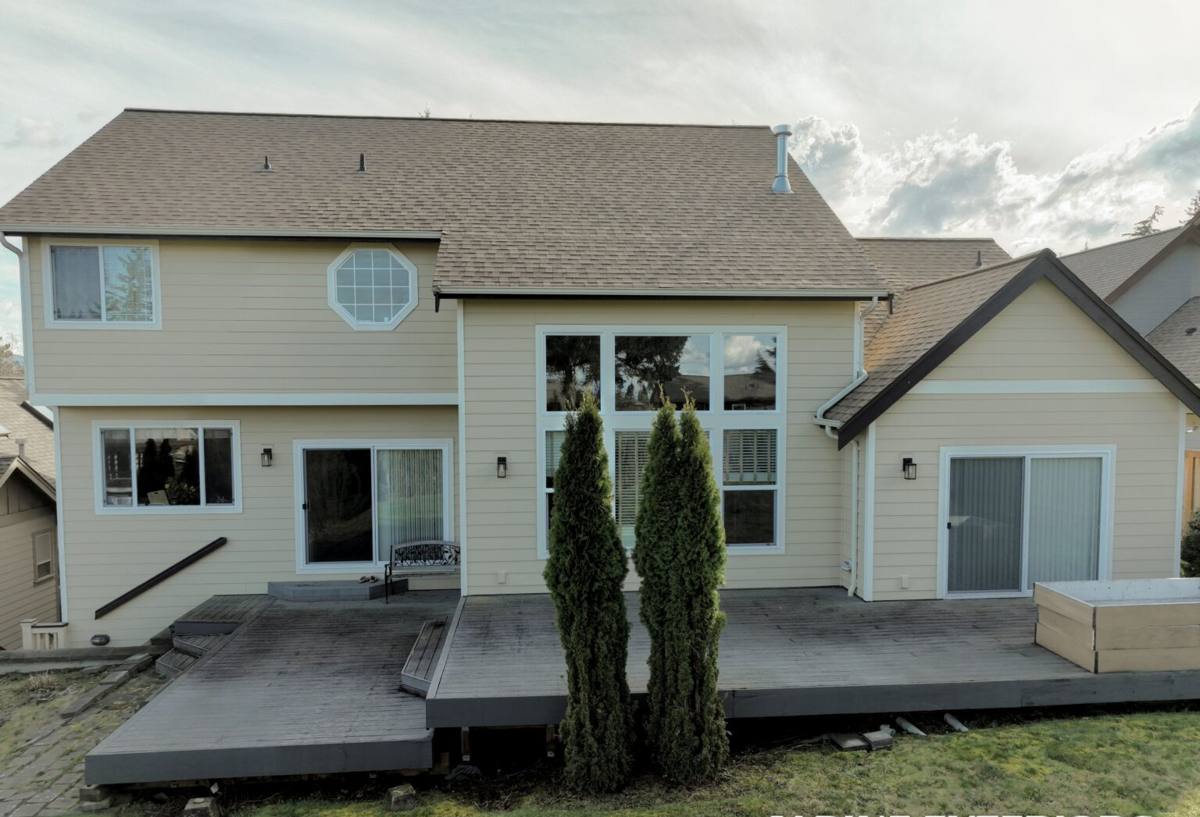
What a Deck Built for This Climate Actually Needs
Every region has its own version of "correct." In a dry climate, a deck mostly needs to handle sun and temperature swings. Here, the priority list looks different:
- Consistent drainage so water sheds off the deck surface instead of pooling between boards
- Airflow underneath the structure so framing and the ground below can actually dry out between rain events
- Fasteners and hardware rated for prolonged moisture exposure, not just splash-and-dry conditions
- Decking material that resists moss and algae growth or can be cleaned without damaging the surface
- Footings set below frost depth and sized correctly for our soil, which holds moisture longer than sandy or rocky ground
Skip any one of these and the deck will still look fine the first summer. The problems show up in year three or four, usually as soft spots near ledger boards, black staining that won't scrub off, or fasteners that have started to corrode and stain the decking around them.
Moss Season Is Longer Than Most Homeowners Expect
Moss doesn't need standing water — it just needs shade, moisture in the air, and a surface with enough texture to hold onto. Under trees or on the north side of a house, a deck in this area can stay damp enough to support moss growth for most of the year, not just during the rainiest months. Board spacing, gap width, and surface texture all affect how quickly a deck dries after rain, which directly affects how much moss and mildew take hold.
Choosing the Right Decking Material
There's no single "best" decking material — there's a best material for a given budget, maintenance appetite, and how much sun or shade the deck sits in. Here's how the common options compare for a wet, moss-prone climate like ours:
| Material | Moisture & Moss Behavior | Maintenance | Typical Lifespan |
|---|---|---|---|
| Pressure-treated wood | Absorbs moisture; needs sealing to resist staining and moss | Annual cleaning and re-sealing recommended | 15-20 years with upkeep |
| Cedar | Naturally moisture- and insect-resistant, but surface still needs care | Periodic cleaning and finish renewal | 15-20 years with upkeep |
| Composite decking | Doesn't absorb water into the board core; surface can still grow algae if shaded | Occasional washing, no sealing or staining | 25-30+ years |
| PVC/capped polymer | Fully moisture-resistant surface; easiest to keep moss-free | Low — occasional rinse | 25-30+ years |
Wood is a legitimate choice and plenty of Everson homeowners want the natural look, but it comes with a real maintenance commitment in this climate — skip a season of sealing and moisture starts working into the grain. Composite and capped polymer products, including well-known lines from manufacturers like Trex and TimberTech, cost more upfront but shift the ongoing burden from sealing and staining to occasional washing. We'll walk through the honest trade-offs for your specific situation rather than pushing one product line — the right call depends on your budget, how much shade the deck gets, and how much yearly maintenance you actually want to do.
Structural Considerations: Footings, Framing, and Fasteners
The part of the deck nobody sees is the part that determines whether it's still solid in fifteen years. Footings need to be set below frost depth and bear on undisturbed, properly compacted soil — Whatcom County's clay-heavy ground in many areas holds water longer than sandy soil, which means footing depth and drainage around the footing matter more here than in drier regions.
Framing lumber should be rated for ground contact where it's close to grade, and every ledger board attachment needs proper flashing so water is directed away from the house rather than wicking into the rim joist. This is one of the most common failure points we see on older decks: a ledger board attached without flashing, sitting against the house and staying damp long after a storm passes, slowly rotting the framing behind the siding.
Fasteners matter too. Hot-dip galvanized or stainless hardware resists corrosion far longer than standard coated fasteners, and using the wrong fastener with certain treated lumber can actually accelerate corrosion through a chemical reaction between the two. It's a small detail that's easy to get wrong and expensive to fix once the deck is built.
Our Deck-Building Process
A custom deck built for this climate goes through the same core steps regardless of size, but the details at each stage are where the quality shows up:
- Site assessment — we evaluate drainage, sun/shade exposure, soil conditions, and how the deck will tie into the existing structure
- Design and material selection — sizing, layout, and material choice based on your budget, maintenance preference, and how the space will actually be used
- Permitting — Whatcom County and local jurisdictions require permits for most deck construction; we handle the application and inspection scheduling
- Footings and framing — footings set to code depth, framing built with proper spacing for drainage and airflow underneath
- Decking, railings, and stairs — installed with attention to fastening method, board spacing, and code-required railing height and baluster spacing
- Final walkthrough — we go over the finished deck with you, including what maintenance (if any) the material requires going forward
We don't skip the permitting step, even on smaller projects. An unpermitted deck can complicate a home sale later and, more importantly, permitted work gets inspected at the framing stage — which is exactly when structural problems are easiest to catch and cheapest to fix.
Railings, Stairs, and Code Requirements
Railing height, baluster spacing, and stair rise-and-run are all governed by building code, and they're not optional details — they're safety requirements that get checked at inspection. Beyond meeting code, railing material choice affects long-term maintenance the same way decking does: painted wood railings need repainting, while metal or composite railing systems generally hold up with less upkeep in a wet climate. We'll talk through railing style and material options as part of the design conversation, not as an afterthought once the deck surface is already built.
Maintenance Through Whatcom County's Wet Season
Even a deck built with the right materials and drainage benefits from a bit of seasonal attention. A simple yearly routine keeps most decks looking good and prevents small issues from becoming structural ones:
- Sweep debris — leaves and needles trap moisture against the surface and feed moss growth
- Rinse or wash the deck surface at least once before the wet season sets in
- Check for standing water after a hard rain — pooling usually points to a drainage or slope issue worth addressing early
- Inspect fasteners and railing connections annually for corrosion or loosening
- For wood decks, re-seal or stain on the manufacturer's recommended schedule, not just when it looks faded
- Trim back overhanging branches to reduce shade and debris buildup on the deck surface
None of this is complicated, but skipping it for a few years in a row is usually how moss gets established and how minor staining turns into a surface that needs real restoration work.
Why Hire a Crew That Already Works in Everson
Building a deck that holds up here isn't about following a generic national spec sheet — it's about knowing how this specific region's rainfall, humidity, and soil behave over a full year, not just during a dry summer install. A crew that already works throughout Lynden and the surrounding Whatcom County area has seen which ledger flashing details actually hold up, which fastener choices cause staining a few years down the road, and which decking products handle our moss season without turning into a slip hazard by December.
That local experience also means a faster, more accurate permitting process, since we're already familiar with the requirements local jurisdictions apply to deck construction. It's the difference between a deck that's designed for "outdoors" in general and one that's actually designed for Everson.
Getting Your Deck Project Started
Whether you're planning a straightforward replacement of an aging deck or a larger custom build, the right approach starts with an honest look at your site, your budget, and how you actually want to use the space. We're happy to walk your property, talk through material options, and give you a clear, no-pressure estimate — just fill out the form below to get started.