 Lynden Siding
 Fiber Cement Siding Built for Everson's Climate
Everson sits in the same weather pattern that shapes every home in Whatcom County: wet winters, a short dry summer window, and a moss season that stretches longer than most homeowners realize. Add in the salt-tinged air that rides inland off the Salish Sea on a west wind, and you've got a combination that punishes the wrong siding material fast. We install James Hardie fiber cement siding for homeowners in and around Everson because it's one of the few products built to shrug off that combination year after year without constant upkeep.
This page is specifically about fiber cement siding for Everson properties — what the local climate demands, what a correct installation actually involves, and why hiring a crew that already knows this area matters more than most people assume.
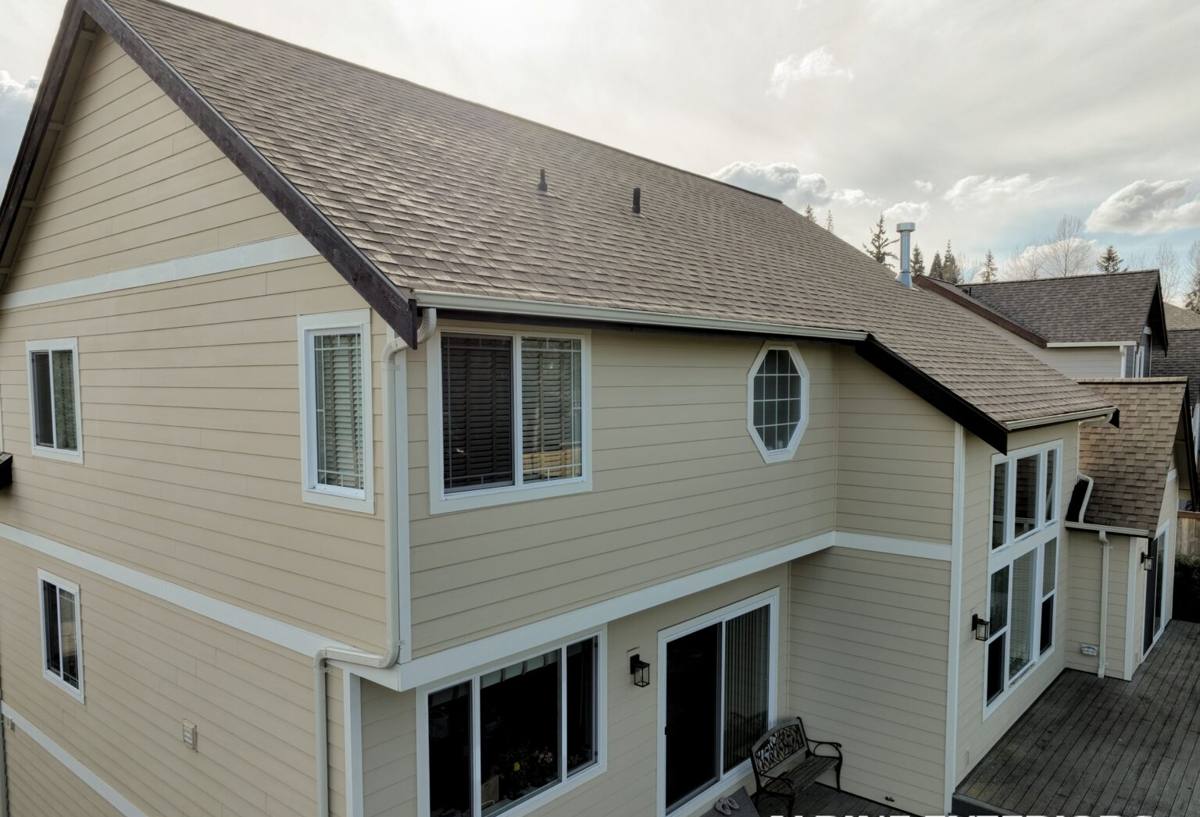
What Salt Air, Driving Rain, and Moss Season Actually Do to Siding
Every siding material eventually loses a fight with moisture. The question is how long it takes and what it costs you along the way.
- Driving rain pushed by wind doesn't just wet the surface — it finds seams, laps, and fastener points and works water behind the cladding if the install isn't right.
- Salt-laden air accelerates corrosion on exposed fasteners and hardware, and it speeds up the breakdown of finishes that aren't formulated to handle it.
- Extended moss and algae season means north-facing and shaded walls stay damp longer than they would in a drier climate, which is exactly the environment mold and rot organisms need.
Wood-based and wood-substitute sidings are the most vulnerable to this combination because they're organic materials at their core — moisture eventually wins. Vinyl holds up to rain fine but can't stop moisture that gets behind it, and it offers no real fire resistance. Fiber cement, correctly installed, is engineered specifically to resist this cycle: it's dimensionally stable when wet, it doesn't feed mold the way wood-based products can, and its factory finish is built to outlast repeated soak-and-dry cycles.
Why We Install Only James Hardie
We don't install LP SmartSide, vinyl, Cemplank, Allura, primed spruce, or cedar. That's a deliberate standard, not a sales pitch, and it's worth explaining honestly.
Vinyl is inexpensive and low-maintenance in mild climates, but it's a petroleum-based product with no fire resistance, and in a wind-driven rain climate like ours, seams and J-channels are where water problems start. Wood and primed-wood products can look excellent when new, but they demand a repainting and caulking schedule that most homeowners underestimate — and once moisture gets past a compromised paint film on wood, rot follows. Other fiber cement brands exist, and some are reasonable products, but we've standardized our crews, our fastening details, and our warranty conversations around one system so we can guarantee the work end to end rather than juggling install specs across five different manufacturers.
James Hardie's fiber cement is non-combustible, holds a factory-applied ColorPlus finish that's baked on rather than field-painted, and offers HZ5 product engineering specifically for climates with prolonged moisture exposure — which describes Whatcom County well. The warranty is transferable, which matters to resale, and the company has decades of field performance data in wet Pacific Northwest climates, not just lab testing.
What Hardie Doesn't Fix By Itself
To be fair to the product: Hardie siding is only as good as the installation behind it. A poorly flashed window, a missing weather-resistive barrier lap, or fasteners driven at the wrong depth will cause problems no matter whose name is on the board. That's why installation detail gets its own section below — it's the actual difference-maker.
What a Correct Fiber Cement Siding Installation Involves
Prep and Moisture Management
The siding is the last layer, not the first line of defense. Before a single board goes up, the wall needs a continuous, properly lapped weather-resistive barrier, correctly flashed window and door openings, and kick-out flashing at roof-to-wall intersections so runoff doesn't dump behind the cladding. Skipping or rushing this step is the single biggest cause of hidden rot behind siding that looks fine from the curb.
Installation Details That Matter
- Fasteners driven flush, not overdriven — overdriving cracks the fiber cement's fastening zone and voids warranty coverage.
- Proper clearance from grade, decks, and roof lines so the siding never sits in standing water or gets buried by mulch and soil over time.
- Correct panel gaps and caulking at butt joints, sized for the manufacturer's expansion tolerances.
- Rain screen or drainage gap detailing appropriate to the wall assembly, giving incidental moisture a path to escape rather than pooling behind the boards.
Finish and Color
ColorPlus finishes come pre-baked at the factory, which means the color coat isn't relying on field conditions — humidity, temperature, dust — the way a job-site paint job does. Touch-up product is matched for nail heads and cut edges, and pre-finished trim keeps the whole elevation consistent.
Choosing the Right Hardie Product Line
Not every wall needs the same product. Exposure, wall height, and design intent all factor in.
| Product | Best Use | Why It Fits |
|---|---|---|
| HardiePlank Lap Siding | Most exterior walls | Standard workhorse; wide color and texture range, proven in wet climates |
| HZ5 Engineered Boards | Full-exposure walls, weather-facing sides | Formulated for freeze-thaw and moisture-heavy climates like Whatcom County |
| HardiePanel | Modern/vertical accents, gables | Clean large-format look, fewer horizontal seams to maintain |
| HardieTrim | Corners, window and door trim | Matches ColorPlus finish system, resists the same moisture cycling as the field siding |
We walk through which combination fits your specific elevations during the estimate — a shaded north wall near mature trees has different needs than a wide-open south face catching full weather.
Our Process, Start to Finish
- On-site assessment — we look at your current siding, wall assembly, trouble spots (moss buildup, staining, soft spots), and sun/wind exposure per elevation.
- Written estimate — product selection, color, and a clear scope, with no pressure to decide on the spot.
- Tear-off and inspection — old siding comes off and we inspect sheathing underneath before anything gets covered back up.
- Barrier and flashing work — the moisture management layer goes in correctly before any new siding is hung.
- Installation — Hardie boards, trim, and accessories installed to manufacturer fastening and clearance specs.
- Final walkthrough — we review the finished job with you and clean up the site.
Cost Factors for Everson Siding Projects
Every home is different, so we don't quote fixed pricing sight unseen — but these are the variables that actually move the number:
| Factor | Why It Matters |
|---|---|
| Existing siding removal | Tear-off of old wood, vinyl, or damaged material adds labor before new siding starts |
| Sheathing/framing repair | Rot found during tear-off has to be fixed before re-siding — this is the most common surprise cost |
| Wall complexity | Multiple gables, dormers, and cutouts take more time than a simple rectangular elevation |
| Product mix | Lap siding, panel accents, and trim packages price differently |
| Access and site conditions | Tight lots, second stories, and landscaping around the foundation affect labor |
Why a Crew That Already Works Everson Matters
Siding work in this part of Whatcom County isn't generic exterior work. A crew that's used to drier climates can under-detail flashing and moisture barriers because they've never had to answer for what happens after a full wet season. A crew that regularly works Lynden and the surrounding communities like Everson has already seen what driving rain does to a poorly lapped barrier, what a long moss season does to a shaded north wall, and what salt-tinged air does to unprotected fasteners over a few winters. That local pattern recognition shows up in the small decisions — where to add extra flashing, which walls need HZ5 boards, how tight to run the caulking joints — that a generic install spec doesn't cover.
Maintenance After Installation
Correctly installed Hardie siding is low-maintenance, not zero-maintenance. A short annual routine keeps it performing the way it's supposed to:
- Rinse off moss and algae growth on shaded or north-facing walls before it gets a foothold — a garden hose is usually enough, avoid pressure-washing directly into seams.
- Keep gutters clear so overflow isn't running down the siding face.
- Check caulking at trim joints and penetrations every couple of years and re-caulk if it's cracked or pulling away.
- Keep soil, mulch, and plantings pulled back from direct contact with the bottom siding course.
- Touch up any chips or fastener exposure with matched ColorPlus touch-up product before bare fiber cement is exposed to weather.
If your Everson home's siding is showing moss staining, soft spots, or paint that won't hold anymore, we're happy to take a look and give you a straightforward, no-pressure estimate — just fill out the form below.