 Lynden Siding
 Siding in Nooksack Has to Work Harder Than Siding Almost Anywhere Else
Nooksack sits in a stretch of Whatcom County where the weather doesn't take a season off. Homes here deal with salt-laden air moving in off the Sound, long stretches of driving rain, and a wet, shaded climate that keeps moss and algae active for most of the year. Siding that would hold up fine in a drier inland climate can start showing problems here within a few years — swelling seams, peeling paint, soft spots at the bottom courses, and a green-black film that never fully goes away no matter how often it's washed.
That's the backdrop for every siding decision we help homeowners make in this area. We're not selling siding in the abstract — we're matching a product and an installation method to what this specific stretch of Washington actually does to a house over a decade or two.
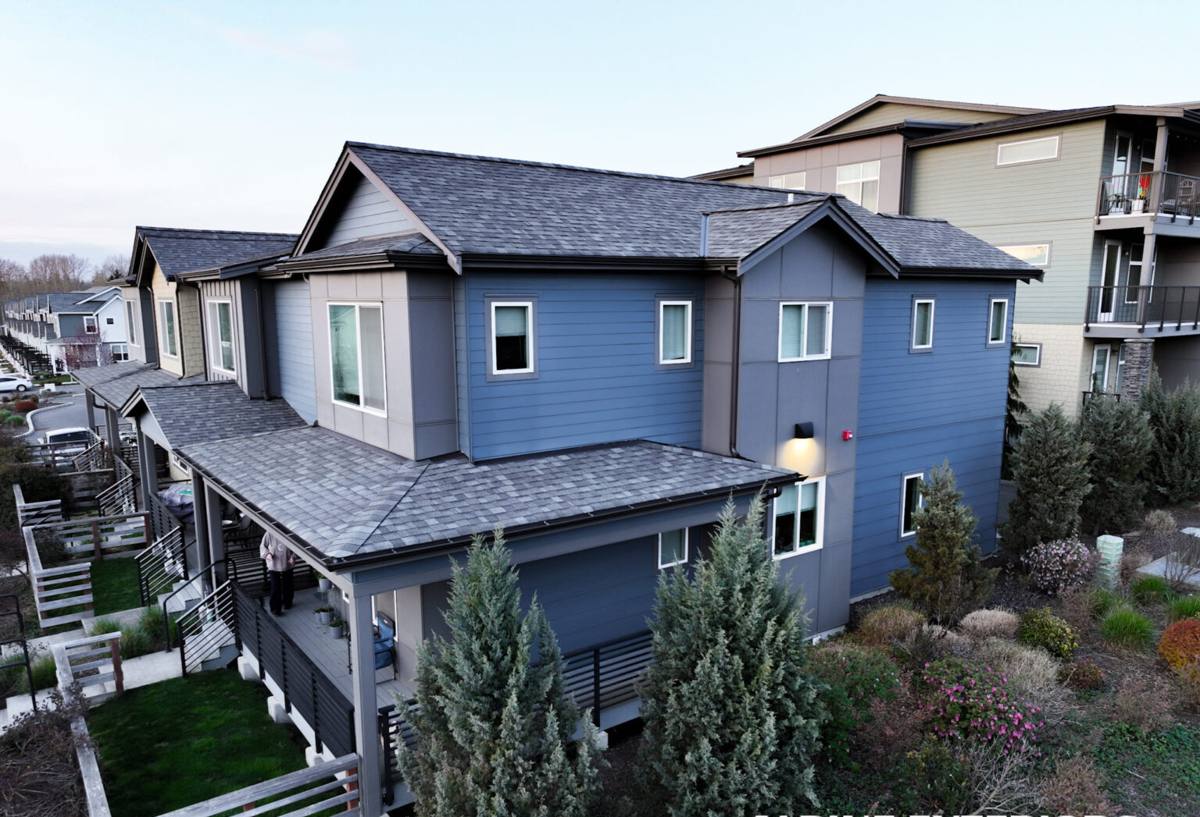
What the Local Climate Actually Does to a Wall
Moisture Load
Whatcom County gets a lot of rain, but it's the combination of rain, humidity, and limited direct sun exposure on shaded lots that causes the real damage. Wood-based and wood-fiber siding products absorb moisture at cut edges, fastener holes, and seams. Once that moisture is inside the material, it doesn't dry out quickly in our climate — it just sits there, and that's when swelling, delamination, and rot start.
Salt Air
Homes in this part of the county are close enough to Puget Sound and the Strait of Georgia that airborne salt is a real factor, even without an ocean view. Salt accelerates corrosion on fasteners and metal flashing, and it interacts badly with lower-grade paint finishes, causing chalking and premature fading years ahead of schedule.
Moss and Biological Growth
Shade, moisture, and mild temperatures are exactly what moss and algae need to thrive. On siding, moss doesn't just look bad — it holds moisture against the surface, which is the opposite of what you want on any exterior wall material, painted or not.
Why We Install Only James Hardie Fiber Cement
We made a deliberate decision as a company to install James Hardie siding exclusively — no vinyl, no LP SmartSide, no Cemplank, no Allura, no primed spruce or cedar. That's not a marketing position, it's an operating standard, and it comes directly from what we see happening to other siding materials in climates like Nooksack's.
Vinyl siding can warp and crack in temperature swings and doesn't hold up well to the kind of driving, wind-pushed rain this area gets — water finds its way behind panels more easily than most homeowners expect. Wood-fiber and engineered wood products depend heavily on maintaining an unbroken paint or sealant layer; the moment that layer is compromised by a scratch, a poorly sealed cut edge, or age, moisture gets in and the clock starts on rot. Cedar is a beautiful material but it's a maintenance commitment — regular refinishing, vigilance about moss, and vulnerability to the same moisture and biological growth issues that plague this region.
James Hardie fiber cement is cement, sand, and cellulose fiber. It doesn't rot, it doesn't support insect activity, and it's non-combustible. It's engineered specifically to handle moisture cycling without the swelling and softening that plagues wood-based products. That's why it's what we put on homes here, and why we don't offer alternatives we don't believe in.
Product Line: Why HardiePlank HZ5 Fits This Region
James Hardie manufactures its siding in different formulations tuned to different climate zones — the "HZ" line. For the Pacific Northwest, including Whatcom County, the HZ5 formulation is engineered for the freeze-thaw cycling and sustained moisture exposure typical of our climate. Choosing the wrong HZ variant for the region is one of the more common mistakes we see in homes that had siding installed by out-of-area crews or budget installers.
Most Nooksack-area homes end up on HardiePlank lap siding for the main field, with HardieTrim used around windows, doors, and corners, and sometimes HardiePanel for accent sections like gables or porch details. All of it comes with the factory-applied ColorPlus finish, which is baked on under controlled conditions rather than applied on-site — that matters a lot in a climate where field-applied paint doesn't cure as reliably due to humidity and cooler temperatures for much of the year.
ColorPlus vs. Field-Painted Finishes
| Factor | ColorPlus Factory Finish | Field-Applied Paint |
|---|---|---|
| Cure conditions | Controlled factory environment | Dependent on job-site weather |
| Coverage consistency | Uniform baked-on finish | Variable by crew and conditions |
| Typical repaint interval | Long-interval, color-matched touch-up available | Shorter, weather-dependent |
| Fade resistance in coastal/salt air | Engineered for UV and moisture exposure | Varies by paint quality |
What a Correct Installation Actually Involves
Fiber cement siding is only as good as the installation behind it. Hardie's own warranty terms hinge on following their installation specifications, and in a wet climate like ours, the details that don't show up in a drive-by inspection are the ones that determine whether the wall stays dry for the next 30 years.
- Correct starter strip and clearance from grade, decks, and roof lines so water can't wick up into the bottom course
- Weather-resistive barrier (house wrap) installed and lapped correctly before any siding goes up
- Rain screen or drainage gap where wall assembly and local conditions call for it, so moisture that gets behind the siding can drain and dry out
- Proper flashing at every window, door, and roof-to-wall transition — this is where most real-world leaks originate, not through the siding field itself
- Correct fastener type, spacing, and penetration depth per Hardie's published specs, using corrosion-resistant fasteners appropriate for a salt-air environment
- Factory-mitered or properly caulked seams and joints, sized and sealed to allow for expansion without trapping water
- Field-cut edges sealed per manufacturer spec so the cellulose fiber core isn't left exposed to moisture
Skip any one of these and you can end up with a wall that looks right for a few years and then starts failing from the inside out — moisture problems that are expensive to trace and repair because the siding itself looks fine while the sheathing behind it is compromised.
Our Process for a Nooksack Siding Project
We approach every project the same disciplined way, adjusted for the specific house and site conditions.
- On-site assessment — we look at existing siding condition, sheathing and moisture issues, drainage around the foundation, and sun/shade exposure that affects moss risk.
- Product and color selection — matching HZ5 product line, plank exposure, and ColorPlus color to the home and any HOA or neighborhood considerations.
- Tear-off and inspection — removing old siding gives us a direct look at sheathing and framing; any rot or moisture damage gets addressed before new siding goes up, not covered over.
- Weather barrier and flashing — house wrap, drainage plane, and flashing details installed to spec before a single piece of siding is hung.
- Installation — siding, trim, and accessories installed to Hardie's fastening and clearance specifications.
- Final walkthrough — checking seams, caulking, touch-up needs, and site cleanup before we call the job done.
What Drives Cost on a Job Like This
| Cost Factor | Why It Matters |
|---|---|
| Existing sheathing condition | Rot or moisture damage found during tear-off adds repair scope |
| Home size and wall complexity | Gables, dormers, and multiple stories increase labor and material needs |
| Trim and accent detail | HardieTrim and panel accents add material cost but improve durability at vulnerable transitions |
| Access and site conditions | Landscaping, slope, and staging space affect labor time |
| Color and product selection | Certain ColorPlus shades and plank profiles carry different material pricing |
We don't quote a job without seeing it. Every Nooksack-area home has its own combination of exposure, existing condition, and layout, and a real number only comes from a real look at the house.
Why Hiring a Crew That Already Works This Area Matters
A contractor who regularly works in Lynden and the surrounding Whatcom County communities already knows how the local moisture cycle behaves, which product formulations are right for this zone, and where moss and algae tend to concentrate on a typical local lot. That's different from a crew that mostly works drier inland climates being handed a Nooksack address. Local experience shows up in the small decisions — flashing details, drainage planning, product selection — that a homeowner never sees until something goes wrong five years later.
If your current siding is showing moss buildup that won't wash off, paint that's peeling faster than it should, or soft spots near the bottom of the walls, it's worth having it looked at before those issues spread to the sheathing underneath. We're happy to come take a look, walk you through what we're seeing, and put together a straightforward, no-pressure estimate for James Hardie siding built for what this climate actually demands.