 Lynden Siding
 Siding Replacement for Nooksack Homes
Nooksack sits in the Nooksack River valley in eastern Whatcom County, close enough to the water and low enough in elevation that the same marine-influenced weather that soaks Bellingham and Lynden pushes inland here too. Homes in and around Nooksack deal with a long wet season, damp ground fog that settles in the valley overnight, and siding that rarely gets a real chance to dry out between storms. That combination is hard on some siding materials and forgiving of others. If your siding is starting to look tired, cracked, or spongy in spots, it's worth understanding what's actually happening before you pay to replace it — and what to ask for when you do.
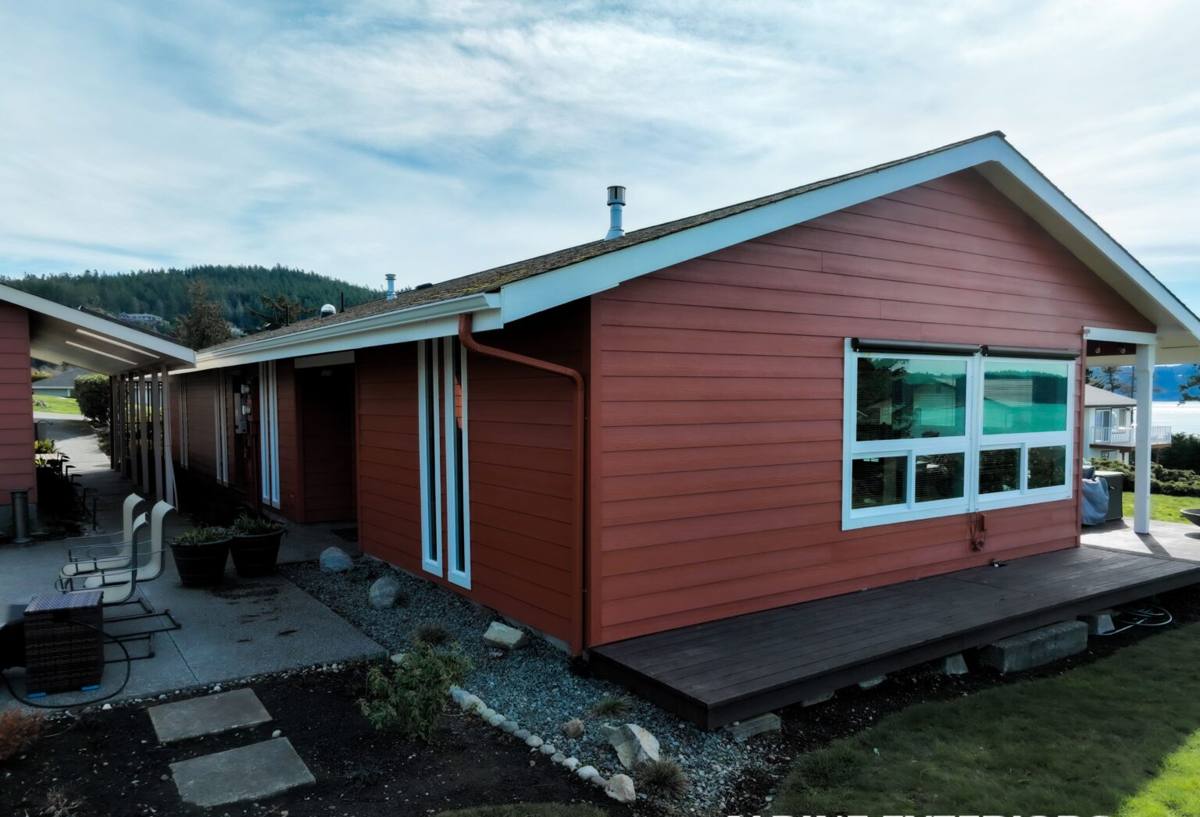
What Whatcom County's Climate Does to Siding
Three things drive most of the siding failures we see on homes in this part of the county: salt-tinged marine air, driving wind-blown rain, and a moss season that can run eight months or longer.
Driving rain and wind exposure
Storms coming off the Strait of Georgia and Puget Sound often arrive sideways, not straight down. That means siding doesn't just get wet on top — it gets pushed against at seams, laps, and butt joints. Any gap in flashing, caulking, or house wrap becomes an entry point, and once water gets behind siding it can sit there for weeks in a valley climate like Nooksack's, where drying days are limited in fall and winter.
Moss, algae, and constant moisture
Shaded north sides of homes, areas under trees, and low spots near the ground stay damp longer here than in drier parts of the state. Moss and algae take hold on porous or textured siding surfaces and hold moisture against the material, which accelerates rot in wood-based products and paint failure on anything that relies on a field-applied finish.
Salt-influenced marine air
Whatcom County's proximity to saltwater means even inland communities like Nooksack see some salt content in prevailing weather, especially during winter storm patterns. Salt air is corrosive to fasteners and accelerates the breakdown of finishes that aren't engineered for coastal-adjacent exposure.
Signs a Nooksack Home Needs Siding Replacement, Not Just Repair
- Soft, spongy, or crumbling spots when you press on the siding, especially near the bottom courses or under windows
- Paint that keeps failing within a couple of years no matter how often it's redone
- Persistent moss or dark streaking that comes back within months of cleaning
- Visible gaps, warping, or cupping boards, particularly on the north and west-facing walls
- Soft trim or sheathing you can find by probing with a screwdriver near corners and window edges
- Interior signs — musty smell, bubbling paint, or stains on interior walls near exterior corners
One or two of these on a small area might mean a repair. Widespread signs across multiple walls usually mean the water-resistive barrier or original installation has failed and full replacement is the more honest recommendation.
What a Correct Siding Replacement Actually Involves
Replacing siding is not just swapping old boards for new ones. In a climate like this, most of what protects the home for the next 30 years happens underneath the visible siding.
Tear-off and sheathing inspection
Once old siding comes off, the sheathing underneath gets inspected for rot or soft spots. Any damaged sheathing gets replaced before anything new goes back on — covering over compromised sheathing just hides a problem that will resurface.
Water-resistive barrier and flashing
A new weather-resistive barrier goes on with properly lapped seams, and flashing gets installed at every window, door, and roof-to-wall transition. In a driving-rain climate, this layer matters more than the siding material itself — it's the last line of defense if water does get past the exterior surface.
Fastening and installation to manufacturer spec
Fiber cement siding has specific nailing patterns, gap requirements, and clearance rules (ground clearance, deck clearance, kickout flashing at roof lines) that are easy to skip and hard to notice until problems show up years later. Installing to spec is what keeps a warranty valid and keeps water from finding a way in.
Why We Install Only James Hardie Fiber Cement
We standardized on James Hardie siding for every job we do, including here in Nooksack, and we don't install vinyl, LP SmartSide, or other fiber cement brands. That's a deliberate call, not a sales pitch.
James Hardie's HZ5 product line is engineered specifically for climates like Whatcom County's — freeze-thaw cycles, sustained moisture, and marine air. Fiber cement is non-combustible, doesn't rot or feed moss and algae the way wood-based products can, and holds paint far longer because most of it comes factory-finished with ColorPlus technology rather than relying on a field-applied coat that has to survive our wet season year after year. It also carries a strong transferable warranty when installed by a factory-trained crew, which matters most in exactly the kind of weather this region gets.
We're not saying every other product on the market is bad — vinyl and wood siding both have their place. We're saying that after years of doing exterior work in this climate, Hardie is the material we're willing to put our name behind and warranty.
Our Siding Replacement Process
1. On-site assessment
We walk the whole exterior, probe suspect areas, and check for moisture intrusion at windows, corners, and roof lines — not just the areas that look obviously bad.
2. Written scope and estimate
You get a clear breakdown of what's being replaced, what Hardie product line and profile is recommended for your home, and what the work will cost — no vague allowances.
3. Tear-off and sheathing repair
Old siding comes off, sheathing gets inspected and repaired as needed, and any rot is dealt with before anything new is installed.
4. Weather barrier, flashing, and installation
New WRB, properly lapped and flashed at every penetration, followed by Hardie siding installed to manufacturer clearance and fastening specs.
5. Final walkthrough
We walk the finished job with you before we consider it done.
What Siding Replacement Typically Costs
Every home is different, but the factors below are what actually move the price on a Nooksack-area siding job. We're not going to quote a number without seeing the home, but this table gives you a realistic sense of what drives cost up or down.
| Factor | Why It Matters |
|---|---|
| Sheathing condition underneath old siding | Rot found during tear-off adds repair cost that can't be known until the old siding is off |
| Home size and wall complexity | More corners, dormers, and trim detail mean more labor and material cutting |
| Siding profile and trim package chosen | Lap width, board-and-batten, and trim details affect material cost |
| Number of stories and access | Second-story and steep-site work requires more staging and labor time |
| Existing moisture damage at windows/flashing | Flashing repair or replacement adds scope beyond straight siding swap |
| Color — factory ColorPlus vs. field-painted | Factory finish colors are included in the product; custom field paint is an added cost |
Hiring a Crew That Already Works in This Area
Siding installed correctly for a drier climate can fail early here. A crew that regularly works Whatcom County homes already knows to plan for driving rain during installation, to prioritize flashing and clearance details that matter in a wet valley climate, and to spot the early signs of moisture damage most homeowners wouldn't catch on their own. That local familiarity shows up in the details — proper kickout flashing at roof-to-wall transitions, correct ground clearance so moss and splash-back don't get a foothold, and installation timing that accounts for our wet season instead of fighting it.
Questions worth asking any siding contractor
- Are you a factory-certified James Hardie installer, and can you show current certification?
- Will you inspect and repair sheathing before installing new siding, and is that itemized separately?
- What water-resistive barrier and flashing details will you use at windows and roof lines?
- What warranty applies — manufacturer material warranty and your own labor warranty — and is either transferable?
- Can you walk me through fastening and clearance specs before work starts, not just after?
Get a Free, No-Pressure Estimate
If your Nooksack home is showing early signs of siding trouble — moss that won't stay away, paint that keeps failing, or soft spots you've noticed while doing yard work near the house — it's worth having someone look before it becomes a bigger repair. Fill out the form below for a free, no-pressure estimate and we'll walk the property with you and give you a straight answer on what your siding actually needs.