 Lynden Siding
 Siding Repair Built for Sumas Weather
Sumas sits in a low river valley at the northern edge of Whatcom County, right against the Canadian border, and that geography matters more than most homeowners realize. Cold air pools in the valley, moisture off the Sumas River and surrounding farmland lingers longer than it does on higher ground, and the marine air moving in off Puget Sound carries salt and humidity that settle into siding seams, laps, and fastener heads. Add a moss season that can stretch from October through May, and you have a climate that is genuinely hard on exterior materials — especially anything with wood content or a factory finish that wasn't engineered for constant damp.
We repair siding for homes throughout Sumas and the surrounding Lynden area, and the failures we see are rarely random. They follow patterns tied directly to this valley's weather: rot at bottom courses where splash-back and standing moisture concentrate, delamination on older lap siding that never fully dries between rain events, and moss and algae staining on north- and shade-facing walls that never see enough sun to dry out. Understanding those patterns is the first step to fixing them correctly instead of just patching what's visible.
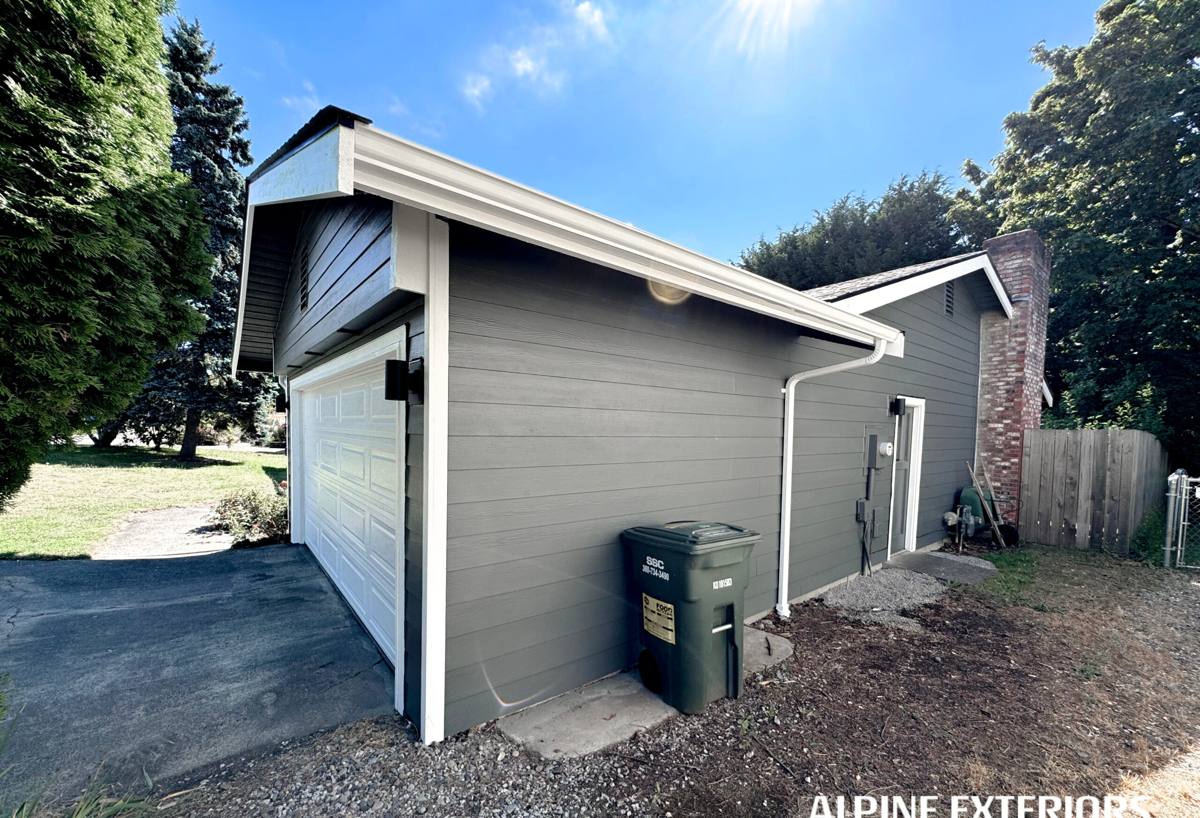
Why Sumas Homes Take a Harder Hit Than You'd Expect
Driving Rain and Wind-Driven Moisture
Whatcom County storms don't just fall straight down — winter and spring systems push rain sideways against exposed walls, forcing water into laps, corner joints, and anywhere caulking has aged past its useful life. Siding that isn't installed with proper clearances and flashing details will take on moisture behind the surface, where you can't see it until the damage is already advanced.
Persistent Moss and Algae
Moss doesn't just look bad — it holds moisture directly against the siding surface for months at a time, well past what the material was designed to tolerate. On wood-based or poorly finished products, that constant contact accelerates rot and finish breakdown. On shaded walls, fence lines, and under overhangs, we routinely see moss establish itself within a year or two of a wall going untreated.
Freeze-Thaw Cycling
Sumas gets genuine cold snaps that Bellingham and the coast don't always see to the same degree, thanks to the valley's exposure to arctic outflow from the Fraser Valley. Water trapped in siding that freezes and thaws repeatedly will crack, split, and pop fasteners — a slow, cumulative failure that often isn't obvious until a section simply falls away from the wall.
What a Correct Siding Repair Actually Involves
A siding repair that only replaces the board you can see is a repair that fails again in a year or two. We treat every repair call as a chance to find out why that section failed in the first place — because in this climate, siding almost never fails without a reason.
- Remove the damaged material and inspect the underlying weather-resistive barrier and flashing for tears, gaps, or improper laps
- Check for rot or moisture damage in the sheathing behind the siding, not just the siding itself
- Confirm proper drainage plane and clearance — siding that touches grade, decking, or roofing invites capillary moisture
- Identify the moisture source (roof runoff, sprinkler overspray, missing kickout flashing, failed caulk) and correct it, not just the symptom
- Match replacement material and profile so the repair blends rather than becoming a visible patch
- Re-seal and re-flash all penetrations, trim returns, and butt joints to current best practice
Skipping any of those steps is how a $600 repair turns into a $6,000 wall rebuild two winters later. We've been called out to plenty of "repairs" done by handymen or general contractors that nailed a new board over rotten sheathing — the siding looked fine for a season, then failed worse than before.
Our Repair Process, Start to Finish
- On-site assessment. We walk the exterior, probe suspect areas, and identify every failure point — not just the one you called about. Damage in this climate is rarely isolated to a single board.
- Root-cause diagnosis. Before any material comes off the wall, we determine what let moisture in: flashing, caulking, grading, gutter overflow, or an installation gap from the original build.
- Written scope and estimate. You get a clear breakdown of what needs replacing, what needs correcting behind the siding, and what's optional versus necessary — no vague line items.
- Repair and correction. We fix the underlying cause first, then install matched, properly flashed replacement material.
- Final walk-through. We show you what was found, what was fixed, and what to watch for going forward — especially on walls prone to moss or shade-driven moisture.
James Hardie Fiber Cement: The Only Repair Material We Install
We install and repair with James Hardie fiber cement exclusively. We don't carry vinyl, LP SmartSide, Cemplank, Allura, primed spruce, or cedar on our trucks, and that's a deliberate standard, not a limitation. In a valley climate like Sumas — sustained dampness, moss pressure, freeze-thaw swings — the material you patch a wall with matters as much as the workmanship.
Fiber cement is non-combustible and dimensionally stable, so it doesn't swell, cup, or delaminate the way wood-based and some engineered wood products can when moisture gets past the surface finish. James Hardie's ColorPlus factory finish is baked on and warrantied against fading and cracking, which means a repaired section holds its color and finish integrity for years rather than needing repainting after a season or two of valley humidity. Hardie also builds region-specific HZ5 product lines engineered for climates with heavier moisture and freeze-thaw exposure — exactly the profile Whatcom County's low valleys present.
None of that means fiber cement is maintenance-free or immune to poor installation. It still needs correct clearances, proper caulking, and real flashing details. What it does mean is that when we repair a wall correctly the first time, the material itself isn't working against us.
Repair Material Comparison for This Climate
| Material | Moisture Behavior in a Valley Climate | Moss/Algae Resistance | Finish Longevity |
|---|---|---|---|
| James Hardie Fiber Cement | Dimensionally stable; doesn't swell or rot from moisture exposure | Non-organic surface resists sustained moss growth better than wood-based products | Factory ColorPlus finish, multi-year fade/crack warranty |
| Cedar / Primed Spruce | Absorbs moisture, prone to swelling, cupping, and rot without diligent maintenance | Organic wood surface is a food source for moss and algae | Field-applied paint/stain needs recoating every few years |
| Vinyl | Doesn't rot, but can trap moisture behind it if installed without proper drainage gaps | Resists moss on the surface, but seams and laps still collect grime | Color is through-body but fades and becomes brittle over decades |
| LP SmartSide / Engineered Wood | Engineered strand product still has wood fiber content; edge exposure is a known failure point | Better than raw wood but still organic-based | Factory finish varies by product line; edge sealing is critical |
Cost Factors for Siding Repair in Sumas
Every repair is different, but the cost of a job in this area is generally driven by a consistent set of factors. Knowing them ahead of time makes it easier to understand your estimate.
| Factor | Why It Matters Here |
|---|---|
| Extent of hidden moisture damage | Valley humidity means rot behind the siding is common; sheathing repair adds cost beyond the visible board |
| Wall height and access | Second-story and steep-grade sections require staging or lift access |
| Matching existing siding | Older or discontinued profiles may require a wider repair area to blend properly |
| Root-cause correction | Reflashing, regrading, or gutter fixes needed to stop the original moisture source |
| Moss and algae remediation | Heavily affected walls may need cleaning and treatment before repair work starts |
Signs You Should Call for a Repair Now
Waiting on siding damage in this climate rarely saves money — it almost always increases the size of the eventual fix. Watch for these signs:
- Soft or spongy spots when you press on a wall section
- Visible gaps, cracks, or separation at siding laps and corners
- Persistent moss or dark staining that keeps returning after cleaning
- Peeling or bubbling paint, especially near the bottom courses
- Warping, bowing, or boards that no longer sit flat against the wall
- Increased drafts or musty odor near exterior walls
Why Hire a Crew That Already Works in Sumas
Siding repair isn't a one-size-fits-all trade. A crew that mostly works drier inland climates or high-desert regions won't instinctively flag the moisture and moss patterns that show up on a valley wall near the Sumas River. We work this specific corner of Whatcom County regularly — Lynden, Sumas, and the surrounding farm-country neighborhoods — so we already know which wall orientations fail first, which older siding profiles are prone to rot in this humidity, and what a properly flashed repair needs to hold up through another wet Northwest winter.
That local familiarity also means faster, more accurate estimates. We're not guessing at how this climate treats siding — we're diagnosing it based on what we see across dozens of homes in the same weather pattern every year.
Get a Straight Answer on Your Siding
If you've noticed soft spots, recurring moss, or siding that just doesn't look right anymore, it's worth getting eyes on it before another wet season passes. We offer free, no-pressure estimates for Sumas-area homeowners — we'll tell you honestly what's wrong, what it'll take to fix it right, and what it'll cost. Reach out using the form below to get started.