 Lynden Siding
 Siding Replacement for Sumas Homes Near Lynden
Sumas sits out at the edge of Whatcom County, close enough to Lynden that homeowners here deal with the same weather pattern year-round: long stretches of damp air, driving rain that comes in sideways during winter storms, and a growing season for moss that never really ends. Siding in this part of Washington doesn't fail because it's old — it fails because it was never built to shed water the way this climate demands, or because it was installed with gaps and shortcuts that let moisture find a way in. If you're looking at a siding replacement for a Sumas property, the material and the installation details matter more here than they would in a drier part of the state.
We work Sumas and the surrounding Lynden area regularly, which means we already know how the local weather behaves against a house — where wind-driven rain tends to hit hardest, which sides of a home stay shaded and damp longest, and what siding actually holds up under that pressure over a decade or two.
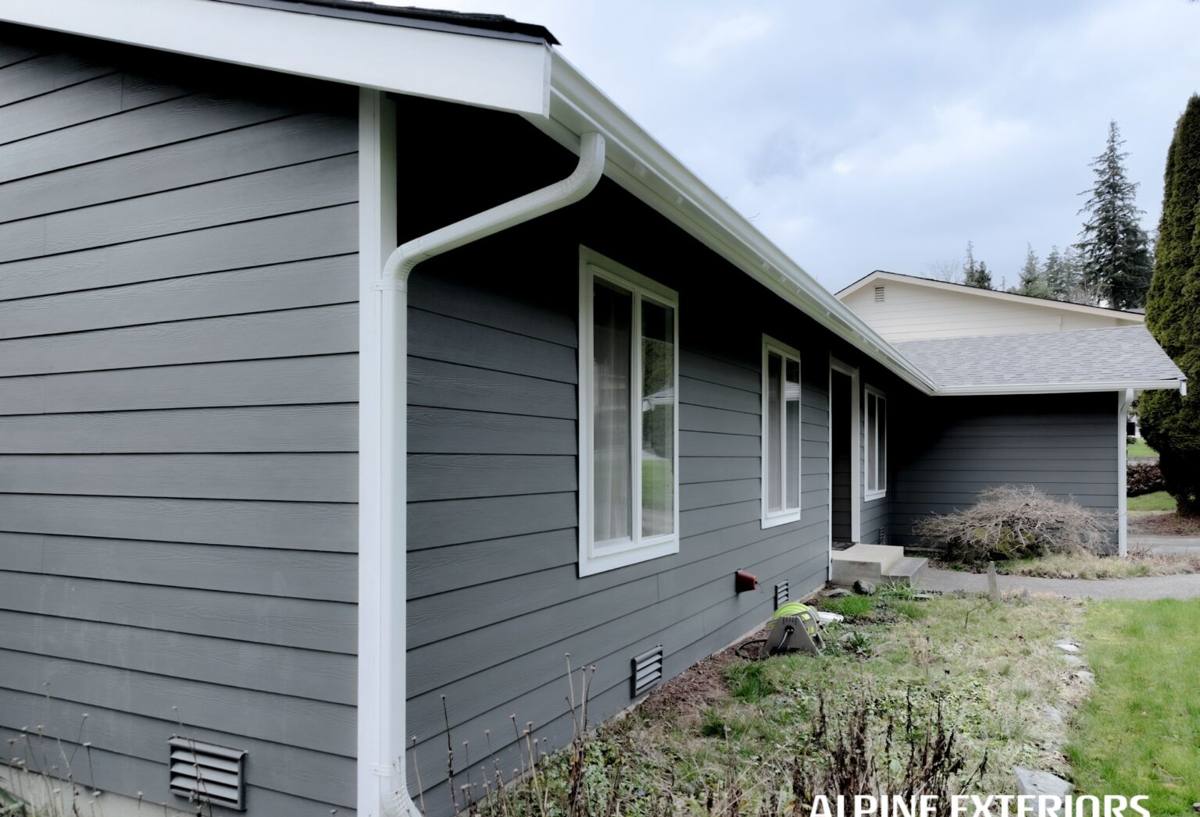
What Sumas's Climate Actually Does to Siding
Whatcom County weather is defined by moisture — steady winter rain, morning dampness that lingers under tree cover, and short, mild summers that never fully dry things out. A few specific effects show up on siding here more than in other parts of the state:
- Driving rain infiltration: Wind-driven storms push water sideways into seams, laps, and trim joints, not just straight down. Poorly sealed siding lets that water track behind the panels.
- Persistent moss growth: Shaded north walls and anything near mature trees or fence lines stay damp long enough for moss and algae to take hold, especially on surfaces with any texture or absorbency.
- Slow drying cycles: Because the air stays humid for long stretches, siding that does take on moisture doesn't get much of a chance to fully dry between rain events — which is exactly the condition that causes swelling, delamination, or rot in the wrong materials.
- Salt-tinged air influence: Coastal and marine air moving inland through the region adds a mild corrosive element that accelerates wear on fasteners, trim, and lower-grade finishes over time.
None of this is unusual for the Pacific Northwest — but it's a real, ongoing load on a home's exterior, and it's why the siding material you choose for a Sumas home matters as much as the workmanship.
Why We Only Install James Hardie Fiber Cement
We made the decision years ago to install James Hardie fiber cement siding exclusively — not vinyl, not LP SmartSide, not cedar, not primed spruce, not other fiber cement brands. That's not a sales angle; it's a standard we hold because of what we've seen happen to other materials in exactly this kind of climate.
Fiber cement is not organic, so it doesn't feed moss and algae the way wood-based products can, and it doesn't swell, rot, or delaminate from repeated wetting the way engineered wood siding can if a seam ever fails. James Hardie's ColorPlus factory finish is baked on under controlled conditions, which gives it better long-term color retention and resistance to fading than field-applied paint — something that matters when a house sits under grey skies for most of the year and takes direct sun in short, intense bursts the rest of the time. Hardie also engineers region-specific product lines (HZ5 for northern climates like ours) that account for freeze-thaw cycling and sustained moisture exposure.
We're not going to tell you every other product is worthless — vinyl and engineered wood siding both have a place and plenty of homes wear them fine in the right conditions. But we've chosen not to install them because, in a climate like Sumas and Lynden's, we don't think they hold up to our standard for a job we're willing to put our name on for the next 20-30 years.
What This Means for a Sumas Homeowner
Choosing us means choosing a single-material approach — you won't get sold on three different product tiers with three different warranty structures. You'll get one system, installed the way the manufacturer specifies, backed by a real transferable warranty, and matched to a color and texture that fits the home.
What a Correct Siding Replacement Involves
A siding replacement is more than pulling off old panels and nailing up new ones. In a wet climate, the work that happens before the siding goes on is often what determines whether the job lasts.
1. Tear-Off and Sheathing Inspection
Once old siding comes off, we inspect the sheathing underneath for soft spots, staining, or rot — common findings on older homes where the original siding or house wrap failed silently for years. Any damaged sheathing gets replaced before anything else happens; siding installed over compromised sheathing just hides a bigger problem.
2. Weather-Resistive Barrier
A properly lapped house wrap or weather-resistive barrier goes down next, integrated correctly with window and door flashing so water is directed out and away from the wall assembly, not trapped behind it.
3. Flashing at Every Penetration
Windows, doors, hose bibs, vents, and any other penetration through the wall get flashed individually. This is one of the most commonly skipped steps on lower-bid jobs, and it's exactly where driving rain finds its way in over time.
4. Hardie Installation to Manufacturer Spec
James Hardie has specific requirements for fastener spacing, clearances from grade and rooflines, caulking at joints, and panel gaps for expansion. Installing outside of spec doesn't just risk cosmetic issues — it can void the manufacturer's warranty. We install to spec, every time.
5. Trim, Caulking, and Paint Detail
Corner boards, trim, and joints get sealed with a proper exterior-grade sealant rated for this climate's temperature swings and moisture load, then finished so the seams are clean and durable.
Comparing Siding Options for This Climate
| Factor | Vinyl Siding | Engineered Wood (e.g. LP SmartSide) | James Hardie Fiber Cement |
|---|---|---|---|
| Moisture resistance | Doesn't absorb water, but seams can let it track behind panels | Vulnerable if any seam or cut edge is exposed to sustained moisture | Non-combustible, doesn't rot or swell from moisture exposure |
| Moss/algae resistance | Can grow surface algae in shaded, damp areas | Wood-based substrate can support moss/mildew if coating is compromised | Cementitious surface resists organic growth better than wood-based products |
| Finish longevity | Color can fade with UV exposure over time | Depends on factory or field-applied coating quality | Baked-on ColorPlus finish holds color longer under field conditions |
| Fire resistance | Combustible | Combustible | Non-combustible material |
| Typical warranty | Varies widely by manufacturer/grade | Varies, often shorter on coating | Strong transferable manufacturer warranty |
This isn't a claim that other products fail outright — it's why, for our own standard of work in this specific climate, fiber cement is the only material we're willing to stand behind long-term.
Why Local Installation Experience Matters in Sumas
A siding crew that already works around Lynden and Sumas understands details that don't show up in a general install guide: how far to hold trim off grade given local drainage patterns, which wall orientations need extra attention for moss and shade, and how the region's rain patterns actually move water against a building. That local knowledge shows up in the small decisions made on-site — flashing details, caulk selection, panel clearances — that a crew unfamiliar with this specific climate might not think twice about.
We also know the practical side of working in this area: permitting expectations, typical home construction styles found on older Whatcom County properties, and how to sequence a job around the wetter months so materials and substrate aren't sitting exposed longer than necessary.
Signs a Sumas Home May Need Siding Replacement
- Soft or spongy spots when pressing on siding, especially near the bottom edges or window trim
- Persistent moss or dark streaking that comes back quickly after cleaning
- Visible warping, buckling, or separation at seams and corners
- Paint that's peeling or bubbling in patterns that follow seams rather than random wear
- Rising energy bills that suggest the wall assembly behind the siding is no longer performing
- Visible rot or staining on sheathing during any exterior repair work
What to Expect Working With Us
We start with an on-site look at the home, not a phone-quote guess — siding needs vary a lot depending on the home's age, orientation, and current condition. From there we walk through product options within the James Hardie lineup, give an honest estimate, and lay out a realistic timeline that accounts for Whatcom County's weather rather than fighting it. We don't upsell products we don't install, and we don't cut corners on the flashing and prep work that this climate actually requires.
If you're weighing a siding replacement for a home in Sumas or elsewhere around Lynden, we're happy to come take a look and give you a straightforward, no-pressure estimate — no obligation, just an honest read on what your home needs.