 Lynden Siding
 Decking Around Wiser Lake Faces a Different Set of Problems
Wiser Lake sits in a pocket of Whatcom County where the ground stays damp longer than it does just a few miles inland, and the tree cover around the shoreline keeps a lot of that moisture from ever fully drying out. Add in the driving rain that comes through Lynden most of the fall and winter, plus a moss season that can run from October well into April, and you've got conditions that are hard on any outdoor structure — but decking takes the worst of it because it's horizontal, low to the ground, and exposed to standing water in a way that vertical siding never is.
A deck built without that in mind will look fine for the first year or two. The problems show up later — as slick green film on the walking surface, soft spots where boards sit too close to grade, or fasteners that have started working loose because the substructure underneath never got a chance to dry between storms. We've replaced decks in this area that were only five or six years old, not because the composite decking itself failed, but because the framing, drainage, and installation details underneath it weren't built for a lake-adjacent, high-moisture site.
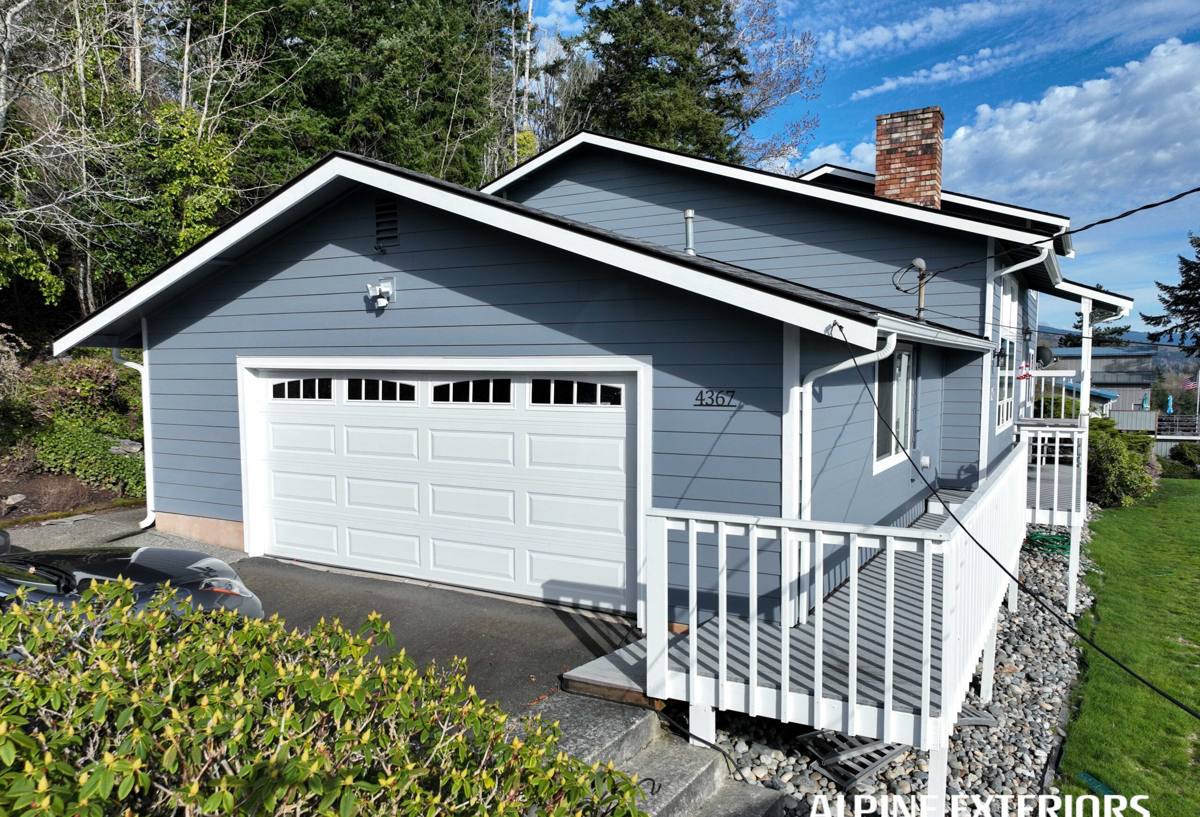
What Composite Decking Needs to Do Differently Here
Airflow Underneath the Deck
Composite boards don't rot the way wood does, but the joists, beams, and ledger board underneath almost always are wood or wood-based, and that structure still needs to breathe. Low-clearance decks near Wiser Lake — the kind built close to grade for a walk-out basement or a lakeside patio — are the ones most likely to trap moisture underneath if there isn't enough airflow. We build in ventilation gaps and keep joist spacing tight enough that trapped condensation isn't sitting against the framing all winter.
Drainage at Grade
Because ground moisture around the lake doesn't drain the way it does on higher, sandier ground elsewhere in the county, we pay close attention to slope away from the house and make sure the deck's substructure isn't sitting in a low spot that collects runoff after every storm.
Flashing Where the Deck Meets the House
The single most common point of hidden water damage on any deck — composite or wood — is the ledger board connection. If that flashing isn't installed correctly, water gets behind the band board and into the house framing, and you won't see it until there's a real problem. This is a detail that's easy to shortcut and expensive to fix later, so it's non-negotiable on every deck we build.
Composite vs. Other Decking Materials for a Wet, Shaded Lot
Homeowners near Wiser Lake usually compare composite against pressure-treated wood and cedar. Here's the honest breakdown for a site with heavy moisture and moss exposure:
| Material | Moisture behavior | Moss/algae resistance | Maintenance |
|---|---|---|---|
| Pressure-treated wood | Absorbs and releases moisture, prone to cupping and checking near ground | Low — porous surface holds spores | Annual cleaning, periodic staining/sealing |
| Cedar | Naturally rot-resistant but still absorbs water over time | Moderate | Regular sealing to hold color and resist graying |
| Capped composite | Doesn't absorb water into the core; won't rot or splinter | Higher — smoother cap sheds spores, though not immune | Periodic washing, no staining or sealing |
| Uncapped composite (older generation) | Can absorb moisture at the surface, more prone to mold staining | Lower than capped products | More frequent cleaning than capped composite |
We install capped composite almost exclusively on lake-adjacent lots for a straightforward reason: the moisture load here is high enough, year after year, that the maintenance burden of wood or uncapped boards becomes a real chore rather than an occasional weekend job. That's a trade-off homeowners should walk into with eyes open — capped composite costs more up front, but it's the honest fit for this climate.
What a Correct Composite Deck Build Involves
- Footings sized and set below frost depth, checked against actual soil conditions on site rather than assumed
- Ledger board flashed with a proper water-resistant barrier and correctly lapped house wrap or siding tie-in
- Joist spacing tightened to the composite manufacturer's spec, which is often closer than standard wood-decking spacing
- Hidden fastener systems installed per manufacturer instructions, not improvised, since some warranties require specific hardware
- Ventilation gaps maintained under low-clearance sections, with skirting designed to allow airflow rather than seal it off
- Board expansion gaps set correctly for our temperature swings so boards don't buckle in summer or gap excessively in winter
How We Handle a Wiser Lake Project
Because we work in this specific area regularly, we start most Wiser Lake estimates already knowing what to look for: the grade around the house, how close the existing deck sits to soil, whether there's tree cover holding moisture against the structure, and how the current deck has aged. That on-site read matters more here than a generic measure-and-quote.
1. On-Site Assessment
We look at the substructure if there's an existing deck, check for soft spots, moss buildup patterns, and drainage issues, and talk through what's realistic for the site — including whether the deck's footprint or height needs to change to solve a drainage problem rather than just re-decking over it.
2. Product and Layout Discussion
We walk through board color and finish options, hidden versus visible fastener trade-offs, and railing choices, matching material selection to how much sun or shade the deck actually gets — shaded decks near tree-lined lake lots benefit from certain cap finishes more than others when it comes to staying clean.
3. Build
Demo of the old deck if applicable, framing and flashing work, then decking installation, railings, and any stairs or lighting. We don't cover up framing issues discovered mid-build — if something under an old deck needs to be addressed, we bring it to you before closing it up.
4. Walkthrough
We go over basic care for your specific board choice and point out anything site-specific — a low corner that'll need occasional attention, a shaded section that may need more frequent washing than the sunnier parts of the deck.
The Moss and Algae Problem, Specifically
This deserves its own mention because it's the complaint we hear most from lake-area homeowners. Moss and algae need moisture, shade, and organic debris to get established, and a deck near Wiser Lake typically has all three for a good chunk of the year. Capped composite resists this better than wood or uncapped composite because spores have a harder time gripping a smooth, dense cap surface — but "resists" isn't "immune." Any deck under tree cover will need periodic washing to stay ahead of it, and boards installed with proper drainage gaps between them will dry faster after rain and give moss less opportunity to take hold in the first place. This is another reason board spacing and airflow aren't cosmetic details — they directly affect how much upkeep you'll be doing.
Cost Factors on a Wiser Lake Deck
Composite decking costs more per square foot than pressure-treated wood, but the range on any given project depends on more than just material grade:
- Substructure condition: replacing rotted or undersized framing adds cost but isn't optional if it's compromised
- Height and grade work: a deck that needs to be raised or re-graded for drainage costs more than a straightforward tear-off-and-replace
- Railing system: composite, aluminum, and cable rail all price differently and affect the overall look
- Access for equipment: tighter, tree-lined lake lots sometimes mean more hand-work and less machine access, which affects labor time
- Board pattern and picture-framing: diagonal layouts or contrasting border boards add material waste and labor
We give a written estimate that breaks these out so you can see where the money is going, rather than a single lump number.
Why Hiring a Crew That Already Works This Area Matters
A deck built to a generic spec sheet can still fail on a site like this if the crew isn't accounting for local conditions — grade, tree cover, and the sheer number of wet days per year. We work in Lynden and the surrounding Whatcom County communities regularly, including lake-adjacent properties like those around Wiser Lake, so we're not guessing at how a deck will hold up here — we're building to what we've already seen happen to decks that weren't. That local pattern recognition is worth more than a lower bid from a crew that mostly builds decks somewhere drier.
If you're planning a new deck or replacing one that's showing its age near Wiser Lake, we're happy to come take a look and give you a straightforward, no-pressure estimate — just fill out the form below.