 Lynden Siding
 Building a Deck for a Wiser Lake Property
Wiser Lake sits in a pocket of Whatcom County where tree cover, standing water, and a long wet season combine to put more stress on outdoor structures than most homeowners expect. A deck built here isn't just a place to put a grill and some chairs — it's a structure that has to shed water fast, resist moss and algae growth, and stand up to fasteners rusting from the inside out. We've built and repaired decks throughout the Lynden area long enough to know which shortcuts show up as callbacks two winters later, and we build every Wiser Lake deck to avoid them from day one.
This page covers what actually matters for a deck in this specific setting: material choices, framing details, drainage, permitting near the lake, and the maintenance habits that keep a deck looking and performing well for decades instead of years.
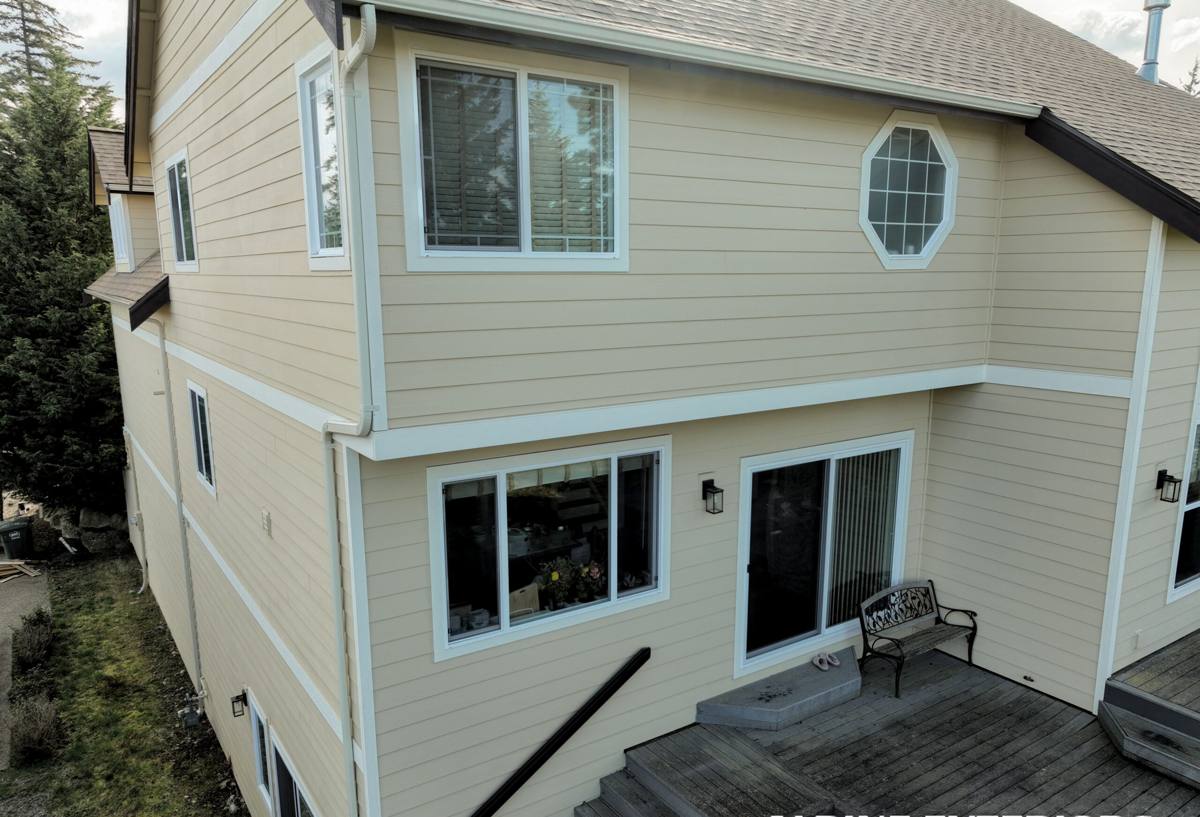
What the Lake Setting Demands From a Deck
Properties near or around Wiser Lake deal with a few conditions at once that inland Lynden lots don't always face to the same degree:
- Higher ambient humidity and slower drying times after rain, especially under tree canopy near the shoreline
- Salt-tinged, moisture-laden air common to Whatcom County's coastal-influenced climate, which accelerates corrosion on hardware and fasteners
- Extended moss and algae season — often eight months or more of conditions favorable to growth on horizontal wood surfaces
- Ground that stays damp longer, which affects footing depth, drainage, and how close framing should sit to grade
None of these conditions are unusual for this part of Washington. What matters is that the deck's design and material choices account for them from the start, rather than treating them as maintenance problems to manage later.
Moisture, Moss, and Corrosion: The Real Enemy List
Moss and Algae
Moss doesn't just sit on top of decking — it holds moisture against the board surface, and on wood that moisture works its way into end grain and fastener holes. Board spacing, airflow underneath the deck, and material selection all affect how much moss growth you'll deal with and how easily it comes off. A deck built too low to the ground, with poor gaps between boards or blocked airflow underneath, will grow moss faster and hold it longer than one built with drainage in mind.
Fastener and Hardware Corrosion
This is the failure mode that's easy to miss until it's a structural issue. Standard interior-grade screws and generic joist hangers will rust in this climate — sometimes within a couple of seasons near the lake. Rust-streaked decking is a cosmetic annoyance; a corroded structural screw or hanger nail is a safety issue. Every connection on a deck we build uses fasteners and hardware rated for exterior, high-moisture exposure.
Ledger and Framing Rot
The single most common deck failure point in this region is the ledger board — where the deck attaches to the house — when it wasn't properly flashed. Water gets behind the ledger, the rim joist behind it rots quietly, and nobody notices until the deck starts to pull away from the house. Proper flashing at this joint isn't optional trim work; it's the difference between a deck that lasts and one that fails structurally.
Framing and Footings Built for Wet Ground
Footings around Wiser Lake need to account for soil that stays saturated longer than typical Lynden ground. That means:
- Footings poured to the depth and bearing requirements the local building code calls for, not just "deep enough to look right"
- Post bases that keep wood posts off concrete and off standing water, using standoff hardware rather than burying posts directly
- Joist tape or a comparable moisture barrier on top of every joist, so screw penetrations don't become entry points for water into the wood
- Ledger flashing that integrates with the house's existing water management, not just a strip of flashing tape stapled over the joint
- Enough clearance and airflow underneath the deck to let the ground and framing actually dry between rain events
These details cost more up front in labor than in materials, which is exactly why they're the details that get skipped by crews trying to hit a low bid.
Choosing Decking Material for a Lake Property
There's no single "right" decking material for every Wiser Lake home — it depends on budget, how much upkeep you want to do, and how much shade and moisture the specific site gets. Here's how the common options actually compare in this climate:
| Material | Moss/Moisture Behavior | Maintenance | Typical Lifespan |
|---|---|---|---|
| Pressure-treated wood | Absorbs moisture; needs sealing to resist moss and staining | Annual cleaning and periodic sealing/staining | 15–20 years with upkeep |
| Cedar | Naturally moisture-resistant, but surface still needs cleaning to prevent moss | Regular cleaning; sealing extends life and color | 20–25 years with upkeep |
| Capped composite | Won't absorb moisture or rot; moss can still grow on the surface film and needs washing | Occasional washing, no sealing or staining | 25–30+ years, manufacturer-warrantied |
| PVC decking | Fully moisture-proof board; surface-level moss/algae is the only concern | Occasional washing, no sealing or staining | Comparable to or longer than capped composite |
For a shaded, damp Wiser Lake lot, we generally steer homeowners away from uncapped wood-composite blends and standard pressure-treated boards used without a real maintenance plan — not because the material is bad, but because the upkeep burden in this specific climate is higher than most owners want to commit to. Capped composite and PVC decking hold up with far less intervention, which is why we install more of them near the lake than anywhere else in our service area.
Railings, Fasteners, and Hardware That Match the Climate
The decking gets the attention, but hardware failures cause more structural problems over time. Every Wiser Lake deck we build uses:
- Stainless steel or coated deck screws rated for ground contact and coastal-level moisture exposure
- Corrosion-resistant joist hangers and structural connectors, matched to the fastener type to avoid galvanic reaction
- Railing hardware and post connections sealed against water intrusion at every penetration point
Mixing metals — for example, standard hangers with stainless screws, or vice versa — can accelerate corrosion through galvanic reaction. We match hardware systems deliberately rather than grabbing whatever's on the shelf.
Permits and Setbacks Near the Lake
If your property borders Wiser Lake or sits within a shoreline buffer, Whatcom County may apply setback or shoreline management requirements on top of standard building permit rules — these can affect how close to the water a deck can be built and what design elements are allowed. Requirements vary by exact lot and shoreline designation, so we always confirm the applicable rules for your specific parcel before finalizing a design rather than assuming standard inland setbacks apply. Getting this checked early avoids redesign costs later.
Our Process, Start to Finish
- On-site assessment — we look at grade, drainage, tree cover, and how the site handles water before drawing anything up
- Design and material selection — sized to your budget and how much upkeep you actually want to do long-term
- Permitting — we handle the permit application and confirm any lake-adjacent setback requirements apply to your lot
- Framing and flashing — footings, ledger flashing, joist protection, and corrosion-resistant hardware installed to code, not to the minimum
- Decking and railing installation — spacing and fastening set for drainage and airflow, not just appearance
- Final walkthrough — we go over the finished deck and what maintenance it actually needs, in plain terms
Keeping Your Deck in Good Shape: A Homeowner Checklist
Even the best-built deck needs some seasonal attention in this climate. This is the routine we recommend to Wiser Lake homeowners:
- Sweep debris and standing leaves off the deck surface regularly, especially in fall
- Rinse or wash the deck surface at least once or twice a year to knock back moss and algae before it takes hold
- Check that gaps between boards stay clear of trapped debris that blocks drainage
- Inspect the ledger flashing and the point where the deck meets the house once a year for any signs of water staining
- For wood decks, re-seal or stain on the schedule the product calls for — don't wait until it's visibly gray or worn
- Check railing posts and stair connections for looseness, which can indicate hardware corrosion underneath
Why a Local Wiser Lake Crew Makes a Difference
A deck built to generic specs without accounting for shade, ground moisture, and coastal-influenced air in this part of Whatcom County will show problems faster than one built for the conditions it actually sits in. We work this area regularly, which means we already know how the ground drains near the lake, what the county expects for permitting on lake-adjacent lots, and which materials hold up versus which ones create ongoing maintenance headaches for homeowners here. That local familiarity shows up in fewer surprises during the build and a deck that performs the way it's supposed to for years afterward.
If you're planning a new deck or replacing an aging one near Wiser Lake, we're happy to take a look at your site and put together a straightforward, no-pressure estimate. Use the form below to get started.