 Lynden Siding
 Why Abbotsford Homes Need Windows Built for This Climate
Abbotsford sits in a stretch of the Pacific Northwest where the weather doesn't do a home any favors. Moist marine air moves through the Fraser Valley for much of the year, driving rain comes in sideways more often than straight down, and there's a long stretch of fall and winter where everything outside stays damp long enough for moss and algae to take hold. Windows are one of the first places that shows up. A window that's sealed and flashed correctly will shrug off a wet season after wet season. One that isn't will start telling on itself within a year or two — fogging between panes, soft trim, drafts you can feel with your hand held near the frame.
Custom windows aren't about luxury upgrades. For a lot of Abbotsford homes — especially older ones with openings that were never quite standard sizes to begin with — custom is simply what fits right. A window that's built to the actual opening seals better than a stock size forced into a gap with extra shims and caulk trying to make up the difference.
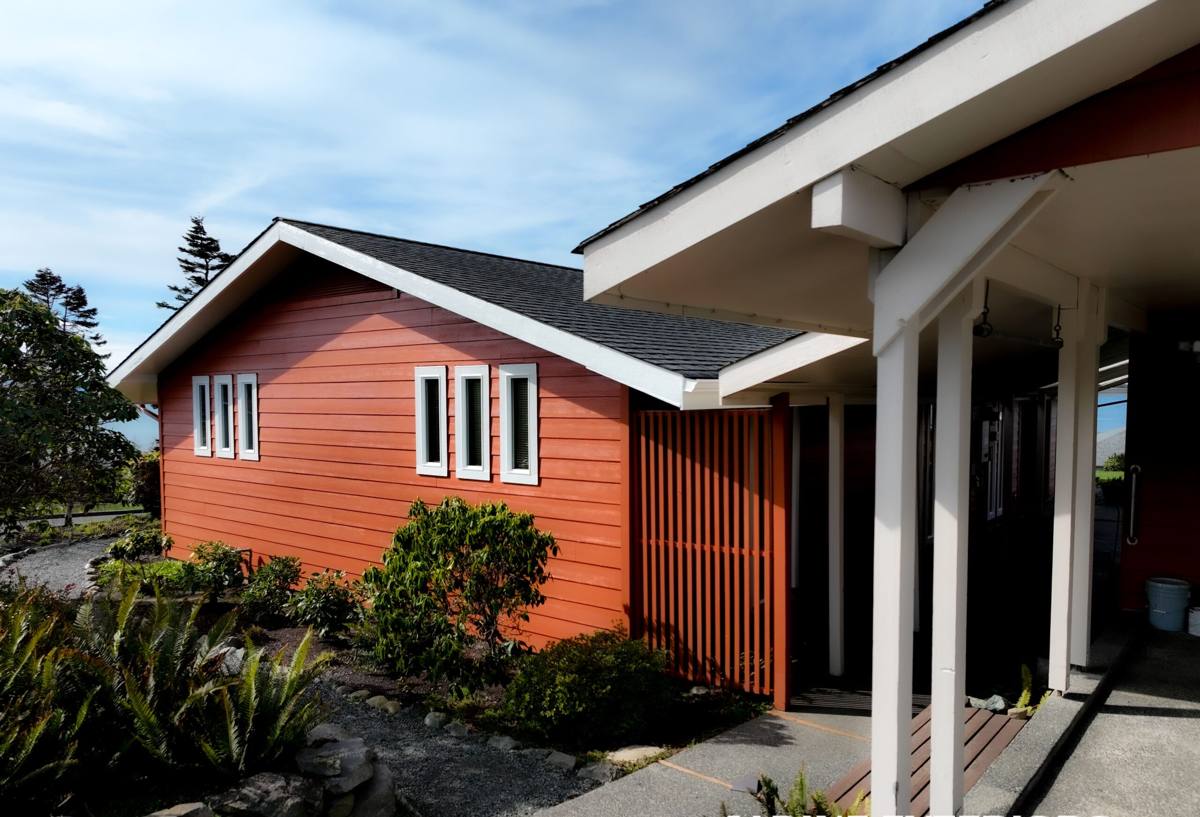
What This Climate Actually Does to a Window Over Time
Salt Air and Corrosion
Homes closer to the water pick up salt-laden air that works on hardware, weep holes, and metal components over the years. Latches get stiff, sliding tracks corrode, and aluminum components in particular can pit and pull away from finish over time. It's slow, but it's steady.
Driving Rain and Water Intrusion
Wind-driven rain doesn't just hit a window head-on — it gets pushed up and under trim, into gaps around the frame, and behind siding that isn't properly integrated with the window flashing. Most of the water damage we find inside walls didn't come from a leaky window itself; it came from flashing that was never lapped correctly when the window went in, so water had a path in behind the frame.
The Long Moss Season
Whatcom County and the Fraser Valley both get an extended stretch where surfaces stay damp enough for moss and algae to grow — on roofs, on siding, and on horizontal window surfaces like sills and exterior trim. Moss holds moisture against wood and painted surfaces far longer than rain alone would, which accelerates rot on sills and trim that aren't sealed or capped properly.
Condensation Indoors
The flip side of a wet climate is what happens inside the house. Older or poorly sealed windows condense heavily on the inside glass during cold snaps, and that moisture runs down onto sills and window frames, feeding the same rot problem from the inside out. Correctly sized double or triple-pane glass with a warm-edge spacer cuts this down significantly.
What "Correct" Custom Window Work Actually Involves
A lot of window problems aren't product problems — they're installation problems. The window itself can be excellent and still fail early if it goes in wrong. Here's what we consider non-negotiable on every job:
- Full removal of the old window and inspection of the rough opening for hidden rot before anything new goes in
- Correct flashing sequence — sill pan first, then side flashing, then head flashing lapped over the top, so water always sheds outward and down
- Proper integration with the existing siding and building paper, not just caulk bridging the gap
- Shimming and squaring the frame so the sash operates smoothly and the seal compresses evenly all the way around
- Low-expansion foam or backer rod and sealant in the gap — never foam alone as a substitute for flashing
- Interior and exterior trim reset or replaced cleanly, with caulking sized to the gap it's actually filling
Skip any one of these steps and the window will probably still look fine on install day. The failures show up eighteen months to three years later, which is exactly why cheap or rushed window work is such a common source of callbacks in this region.
Choosing the Right Frame Material for This Region
There's no single "best" frame material — there's a best fit for the house, the budget, and how much upkeep the owner wants to take on. Here's how the common options actually compare for a climate like ours:
| Frame Material | Moisture Behavior | Maintenance | Typical Fit |
|---|---|---|---|
| Vinyl | Won't rot or corrode; expands/contracts with temperature swings | Low — occasional cleaning | Most homes; best value for the climate |
| Fiberglass | Very stable, minimal expansion; handles wet/dry cycling well | Low | Larger openings, higher-end replacements |
| Wood-clad | Good insulator but vulnerable if cladding or seals fail | Higher — exterior cladding and seals need monitoring | Homes prioritizing a traditional wood interior look |
| Aluminum | Prone to condensation and slow corrosion in salt-influenced air | Moderate to high | Limited use; mainly older homes being matched or replaced outright |
For most Abbotsford homes dealing with the salt air and rain load described above, vinyl and fiberglass frames hold up with the least fuss. We'll still install wood-clad or other materials when that's what the homeowner wants for appearance — the important part is making sure whatever frame goes in is installed with the moisture management this climate demands.
Our Process, Start to Finish
1. On-Site Consultation and Measurement
We come out, measure every opening individually — no assuming rooms match — and look at the condition of the existing framing, siding, and trim around each window. This is also when we talk through what's actually bothering the homeowner: drafts, condensation, a window that won't stay open, or just wanting something that looks better and performs better.
2. Product Selection
We walk through frame material, glass package, and grille or style options based on the home's age and what the budget supports — no upselling toward whatever has the best margin, just an honest rundown of trade-offs like the ones above.
3. Scheduling and Prep
Custom units are ordered to the exact measurements taken on-site, which typically takes a few weeks to arrive. We schedule installation once product is in hand so the openings aren't sitting exposed any longer than necessary.
4. Installation Day
One window at a time, so the house is never wide open to the weather. Old window out, opening inspected and repaired if needed, new window set, flashed, insulated, and trimmed before moving to the next one.
5. Walkthrough and Cleanup
We test every window's operation, check the seal by hand, clean up debris, and walk the homeowner through anything they should know about care or warranty coverage.
Signs Your Current Windows Are Past Their Service Life
- Fog or moisture trapped between panes of double-glazed units — the seal has failed and the gas fill is gone
- Visible gaps or soft, spongy wood at the sill or frame corners
- Moss or dark staining building up on the exterior sill or trim year after year
- Windows that are hard to open, won't stay open, or don't latch snugly
- Noticeable draft near the frame during windy or wet weather
- Interior condensation that returns quickly even after wiping it down
- Rooms that feel colder near the window than the rest of the house in winter
Any one of these on its own might just mean a repair. Several together, especially on a home more than 20 years old, usually means it's time to talk about replacement before the damage spreads into the surrounding wall.
What Affects the Cost
Every home is different, so we won't quote a number without seeing the openings, but these are the factors that actually move the price:
| Factor | Why It Matters |
|---|---|
| Frame material | Vinyl is the most budget-friendly; fiberglass and wood-clad cost more upfront |
| Window size and count | Larger openings and picture windows cost more per unit than standard sizes |
| Glass package | Double vs. triple-pane, low-E coatings, and gas fills all add incremental cost for better performance |
| Condition of the existing opening | Rot or framing repair found during removal adds labor before the new window can go in |
| Access and site conditions | Second-story or hard-to-reach windows take more time and equipment |
| Trim and finish work | Matching existing interior trim or exterior siding detail adds finishing time |
Broadly, homeowners in this region should expect a wide range depending on how many of these factors stack up — which is exactly why we measure and inspect before ever putting a number in writing.
Why It Matters That We Already Work in Abbotsford
Window work near the border isn't quite the same as window work fifty miles inland. A crew that's worked in and around Abbotsford has already seen how the local mix of older housing stock, marine air, and heavy seasonal rain plays out on real jobs — which openings tend to have hidden rot before we even pull the old window, which flashing details actually hold up through a full wet season, and which frame materials are worth the extra cost here versus somewhere drier. That local repetition is what keeps a job from turning into a guessing game. We also work comfortably on both sides of the border, so scheduling, permitting conversations, and product sourcing don't slow a project down just because of where the property line happens to sit.
Ready for an Honest Look at Your Windows?
If your windows are fogging, drafty, or just past their prime, we're happy to come take a look and give you a straightforward assessment — no pressure, no upsell script. Fill out the form below for a free estimate, and we'll walk the property, measure what needs measuring, and tell you exactly where things stand.