 Lynden Siding
 Siding in Abbotsford's Fraser Valley Climate
Abbotsford sits in the Fraser Valley just north of the Whatcom County line, and it shares the same weather system that shapes siding decisions on both sides of the border. Homes here deal with marine-influenced air moving in off the strait, long stretches of driving rain through fall and winter, and a moss season that can run most of the year on shaded walls and north-facing elevations. None of that is unusual for the Pacific Northwest — but it does mean siding material choice matters more here than it would in a drier climate.
We install James Hardie fiber cement siding exclusively. This page is about what that looks like specifically for a home in the Abbotsford area: what the climate actually does to a wall over time, what a correct installation has to account for, and why the crew doing the work matters as much as the material.
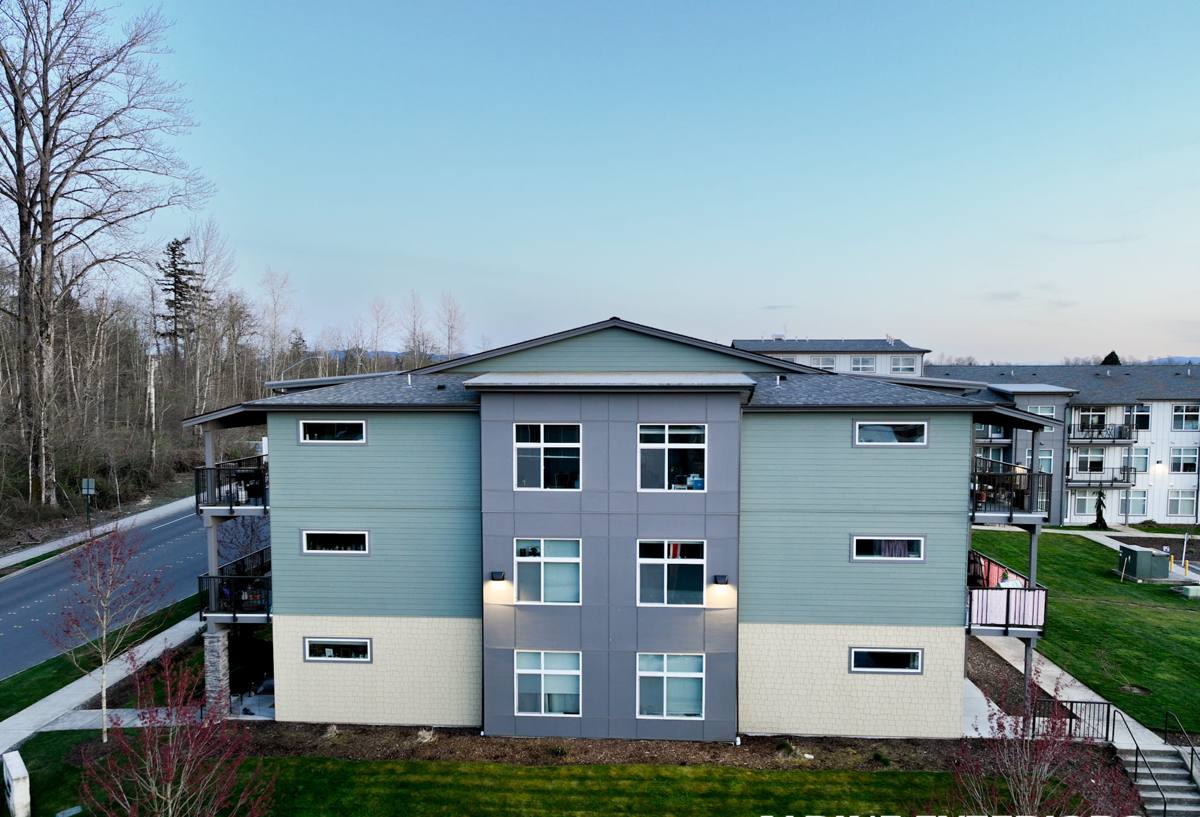
What Marine Air, Driving Rain, and Moss Really Do to a Wall
Siding failure in this region rarely happens all at once. It's usually a slow accumulation of moisture cycling through material that wasn't built to handle it, or that was installed without the details that keep water moving out instead of in.
- Driving rain pushed sideways by wind finds every gap in lap joints, corner boards, and trim — it doesn't just run down the face of a wall, it gets pushed into it.
- Persistent moisture and shade on north- and west-facing walls create the conditions moss and algae need to establish themselves and hold water against the surface longer than it should sit there.
- Freeze-thaw cycles, even mild ones, are harder on any siding that has already absorbed moisture, because that moisture expands and works joints and fasteners loose over years.
- Salt-tinged marine air moving up the valley accelerates corrosion on lower-grade fasteners, trim, and hardware that wasn't specified for a coastal-adjacent climate.
Wood-based and composite sidings are the most vulnerable to this combination, because they rely on paint film and caulking to stay dry — and both degrade faster under sustained wet-dry cycling than most homeowners expect.
Why This Company Installs Only James Hardie
We don't offer LP SmartSide, vinyl, Cemplank, Allura, primed spruce, or cedar. That's a deliberate standard, not a lack of options. Each of those products has real strengths — cedar looks the way a lot of homeowners want a house to look, vinyl is inexpensive up front, engineered wood siding installs quickly. But in a climate that stays wet for months at a stretch, the trade-offs on all of them show up as maintenance burden, moisture risk, or a shorter practical service life than homeowners are told to expect.
James Hardie is fiber cement: sand, cement, and cellulose fiber, factory-cured. It doesn't absorb and swell the way wood-based products can, it's non-combustible, and its ColorPlus factory finish is baked on rather than field-applied, which matters in a climate where field-applied paint gets far fewer good drying days per year than a spec sheet assumes. We standardized on it because it holds up to exactly the conditions the Fraser Valley and Whatcom County put on a wall — not because it's the cheapest option on the table.
James Hardie Product Lines for This Climate
James Hardie makes climate-engineered product lines, and the version specified matters. HZ5 formulations are engineered for colder, wetter climates with more freeze-thaw exposure — which describes this region well — versus HZ10 formulations built for hot, humid Southern climates. Getting the right HZ designation specified isn't a minor detail; it's part of what "installed to spec" actually means.
| Product | Best Use | What It Solves For |
|---|---|---|
| HardiePlank lap siding | Most wall areas, traditional lap look | Primary rain-shedding field material |
| HardieShingle | Accent gables, dormers | Architectural detail without wood-shake maintenance |
| HardiePanel + battens | Modern/board-and-batten sections | Clean vertical lines, low-maintenance seams |
| HardieTrim | Corners, window/door casing, fascia | Matches siding durability at the joints most exposed to driving rain |
Color is factory-baked with ColorPlus technology, which matters here specifically because a field-applied topcoat needs consecutive dry days to cure properly — something this region doesn't always offer on a predictable schedule during the install season.
What a Correct Installation Involves Here
The material is only half the equation. Fiber cement performs the way it's rated to perform only when the installation details are right, and in a wet climate the details that get skipped are usually the ones that cause problems years later, not weeks later.
- Proper clearance and gapping — siding held off the foundation and other horizontal surfaces per manufacturer spec, so water has somewhere to go instead of wicking up into the bottom edge.
- A drainable water-resistive barrier behind the siding, installed continuous and lapped correctly, so any moisture that does get past the cladding has a path down and out.
- Flashing at every penetration — windows, doors, hose bibs, light fixtures, deck ledgers — installed in the correct shingle-lap order so water is always directed outward and down.
- Correct fastener type and placement, driven flush (not overdriven), in corrosion-resistant material appropriate for marine-influenced air.
- Factory-cut and factory-primed edges kept intact wherever possible, and any field cuts sealed per spec rather than left raw.
None of this is exotic. It's the standard the manufacturer publishes. But it's also exactly the set of steps that gets shortcut when a crew is unfamiliar with fiber cement or is used to installing forgiving materials like vinyl, where a bad flashing detail doesn't show up as a rot problem five years later.
Why a Lynden-Based Crew That Already Works Abbotsford Matters
Abbotsford is close enough to Lynden that it's a normal part of our service area, not a special trip. That matters in a few concrete ways. A crew that's already used to crossing the border for jobs understands the logistics — getting materials, tools, and a crew across efficiently rather than losing a day to it — so a project isn't priced or scheduled around friction that shouldn't exist.
It also means familiarity with how things work on the Canadian side of a project: municipal permitting through the City of Abbotsford, inspection scheduling, and quoting in the currency and terms that make sense for the homeowner. We handle those administrative details as part of the job rather than treating them as an afterthought, because we do this regularly, not occasionally.
And because the climate on both sides of the line is functionally the same Fraser Valley/Puget Sound weather system, there's no learning curve on the technical side either — the flashing, gapping, and fastening details that protect a home in Lynden are the same details that protect a home in Abbotsford.
Our Process, Start to Finish
- Walk-through and assessment. We look at existing siding condition, moisture damage if any, trim and window flashing condition, and take measurements.
- Written estimate. Product lines, colors, and scope specified clearly, with the HZ formulation called out — no vague allowances.
- Permitting. We handle the paperwork for the jurisdiction the home is in, on either side of the border.
- Material staging. Full order delivered and checked against spec before the crew starts, so the job isn't waiting on back-ordered pieces mid-install.
- Tear-off and prep. Old siding removed, sheathing inspected for hidden moisture damage, water-resistive barrier and flashing installed or corrected before a single piece of new siding goes up.
- Installation. Siding, trim, and accent details installed to manufacturer spec, with fastening and gapping checked as the crew moves.
- Final walk-through. Homeowner review, cleanup, and warranty paperwork registered.
What Affects the Cost of a Job Here
We don't quote broad ballpark numbers on a page like this because every home is different, but these are the real factors that move a project's cost up or down.
| Factor | Why It Matters |
|---|---|
| Existing siding condition | Rotted sheathing found during tear-off adds repair scope before new siding can go on |
| Wall complexity | Gables, dormers, and multiple wall planes add cutting, flashing, and trim labor |
| Product mix | Lap siding alone costs less than lap plus shingle accents and board-and-batten sections |
| Access | Multi-story walls, tight lot lines, or limited staging space affect labor time |
| Trim scope | Full HardieTrim replacement at corners and openings versus reusing sound existing trim |
Keeping New Hardie Siding Looking Right
Fiber cement is low-maintenance compared to wood, but "low-maintenance" isn't "no-maintenance" in a climate that grows moss on everything shaded and damp. A little upkeep protects the finish and keeps small issues from becoming bigger ones.
- Rinse the siding once or twice a year with a garden hose, focusing on north-facing and shaded areas where moss and algae take hold first.
- Skip the pressure washer, or use a wide fan tip at low pressure and keep the nozzle well back — direct high pressure can force water behind joints and trim.
- Keep gutters clear and downspouts directed away from the wall so runoff isn't sheeting down the siding face.
- Trim back shrubs and trees so foliage isn't holding moisture against the wall.
- Check caulking at trim joints and penetrations every year or two and re-seal if it's cracked or pulling away.
If you're weighing a siding replacement on a home in or near Abbotsford, we're happy to walk the property, look at what's actually going on with the existing siding, and put together a straightforward, no-pressure estimate. There's a form below to get that started.