 Lynden Siding
 Storm Damage Roof Repair for Abbotsford Homes
Abbotsford sits in a stretch of the Fraser Valley that takes weather seriously. Between Pacific storm systems rolling in off the coast, sustained winter rain, and the damp air that never fully lets a roof dry out, homes here deal with a different kind of wear than roofs in drier climates. When a storm rolls through and rips shingles loose, drives rain under flashing, or knocks a branch into the roof deck, the damage doesn't always show up as an obvious hole. Often it's a slow leak that shows up weeks later as a stain on a ceiling, long after the storm that caused it has been forgotten.
We repair storm-damaged roofs for homeowners in and around Abbotsford, BC, working on the same roof types and weather exposure we see throughout the Lynden and greater Whatcom-Fraser Valley corridor. The building codes and inspection process differ slightly on the Canadian side of the border, but wind-driven rain and moss don't check your postal code — the physics of a compromised roof are the same whether the shingles are stamped in Washington or Ontario.
Why Storm Damage Here Is Different
Wind-Driven Rain and Salt Air
Abbotsford is close enough to the Salish Sea and the Fraser River delta that salt-laden air is a real factor, especially on roofs facing west or southwest toward incoming weather. Salt air accelerates corrosion on exposed metal — flashing, fasteners, vent caps, gutter hardware — faster than it would inland. A storm that loosens a shingle doesn't just create a gap; it exposes fasteners and flashing edges to that corrosive air for the first time, and once corrosion starts on a nail or flashing seam, the leak path usually isn't far behind.
The Long Moss Season
The Fraser Valley's mild, wet winters and shaded, tree-lined lots are ideal moss-growing conditions for a good chunk of the year. Moss holds moisture against the shingle surface long after a storm has passed, which does two things: it accelerates granule loss on asphalt shingles, and it can lift shingle edges just enough for wind-driven rain to get underneath during the next storm. A lot of what looks like "storm damage" on an Abbotsford roof is actually storm damage plus months of moss weakening that section of the roof beforehand — the storm just finished the job.
Repeat Storm Cycles
One storm rarely does all the damage on its own. It's more common for a roof to take a hit, develop a small vulnerability, and then take a bigger hit from the next system a few weeks later because that first weak point was never addressed. This is why we always inspect a wider area than just the obviously damaged section — a storm that lifted shingles on one slope may have loosened fasteners nearby that haven't failed yet.
What Storm Damage Actually Looks Like
Homeowners often expect storm damage to be dramatic — a missing patch of shingles or a visible hole. Sometimes it is. More often it's subtler, and the subtle signs are exactly what a homeowner is least likely to catch from the ground.
- Shingles that are cracked, curled, or lifted at the edges but still mostly in place
- Granules collecting in gutters or at downspout outlets after a storm
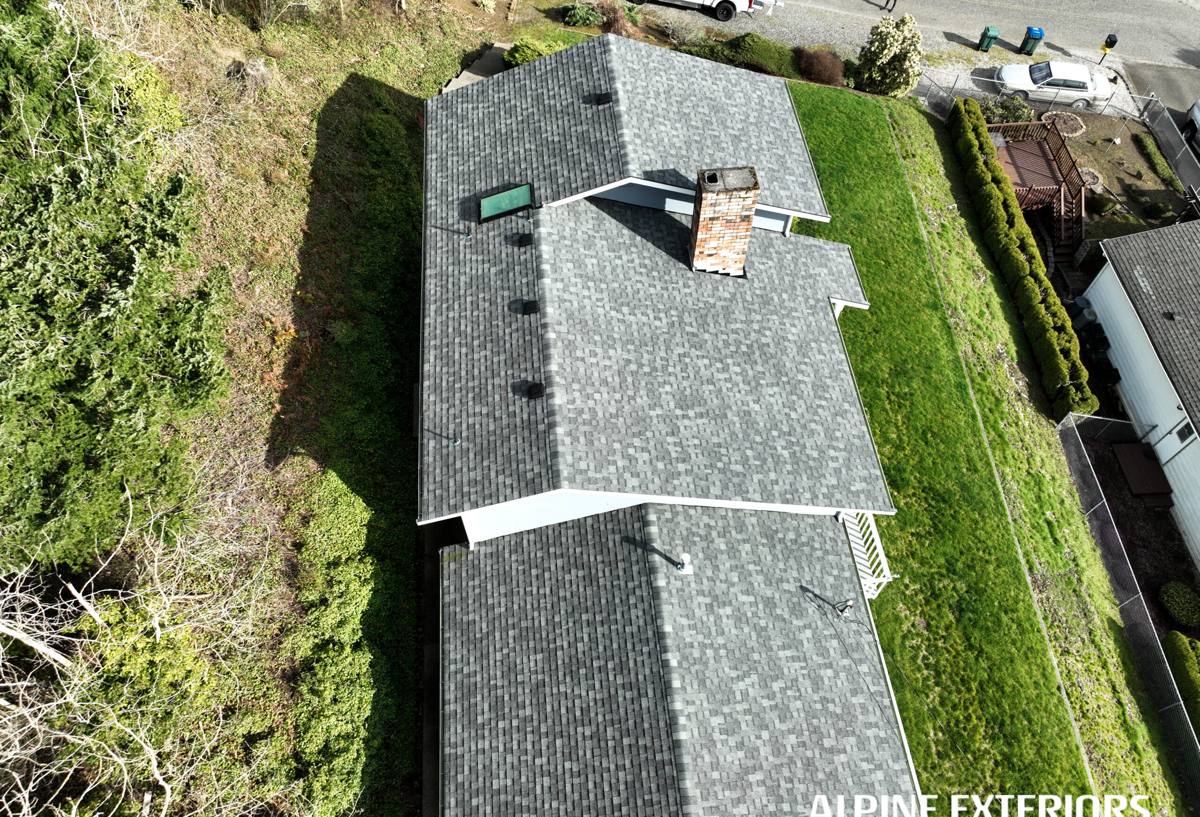
- Flashing around chimneys, vents, or skylights that's been bent, pulled loose, or separated from its seal
- Soft spots or discoloration on ceilings or upper walls that appear days or weeks after a storm
- Debris — branches, twigs, needles — lodged against a ridge or valley, trapping moisture
- Gutters pulled away from the fascia or sagging under storm debris and water weight
- Moss or algae growth that's thicker or darker in one area than the rest of the roof, often a sign water is sitting there longer than it should
Our Storm Damage Repair Process
1. Assessment First
We start with a full inspection, not just a look at the spot the homeowner flagged. Storm damage rarely stays confined to one area, and a proper assessment means checking the whole roof plane, the flashing details, and the attic side if access allows — an attic inspection often reveals a leak's true entry point faster than staring at shingles from outside.
2. Honest Scope of Work
Once we know what's actually wrong, we tell you plainly what needs to happen: a targeted repair, a larger section replacement, or in some cases a recommendation that a full roof replacement makes more sense than continuing to patch an aging roof. We don't pad the scope, and we don't downplay it either.
3. Repair Done to Match
Repairs are done with materials that match your existing roof as closely as possible in type, weight, and where reasonable, color. A patch job that doesn't match the surrounding shingles isn't just a cosmetic issue — mismatched materials can age and shed water differently, creating a new weak point right at the repair line.
4. Flashing and Fastener Check
Given how much salt air and moisture affect metal components here, we pay close attention to flashing and fastener condition anywhere near the repair, not just the shingles themselves. A new shingle over corroded flashing is a short-term fix at best.
5. Cleanup
We clear moss, debris, and displaced granules from the work area and gutters before we leave, since leftover debris is exactly what causes the next round of moisture problems.
Repair vs. Replacement: How We Decide
Not every storm-damaged roof needs to be replaced, and not every roof can be reasonably patched forever. The decision usually comes down to the roof's age, how widespread the damage is, and whether the underlying materials are still sound.
| Factor | Favors Repair | Favors Replacement |
|---|---|---|
| Roof age | Under 12-15 years, shingles otherwise healthy | Nearing or past typical shingle lifespan |
| Damage extent | Isolated to one section or a few spots | Widespread across multiple slopes |
| Decking condition | Solid, no rot found on inspection | Soft spots or rot found under damaged shingles |
| Moss/algae history | Light, manageable growth | Heavy, long-term moss with granule loss |
| Storm frequency | First significant damage event | Repeated storm damage over recent seasons |
Insurance and Documentation
Storm damage is one of the more common reasons homeowners file a roofing insurance claim, and having clear documentation matters. We take photos of the damage as we find it and can provide a written description of what we observed and what we repaired, which homeowners can pass along to their insurer. We're not adjusters and don't speak for the insurance company, but a clear, honest record of the actual condition of the roof tends to make that process go smoother than a vague verbal description after the fact.
Preventing the Next Storm From Doing More Damage
A storm repair is a good moment to address the conditions that made the damage worse than it needed to be. That usually means dealing with moss buildup, clearing gutters and valleys of debris, and checking that flashing around penetrations is properly sealed — not because any one of those is glamorous work, but because they're the difference between a roof that shrugs off the next storm and one that takes on new damage every time the wind picks up.
- Have moss treated or removed before it spreads across a wider area of the roof
- Trim back tree limbs that overhang the roofline and could drop debris in high wind
- Keep gutters and downspouts clear so storm water has somewhere to go
- Ask for a flashing check around chimneys, vents, and skylights during any roof service
- Get a post-storm inspection after any significant wind or rain event, even if nothing looks obviously wrong
Why Work With a Crew That Knows This Area
Roofing crews unfamiliar with the Fraser Valley and northern Whatcom County climate sometimes underestimate how much moss and moisture cycling affects a roof's real condition versus what a quick visual check shows. We work this region regularly, which means we know what a genuinely storm-damaged section looks like versus a section that was already weakened by months of moss and trapped moisture before the storm ever hit — and that distinction changes what an honest repair plan looks like.
If a recent storm has left you with missing shingles, a new leak, or just a nagging feeling that something's not right up there, we're happy to take a look. Reach out for a free, no-pressure estimate — we'll tell you plainly what we find and what it would take to fix it.