 Lynden Siding
 Deck Replacement for Acme-Area Homes Near Lynden
The Acme area sits in a part of Whatcom County where decks take a real beating. Between the driving rain off the Pacific, the salt air that works its way inland on wind currents, and a moss season that can run eight or nine months out of the year, an aging deck out here isn't just cosmetic — it's a structure that's been fighting the climate every single day it's stood. If your deck is soft underfoot, has boards that stay damp for days after a storm, or has visible moss buildup on the north-facing side, you're not imagining a problem. You're looking at the normal end-of-life pattern for decks in this part of the county.
This page is specifically about full deck replacement for homes in and around Acme — not a repair job, not a resurfacing, but tearing out a deck that's past saving and building a new one correctly for this climate. If you're not sure whether your deck needs replacement or just repair, that's a fair question, and it's one we'll answer honestly on a site visit rather than push you toward the bigger job by default.
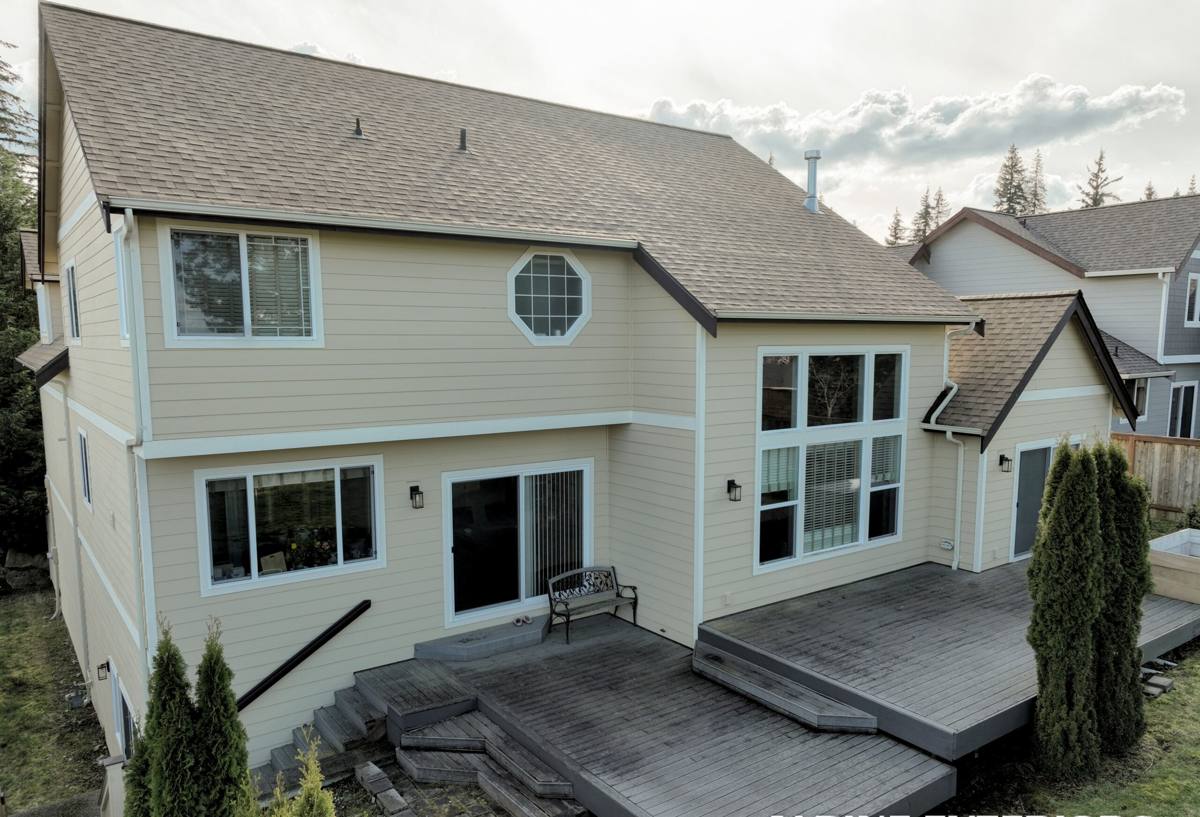
Why Decks Fail Faster Out Here Than the National Average Suggests
Most decking material — even pressure-treated lumber — is rated and marketed based on general moisture exposure, not the specific combination Acme homes deal with: near-constant damp conditions from fall through spring, moss and algae colonizing any shaded or north-facing surface, and periodic salt-laden air that accelerates corrosion on fasteners and hardware. None of that is unique to Acme by itself, but the combination is what does the damage.
What we typically find on decks we're asked to replace in this area
- Rot concentrated at ledger boards and post bases, where water sits longest
- Corroded or failing fasteners — especially on decks built before stainless or coated hardware was standard practice
- Moss and algae growth that's kept boards perpetually damp, accelerating decay from the top down as well as underneath
- Undersized or improperly flashed ledger connections, which is a structural safety issue, not just a cosmetic one
- Railings and stairs that have loosened as the framing beneath them has shifted or softened
Any one of these can usually be repaired. When several show up together — which is common on a deck original to the house — replacement is almost always the more honest recommendation, both for safety and for long-term cost.
What a Correct Deck Replacement Involves
A deck replacement done right in this climate isn't just swapping old boards for new ones on the same frame. It's an opportunity to fix the underlying issues that caused the failure in the first place.
Structure and framing
We inspect and typically replace the ledger board connection, joists, and posts — not just the decking surface. In a high-moisture area like Acme, this is where deck failures actually start. Proper ledger flashing (so water is directed away from the house rather than into the rim joist) matters more here than in drier parts of the state, and it's one of the most commonly skipped steps in older or lower-cost deck work.
Fasteners and hardware
Given the salt air exposure, we use corrosion-resistant, code-rated fasteners and structural connectors rather than standard galvanized hardware that wasn't specified for coastal-influenced conditions. This is a small line-item cost difference and a large difference in how long the deck actually lasts.
Decking material
Material choice is a real decision, not a default. We'll walk through the honest trade-offs for your situation rather than push whatever's easiest to install.
| Material | Moss/moisture behavior | Maintenance | Typical lifespan here |
|---|---|---|---|
| Pressure-treated lumber | Absorbs moisture readily; needs sealing to resist moss and staining | Annual cleaning and periodic re-sealing | 10–15 years with upkeep |
| Cedar | Naturally moisture- and insect-resistant, but still needs care in constant shade/damp spots | Regular cleaning, periodic oil or stain | 15–20 years with upkeep |
| Composite/capped composite | Doesn't absorb water or rot, but moss and algae can still grow on the surface film and need washing | Occasional washing, no sealing or staining | 25+ years, manufacturer-warrantied |
Composite tends to make the most sense for shaded, north-facing, or low-airflow deck areas around Acme where moss is a recurring problem, since it removes the rot risk even though it still needs periodic cleaning. Cedar or treated lumber can still be the right call for homeowners who want a natural look and are willing to keep up with sealing — we're not going to tell you composite is mandatory when it isn't the right fit for your budget or preference.
Drainage and Airflow: The Part That Actually Determines Lifespan
In a climate with this much sustained rain, how a deck sheds and drains water matters as much as what it's built from. Decks that sit low to grade, have minimal gap spacing between boards, or lack any ventilation underneath trap moisture and accelerate both rot and moss growth. Part of a proper replacement is correcting these conditions where possible — adjusting board spacing, improving under-deck airflow, and making sure water isn't pooling against the house foundation or crawlspace vents. This is also where we coordinate with siding and trim work if your deck ledger area has caused any related water damage to the house itself, since that's a common pairing of problems on older homes in this area.
Our Process for Acme Deck Replacements
- On-site assessment. We look at the framing, not just the surface — probing for soft spots, checking ledger flashing, and assessing whether repair is honestly viable before recommending replacement.
- Written scope and estimate. You get a clear breakdown of what's being torn out, what's being rebuilt structurally, material options with real trade-offs, and a total cost — no vague allowances.
- Permitting. Deck replacement of this scope typically requires a permit through Whatcom County or the applicable local jurisdiction; we handle that process as part of the job.
- Demolition and disposal. Old decking, framing, and hardware removed and hauled off — we don't leave debris piled on-site.
- Structural rebuild. Ledger, posts, joists, and connections done to code with corrosion-resistant hardware, properly flashed at the house connection.
- Decking, railing, and finish work. Installed per manufacturer spec (critical for composite warranty coverage) with attention to drainage and spacing.
- Final walkthrough. We go over the finished deck with you, including any maintenance expectations for the material you chose.
Why a Crew That Already Works Acme Matters
Deck work in this part of Whatcom County isn't the same job as deck work in a dry inland climate, and a crew that hasn't dealt with the local moss and moisture pattern will often make the same mistakes we see on failed decks: inadequate ledger flashing, standard hardware where corrosion-resistant fasteners were needed, and decking installed without enough attention to drainage and airflow. A crew already familiar with Acme and the surrounding Lynden area knows which parts of a deck fail first here, what the local permitting process actually requires, and how to build so the next replacement isn't needed in ten years instead of twenty-five.
Signs Your Deck Needs Replacement, Not Repair
- Soft, spongy, or springy decking in multiple areas — not just one board
- Visible rot or discoloration at the ledger board or where posts meet the ground
- Persistent moss coverage that returns quickly after cleaning
- Loose or wobbly railings and stair stringers
- Fasteners showing rust bleed or corrosion staining on the wood
- The deck is original to a home more than 15–20 years old and has never been structurally inspected
If you're only seeing one or two of these and the framing underneath is still sound, targeted repair may genuinely be the more cost-effective answer — we'll tell you that if it's true.
What Replacement Typically Costs
Cost depends heavily on deck size, framing condition, material choice, and whether structural issues extend beyond the deck itself into the house connection. As a broad range, straightforward composite deck replacements on an average residential deck footprint tend to run from the mid four figures to the low five figures, with cedar or treated lumber often landing somewhat lower and larger or multi-level decks running higher. We don't quote firm numbers without seeing the deck in person, since the framing condition underneath is usually the biggest cost variable — and it's not visible until we're up close.
If your deck in the Acme area is showing rot, persistent moss, or just feels unsafe, we're glad to take a look and give you a straightforward, no-pressure estimate — use the form below to get started.