 Lynden Siding
 Siding Repair for a Rural Corner of Whatcom County
Acme sits apart from the denser, in-town parts of the Lynden and Bellingham area — a wooded, spread-out community where homes tend to sit on larger lots, often with mature tree cover close to the house and more distance between neighbors. That setting changes what siding repair actually looks like here. A home tucked under fir and cedar canopy dries out slower after a storm than a house on an open, in-town lot, and that difference shows up directly in how siding ages, where damage starts, and how urgently it needs attention.
This page is about one service, in one place: siding repair for Acme homes. Not a general overview of exterior work, not a pitch for a full tear-off you may not need. We'll walk through what actually damages siding out here, how to tell a cosmetic problem from a real one, what a correct repair involves, and why a crew that already works this part of Whatcom County catches things a first-time visitor to the area tends to miss.
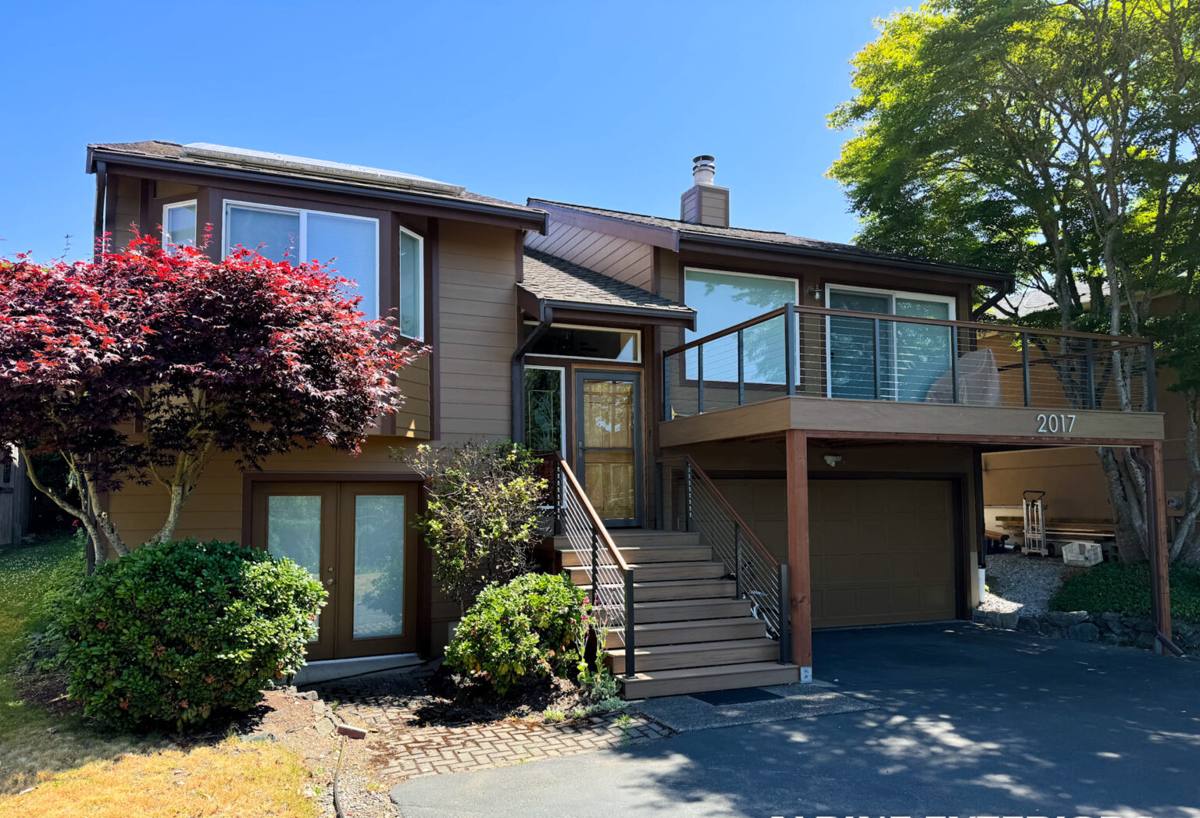
What Wears Down Siding in Acme
Driving Rain and Sustained Dampness
Whatcom County's weather system doesn't just drop rain straight down — wind pushes it sideways into lap joints, trim seams, and anywhere two pieces of siding meet. On a wooded, rural lot, that moisture also has less open-air exposure to dry it back out between storms than it would on a windswept, treeless site. The result is siding that stays damp longer after each rain event, which is exactly the condition that lets small problems, a hairline gap, a failed sealant joint, turn into water intrusion over a season or two.
A Long Moss and Mildew Season
Heavy tree canopy is common on Acme properties, and it's a mixed blessing for a house. It's also one of the more consistent reasons we get called out on repair jobs in this area rather than in more open parts of the county. Shade keeps siding cooler and damper for more of the year, and that combination is close to ideal for moss and mildew growth. North-facing walls and anything shaded by trees or outbuildings are usually the first places it shows up, and once moss gets a foothold on porous or aging siding, it holds moisture against the surface even longer, accelerating whatever damage is already underway underneath.
Marine-Influenced Air, Even This Far Inland
Whatcom County's Pacific Northwest climate carries salt-tinged, moisture-heavy air well beyond the immediate coastline, and it's part of what makes this region harder on exterior materials than a drier inland climate. It's a slower, background factor here compared with waterfront neighborhoods, but it still plays a role in how fasteners, caulking, and lower-grade finishes hold up over the years.
Rural Lot Conditions
Larger lots, more vegetation close to the foundation, and less consistent sun exposure all affect how a wall dries out and how easy problems are to spot early. A siding issue that would be visible from the street on an in-town lot can go unnoticed for a while on a rural property, tucked behind landscaping or on a side of the house nobody walks past often.
Cosmetic Wear vs. Damage That Needs Attention
Not every mark on a wall means a repair job, and not every "minor" issue is actually minor. Telling these apart correctly is the first real step in scoping a repair.
| What You're Seeing | Usually Cosmetic | Often Needs Repair |
|---|---|---|
| Light moss or algae film that cleans off easily | Yes, especially on newer siding | Return quickly after cleaning can signal a moisture problem underneath |
| Faded or chalking paint on trim | Often, on older painted surfaces | Combined with soft wood underneath, it's a bigger issue |
| Small hairline cracks in siding boards | Rarely stays cosmetic for long | Usually, since it's an entry point for water |
| Soft or spongy siding when pressed | No | Yes, this typically means moisture has already reached the substrate |
| Gaps at seams, corners, or trim joints | No | Yes, these are common water entry points behind the wall |
| Warped or bowing sections | No | Yes, often points to trapped moisture or a failed original install |
The honest version of this: a lot of what homeowners worry about is genuinely cosmetic, and a lot of what looks minor is actually a sign of something already happening behind the siding. A proper inspection is the only way to know which one you're looking at.
What a Correct Siding Repair Actually Involves
Finding the Real Cause, Not Just the Visible Symptom
Damaged siding is frequently a symptom of a problem that started somewhere else, flashing that was never sealed correctly, a house wrap seam that failed, a trim detail that lets water track behind the wall instead of off it. Replacing the damaged boards without addressing what let water in behind them just buys time before the same spot fails again. A repair worth doing starts with figuring out why that section failed in the first place.
Matching Material and Profile
A repair that blends in matters, both for appearance and for performance. That means matching board profile, exposure, and color as closely as possible, and being upfront when an older siding product can't be matched exactly, which happens more often on homes where the original siding is discontinued or has weathered unevenly over the years.
Getting the Water Management Right
Siding is one layer of a larger water-management system that includes house wrap, flashing, and properly lapped joints working together. A repair that swaps out damaged boards but skips correcting the flashing or wrap underneath is a repair that's likely to need doing again. This is the step that gets rushed most often, and it's the one that determines whether a repair actually lasts.
Addressing What the Rural Setting Adds
On a wooded Acme lot, a repair also usually means dealing with what let the moisture problem develop in the first place, trimming vegetation back from the wall where practical, checking that gutters and downspouts are actually moving water away from siding rather than dumping it along a wall, and making sure repaired sections have a real chance to dry between storms instead of sitting in shade and dampness the way the original section did.
Repair vs. Replace: How That Decision Gets Made
Not every siding problem on an Acme home means a full replacement, and assuming otherwise can mean spending money you didn't need to. The factors that actually decide it:
- How localized the damage is. A section or two damaged by impact, age, or a specific water entry point is usually a strong repair candidate.
- How long moisture has been getting in. Damage that's been developing quietly for years behind aging siding often extends further than what's visible, and that changes the math.
- What's underneath the siding. If sheathing or framing has soft spots once boards come off, that's a bigger scope than a cosmetic repair, regardless of how the rest of the wall looks.
- The age and condition of the rest of the siding. Repairing a wall that's otherwise sound is a good use of money. Repairing one small section of siding that's clearly near the end of its service life everywhere else usually isn't.
We'll tell you plainly which category your situation falls into, including when a repair is genuinely the right call and full replacement isn't necessary.
Why We Only Work in James Hardie Fiber Cement
Every repair we do gets tied into James Hardie fiber cement siding, and that's the only siding brand we install or repair into. We don't carry LP SmartSide, vinyl, Cemplank, Allura, primed spruce, or cedar, not because those products can't be installed competently by someone, but because of what we've consistently seen come off the wall on repair calls in this climate.
- Non-combustible core: Fiber cement doesn't feed a fire the way wood-based siding can, which matters for household safety.
- Factory-applied ColorPlus finish: Cured under controlled factory conditions rather than field-applied, it holds up far better against fading, chalking, and moisture than site-applied paint or stain.
- Climate-engineered HZ formulation: Hardie's HZ5 line is built for regions with heavy sustained moisture and freeze-thaw cycling, a closer match to inland Whatcom County's damp, shaded conditions than a generic national product.
- Dimensional stability: Fiber cement doesn't swell, cup, or warp the way engineered wood can after repeated wet-season moisture exposure, which is exactly what a shaded, rural lot delivers year after year.
- A strong transferable warranty backed by the manufacturer, provided installation follows spec, which is part of why we take installation detail seriously on every repair.
Repairing damaged siding with a mismatched or lower-grade product is a common shortcut, and it usually shows within a few seasons, especially in a moss-prone, shaded setting where the original material was already struggling. When we repair a section, we're matching into a system we understand completely and trust to perform the same way the rest of the wall does.
How We Approach a Repair Job in Acme
- Walk the property and inspect the damaged area along with the surrounding siding, not just the spot you called about
- Check for soft spots, trapped moisture, and flashing or wrap issues that may be feeding the visible damage
- Give you a straight read on repair versus replacement, with the reasoning behind it
- Scope the repair to match existing siding as closely as possible in profile and finish
- Correct the underlying water-management issue, not just the boards, before anything new goes up
- Leave the site clean and walk you through what was found and fixed
What Drives Siding Repair Cost in Acme
| Factor | What It Affects | Why It Matters Here |
|---|---|---|
| Extent of hidden moisture damage | Whether sheathing or framing repair is needed before new siding goes on | Shaded, damp lots common in Acme give moisture more time to work before it's visible |
| Material match availability | Whether existing siding can be matched exactly | Older or discontinued siding profiles are harder to blend seamlessly |
| Site access | Labor time and equipment needs | Larger rural lots and tree cover can mean more setup and staging than an in-town job |
| Number and location of damaged sections | Total scope of the repair | Damage spread across multiple walls often points to a systemic issue worth addressing together |
| Drainage and vegetation around the wall | Whether a full fix, not just a patch, is needed | Correcting the moisture source matters as much as replacing the boards |
An accurate number requires a real look at the property. We don't quote siding repair off a phone description alone, because the same symptom can point to a five-board fix or a much larger issue underneath.
Before You Hire Someone for Siding Repair
- Confirm an active Washington state contractor license and current insurance
- Ask what siding product they'll match into, and whether it's the same material as the rest of your home
- Ask how they handle hidden damage found once boards come off, and how that changes the price
- Ask whether they're addressing the underlying moisture source, not just replacing what's visibly damaged
- Get a written scope of work before anything starts, not a verbal estimate
Why a Crew That Already Works in Acme Matters
A contractor unfamiliar with rural, wooded Whatcom County properties tends to treat every repair the same way they would on an open, in-town lot. A crew that already works out here knows to check the shaded, damp side of the house first, expects moss issues to be further along than they look on the surface, and understands that a rural setting changes both what caused the damage and what it takes to keep it from coming back. That local pattern recognition is often the difference between a repair that holds and one that needs revisiting in a year or two.
If siding on your Acme home needs repair, or you're not sure whether what you're looking at is cosmetic or something more, we're glad to take a look. Reach out using the form below to schedule a free, no-pressure estimate.