 Lynden Siding
 Why Siding Wears Differently in Acme
Homes in the Acme area sit in a corner of Whatcom County that takes weather seriously. You get the same driving rain that soaks the rest of the Nooksack valley, but you also get the shade, humidity, and slower drying times that come with being closer to timber and tree cover than the open farmland around Lynden proper. That combination — more moisture exposure, less direct sun to dry things out, and a long moss season that can run from fall through spring — is hard on any exterior wall covering. Add the mineral-rich, damp coastal air that reaches this whole part of the county, and you've got a climate that finds every weak point in a siding system faster than it would in a drier region.
None of that means siding here is doomed. It means the material and the installation details matter more than they would somewhere with a gentler climate. A siding job that would hold up fine in eastern Washington can fail early in Acme if it wasn't built for sustained moisture and organic growth.
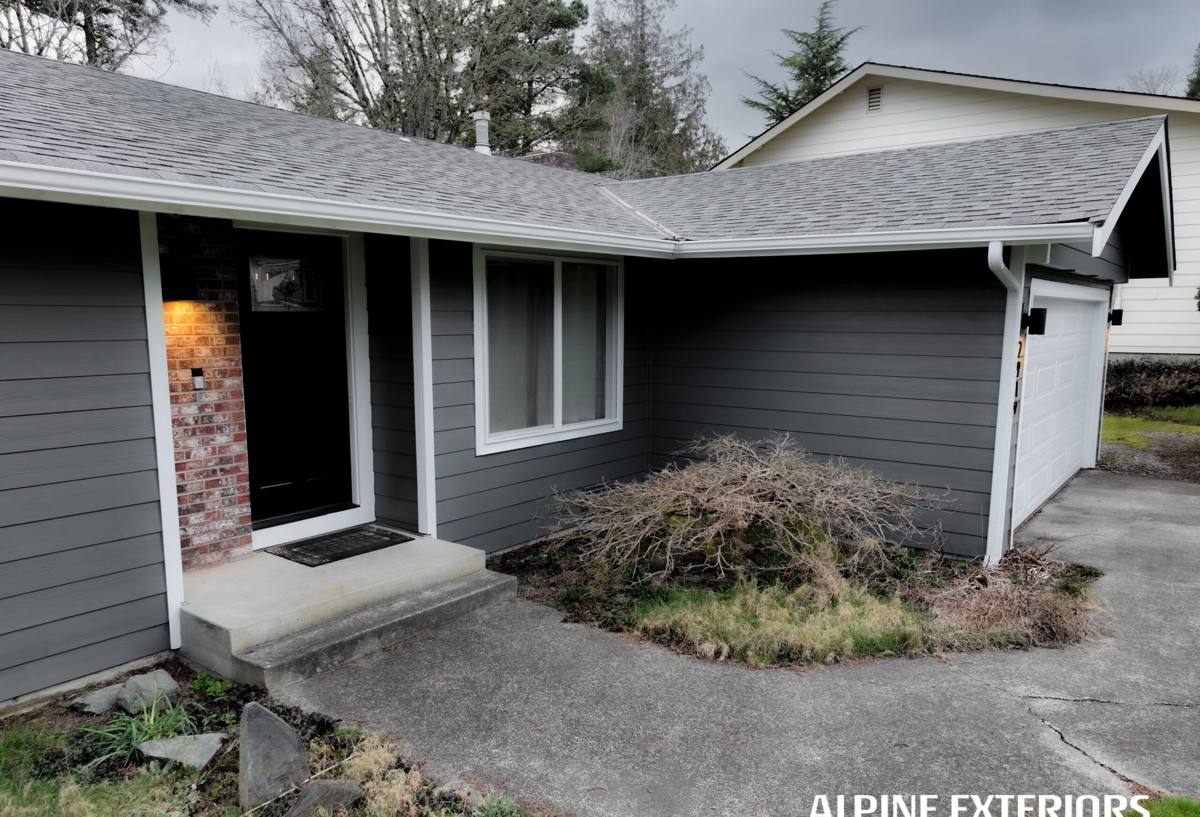
What Driving Rain and Moss Season Actually Do to Siding
Moisture Intrusion
Wind-driven rain doesn't just hit siding — it gets pushed sideways and upward into laps, seams, and butt joints. Over years, siding that wasn't installed with correct clearances, flashing, and a functioning drainage plane lets water behind the cladding. Once moisture is trapped against sheathing, you're not just dealing with cosmetic damage — you're looking at rot, mold, and eventually structural repairs that cost far more than the siding itself.
Moss, Algae, and Organic Growth
Shaded walls, north-facing elevations, and anything near overhanging trees in the Acme area tend to hold moisture longer, which is exactly what moss and algae need to establish. On some siding materials this is mostly a cleaning problem. On others — particularly wood-based products or siding with compromised caulking — sustained moss growth holds water against the surface and accelerates decay underneath.
Freeze-Thaw and Seasonal Cycling
Whatcom County doesn't get brutal winters, but Acme sees enough freeze-thaw cycling each year that any water already trapped in siding or behind it gets a chance to expand, crack, and work joints loose. It's a slow process, which is why siding problems here often go unnoticed until they're already serious.
Signs an Acme Home Needs Siding Replacement, Not Just Repair
- Soft or spongy spots when you press on siding, especially near the bottom courses or under windows
- Persistent moss or algae staining that comes back within weeks of cleaning
- Visible gaps, warping, or bowing boards, particularly on shaded or north-facing walls
- Paint that's peeling or bubbling repeatedly in the same spots, which usually means moisture is coming from behind
- Rising interior humidity, musty smells, or bubbled interior paint near exterior walls
- Siding that's original to a home built before modern house-wrap and flashing standards were common
- Visible rot at corner boards, trim, or anywhere siding meets a roofline, deck, or porch
If you're only seeing one or two of these and the underlying boards are still sound, a repair or partial replacement may be enough. Once you're seeing several at once, or the damage traces back to trapped moisture rather than surface wear, full replacement is usually the more honest recommendation — patching over a moisture problem just buys a year or two before it resurfaces.
What a Correct Siding Replacement Involves
Replacing siding well is mostly about what happens before the new boards ever go up. In a climate like this one, skipping steps here is where premature failures come from.
Full Tear-Off and Inspection
We remove the old siding down to the sheathing so we can actually see what's underneath — not guess at it. This is where hidden rot, damaged sheathing, or old water damage from a previous installation gets caught and dealt with, instead of being sealed back up behind new siding.
Water-Resistive Barrier and Flashing
A correctly lapped, sealed water-resistive barrier is the actual line of defense against driving rain — the siding itself is the second line, not the only one. Window and door flashing, kick-out flashing at roof-to-wall intersections, and proper head flashing above trim all get installed or replaced as part of the job, not treated as optional extras.
Clearances and Drainage
Siding needs to end above grade, above roof lines, and above decks and patios with real clearance — not butted tight against them. In a wet climate, those clearances are what let water shed and surfaces dry instead of staying saturated.
Correct Fastening and Joint Treatment
Fastener type, spacing, and depth matter, especially with fiber cement, where over-driven or under-driven nails can crack boards or compromise the water seal at joints. Butt joints get properly sealed or flashed rather than just caulked and hoped for.
Why We Install Only James Hardie Fiber Cement
We don't install LP SmartSide, vinyl, Cemplank, Allura, primed spruce, or cedar. That's a deliberate standard, not a lack of options. In a climate that includes salt-laden air, sustained rain, and a long moss season, the material itself has to be able to take on-and-off moisture exposure for decades without swelling, rotting, or becoming a food source for organic growth. Fiber cement doesn't absorb water the way wood-based products can, and it isn't vulnerable to the impact damage, thermal expansion, and seam issues that come with vinyl.
James Hardie's HZ5 product line is engineered specifically for wetter, harsher climates like the Pacific Northwest, and the ColorPlus factory finish is baked on under controlled conditions rather than field-painted, which matters a lot in a region where a fresh paint job doesn't always get the dry cure time it needs. It's also backed by a strong transferable warranty — worth something specifically because it assumes correct installation, which is why we treat the tear-off, flashing, and fastening details above as non-negotiable rather than optional upsells.
None of this is a knock on every alternative material in every situation. It's that after years of doing this work in Whatcom County's climate, we stopped installing products that ask homeowners to accept more maintenance, more moisture risk, or more replacement frequency than they need to.
Our Process for Acme Jobs
- On-site assessment — we look at existing siding, sheathing condition where accessible, drainage patterns, and shaded or moss-prone elevations specific to your lot
- Written scope and estimate — what's being torn off, what underlying repairs (if any) are anticipated, and what Hardie product and profile fits the home
- Scheduling around weather windows — driving rain and wet ground conditions in this area mean tear-off and barrier installation get scheduled for realistic dry stretches, not squeezed in regardless of forecast
- Tear-off, sheathing repair, and barrier/flashing installation — done in that order, with sheathing issues fixed before anything gets covered back up
- Hardie installation to manufacturer spec — correct clearances, fastening, and joint treatment throughout
- Final walkthrough — checking clearances, caulking, and trim details before we consider the job finished
Cost Factors for Acme-Area Siding Replacement
Every home is different, but the variables that move the price on a job like this are consistent. Rather than quote a number that won't mean much without seeing your home, here's what actually drives cost:
| Factor | Why It Matters |
|---|---|
| Extent of hidden damage found at tear-off | Rotted sheathing or framing found once old siding comes off has to be repaired before new siding goes on |
| Home size and wall complexity | More corners, dormers, and roof-to-wall intersections mean more flashing detail and labor time |
| Hardie product line and profile chosen | Lap siding, shingle-style panels, and trim combinations vary in material cost |
| Existing trim and window flashing condition | Failing trim or flashing found during the job often needs replacement alongside the siding |
| Access and site conditions | Steep lots, mature landscaping, or tight setbacks affect staging and labor time |
| Shaded/moss-prone elevations | Walls with heavier moss or algae history sometimes need extra prep or treatment before new siding goes up |
Why a Crew That Already Works This Area Matters
A contractor who's worked on homes throughout Lynden and the surrounding Whatcom County communities, including areas like Acme, already knows which elevations tend to hold moisture, how local moss growth behaves through the wet months, and what tear-offs on homes of this age typically reveal once the old siding comes off. That's not something you can fully substitute with a generic estimate — it changes how we schedule around weather, what we check for during tear-off, and which details we don't skip because we've seen what happens when they're skipped in this specific climate.
It also means straightforward communication about realistic timelines. Driving rain doesn't respect a project calendar, and a crew that's used to working around it will tell you honestly when a weather delay is coming rather than rushing a step that shouldn't be rushed.
Questions to Ask Before You Hire
- Will you inspect sheathing condition during tear-off before installing new siding, or just install over what's there?
- What water-resistive barrier and flashing details are included, and are they itemized in the estimate?
- What Hardie product line and clearance specs will be used, and do they match manufacturer installation requirements?
- How do you handle scheduling around rain delays in this area?
- Is the warranty tied to correct installation, and who's responsible if it isn't installed to spec?
If your Acme-area home is showing signs of moisture damage, recurring moss staining, or siding that's simply reached the end of its service life, we're happy to take a look and give you a straightforward, no-pressure assessment. Fill out the form below for a free estimate — we'll tell you honestly what we find and what we'd recommend.