 Lynden Siding
 Why Decks in Aldergrove Wear Out Faster Than the Brochure Says
Aldergrove sits close enough to the coast that the same marine-influenced weather pattern that soaks Whatcom County pushes right up into the Fraser Valley. Homeowners here deal with a long, low-intensity rainy season, stretches of driving rain off passing fronts, and enough humidity most of the year that anything wood-framed and outdoors is under constant moisture pressure. Add a shoulder season where the sun barely gets above the tree line for weeks at a time, and you get ideal conditions for moss, algae, and slow rot to take hold on a deck that wasn't built with that in mind.
A deck built to a generic spec sheet — the kind that works fine in a drier inland climate — will show problems here years before it should: soft spots around the ledger board, black staining between boards, corroded fasteners, and a substructure that's rotting quietly underneath a deck surface that still looks fine from the top. None of that is inevitable. It's a function of what materials and details were used, and whether the crew that built it actually accounts for this climate.
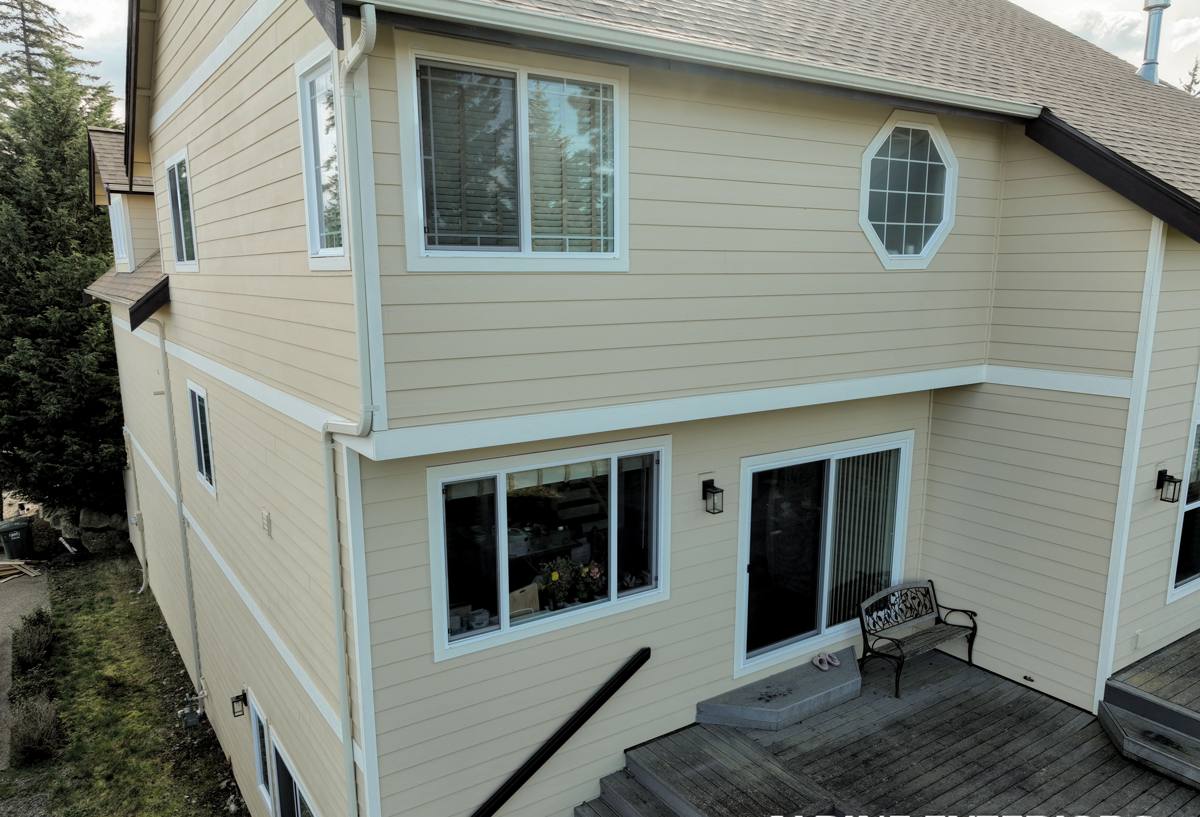
What a Deck Built for This Climate Actually Needs
Ledger Board and Framing
The single most common failure point on decks in wet climates is the ledger board — the piece that attaches the deck to the house. If it's not flashed correctly, water gets behind it and travels into the house's rim joist and framing, which is a much more expensive problem than the deck itself. Every ledger attachment we do gets proper flashing, a water-resistant barrier behind it, and a gap or drainage path so water sheds away from the house instead of pooling against it.
Fasteners and Hardware
Standard galvanized fasteners corrode faster than people expect in a climate this damp, especially in contact with treated lumber, which is chemically more corrosive to metal than it used to be. We use stainless steel or coated fasteners rated for ground-contact and treated-lumber contact, and structural hardware — joist hangers, post bases, hurricane ties — matched to the same standard. It costs a little more up front and is invisible once the deck is finished, but it's the difference between hardware that lasts the life of the deck and hardware that's rusting through in eight years.
Joist Protection
Every joist top gets a self-adhering flashing tape before decking goes down. It's a small material cost that keeps water from wicking into the end grain and top face of the joists — the two places framing lumber rots fastest when it's exposed to repeated wetting. On a climate like this one, skipping it is asking for hidden rot under a deck surface that looks perfectly good.
Choosing Decking Material for a Wet, Mossy Climate
The decking surface itself is where most homeowners spend their design energy, but the material decision matters just as much for long-term performance as it does for looks. Here's how the common options actually hold up in this kind of weather:
| Material | How It Handles This Climate | Maintenance Burden |
|---|---|---|
| Pressure-treated wood | Affordable and strong, but absorbs moisture and needs the wood to fully dry between wet stretches; prone to surface checking and algae growth if not sealed regularly | Annual cleaning, resealing every 1-2 years |
| Cedar | Naturally rot-resistant and handles damp weather well, but it's a softer wood that still needs finish maintenance to keep its color and resist surface mildew | Cleaning and refinishing every 1-2 years |
| Capped composite (e.g. Trex, TimberTech) | Doesn't absorb water or rot, and resists the mold/mildew staining that shows up fast in shaded, damp spots | Occasional washing, no sealing or staining |
| PVC decking | Fully synthetic, essentially immune to moisture damage; performs consistently in wet climates with minimal upkeep | Occasional washing only |
We install all of these and don't push homeowners toward one over another — it's a real trade-off between upfront cost, maintenance appetite, and how the deck will actually be used. What we will say plainly: if a deck is heavily shaded or tucked under trees, which describes a lot of properties in this area, a capped composite or PVC surface will save a lot of scrubbing and re-staining over the years compared to a natural wood surface.
The Structure Underneath Doesn't Get to Skip This Decision
Whatever decking material sits on top, the substructure — joists, beams, posts, and footings — is almost always framed in treated lumber, and that framing takes the same climate abuse regardless of what's visible on top. This is why the fastener and flashing details above matter just as much on a composite deck as they do on a wood one; the surface material doesn't protect the frame.
Footings, Drainage, and What's Happening Below the Deck
Ground conditions in this part of the Fraser Valley tend to hold moisture, and a deck built on undersized or poorly drained footings will move over time — you'll notice it as boards that shift, railings that loosen, or stairs that start to feel slightly off. Footings need to be sized for the actual load and set below the frost line for this region, with concrete that's given time to cure properly before framing loads go on it. On lower decks close to grade, we also grade and, where needed, add drainage away from the footings so water isn't sitting against them season after season.
For decks over living space or where drainage underneath matters — a covered patio below, for example — a proper under-deck drainage system pays for itself by keeping the space below actually usable in a climate that gets rain most months of the year.
Moss, Algae, and the Maintenance Reality
Moss season here isn't a minor seasonal nuisance — it's a multi-month stretch where shaded, north-facing, or tree-covered decks stay damp enough for moss and algae to establish themselves on the surface and in the gaps between boards. That buildup does more than look bad: it holds moisture against the decking and hardware, and on wood surfaces it becomes slippery and can accelerate surface breakdown. Board spacing, airflow underneath the deck, and gap width all affect how much this happens, and we account for that in the build rather than leaving it purely as a maintenance problem to solve later.
- Deck boards should be spaced to let water and debris drain through, not pool on the surface
- Skirting, if used, should still allow airflow underneath — solid skirting traps moisture
- Shaded areas benefit from decking with built-in mold/mildew resistance rather than relying on annual treatment
- Gutters and downspouts near the deck should be directing water away, not onto the deck surface
- An annual rinse and inspection catches moss buildup and loose fasteners before they become bigger repairs
Permits and Building Across the Border
Aldergrove sits on the BC side of the border, which means permit requirements, setback rules, and inspection processes run through the Township of Langley rather than a Washington jurisdiction — a different process than what we handle for deck jobs on our home side of the line. We're upfront with homeowners about which permits their project needs and coordinate that paperwork as part of the job rather than leaving it for the homeowner to sort out separately. If your property is close enough to the border that you're not sure which building department applies, we can help you figure that out before the project starts, not after.
Our Process for an Aldergrove Deck Build
- On-site visit: we look at the site, grade, sun/shade exposure, and how the deck will connect to the house before we talk materials or price
- Design and material selection: we walk through decking and framing options honestly, including what each one means for maintenance down the road
- Permitting: we identify what's required on the BC side and handle the applicable paperwork
- Framing and flashing: ledger flashing, joist tape, and corrosion-rated hardware go in regardless of which decking material is chosen
- Decking and finish work: surface installation, railings, stairs, and any lighting or skirting
- Final walkthrough: we go over care and maintenance specific to the material installed, so there are no surprises the first wet season
Why It Matters That We Already Work in Aldergrove
A crew that only occasionally crosses the border to build a deck doesn't have the same working knowledge of Langley Township's permit process, or the same instinct for how a specific lot's drainage and sun exposure will behave through a Fraser Valley winter. We work this area regularly enough to know which details actually matter here versus which ones are just upsells, and we build every deck — regardless of budget — with the flashing, fastener, and drainage standards this climate requires, not the minimum a generic spec would allow.
Questions Worth Asking Before You Hire
- Will the ledger board be properly flashed, and what does that flashing detail actually look like?
- What grade of fasteners and structural hardware are being used — are they rated for treated lumber contact?
- Is joist tape included, or is that an upgrade?
- How are footings sized and set relative to frost depth for this area?
- Who is responsible for pulling permits, and which jurisdiction's process applies to your property?
- What does the warranty cover — materials, labor, or both — and for how long?
If you're planning a new deck or replacing one that's showing its age, we're happy to take a look and give you a straightforward assessment — no pressure, no upsell script. Use the form below to request a free estimate for your Aldergrove property.