 Lynden Siding
 Composite Decking Built for the Aldergrove–Lynden Climate
Aldergrove, BC sits just across the line from Lynden, close enough that plenty of homeowners on the Canadian side end up comparing notes with neighbors in Whatcom County about contractors, materials, and how their outdoor living spaces are holding up. It makes sense — the two communities share the same weather system. Whether your deck footprint is in the Fraser Valley or the Nooksack lowlands south of the border, it's dealing with the same long wet season, the same moss pressure, and the same marine air moving in off the Strait of Georgia and Puget Sound.
That shared climate is exactly why composite decking has become the practical choice for a lot of homeowners in this corridor. Wood decks in this region need constant upkeep to stay ahead of rot and moss. Composite decking, installed correctly, gives you a deck that looks the same in year eight as it did in year one — provided the substructure underneath it was built to actually shed water instead of trap it.
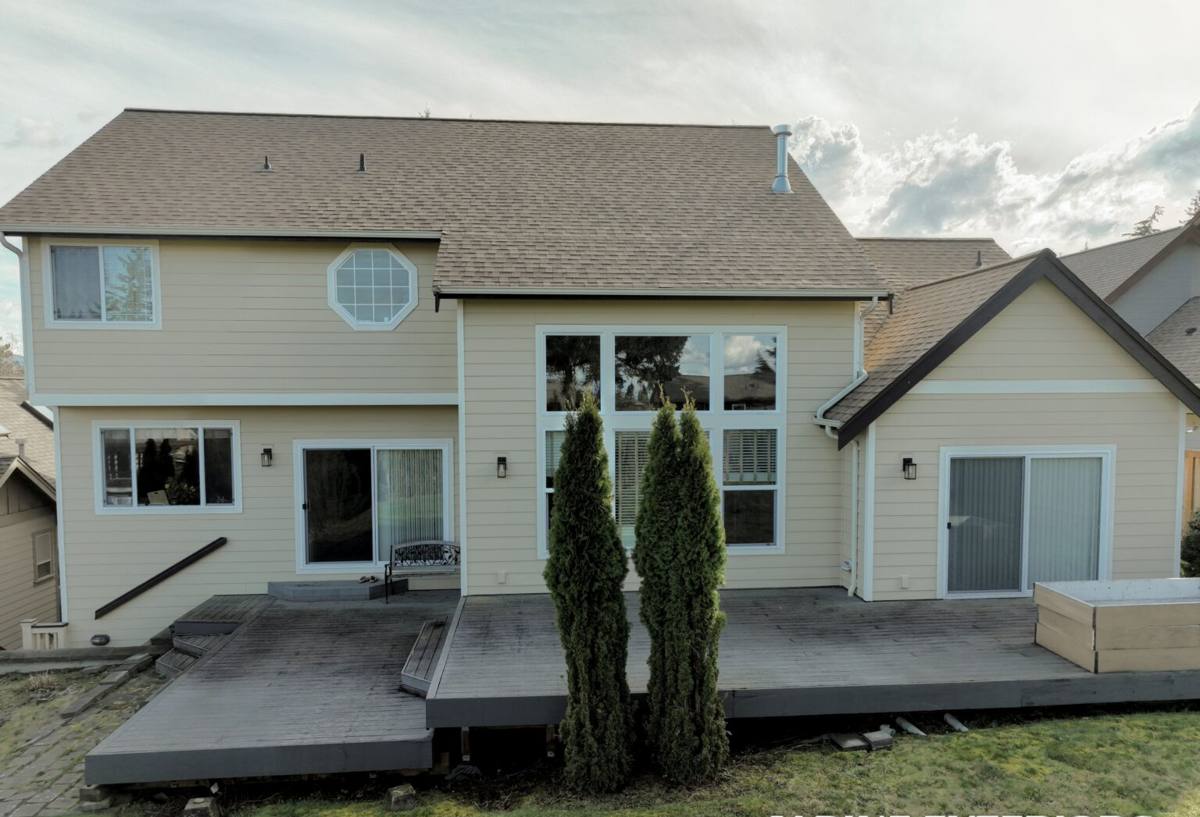
What a Deck Has to Survive Here
Before talking about materials, it helps to be honest about what a deck in this area is up against. This isn't a dry-climate build. It's a wet-climate build with long stretches of low sun angle, and that combination is harder on decking than most homeowners expect.
Rain That Doesn't Let Up
Driving rain here isn't just a fall event — it's a season that runs from October well into spring, with plenty of gray, damp days mixed in through summer. Any decking material that can absorb moisture, or any framing detail that lets water sit instead of drain, is going to show it within a couple of seasons.
Moss That Never Really Goes Dormant
The moss season here is genuinely long. Board surfaces, joist tops, and anywhere debris collects will grow moss and algae if there isn't airflow and drainage to dry things out between rain events. On a wood deck, that moss holds moisture against the boards and accelerates rot. On composite decking, moss is mostly cosmetic and cleanable — but only if the boards were installed with proper gapping and ventilation underneath.
Salt-Laden Marine Air
Homes further inland don't think about salt air, but onshore flow off the Strait of Georgia and Puget Sound pushes moist, mineral-laden air well into the Fraser Valley and Whatcom County lowlands. Over years, that air accelerates corrosion on hardware, fasteners, and metal flashing that wasn't rated for it. It's a slower, quieter problem than moss, but it's one of the more common reasons we find corroded fasteners on decks that are otherwise in decent shape.
Composite Decking vs. Other Deck Materials
We get asked fairly often why we steer most Aldergrove and Lynden clients toward composite over pressure-treated lumber or cedar. It comes down to how each material actually behaves in a wet, moss-prone climate over the long run — not brand preference.
| Material | Moisture Behavior | Moss/Algae Resistance | Ongoing Maintenance |
|---|---|---|---|
| Composite decking | Doesn't absorb water into the board itself | Surface growth cleans off; doesn't feed into the material | Occasional wash; no staining or sealing |
| Pressure-treated lumber | Absorbs and releases moisture seasonally, which drives warping | Growth takes hold in the wood grain and holds moisture against it | Annual cleaning and re-sealing to keep rot at bay |
| Cedar | More stable than PT lumber but still moisture-permeable | Similar issue to PT lumber, especially in shaded areas | Regular oiling/sealing; sanding as it grays |
| PVC decking | Fully moisture-resistant | Very good, similar to composite | Low; can look and feel more plastic underfoot |
Composite isn't the only reasonable option in this table — PVC decking holds up just as well against moisture and is worth discussing if you want the lowest possible maintenance and don't mind the different look and feel underfoot. Where we don't recommend a product, it's usually about long-term maintenance burden or how forgiving it is to install correctly in wet conditions, not a knock on any manufacturer.
What a Correct Composite Deck Installation Actually Involves
Composite boards themselves are close to maintenance-free, but the deck as a whole is only as good as what's underneath the boards. This is where most of the long-term problems we get called out for actually started — not with the decking material, but with the framing and flashing decisions made before a single board went down.
Ledger Flashing Where the Deck Meets the House
Any deck attached to the house needs proper ledger board flashing that directs water away from the wall structure, not into it. In a climate that sees this much rain, a missed or undersized flashing detail here is one of the more common ways water ends up inside a wall cavity years later.
Joist Spacing and Airflow
Composite boards typically need tighter joist spacing than solid wood decking to prevent sagging, and manufacturers are specific about it. Just as important is leaving enough clearance underneath the joists for air to move — a low, tight crawlspace under a deck traps moisture and speeds up moss growth on the underside of the boards.
Fasteners and Hardware
Given the marine air in this area, hardware matters more here than it would in a drier inland climate. Structural screws, joist hangers, and hidden fastener clips should be rated for exterior, corrosion-prone environments — not just whatever came in the cheapest hardware pack.
Board Gapping
Composite boards need consistent gapping, both for water drainage between boards and to allow for the material's natural expansion and contraction with temperature swings. Too tight, and boards can buckle. Too loose, and you get an uneven, unfinished look.
Our Process for Aldergrove and Lynden Deck Projects
The process itself isn't complicated, but a few steps matter more here than they would somewhere drier.
- Site visit and assessment — we look at drainage on the lot, sun exposure, existing framing if it's a tear-off and rebuild, and how the new deck will tie into the house.
- Material and layout discussion — board tier, color, railing style, and any stairs or multi-level layout, priced honestly against your budget rather than upsold.
- Framing and flashing — the substructure gets built to drain and dry, with flashing detailed at every point the deck contacts the house.
- Decking installation — boards installed to spec with correct spacing, fastening, and any picture-framing or pattern work you've chosen.
- Final walk-through — we go over basic care so the deck stays looking the way it did the day it was finished.
For homeowners in Aldergrove weighing a Lynden-based crew, it's a fair question to ask how the logistics work across the border — permitting is handled through your local municipality, not ours, and material delivery and scheduling need to account for the crossing. We're upfront about that during the site visit rather than after a quote is signed.
Cost Factors for a Composite Deck
Composite decking costs more upfront than pressure-treated lumber and less than most homeowners assume once they factor in years of staining and sealing avoided. What actually moves the number on a given project is usually one of these:
| Factor | Why It Matters |
|---|---|
| Deck size and shape | Square footage plus cuts around angles, curves, or multiple levels |
| Board tier | Entry-level composite vs. capped, higher-end lines with deeper color and grain options |
| Existing substructure condition | Reusing sound framing costs less than a full tear-off and rebuild |
| Height and stairs | Elevated decks need railing systems and stair stringers that add labor and material |
| Railing style | Composite, aluminum, or cable railing all price differently |
| Site access | Tight lots or backyard-only access can add labor time for material staging |
We'll walk through where your project lands on each of these during the estimate, rather than quoting a flat per-square-foot number that doesn't reflect your actual site.
Keeping a Composite Deck Looking Right in This Climate
Composite decking is low-maintenance, not no-maintenance, especially with the moss season this area sees. A little seasonal attention goes a long way:
- Sweep leaves, needles, and organic debris off the boards regularly, especially in fall — trapped debris holds moisture and feeds moss growth
- Clean the gaps between boards a couple of times a year so drainage channels don't clog
- Wash the surface with a soft-bristle brush and mild soap and water rather than a pressure washer on high setting, which can damage the board's surface layer
- Check ledger flashing and any spots where the deck meets the house once a year for signs of water intrusion
- Trim back overhanging vegetation that keeps sections of the deck shaded and slow to dry
- Avoid harsh chemical cleaners or de-icers not rated for composite material
Why It Matters That We Already Work in Aldergrove and Lynden
A crew that's never dealt with this specific combination of long moss seasons, driving rain, and marine air tends to learn those lessons on your deck — undersized joist spacing, missed flashing details, hardware that corrodes early. We've built and repaired decks around Whatcom County long enough to know which details actually matter here versus what's fine to simplify. That's the difference between a deck that needs attention every year and one you mostly forget about.
If you're in Aldergrove, BC or Lynden and thinking about a composite deck — new build, replacement, or a rebuild on an aging structure — we're happy to come take a look and give you a straightforward, no-pressure estimate using the form below.