 Lynden Siding
 Building a Deck That Actually Holds Up in Aldergrove
Aldergrove sits right on the Whatcom County / Fraser Valley border, and that location cuts both ways. It gets the marine air rolling in off the Salish Sea, the steady soaking rain that defines a Pacific Northwest fall and winter, and enough shaded, damp ground to grow moss on almost any horizontal surface that isn't actively shedding water. A deck built here isn't just a place to put a barbecue and a couple of chairs — it's an outdoor structure that has to survive months of standing moisture, freeze-thaw swings, and UV exposure in between. We build custom decks for homes on both sides of the Aldergrove-Lynden line, and the lessons from one side apply directly to the other because the weather doesn't stop at the border.
This page is about custom deck construction specifically for Aldergrove, BC properties — what the climate demands, what a properly built deck involves, and how our process works when the job site is across the line from our home base in Lynden, Washington.
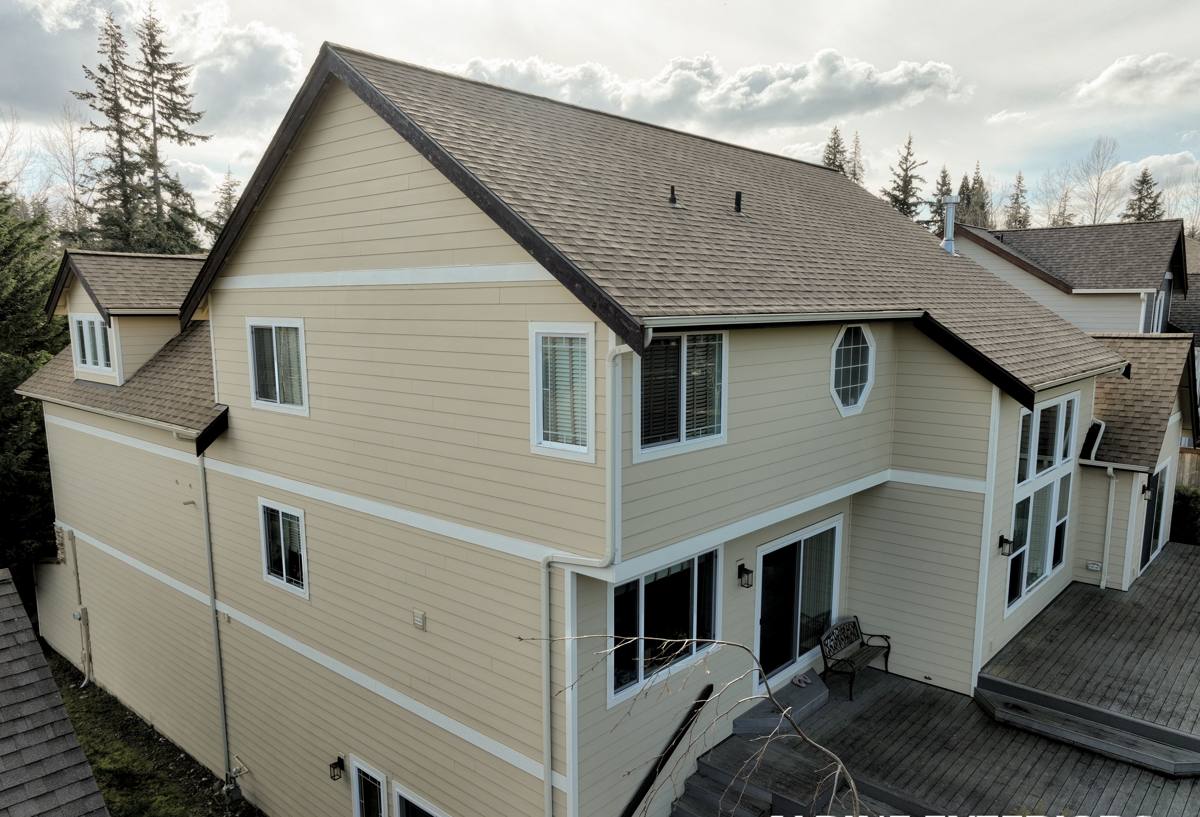
What Aldergrove's Climate Actually Does to a Deck
Every deck problem we get called out to fix traces back to moisture that had nowhere to go. In this region that shows up in a few predictable ways:
Salt air and corrosion
Aldergrove isn't beachfront, but the marine air that moves through the Fraser Valley carries enough salt content to accelerate corrosion on cheap or uncoated fasteners over time. Screws and joist hardware that would last decades in a dry inland climate can start rusting and staining the decking around them within a few seasons if the wrong grade of hardware was used.
Driving rain and standing water
Rain here doesn't just fall straight down — wind-driven rain gets underneath railings, into ledger board connections, and between deck boards that weren't spaced correctly. Left alone, that moisture doesn't dry out fast because the air stays damp for weeks at a stretch.
A long moss season
Shaded decks, north-facing decks, and decks under trees can hold moss and algae growth for most of the year in this climate. Moss isn't just cosmetic — it holds moisture against the wood or composite surface and makes the boards slicker and more slippery underfoot, which is a real safety issue on stairs and ramps.
Decking Material Options: What Actually Makes Sense Here
There's no single "best" decking material — there's a best material for your budget, your yard's exposure, and how much maintenance you're willing to do. Here's how the common options actually perform in this climate:
| Material | Upfront Cost | Maintenance | Moss/Moisture Behavior |
|---|---|---|---|
| Pressure-treated wood | Lowest | Needs cleaning and re-sealing every 1-2 years | Prone to moss in shaded spots; can cup or split if not maintained |
| Cedar | Mid | Regular sealing to hold color and resist decay | Naturally more rot-resistant than PT wood but still needs upkeep |
| Composite (capped) | Higher | Occasional washing, no sealing or staining | Much more moss- and mildew-resistant; won't rot or splinter |
| PVC / all-vinyl | Highest | Lowest — wash as needed | Fully synthetic, no organic material for moss or rot to feed on |
Composite and PVC decking cost more up front, but in a climate with this much sustained moisture, the maintenance savings and moss resistance often make up the difference over the life of the deck. Wood is a legitimate choice too — it just means committing to a real maintenance schedule, which we'll be honest with you about before you buy.
Where Rushed or DIY Deck Builds Go Wrong
We get called to look at decks that are only a few years old and already failing. The pattern is almost always the same:
- No flashing at the ledger board — where the deck attaches to the house is the single most common spot for hidden rot, because water gets behind the ledger and has nowhere to escape.
- Standard fasteners instead of coated or stainless hardware — cheap screws corrode, stain the decking, and eventually lose grip strength.
- Boards installed tight with no gap — without proper spacing, water pools between boards instead of draining, which accelerates rot and moss growth.
- Footings that don't account for local soil and frost depth — undersized or shallow footings can shift over a few wet winters, leading to a deck that feels spongy or uneven.
- No ventilation under the deck — low clearance and no airflow trap moisture underneath, which rots joists from below where nobody sees it until it's serious.
None of these are exotic mistakes — they're what happens when a deck gets built fast, by someone unfamiliar with how wet this climate actually gets. Correcting them after the fact usually costs more than doing it right the first time.
How We Build a Custom Deck
1. On-site consultation and design
We walk the property, look at drainage, sun/shade exposure, and how the deck will connect to the house. This is where we talk through material options honestly — what fits your budget and how much upkeep you actually want to sign up for.
2. Structural planning
Footing depth, joist spacing, and ledger attachment get planned for this specific site — not a generic template. Ground conditions and drainage patterns vary block to block, so we don't assume a spec from one yard works on the next.
3. Permitting
Deck construction typically requires a building permit, and the process and requirements differ depending on which side of the border the property sits on. We handle this conversation up front so there are no surprises mid-project.
4. Framing and moisture protection
This is the stage that determines whether a deck lasts ten years or thirty. Proper ledger flashing, coated or stainless fasteners, joist tape on top of the framing, and correct board spacing all happen here — the parts that aren't visible once the deck is finished but matter the most.
5. Decking, railing, and finish work
Once the structure is sound, we install the decking material, railings, and any stairs, then do a final walkthrough with you before calling the job done.
Permits and Codes: Building on the Canadian Side of the Border
Aldergrove is part of the Township of Langley in British Columbia, which means deck construction there falls under BC building code and local Township permitting rather than Washington State requirements. That includes differences in things like guard rail height requirements, footing depth standards, and pressure-treated lumber chemical ratings between the US and Canada. A contractor who only works on one side of the border can miss these differences; we make a point of confirming current local permit and code requirements for every Aldergrove job rather than assuming what applies in Whatcom County automatically carries over.
If you're comparing quotes, it's worth asking directly whether the contractor is familiar with Township of Langley permitting and BC code requirements, or whether that's new territory for them on your project.
Hardware and Material Choices That Actually Matter Here
The visible decking gets most of the attention, but the hardware underneath is what determines whether the structure is still sound in fifteen years. For this climate, that means:
- Stainless steel or heavy hot-dip galvanized fasteners rated for treated lumber contact, not standard exterior-grade screws.
- Self-adhering flashing tape at the ledger board connection to keep water from reaching the house's rim joist.
- Joist tape over the top of framing lumber to shed water away from screw penetrations, which is where rot most often starts.
- Hidden or surface fasteners rated for the specific decking material — composite and PVC boards often need different fastening systems than wood.
- Post bases that hold posts up off standing water rather than embedding them directly where moisture collects.
None of this is visible once the deck is finished, which is exactly why it's worth asking a contractor what hardware and flashing details they're using before the framing gets covered up.
What Affects the Cost of a Custom Deck
Every deck is priced around a handful of variables. Rather than throw out a number that won't mean much without context, here's what actually drives the cost up or down:
| Factor | Why It Matters |
|---|---|
| Size and footprint | More square footage means more material, framing, and labor |
| Decking material | Pressure-treated wood costs less upfront than composite or PVC |
| Height and stairs | Elevated decks need more structural framing, footings, and guard rail |
| Site access and grading | Sloped or hard-to-access yards add labor time |
| Railing style | Cable, glass, or composite railing systems cost more than standard wood balusters |
| Permit and inspection requirements | Varies by jurisdiction and project scope |
We give a written estimate that breaks these down for your specific property rather than a flat per-square-foot number that doesn't account for your yard, your material choice, or which side of the border you're building on.
Keeping a New Deck Ahead of Moss and Mildew
A well-built deck still needs some seasonal attention in this climate. What that looks like depends on material, but the basics apply across the board:
- Sweep debris off the deck regularly — wet leaves sitting on boards is one of the fastest ways to start moss growth.
- Rinse or wash the surface at least once or twice a year, more often in heavily shaded areas.
- Check that gaps between boards stay clear so water keeps draining instead of pooling.
- Trim back overhanging branches to let more light and airflow reach the deck surface.
- For wood decks, re-seal on the schedule recommended for the specific product — skipping a year is when rot gets a foothold.
- Walk under the deck once a year to check for standing water, sagging, or discoloration on the joists.
Why Work With a Crew That Already Builds in This Area
A custom deck is a structural project sitting outside in one of the wetter climates in North America — the details that don't show up until year three or four are the ones that matter most. Working with a crew that already builds decks in Aldergrove and across the Lynden border means the framing, flashing, and fastener choices are already dialed in for this specific combination of rain, salt air, and moss exposure, and the permitting conversation on the BC side isn't guesswork. We're not learning the local code requirements or the way this climate treats a deck for the first time on your project.
If you're planning a new deck or replacing one that's showing its age, we're happy to come take a look and put together a straightforward estimate — no pressure, no inflated scope. Use the form below to get in touch and we'll set up a time to walk the property with you.