 Lynden Siding
 Building New in Aldergrove? Your Windows Are a One-Shot Decision
When you're framing a new home or a major addition in Aldergrove, windows aren't a swap-and-go job the way a replacement project is. They go in before the siding, before the interior finishes, and often before the final grading around the foundation. Get the flashing, the rough opening, and the water management wrong at this stage, and you're not looking at a leaky window in five years — you're looking at rot inside a wall that's already closed up. New construction is the one point in a home's life where doing the window install correctly costs almost nothing extra. Fixing it later costs a lot.
Aldergrove sits right on the US-Canada line at the Aldergrove–Lynden border crossing, which is exactly why a crew based in Lynden ends up working this side of the border regularly. We're not driving in cold from three hours away — we know the building patterns, the inspectors' expectations, and the weather this area actually deals with.
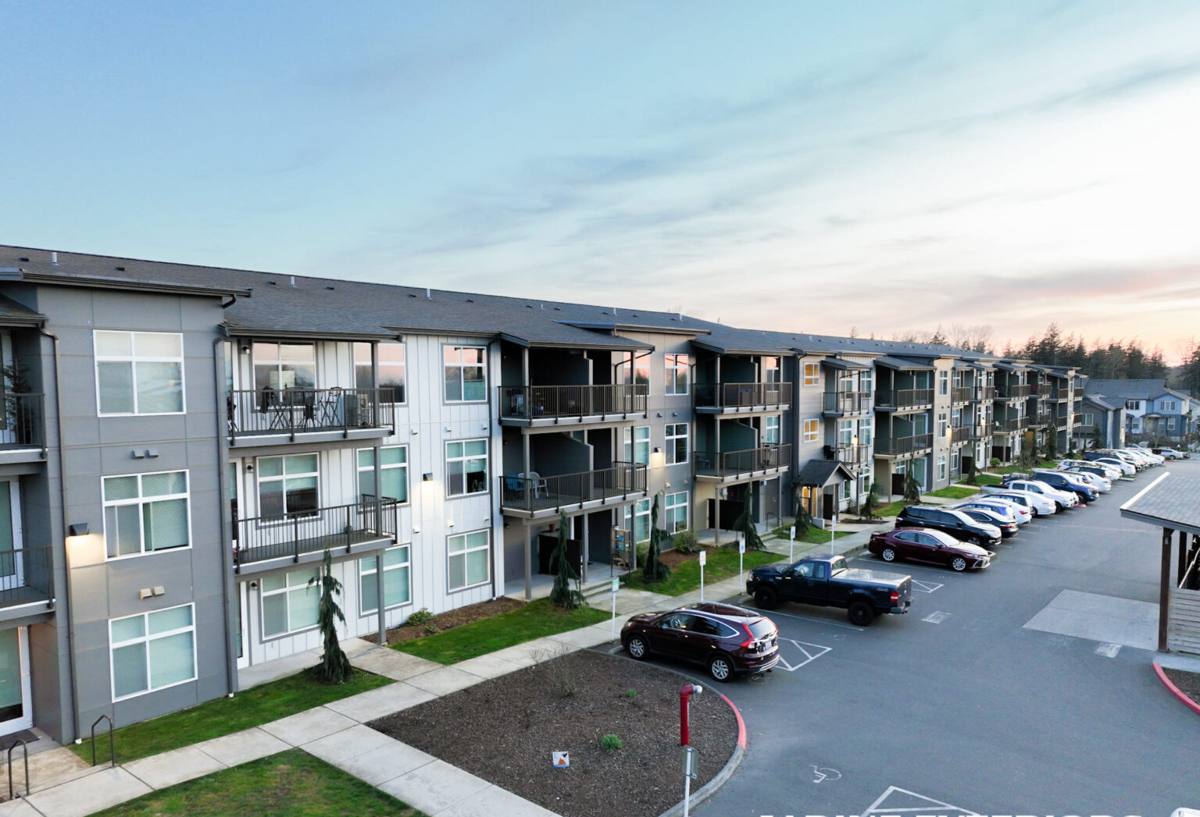
What the Local Climate Does to New-Construction Windows
This part of the Pacific Northwest doesn't get hurricanes or hard freezes, but it grinds on a building envelope in its own steady way. A window installed correctly the first time shrugs this off for decades. One installed with shortcuts starts showing problems within a few wet seasons.
Driving Rain
Fall and winter here mean weeks of sustained rain, often pushed sideways by wind off the Fraser Valley and the Strait. Water doesn't just fall on a window — it gets driven up and under trim, sills, and any gap in the weather-resistive barrier. New-construction installs have to plan for wind-driven rain at the flashing and sealant stage, not just at the glass.
A Long Moss Season
North- and east-facing walls that stay shaded for months at a time hold moisture longer than the rest of the house. That's where moss and mildew take hold first — on trim boards, sills, and anywhere water sits instead of shedding. A window detail that traps water against wood trim is asking for a moss and rot problem within a few winters, regardless of how good the window itself is.
Salt-Tinged Marine Air
This region's marine air carries enough salt and moisture to accelerate corrosion on lower-grade hardware, fasteners, and metal flashing over time. It's not coastal-Florida severe, but it's persistent, and it's one more reason we don't cut corners on flashing material or fastener quality on a new build that's supposed to last the life of the house.
New-Construction Windows vs. Replacement Windows — Why the Method Matters
These are genuinely different jobs with different failure points. Confusing them is one of the most common mistakes on a new build.
| Factor | New-Construction Window | Replacement / Retrofit Window |
|---|---|---|
| Frame type | Nail-fin frame, installed into an open rough opening | Block-frame or insert, fit into an existing finished opening |
| Water management | Flashing tied directly into the house wrap/WRB before siding goes on | Relies on sealant and existing wall flashing already in place |
| Access to structure | Full access to studs, sheathing, sill pan | Limited — mostly working around existing finishes |
| Best suited for | New homes, additions, full wall re-builds | Existing homes keeping their siding and trim |
| Long-term risk if done wrong | Hidden rot inside a closed wall | Usually visible leak sooner, easier to catch |
Because a new-construction install happens while the wall is still open, there's no excuse for skipping steps — every layer is accessible. That's also why the sequencing matters so much: each layer has to lap the one below it correctly, or the whole point of doing it "the right way" is lost.
What a Correct New-Construction Install Actually Involves
Flashing and WRB Sequencing
The order matters as much as the materials. Sill pan flashing goes in first, sloped to drain outward, then the window, then the side and head flashing lapped over the housewrap in the correct shingle-style order — always working top-over-bottom so water sheds down and out, never up and behind the barrier. This is the single most common place we find shortcuts on other people's framing when we're brought in to inspect or repair a problem house.
Rainscreen or Drainage Gap
Given how much sustained rain this region sees, a drainage gap behind the siding — even a simple furring-strip rainscreen — gives any water that does get past the cladding somewhere to go besides sitting against the sheathing. Around the window opening, that drainage path has to stay continuous, not get blocked by the window's own flashing.
Rough Opening Tolerances
Too tight and the frame racks when the house settles, causing operational problems and stress cracks in the corner welds down the road. Too loose and you're relying on foam and sealant to do a structural job they aren't meant to do. We build openings to the manufacturer's spec, not "close enough."
BC Building Code and Energy Step Code — What New Construction Has to Meet
Working new-construction jobs on the BC side means building to BC Building Code and, depending on the jurisdiction and the project, the BC Energy Step Code targets that apply to new residential builds. That affects window selection directly — U-factor and overall assembly performance have to meet a documented standard, not just "feel efficient." It also means permit and inspection sequencing that's different from a straightforward Whatcom County replacement job. A crew that only works south of the line and treats a BC new-construction job the same as a Washington one is going to hit friction with either the permit office or the final inspection. We plan for this from the framing stage, not after the windows are already in.
Choosing Frame Material and Glazing for This Climate
For new construction here, we lean toward vinyl or fiberglass frames with a good multi-point lock and double- or triple-pane glazing depending on the exposure and the client's energy targets. Wood-clad frames look good but demand real upkeep in a climate this wet — that's a maintenance conversation we have honestly with homeowners rather than a sale we push. The trade-off is straightforward: wood needs regular refinishing to keep moisture out of the frame joints, vinyl and fiberglass don't. On a new build, we'd rather set expectations up front than have someone find out the hard way five winters in.
Glazing choice matters too. A low-E coating tuned for this region cuts summer heat gain without sacrificing the daylight most people want on a new build, and it pairs with the argon or krypton fill most manufacturers use in their better window lines for extra insulating value against our cold, wet winters.
Our Process for New-Construction Window Installs
Every new build we work follows the same sequence, whether it's a full house or a large addition:
- Review the rough openings against the window schedule before a single unit shows up on site
- Install sill pan flashing sloped to drain, before the window ever goes in
- Set the window plumb, level, and square, shimmed correctly at the manufacturer's load points
- Flash head and jambs in proper shingle-lap order, tied into the WRB
- Confirm the drainage/rainscreen gap stays continuous around the opening
- Air-seal and insulate the gap between frame and rough opening without over-compressing the frame
- Photo-document flashing and sealing before siding closes the wall
- Final walk-through covering operation, hardware, and warranty paperwork
That documentation step matters more than people expect — once siding goes on, nobody can see what's behind it. Having a record of the flashing work done right protects the homeowner if a warranty question ever comes up years later.
Why a Crew That Already Works This Border Area Matters
Aldergrove and Lynden sit close enough together that a lot of building patterns, weather exposure, and even trades knowledge cross the line freely — but the code requirements, inspection processes, and permitting don't. A contractor who only works one side of the border is guessing at the other. We do new-construction window work on both sides regularly, which means we're not learning BC permit requirements or Whatcom County requirements for the first time on your job. It also means when we say a detail is "built to code," we know which code we mean and we can show it.
What to Watch in the First Year After Move-In
Even a correctly installed new-construction window benefits from an early check. In the first wet season, walk the exterior after a heavy rain and look for any staining below sills or trim, and check operation on every window as the house settles and humidity swings through its first full year. Minor adjustment of hardware or sealant touch-up in year one is normal on a new build — it's not a sign anything was done wrong, just a normal part of a house settling into its final position.
If you're planning a new build or addition in Aldergrove and want windows installed by a crew that treats the flashing and sequencing as seriously as the glass itself, we're happy to walk the plans with you and put together a straightforward, no-pressure estimate — just fill out the form below.