 Lynden Siding
 Why Abbotsford Roofs Wear Differently
Abbotsford sits in the Fraser Valley, close enough to the Strait of Georgia and Boundary Bay that homes here deal with a mix of moisture-heavy air, wind-driven rain funneling through the valley, and long stretches of overcast, damp weather that never quite dries a roof out. That combination is harder on asphalt shingles than a simple "it rains a lot" description suggests. It's not just the volume of rain — it's how long the roof surface stays wet, how often wind pushes water sideways under poorly sealed shingles, and how much shade and moisture collect on north-facing slopes where moss gets a foothold and never really leaves.
A roof built for a drier climate, or installed without accounting for these specific conditions, tends to show problems early: soft granule loss, curling tabs, moss ridges along the shingle courses, and soggy sheathing underneath before anyone notices a leak from inside. Asphalt shingle roofing done right for this area isn't a different product so much as a different set of decisions — material grade, ventilation, underlayment, and detailing at the vulnerable points — made with this specific climate in mind.
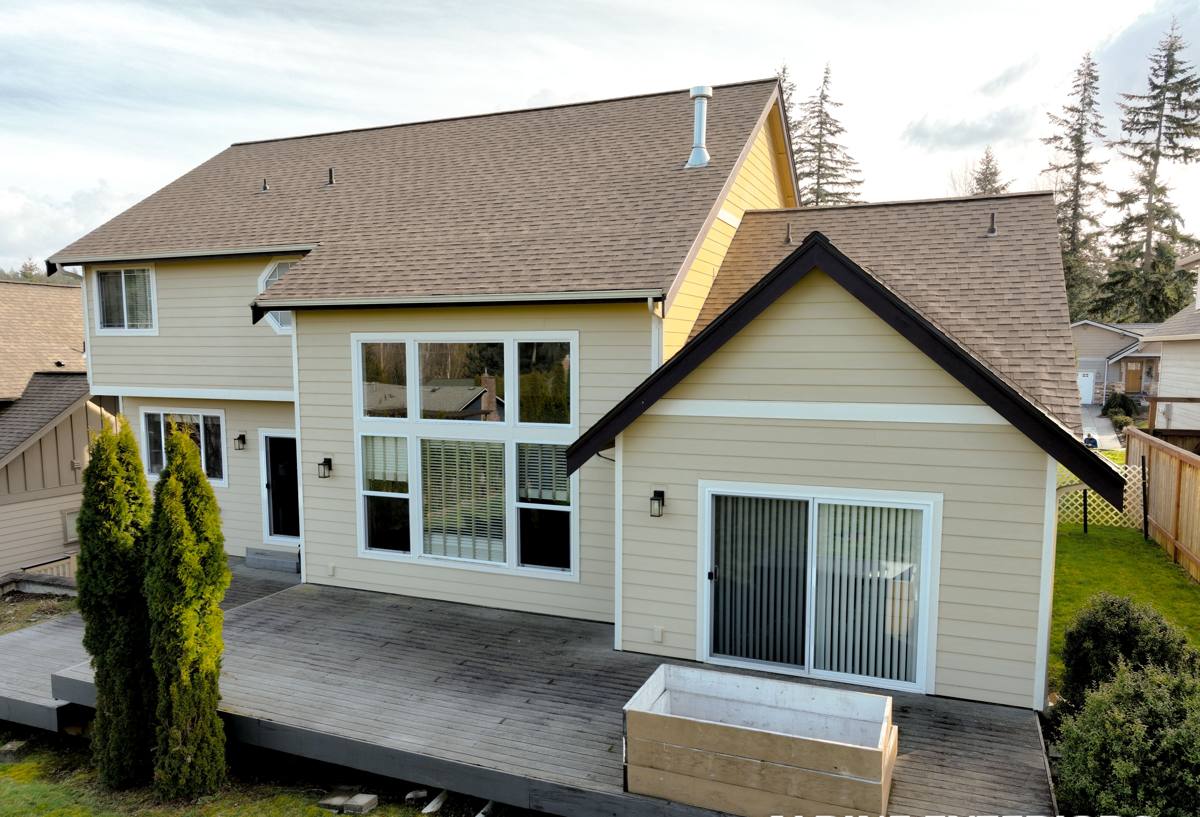
What the Climate Actually Does to an Asphalt Shingle Roof
Driving Rain and Wind
Wind-driven rain doesn't just fall on a roof — it gets pushed uphill under shingle edges, into exposed nail heads, and through any gap in flashing around chimneys, vents, and valleys. A roof that would hold up fine in a calmer climate can leak here simply because the wind direction during storms pushes moisture into spots that were never properly sealed.
Moss and Prolonged Moisture
Because so much of the year stays cool and damp, moss and algae get a long growing season with little dry-out time to check their spread. Moss isn't just cosmetic — its root structure lifts shingle edges, holds standing water against the granule layer, and accelerates the breakdown of the asphalt mat underneath. Left unaddressed for a few seasons, moss growth alone can shave years off a roof's usable life.
Salt-Influenced Coastal Air
Proximity to coastal air brings a low but steady level of airborne salt and moisture that speeds up corrosion on exposed metal — nail heads, flashing, and vent components — faster than an inland climate would. Correctly fastened, corrosion-resistant hardware and properly sealed flashing matter more here than they would further from the coast.
Choosing the Right Asphalt Shingle for This Area
Not every asphalt shingle product is built the same way, and for this climate the differences that matter most are algae resistance, wind rating, and how the shingle sheds water at overlaps. Below is a general comparison of the two common categories homeowners choose between.
| Factor | 3-Tab Shingles | Architectural (Laminate) Shingles |
|---|---|---|
| Typical lifespan in this climate | Shorter — flatter profile holds moisture longer | Longer — thicker, layered profile sheds water faster |
| Wind resistance | Lower rating, more vulnerable to lifting | Higher rating, better suited to valley wind gusts |
| Moss and algae resistance | Available with algae-resistant granules, but thinner mat wears faster | Usually available with algae-resistant granules and more durable mat |
| Upfront cost | Lower | Higher |
| Appearance | Flat, uniform look | Dimensional, shadow-line look |
We generally recommend algae-resistant, architectural-grade shingles for Abbotsford-area homes, particularly on shaded or north-facing slopes. The higher upfront cost is offset by fewer moss-related maintenance calls and a longer service life before replacement. That said, 3-tab shingles remain a reasonable, budget-conscious choice on simpler roofs with good sun exposure and drainage — the right answer depends on the specific roof, not a blanket rule.
What a Correct Installation Involves
Shingle selection only matters if the installation underneath it is done correctly. A roof that leaks in this climate almost always fails at one of these points rather than in the field of the shingles themselves.
Underlayment and Ice-and-Water Protection
A synthetic underlayment across the full roof, with self-adhering ice-and-water membrane at eaves, valleys, and around penetrations, gives the roof a second line of defense where wind-driven rain is most likely to get under the shingles.
Ventilation
Balanced intake and exhaust ventilation keeps the underside of the roof deck dry and at a stable temperature. In a damp climate, poor ventilation traps moisture in the attic, which shortens shingle life from underneath and can lead to sheathing rot that has nothing to do with the roof surface itself.
Flashing and Fasteners
Corrosion-resistant flashing at chimneys, skylights, walls, and valleys, paired with properly placed nails driven to the correct depth — not underdriven, not overdriven — is what actually keeps water out over the long run. This is also where salt-air corrosion shows up first if lower-grade hardware is used.
Nailing Pattern and Sealant Strips
Manufacturer-specified nailing patterns and properly activated sealant strips between shingle courses are what give the roof its wind rating in practice, not just on paper. Rushed installs skip or misplace these details, and it rarely shows until the first real windstorm.
Our Process for an Abbotsford Roof
Inspection and Estimate
We start with a full roof walk — checking shingle condition, flashing, ventilation, and any moss or moisture staining — and give a straightforward estimate that separates what's necessary now from what can wait.
Tear-Off and Deck Check
Old roofing comes off down to the deck, and we inspect the sheathing underneath for soft spots, rot, or prior water damage before anything new goes on. This step catches problems a surface-level estimate can't see.
Installation
Underlayment, ice-and-water membrane at vulnerable areas, flashing, and shingles go on in that order, following manufacturer specs for nailing and exposure. Ventilation components are checked and corrected as part of the same job, not treated as an afterthought.
Cleanup and Walkthrough
We clear debris and run a magnetic sweep for stray nails, then walk the finished roof with you so you know what was done and what to watch for going forward.
Repair or Full Replacement?
Not every roof problem in this climate means a full tear-off. The table below outlines the general factors that push a decision one way or the other.
| Situation | Repair Usually Makes Sense | Replacement Usually Makes Sense |
|---|---|---|
| Age of roof | Under roughly 12-15 years | Past typical service life for the material |
| Damage pattern | Isolated leak, damaged flashing, or a localized section | Widespread granule loss, curling, or moss across most slopes |
| Deck condition | Sheathing sound underneath | Soft or rotted decking found during inspection |
| Underlying cause | One-time damage (storm, fallen branch) | Chronic moisture or ventilation issues affecting the whole roof |
We'll tell you honestly which category a given roof falls into. A well-timed repair can add several years of life; patching a roof that's already failing broadly usually just delays a bigger cost.
Ongoing Maintenance for This Climate
Asphalt shingle roofs in Abbotsford last longer with a small amount of regular attention, especially given how long the moss season runs here.
- Have moss physically removed and treated on shaded or north-facing slopes before it establishes root structure under the granules
- Keep gutters and downspouts clear so water isn't backing up against the eaves during heavy rain
- Trim back overhanging branches that keep sections of the roof shaded and slow to dry
- Check attic ventilation isn't blocked by insulation, especially after any attic work
- Have flashing around chimneys, skylights, and vents inspected every couple of years for corrosion or sealant failure
- Address small leaks or lifted shingles promptly rather than waiting for a dry season to deal with them
Why a Crew That Already Works Abbotsford, BC Matters
A roofing crew that regularly works this specific area brings a few practical advantages over one that doesn't. They already know which shingle products and underlayment systems consistently perform under this valley's rain and moss conditions, rather than treating every roof as a generic install. They're familiar with the local supply chain for materials, so timelines aren't held up by sourcing delays. And because Abbotsford sits just across the border from Lynden, a crew that regularly crosses to work here understands the logistics of scheduling and material transport that a purely local operation might not have worked out.
Just as important is pattern recognition. A crew that's replaced and repaired dozens of roofs in this specific microclimate has seen where problems actually show up — which valleys pond water, which slopes hold moss no matter what, which flashing details get skipped by rushed installers — and builds those lessons into every new job rather than learning them on your roof.
If you're dealing with moss buildup, a leak, or a roof that's simply due, we're happy to take a look and give you a straightforward, no-pressure estimate. Use the form below to get started.