 Lynden Siding
 Roof Repair Built for Bellingham and Lynden Weather
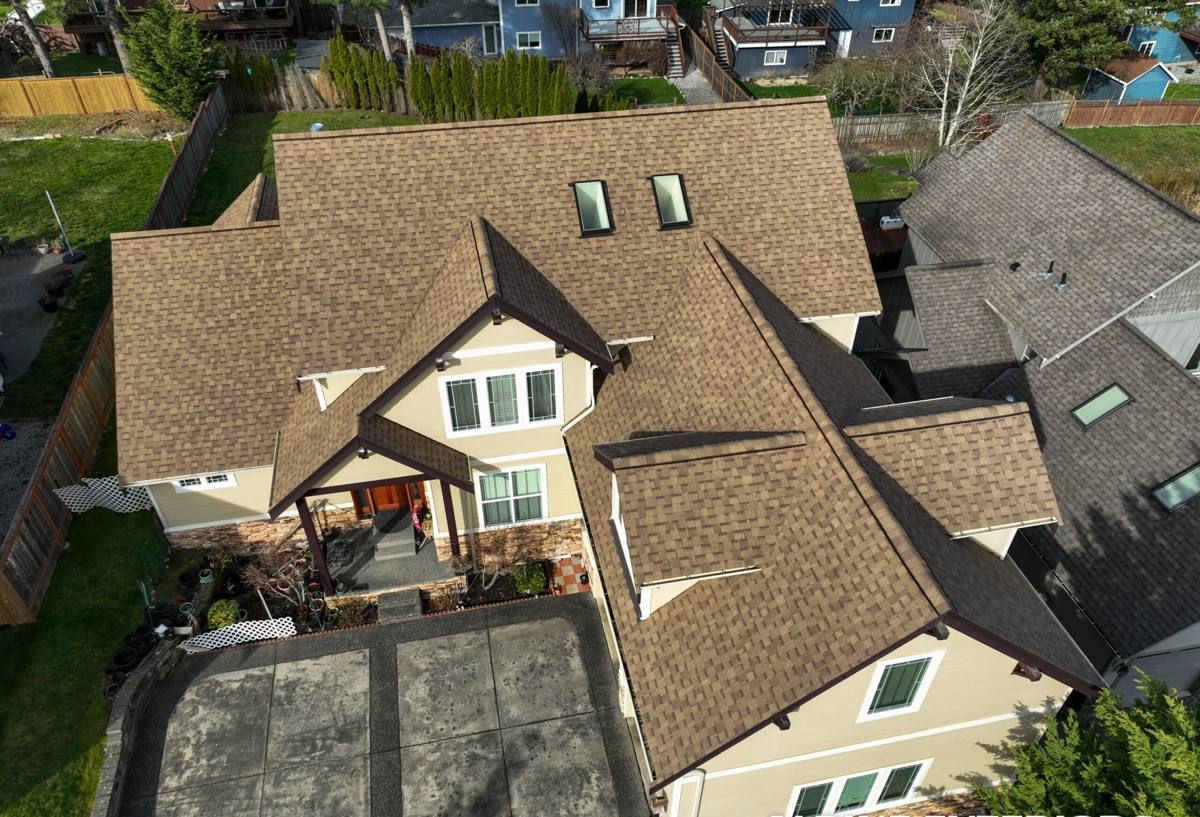
Homes in and around Bellingham face a specific combination of stress that inland roofs rarely see: salt-laden air off the coast, long stretches of driving rain, and a moss season that can run most of the year. None of these alone would be a big deal. Together, over years, they find every weak point in a roof — a lifted shingle tab, a flashing seam that was never quite sealed right, a vent boot that's gone brittle. Roof repair here isn't just about patching a leak; it's about understanding why that spot failed in this climate and making sure the fix holds up to the next few winters, not just the next dry spell.
We work on homes throughout Bellingham and the surrounding Lynden and Whatcom County area, and the repair calls we get tend to follow a pattern tied directly to the regional climate. Knowing that pattern is most of what separates a repair that lasts from one that's back on the schedule in two years.
Why Roofs Wear Differently Here Than Inland
Salt Air and Metal Fatigue
Proximity to the water means airborne salt settles on roofing metal — flashing, drip edge, fasteners, vent caps — and accelerates corrosion compared to a roof forty miles inland. A galvanized nail head that would last decades in a dry eastern Washington climate can start rusting and weeping stain streaks in a fraction of that time here. When we repair flashing or replace fasteners on a coastal-influenced roof, we account for that, using materials and coatings suited to a marine environment rather than whatever happens to be cheapest at the yard.
Driving Rain and Wind-Driven Water
It's not just rainfall totals — it's the direction. Storms off the Strait push rain sideways, which means water gets tested against roof details that a straight-down rain would never reach: the up-slope side of a chimney, a low-slope dormer, the transition where a roof meets a wall. Roofs that would perform fine in a calmer climate develop leaks specifically because wind-driven rain finds gaps in flashing and underlayment laps that were adequate but not generous. Repair work in this region has to close those margins, not just match what was there before.
A Moss Season That Doesn't Really End
Bellingham and Lynden both sit in a climate that stays cool and damp for much of the year — ideal conditions for moss and algae to establish on roofing. Moss isn't just cosmetic. It holds moisture against the roofing surface, works its way under shingle tabs and shakes, and lifts material as it grows, which opens the door for water intrusion that wouldn't happen on a clean, dry roof. A huge share of the repair calls we run start with moss that was left to spread for a season or two too long.
The Repairs We See Most Often in This Area
- Lifted or cracked shingle tabs from moss growth and wind uplift, especially on north- and shade-facing slopes
- Flashing failures around chimneys, skylights, and roof-to-wall transitions where wind-driven rain gets pushed uphill
- Corroded or failed vent boots and pipe collars, which age faster in salt-influenced air
- Valley leaks where debris and moss slow drainage and let water back up under the shingle courses
- Soft or rotted roof decking discovered under a leak that went unnoticed longer than it should have
- Gutter and edge-metal issues that redirect water back under the roofline instead of away from the house
What a Correct Repair Actually Involves
A roof repair done right starts before anyone touches a shingle. We look at the leak the way water actually travels — which is almost never straight down from where the stain shows up inside. A stain on a ceiling ten feet from an exterior wall can trace back to a flashing gap, a valley, or a vent that's nowhere near that spot. Chasing the visible symptom instead of the real entry point is the single most common reason a "repaired" roof leaks again the next season.
Diagnosis First
We get on the roof, not just under it. That means checking flashing laps, fastener condition, shingle granule loss, decking firmness underfoot, and how water is actually moving across that section of roof during a real rain if the timing allows. Guessing from the ground, or from an attic flashlight check alone, misses too much in a climate this wet.
Matching Materials, Not Just Colors
A patch that doesn't match the existing roofing's age, exposure, and granule profile stands out and can also behave differently under water — a mismatched shingle can shed water at a slightly different rate or seal down differently, which sometimes creates a new weak point instead of fixing the old one. We source materials that integrate with what's already on the roof whenever the existing product is still available, and we're upfront when it isn't and a broader patch is the more honest fix.
Flashing and Underlayment Get the Real Attention
Most lasting leaks in this region come down to flashing and underlayment details, not the shingles themselves. Any repair we do around a penetration, wall transition, or valley gets rebuilt with proper laps and sealant sized for wind-driven rain, not just a bead of caulk over the old failure point.
We Check the Decking
If a leak has been active for a while, the plywood or plank decking underneath may have softened. Shingling over soft decking is a short-term cover-up — it won't hold fasteners properly and the repair will fail early. We tell you plainly if decking replacement is needed before the roofing goes back on, and why.
Repair or Replacement? How to Think About It
Not every roof problem needs a full replacement, and not every leak is safely solved with a patch. The honest answer depends on the roof's age, how localized the damage is, and how much of the roofing system is still sound underneath.
| Factor | Points Toward Repair | Points Toward Replacement |
|---|---|---|
| Roof age | Under roughly 15 years, or well-maintained | Near or past the material's expected service life |
| Extent of damage | Isolated to one section, valley, or penetration | Multiple areas failing, or moss/wear spread across most slopes |
| Decking condition | Firm, dry, no rot found | Soft spots, rot, or repeated leak history in the same area |
| Material availability | Matching shingle or shake still made or in stock | Discontinued profile makes patches visually and functionally mismatched |
| History of repairs | First or second repair on this roof | Repeated repairs in the same or nearby spots |
When a roof falls clearly on the repair side of that table, we say so and repair it — we don't push a replacement a roof doesn't need. When it falls on the other side, we'd rather tell you that up front than have you pay for a patch that buys a single season.
How Our Process Works
- Inspection. We assess the roof from the surface and, where accessible, the attic side, and identify the actual entry point rather than just the visible symptom.
- Written scope and estimate. You get a clear explanation of what failed, what we're proposing to fix, and a straightforward price before any work starts.
- The repair. We remove and rebuild the failed section properly — flashing, underlayment, decking, and roofing material as needed — rather than layering a patch over the problem.
- Cleanup and walkthrough. Debris and old material are cleared, and we show you what was done and why, in plain terms.
Materials and Product Choices
For most repairs in this climate, we favor roofing and flashing components with a track record in wet, salt-influenced marine environments over products that look similar but are more sensitive to installation detail or moisture cycling. That's not a knock on any particular brand — it's a matter of matching material behavior to the conditions the roof will actually face here, including maintenance burden down the road. If a lower-maintenance option costs a bit more up front but means fewer callbacks for moss cleaning or sealant touch-ups, we'll tell you that trade-off plainly so you can decide.
Keeping a Repaired Roof From Needing Repair Again
A good repair buys you years, but a roof in this climate still needs basic upkeep to get the full life out of that work. Homeowners in Bellingham and Lynden get the most out of a repair by staying ahead of the same conditions that caused the original problem.
- Keep gutters and valleys clear of needles and debris so water has a clean path off the roof
- Address moss while it's still light growth — a soft wash or treatment is far less disruptive than removing established moss later
- Trim back overhanging branches that keep sections of the roof shaded and slow to dry
- Have flashing and vent boots checked every couple of years, since these fail quietly and often show up as an interior leak only after they've been letting water in for a while
- Walk the attic after a hard wind-driven storm and look for new staining, especially near chimneys and valleys
Why Local Experience Matters for This Work
A crew that already works Bellingham roofs on a regular basis has seen how the local combination of salt air, wind-driven rain, and moss actually plays out on real roofs, not just in general roofing theory. That shows up in small but important decisions — which flashing details need extra attention on this side of a house, how much moss growth is normal versus a sign of a bigger drainage problem, which materials hold up and which need more frequent upkeep in this specific climate. It also means we're not learning the local weather patterns and permitting expectations on your project; we already know them, which keeps repairs efficient and priced fairly instead of padded for a learning curve.
Getting an Estimate
If you've got a leak, a stain, or a roof that's overdue for a look after a rough winter, we're glad to come take an honest look and tell you plainly whether it's a repair or something bigger. There's a free, no-pressure estimate form below — reach out and we'll get you scheduled.