 Lynden Siding
 Siding Replacement Built for Bellingham's Climate
Bellingham sits close enough to Bellingham Bay and the Salish Sea that salt-laden air is a real factor in how exterior materials age here, and it sits far enough into Whatcom County's marine weather pattern that driving rain off the water is a near-constant companion for eight or nine months of the year. Add in a moss season that can run from early fall through late spring on shaded, north-facing walls, and you have a set of conditions that punishes the wrong siding choice faster than almost anywhere else in the state. A siding replacement here isn't just a cosmetic upgrade — it's a decision about what's going to stand between your framing and a climate that never really lets up.
We work Bellingham regularly, which means we've seen firsthand how homes in this area actually age: where moisture tends to collect, which elevations take the worst of the wind-driven rain, and which siding materials hold up versus which ones quietly fail behind a coat of paint. That local pattern-recognition shapes every replacement we do.
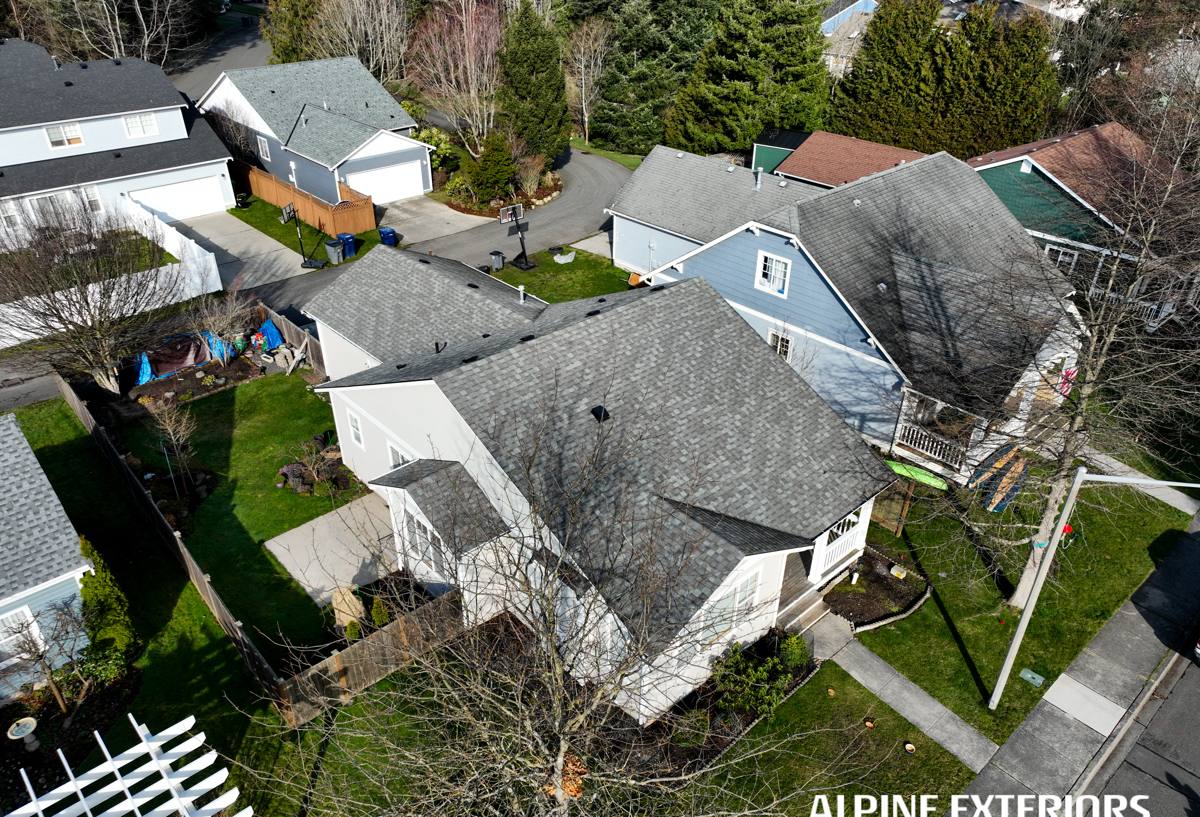
Why Bellingham Homes Wear Out Siding Faster Than the Brochure Says
Salt Air and Slow Corrosion
Proximity to saltwater doesn't just affect metal fasteners and flashing — it also accelerates the breakdown of lower-grade paint films and some composite sidings, causing chalking, fading, and surface degradation years ahead of schedule. Homes closer to the water tend to show this first, but it isn't limited to waterfront properties; salt-influenced air moves inland with the prevailing weather.
Driving Rain and Wind-Loaded Walls
Wind-driven rain doesn't behave like a gentle shower. It gets forced sideways and upward into laps, seams, and butt joints that were never designed to handle water moving against gravity. Over years, this is what turns a small installation shortcut — a missing piece of flashing tape, a lap that's too tight — into a rot problem you can't see until the siding is off the wall.
Moss, Shade, and Trapped Moisture
Whatcom County's tree cover and marine humidity are a near-perfect recipe for moss and algae growth on shaded siding. Moss itself isn't just cosmetic — it holds moisture against the siding surface far longer than open air would, which matters a great deal on materials that swell, absorb water, or aren't dimensionally stable when wet.
Signs a Bellingham Home Needs Replacement, Not Repair
Not every siding problem calls for a full tear-off. But there's a point where patching becomes a losing strategy, and Bellingham's climate tends to push homes past that point faster than drier parts of the state.
- Soft, spongy, or crumbling sections when pressed — usually a sign of trapped moisture and rot underneath, not just a surface issue
- Persistent moss or algae that returns within a season or two of cleaning
- Paint that's bubbling, peeling, or failing in patches rather than an even, gradual fade
- Visible cupping, warping, or delamination, especially on the north and west-facing walls that catch the worst weather
- Gaps opening up at butt joints, corners, or around windows and doors
- A musty smell or visible staining on interior walls that back up to exterior siding
- Siding that's original to a home built more than 20-25 years ago and has never been fully replaced
If you're seeing two or more of these, it's worth having someone look at what's happening behind the siding, not just at the surface.
What a Correct Siding Replacement Actually Involves
A siding replacement is only as good as what's underneath it. In a climate like Bellingham's, the details that don't show in a driveway photo are the ones that determine whether the job lasts fifteen years or fifty.
Tear-Off and Sheathing Inspection
Full removal of the old siding lets us actually see the wall — sheathing condition, existing water damage, and any framing that needs to be addressed before anything new goes up. Covering over a compromised wall with new siding just delays the problem and hides it better.
Water-Resistive Barrier and Flashing
A continuous, properly lapped water-resistive barrier, with correctly integrated flashing at every window, door, and penetration, is what actually keeps wind-driven rain out of the wall assembly. This is the step that matters most in a marine climate and the one that's easiest to shortcut if a crew is moving fast.
Rainscreen and Drainage Space
Where conditions call for it, a drainage gap between the siding and the water-resistive barrier lets any moisture that does get past the outer layer drain and dry out instead of sitting against the wall. Given the amount of driving rain and moss-driven moisture Bellingham sees, this detail earns its keep.
Fastening and Clearances
Correct fastener type, spacing, and penetration depth, along with proper clearance from grade, roof lines, and decks, all affect how well the siding sheds water and resists wind loads over decades — not just at installation, but as the home settles and moves with the seasons.
Why We Install Only James Hardie Fiber Cement
We don't offer vinyl, LP SmartSide, or other engineered wood products, and that's a deliberate standard, not an oversight. In a climate defined by sustained moisture exposure and a long moss season, we want a siding material on the wall that doesn't rely on paint film alone to stay dimensionally stable, and that won't swell, delaminate, or feed fungal growth the way wood-based products can if moisture gets past the outer defenses.
James Hardie fiber cement is non-combustible, holds its shape in wet conditions, and comes with a factory-applied ColorPlus finish that's baked on rather than field-painted, which matters in an area where UV and salt air both work against a coating's lifespan. Hardie also engineers specific product lines (its HZ5 climate zone products) for regions with sustained moisture exposure — which describes Whatcom County about as well as anywhere in the Pacific Northwest. Backed by a strong, transferable manufacturer warranty when installed to spec, it's the one product we're willing to put our name behind on every job.
Our Bellingham Siding Replacement Process
- On-site assessment — we look at existing siding condition, sheathing, moisture history, and exposure on each elevation of your home
- Written scope and estimate — clear detail on materials, prep work, and what the job actually includes, no vague line items
- Tear-off and wall inspection — old siding comes off, and any hidden damage gets identified and addressed before anything new goes up
- Weather barrier and flashing installation — the unglamorous work that determines long-term performance
- James Hardie installation — installed to manufacturer specifications for fastening, clearances, and joint treatment
- Final walkthrough — we go over the finished work with you before calling the job done
What Drives the Cost of a Siding Replacement
| Factor | Why It Matters |
|---|---|
| Home size and wall complexity | More square footage, dormers, and corners mean more material and labor time |
| Current siding condition | Rot or damaged sheathing found during tear-off adds repair scope before new siding can go on |
| Siding profile and accessories | Lap width, trim details, and corner treatments affect both material cost and installation time |
| Access and site conditions | Steep lots, limited access, or multi-story walls affect staging and labor |
| Existing moisture barrier | Whether a compliant water-resistive barrier and drainage plane already exist or need to be built from scratch |
We won't quote a number without seeing the home, but these are the variables that actually move a bid up or down — worth understanding before you compare estimates.
Why Local Experience in Bellingham Matters
A siding crew that hasn't worked much in Whatcom County can still do competent work, but they're guessing at things a Bellingham-experienced crew already knows: which elevations of a typical home here take the worst wind-driven rain, how aggressively moss establishes itself on shaded walls, and how salt air factors into fastener and flashing choices near the water. Those aren't things you can fully compensate for with a generic installation manual — they come from having done the work here before.
When you're vetting a contractor for a project this significant, it's reasonable to ask directly about their experience with homes in your specific area and climate, not just their experience installing the product in general.
Protecting Your Investment After Installation
Correctly installed James Hardie siding is low-maintenance, but "low-maintenance" doesn't mean "no maintenance," especially in a climate that supports moss growth for most of the year.
- Rinse siding periodically to keep dirt, pollen, and early moss growth from building up, especially on shaded elevations
- Keep gutters clear and functioning so water isn't sheeting down the siding face during heavy rain
- Trim back vegetation and tree limbs that keep siding shaded and damp longer than it needs to be
- Inspect caulking and joints annually, particularly around windows, doors, and trim
- Address any impact damage or chips in the finish promptly rather than letting them sit exposed
If your Bellingham home's siding is showing its age or you're planning ahead for a replacement, we're happy to take a look and walk you through what we're seeing — no pressure, no obligation. Request a free estimate and we'll give you an honest read on where your home stands.