 Lynden Siding
 Why Bellingham Windows Wear Out Faster Than the Manual Says
Manufacturers write their warranties and maintenance schedules for an average climate. Bellingham doesn't have an average climate. Sitting near the water in Whatcom County means homes deal with salt-laden air, wind-driven rain off the bay, and a moss and mildew season that runs a good chunk of the year. None of that is dramatic on its own, but stacked together over ten or twenty years, it's exactly the kind of slow, steady exposure that finds every weak point in a window installation.
Salt Air and Marine Exposure
Homes closer to the water take on fine salt particulate in the air, which settles on window hardware, screens, and exposed metal flashing. Over time it accelerates corrosion on hinges, balances, and locking mechanisms, and it can pit lesser-quality aluminum components. It's rarely the glass that fails first near the coast — it's the moving parts and fasteners.
Driving Rain and Wind-Driven Water
Bellingham gets rain that doesn't just fall straight down — storms off the water push it sideways into wall assemblies. A window that's watertight in a light, vertical rain can still leak under wind-driven conditions if the flashing details weren't done correctly. This is the single biggest cause of hidden rot we find behind older window installations in this area.
A Long Moss and Mildew Season
Extended damp periods keep wood sills, trim, and cladding wet for days at a stretch. That's ideal conditions for moss and mildew to take hold on horizontal surfaces like sills and sloped trim boards. It's mostly a maintenance and appearance issue, but where moss holds moisture against wood or compromised caulk lines, it can accelerate rot underneath.
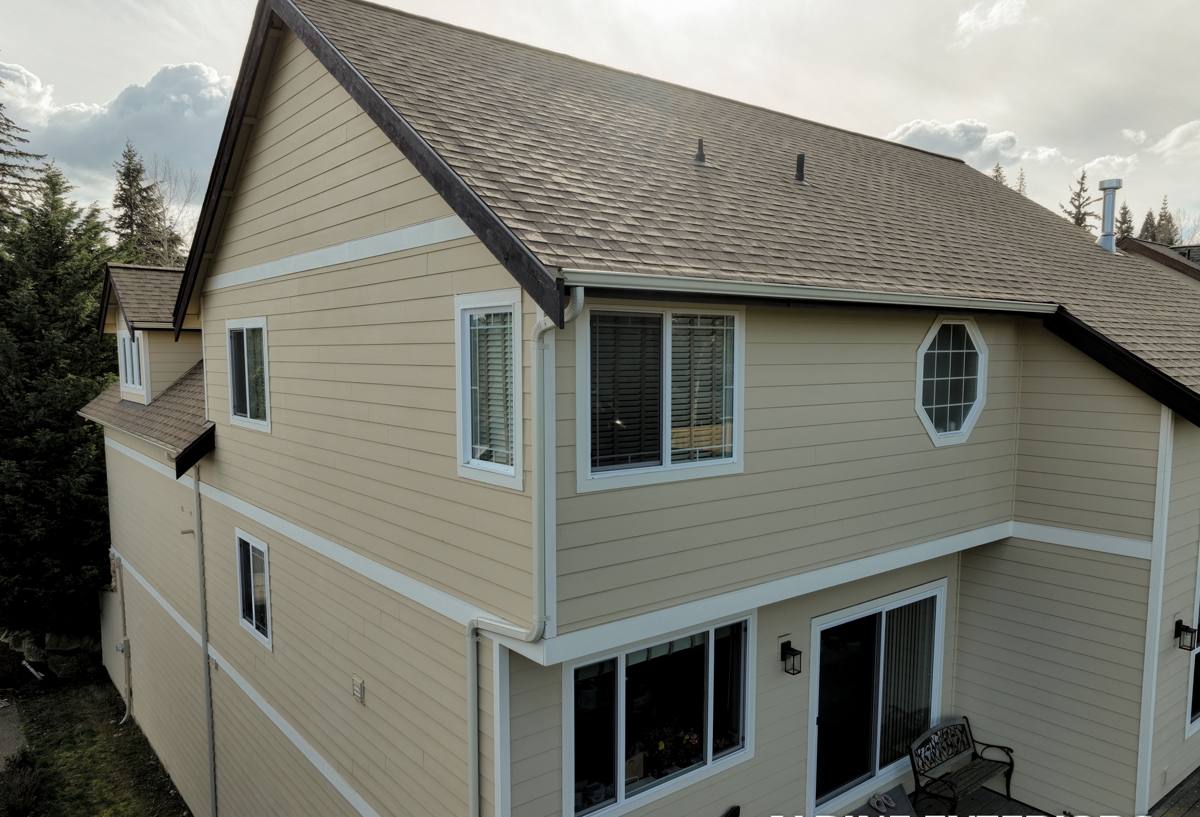
Signs a Bellingham Home Needs Window Replacement, Not Just Repair
Not every drafty or sticky window needs full replacement. But in this climate, certain symptoms usually mean the window assembly itself — not just the glass or the weatherstripping — has been compromised by moisture.
- Fogging or a permanent haze between the panes of a double-pane window (the seal has failed and the gas fill is gone)
- Soft, spongy, or discolored wood at the sill or lower corners of the frame
- Visible daylight or a draft you can feel around the frame even with the window latched
- Paint that keeps bubbling or peeling on the interior or exterior trim despite repainting
- A sash that's difficult to open, won't stay up on its own, or has been painted shut for years
- Musty smell or visible mildew on the interior sill or lower wall after wet stretches
- Condensation forming on the interior glass regularly through fall and winter
What a Correct Window Replacement Job Actually Involves
Window replacement looks simple from the outside — old window out, new window in — but the parts that determine whether it holds up in this climate happen where you can't see them once the trim goes back on.
Removing the Old Window the Right Way
Before anything new goes in, we open up the opening enough to actually see the condition of the framing, sheathing, and any existing flashing. This is often the first real look anyone's had at that wall cavity in decades, and it's the only chance to catch rot or past water damage before it's sealed back up behind a new window.
Flashing and Water Management
Given how much wind-driven rain this area sees, the flashing sequence matters more here than in drier climates. That means a proper sill pan to catch and direct any water that gets past the window back out, correctly lapped flashing tape at the sides and head, and head flashing or a drip cap that actually sheds water away from the opening rather than just sitting on top of it. Done out of order, or skipped, this is where future leaks come from — regardless of how good the window itself is.
Insulation, Air Sealing, and Interior Finish
The gap between the new window frame and the rough opening needs to be filled with an appropriate low-expansion foam or backer rod and sealant — not just stuffed with fiberglass, which does little to stop air movement. Interior and exterior trim gets resealed with a quality caulk rated for exterior exposure, and hardware and locks get checked for smooth operation before we call the job done.
Choosing a Window Built for This Climate
There's no single "best" window material — there's the right material for the exposure, maintenance appetite, and budget of a given home. For homes in and around Bellingham, we weigh moisture behavior and long-term maintenance heavily, since this climate punishes anything that depends on regular upkeep to stay weathertight.
| Material | Moisture Behavior | Maintenance | Typical Trade-Off |
|---|---|---|---|
| Vinyl | Doesn't rot or corrode; performs well in damp, salt-air conditions | Low — occasional cleaning | Frame color/style options more limited than wood |
| Fiberglass | Very stable in temperature and moisture swings; holds paint well | Low to moderate | Higher upfront cost than vinyl |
| Wood (unclad) | Handsome, but vulnerable to prolonged dampness and requires an intact paint or finish layer | High — regular repainting/sealing | Best suited to protected elevations, not full weather exposure |
| Aluminum-clad wood | Wood interior warmth with a weather-resistant exterior shell | Moderate | Clad seams and corners are installation-sensitive; needs a careful installer |
We don't push one brand or material on every job. Our standard is simple: whatever we install has to be able to shed water on its own for years without depending on the homeowner catching every small maintenance item.
Full-Frame vs. Insert Replacement: Which Your Home Needs
An insert (or "pocket") replacement window fits inside the existing frame, leaving the old frame, sill, and exterior trim in place. It's faster and less invasive, and it's a reasonable option when the existing frame is still sound and dry. A full-frame replacement removes the window down to the rough opening, including the old frame and sill, and rebuilds the flashing and sill pan from scratch.
Given how much wind-driven rain and dampness this area sees, we lean toward recommending full-frame replacement whenever there's any sign of past water intrusion, soft wood at the sill, or an opening that was never properly flashed to begin with. Installing a new insert window into a compromised old frame just seals the existing problem behind a new sash — it doesn't fix it.
Our Process, Start to Finish
- Free on-site assessment — we look at the specific opening, exposure, and existing condition of each window before recommending anything
- Straightforward written estimate covering material, labor, and whether full-frame or insert replacement fits the situation
- Careful removal of the old window and inspection of the rough opening for hidden rot or prior water damage
- Sill pan, flashing, and air-sealing installed to a sequence that accounts for wind-driven rain, not just vertical rainfall
- New window set, shimmed, and checked for level, square, and smooth operation before final fastening
- Interior and exterior trim and caulking finished, hardware tested, and site cleaned up
Why It Matters That We Already Work in Bellingham and Lynden
A crew that's spent time on homes throughout Whatcom County knows what a marine-exposed opening actually needs versus what a textbook installation assumes. We've seen how quickly a poorly flashed window shows problems here compared to a drier inland climate, and we build our process around that reality rather than a generic install checklist. Being based in Lynden also means we're a short drive away for a warranty callback or a follow-up question — not a crew that did one job in the area and moved on.
What Affects the Cost of Window Replacement Here
Costs for window replacement vary widely depending on size, material, and the condition of the opening, so we'd rather walk a homeowner through their specific job than throw out a number that doesn't apply. A few things that reliably move the price:
Full-frame versus insert replacement — full-frame costs more because it involves rebuilding the flashing and sill, but it's often the right call once there's any sign of moisture damage. Window count and size — larger openings and picture windows cost more than standard double-hung sizes. Material — vinyl is typically the most economical, fiberglass and clad-wood options cost more upfront but can mean less long-term maintenance. Hidden repairs — if we find rot or damaged sheathing once the old window is out, that gets addressed before the new window goes in, which is something no estimate can fully predict until the opening is actually opened up.
Keeping New Windows Performing for the Long Haul
Even a well-installed window benefits from a little attention in this climate. Rinse salt buildup off frames and hardware near the water a couple of times a year, keep an eye on sills and horizontal trim for moss or mildew starting to take hold, and make sure exterior caulk lines stay intact — catching a small gap early is a lot cheaper than dealing with water damage behind the wall later. A quick check each fall, before the wettest months set in, goes a long way.
If your windows in the Bellingham area are drafty, foggy, or just past their working life, we're happy to take a look and give you a straightforward, no-pressure estimate — fill out the form below and we'll get in touch.