 Lynden Siding
 Building Decks for Birch Bay's Marine Climate
Birch Bay sits right on the water, and that changes what a deck has to survive. Homes here deal with salt-laden air blowing off the bay, driving rain that comes in sideways more often than straight down, and a moss season that can stretch from October well into April. A deck built to a generic spec sheet — the kind that works fine inland in Whatcom County — often struggles here within a few years. Fasteners corrode faster, wood surfaces stay damp longer between dry spells, and anything shaded by trees or the house itself becomes a moss farm if it isn't detailed correctly.
We've worked on homes throughout the Birch Bay area long enough to know which shortcuts show up as callbacks two winters later. This page covers what actually matters for a deck in this specific environment: material choices, hardware, drainage, and the build sequence that keeps a deck sound instead of just good-looking on installation day.
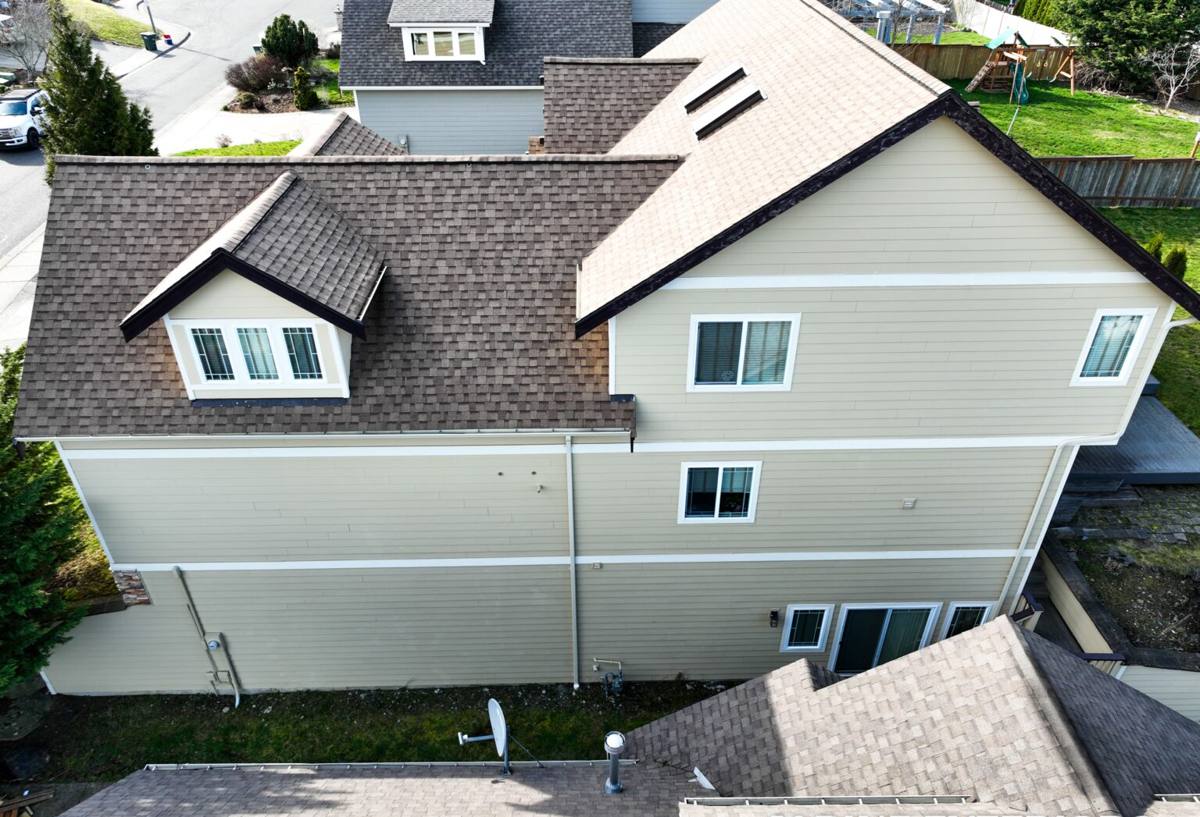
What Salt Air Does to a Deck Over Time
Salt air is corrosive to metal, full stop. It doesn't matter how far from the water a lot technically sits — if you're in Birch Bay, you're close enough for airborne salt to matter. The parts of a deck most affected are the ones homeowners never look at until something fails:
- Fasteners — screws, joist hangers, and structural bolts that aren't rated for coastal exposure will rust, streak the decking, and eventually lose holding strength
- Flashing and ledger connections — any exposed metal at the house-to-deck connection is a common point of hidden corrosion
- Railing hardware — brackets and cable/rod tensioners on metal railing systems take the brunt of salt exposure since they're fully exposed
- Fastener heads on composite and PVC decking — even though the board itself doesn't corrode, cheap fastener coatings will
The fix isn't complicated, it's just a matter of not cutting corners: stainless steel or heavy-duty coated fasteners rated for coastal/marine use throughout, hot-dip galvanized or stainless structural hardware, and hidden fastener systems that limit how much metal is exposed to weather in the first place.
Driving Rain and Why Drainage Detailing Matters
Whatcom County gets plenty of rain generally, but Birch Bay's exposure to wind off the water means rain frequently arrives at an angle rather than falling straight down. That has real consequences for deck construction:
Ledger and House Connection
Where the deck attaches to the house is the single most important waterproofing detail on the whole project. Angled, wind-driven rain will find any gap in flashing at the ledger board. We integrate flashing that sheds water away from the house sheathing rather than relying on caulk alone — caulk fails, properly lapped flashing doesn't.
Board Spacing and Substructure Airflow
Decking that's spaced too tight traps moisture between boards and against the joists below. In a climate where things rarely get a long stretch to fully dry out, that trapped moisture is what accelerates rot in wood framing and encourages mold and moss growth on the underside of composite boards. Correct gapping, paired with proper airflow underneath the deck, lets things dry between rain events instead of staying wet for weeks.
Joist Protection
Even when the visible decking is a low-maintenance composite, the structural frame underneath is almost always wood. Joist tape or a comparable protective barrier over the top of each joist keeps water from pooling into fastener holes and wicking into the lumber — this is one of the most overlooked details in budget deck builds and one of the most consequential in a wet coastal climate.
Moss: The Slow Problem Nobody Notices Until It's Bad
Moss doesn't damage a deck overnight, which is exactly why it's dangerous — it builds up quietly over a season or two until a homeowner notices the deck surface has gone slick and green in shaded corners. Moss holds moisture against the decking surface constantly, which shortens the life of wood decking and can void warranties on some composite products if buildup isn't addressed. It's also a slip hazard on stairs and walkways, which matters more on a deck near a home with kids, guests, or older family members.
Moss growth in this area is driven by shade, orientation, and how much airflow a deck gets — not by anything wrong with a homeowner's cleaning habits. A deck tucked under mature trees or on the north side of a house will always be more moss-prone than one in full sun, regardless of material. Design choices at the build stage — board spacing, gaps at the house and rail lines, and picking a decking surface with the right texture — make a measurable difference in how fast moss becomes a maintenance chore.
Decking Material Comparison for Birch Bay Conditions
There's no single "best" decking material for every home — it depends on budget, how much maintenance a homeowner wants to do, and how exposed the deck is to sun, shade, and salt air. Here's how the common options actually perform in this specific environment:
| Material | Salt Air Resistance | Moss/Moisture Behavior | Maintenance |
|---|---|---|---|
| Pressure-treated wood | Good if fasteners are upgraded | Prone to moss/mildew without regular cleaning and re-sealing | High — annual cleaning and periodic staining/sealing |
| Cedar | Good, naturally rot-resistant | Still needs sealing to resist moisture staining and moss | Moderate to high — sealing every 1-2 years |
| Composite decking | Excellent — doesn't corrode or rot | Resists moisture damage but can still grow surface moss in deep shade | Low — occasional washing |
| PVC/capped polymer decking | Excellent | Best moisture resistance of the group; smooth-cap versions shed moss more easily | Low — occasional washing |
For decks with heavy shade or close proximity to the water, we generally steer homeowners toward composite or capped polymer decking — not because wood is a bad product, but because the maintenance burden of keeping wood properly sealed in this climate is steep, and a missed year of sealing shows up fast as moisture damage. For sunnier, more sheltered lots, wood and cedar remain solid, honest choices as long as the homeowner is realistic about the upkeep.
Structural Considerations Specific to This Area
Footings and Soil
Soil composition near the bay can vary from sandy to more compact clay-like soil within short distances, which affects how footings are sized and set. We check actual site soil conditions rather than assuming a standard footing depth will hold — this matters more here than on a typical inland lot.
Wind Exposure
Open lots facing the water see more sustained wind than sheltered inland properties. Railings, especially taller or glass/cable systems, need hardware and blocking sized for that added wind load, not just code minimums for a calm site.
Ledger Attachment on Older Homes
A fair number of Birch Bay homes are older beach cottages or homes that have been added onto over the years. Before attaching a new deck ledger, we confirm the rim joist and sheathing behind it are sound — attaching a new deck to compromised framing is a problem that won't show up until it's expensive to fix.
Our Process for a Birch Bay Deck Project
- On-site assessment — we look at sun/shade exposure, wind exposure, existing structure (for replacements), and drainage patterns specific to the lot
- Material and layout discussion — honest conversation about maintenance expectations versus upfront cost for the decking, railing, and fastener systems that fit the site
- Permitting — we handle the permit process with Whatcom County where required
- Demolition (for replacements) — removal of the old deck with attention to what condition the ledger, framing, and posts are in underneath
- Framing and flashing — corrosion-resistant structural hardware, proper ledger flashing, and joist protection installed before any decking goes down
- Decking, railing, and finish details — installed with coastal-rated fasteners and correct spacing for drainage and airflow
- Final walkthrough — we go over basic maintenance specific to the material chosen so the deck holds up the way it's supposed to
What to Check Before Hiring Anyone for This Job
A deck is a structural project, not just a carpentry project, and coastal conditions raise the stakes on getting the details right. Before hiring a contractor for a Birch Bay deck, it's worth asking:
- Do they use stainless or marine-rated fasteners as standard practice here, or only if asked?
- Will they inspect and address the ledger/rim joist condition on a replacement, not just bolt onto whatever is there?
- What's their approach to joist protection and board spacing for drainage?
- Are they pulling the required Whatcom County permit, or suggesting you skip it?
- Can they explain material trade-offs honestly, including maintenance requirements, instead of just upselling the most expensive option?
A contractor who's built decks specifically in this stretch of coastline should be able to answer all of these without hesitation — it's the difference between a deck that needs real repairs in five years and one that's still solid in twenty.
Maintenance That Actually Extends the Life of a Birch Bay Deck
Even a well-built deck needs a little seasonal attention in this climate. The good news is it's not complicated:
- Sweep debris off the deck surface regularly, especially in fall when leaves and needles trap moisture against the boards
- Rinse salt residue off railings and hardware periodically, particularly after storms with wind off the water
- Check and clear gaps between boards so water and debris aren't accumulating against the substructure
- For wood decking, keep to a sealing schedule rather than waiting until it visibly needs it
- Address moss at first sign rather than letting it establish — a light wash early is far easier than scrubbing a season's growth off stairs
If you're planning a new deck or need to replace one that's showing its age, we're happy to come take a look and give you a straightforward, no-pressure estimate for your Birch Bay property — just fill out the form below.