 Lynden Siding
 Why Birch Bay's Climate Is Hard on Roofs
Birch Bay sits close enough to the water that salt air is part of daily life, and that changes what a roof has to withstand compared to homes further inland in Whatcom County. Salt-laden air accelerates corrosion on exposed metal — nail heads, flashing, vent caps, gutter fasteners — long before the roofing material itself wears out. A roof that would hold up fine in Lynden or Everson can develop rust streaks and failed fasteners years earlier if it sits a mile or two from the bay.
Add to that the driving rain that comes off the Salish Sea during winter storms. Wind-driven rain doesn't just fall straight down onto a roof — it gets pushed sideways and upward under shingle edges, around vent penetrations, and into any flashing detail that isn't sealed correctly. A roof that would shed a calm rain just fine can leak during a January windstorm if the underlayment and flashing weren't installed with that wind direction in mind.
Then there's moss. The Pacific Northwest's damp, mild climate keeps roofs wet for long stretches of the year, and shaded lots near mature trees make it worse. Moss doesn't just look bad — it holds moisture against the roofing material, lifts shingle edges as it grows, and works its way under laps where water then has an easy path underneath. In Birch Bay, moss season runs long, which means a roof here needs both the right material and the right maintenance rhythm to actually get its full service life.
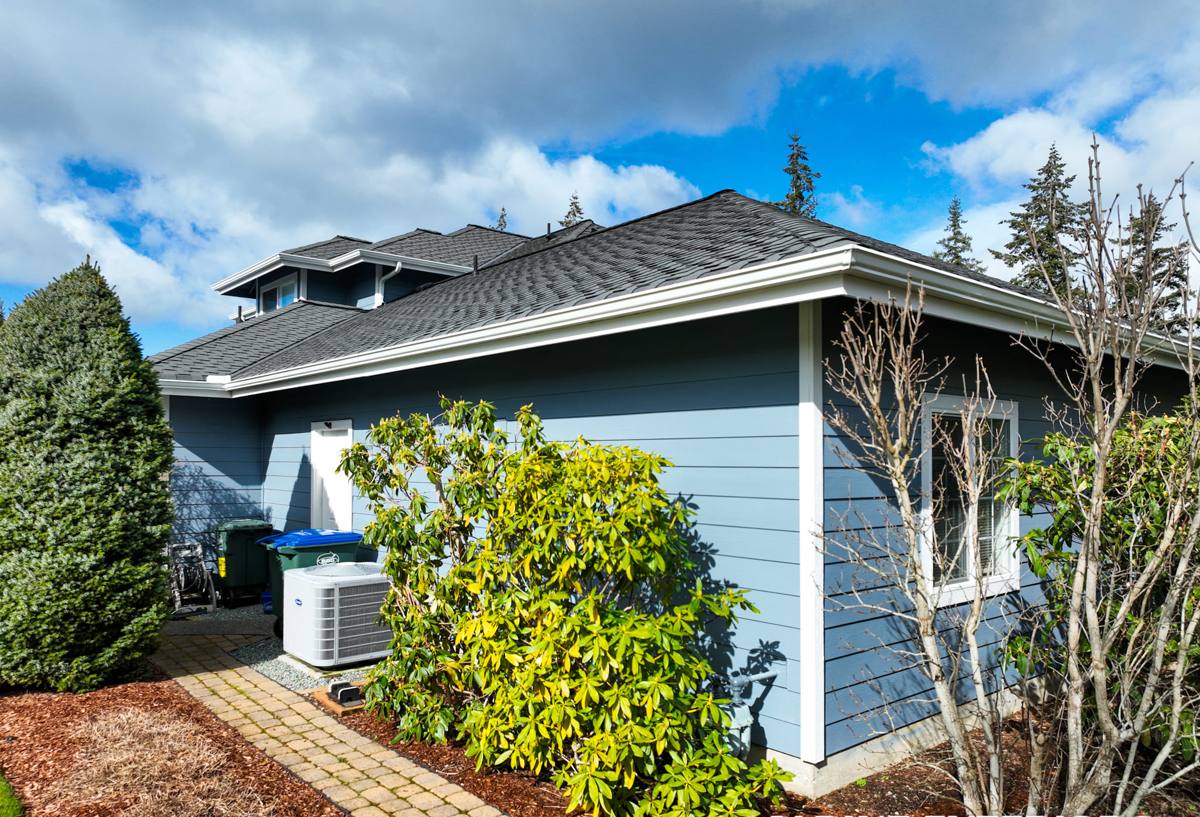
Signs Your Birch Bay Roof Needs Replacing
Not every roof problem means a full replacement, but these are the signals worth taking seriously, especially on a home with coastal exposure:
- Heavy moss growth that's lifting shingle tabs rather than just sitting on the surface
- Granule loss showing bare, shiny patches on asphalt shingles
- Shingles that are curling, cupping, or cracking at the edges
- Rust staining around nail heads, flashing, or metal vent boots
- Soft or spongy spots when walking the roof, which usually means deck damage underneath
- Daylight visible through the roof deck from inside the attic
- Interior water stains on ceilings after wind-driven rain events
- A roof over 20-25 years old, even if it looks okay from the ground
If you're seeing two or more of these, it's worth having someone look at the roof from the deck down, not just the surface. Surface shingles can look tired while the real problem is underneath, or a roof can look fine from the driveway while the flashing and underlayment are already compromised.
What a Correct Roof Replacement Involves
Tear-Off and Deck Inspection
A proper replacement starts with a full tear-off down to the deck — not a layover on top of old shingles. That's the only way to actually see the plywood or OSB underneath and catch soft, delaminated, or rotted sections before they get covered up again. In a moist coastal climate like Birch Bay's, deck damage around old leak points is common enough that budgeting for some deck repair is realistic, not a sign of a contractor padding the job.
Underlayment and Moisture Barriers
Underlayment is doing more work here than it would on a drier inland roof. Self-adhered ice-and-water membrane belongs at eaves, valleys, and around penetrations, with a quality synthetic underlayment covering the rest of the field. This combination is what keeps wind-driven rain from finding its way to the deck even if it gets pushed up under a shingle edge during a storm.
Flashing That Actually Sheds Water
Flashing failures are behind most of the leaks we see on older coastal roofs. Step flashing at walls, counter-flashing at chimneys, valley metal, and pipe boots all need to be installed in the correct sequence with the roofing material — flashing tucked under upslope layers and lapped over downslope ones — not just caulked into place. Caulk is a backup, not a flashing system, and it's the first thing salt air and UV exposure break down.
Ventilation That Matches the Climate
Balanced intake and exhaust ventilation keeps moisture from condensing in the attic, which matters in a climate where the air outside is often as damp as the air you're trying to vent. Under-ventilated attics trap moisture that can rot the deck from underneath, regardless of how good the roofing on top is.
Choosing Materials for Salt Air and Moss
There's no single "best" roofing material for every Birch Bay home — it depends on budget, roof pitch, exposure, and how much maintenance you want to do. Here's how the common options actually compare in this climate:
| Material | Moss/Algae Resistance | Coastal Wind Performance | Typical Lifespan Here | Maintenance Needs |
|---|---|---|---|---|
| Architectural asphalt shingles | Good with algae-resistant (zinc/copper granule) versions | Solid when rated and installed with proper nailing pattern | 20-30 years | Periodic moss removal, gutter clearing |
| Standard 3-tab shingles | Lower — thinner profile sheds moss less effectively | Lower wind rating than architectural | 15-20 years | More frequent moss/algae treatment |
| Metal (standing seam or panel) | Excellent — moss struggles to grip smooth metal | Very strong in wind when properly fastened | 40-50+ years | Low; occasional fastener/sealant check |
| Composite/synthetic shingles | Good, varies by product | Good, check manufacturer wind rating | 30-40 years | Low to moderate |
We steer most Birch Bay homeowners toward algae-resistant architectural shingles or metal, simply because standard 3-tab holds moss more readily and its lighter wind rating isn't a great match for a site exposed to bay winds. That's a maintenance and performance call, not a knock on 3-tab shingles as a product — they're a legitimate budget option in more sheltered locations.
Our Roof Replacement Process
- On-site inspection and honest assessment. We walk the roof, check the attic, and tell you what we actually find — including if repair rather than full replacement makes more sense.
- Material selection based on your roof and exposure. We'll talk through the trade-offs in the table above against your budget and how exposed your specific lot is.
- Scheduling around weather windows. Roofing needs a dry deck to install correctly, so we plan around Whatcom County's rain patterns rather than rushing a job into a wet forecast.
- Full tear-off and deck inspection. Old material off, deck checked and repaired as needed, debris hauled away.
- Dry-in with underlayment and flashing. This is the step that actually determines whether the roof leaks in a windstorm, so we don't shortcut it.
- Roofing installation to manufacturer spec. Correct nailing pattern, exposure, and fastener type — stainless or hot-dip galvanized where salt exposure calls for it.
- Cleanup and magnetic nail sweep. Yard and driveway cleared of debris and stray fasteners before we call it done.
- Final walkthrough and warranty paperwork. We go over the finished roof with you and make sure manufacturer warranty registration is handled correctly.
Why a Crew That Already Works Birch Bay Matters
A roofer who mostly works drier, more sheltered inland areas can still do competent general roofing work, but they may not automatically reach for stainless fasteners near the water, or think to spec algae-resistant shingles on a shaded, moss-prone lot. Those are decisions that come from having seen how roofs actually age in this specific stretch of Whatcom County — which flashing details hold up to wind-driven rain here, which materials handle salt air without early corrosion, and which roofs need more aggressive moss management because of tree cover.
Local experience also matters for practical logistics: knowing the county permitting process for reroofing, being realistic about weather windows for scheduling a tear-off, and being reachable if a storm causes damage rather than being a long drive away. None of that shows up in a materials list, but it shows up in how the finished roof performs five and ten years down the road.
Maintenance That Extends the Life of Your New Roof
Even the right materials installed correctly will do better with some basic upkeep in this climate:
- Have moss physically removed rather than just chemically treated once it's established — treatment kills it, but buildup should still come off
- Keep gutters clear so water isn't backing up under the eave edge during heavy rain
- Trim back overhanging branches to cut down on shade and debris that feed moss growth
- Do a visual check after major windstorms for lifted shingles or displaced flashing
- Rinse salt residue off metal flashing and fasteners periodically if your home is close to the water
None of this is a huge time investment, but skipping it is how a roof that should last 25-30 years starts having problems at year 15.
If your Birch Bay roof is showing its age or you just want an honest read on how much life it has left, we're glad to come take a look. The estimate is free, there's no pressure, and you'll get a straight answer about repair versus replacement — you can request one using the form below.