 Lynden Siding
 Birch Bay's Climate Is Tougher on Siding Than Most of Whatcom County
Birch Bay sits right on the water, and that changes what siding has to survive compared to homes further inland around Lynden or Everson. Salt-laden air moves off the Strait of Georgia and settles on everything facing the water, which accelerates corrosion on fasteners, trim, and any siding material that isn't built to resist it. Add in driving rain that comes in sideways during winter storms, and a shaded, damp lot that never fully dries out between rain events, and you've got a combination that exposes weak siding installations fast — sometimes within a few years instead of a few decades.
None of this means siding is a losing battle in Birch Bay. It means the material and the installation details matter more here than they do in a drier, more sheltered part of the county. A siding job that would hold up fine on a protected inland lot can fail early on a waterfront or near-waterfront property if it wasn't planned for salt exposure and sustained moisture.
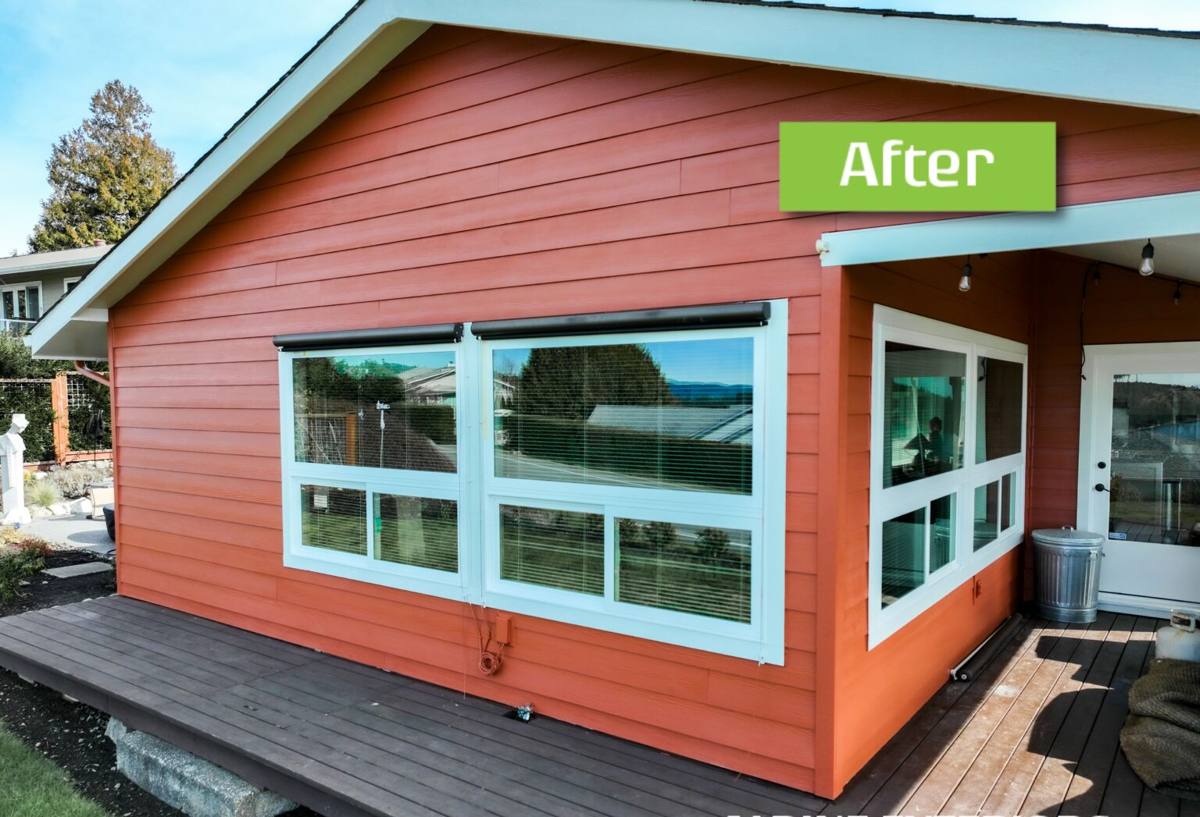
What Salt Air Actually Does to a Home's Exterior
Salt air isn't just a coastal talking point — it's a chemical reality. Airborne salt is hygroscopic, meaning it pulls moisture out of the air and holds it against whatever surface it lands on. On siding, that means longer wet-dry cycles, more corrosion pressure on exposed metal, and faster breakdown of finishes that weren't engineered to shed it.
- Fasteners: Standard fasteners corrode faster in salt air, which can lead to staining, streaking, and eventually loose siding if the wrong hardware was used.
- Trim and flashing: Any metal flashing, trim coil, or fastener head that isn't corrosion-resistant becomes a visible failure point within a few seasons near the water.
- Paint and finish: Field-applied paint tends to chalk and fade faster under salt exposure than a factory-cured finish, which means more frequent repainting for materials that rely on site-applied topcoats.
- Wood-based products: Anything with wood fiber or engineered wood content absorbs moisture more readily in salt air, which raises the risk of swelling, edge softening, and rot over time.
Driving Rain and a Long, Wet Season
Whatcom County gets a lot of rain generally, but Birch Bay's exposure to open water means storms often arrive with real wind behind them, driving rain horizontally into wall assemblies instead of just falling straight down. That kind of wind-driven rain finds every gap in flashing, every under-caulked seam, and every spot where house wrap wasn't lapped correctly. A siding installation that only accounts for vertical rainfall — adequate in a lot of the country — isn't enough here.
This is also why the water-resistive barrier and flashing details behind the siding matter as much as the siding itself. Good siding over a poorly detailed wall assembly still leaks. The visible product is only half the system.
Moss and Algae: Birch Bay's Long Season
Between the moisture, the mild temperatures, and the shade many lots get from mature trees, moss and algae have a long growing window in Birch Bay — often close to year-round on north-facing or heavily shaded walls. This isn't just cosmetic. Moss holds moisture against the siding surface, which extends how long a wall stays wet after rain and increases the risk of rot on materials that aren't moisture-stable.
Some materials tolerate this better than others. A factory-applied finish that's engineered to resist mildew and algae growth holds its appearance and its protective integrity longer than a field-painted or raw wood surface exposed to the same conditions. It won't stop moss from landing on a shaded wall, but it resists the material breakdown that moss and prolonged dampness cause underneath.
Why We Only Install James Hardie Fiber Cement
We install James Hardie fiber cement siding exclusively, and Birch Bay's climate is a big part of why. Fiber cement is dimensionally stable — it doesn't swell, warp, or absorb water the way wood-based or wood-fiber products can, which matters directly in a place with this much sustained moisture. It's also non-combustible, which is a genuine benefit regardless of climate, but the moisture performance is what's most relevant for a coastal property.
Hardie's ColorPlus finish is baked on at the factory and engineered to resist fading, chipping, and the mildew growth that shaded, damp walls invite. That matters more in Birch Bay than in a drier inland location, because the finish is under more sustained attack from moisture and organic growth here. Hardie also builds climate-specific product lines (their HZ system) engineered for the moisture and temperature patterns of different regions, which is a more honest match for Pacific Northwest coastal exposure than a one-size-fits-all product.
We don't install vinyl, LP SmartSide, Cemplank, Allura, primed spruce, or cedar. That's a deliberate standard, not a lack of options. Vinyl can warp and become brittle with the temperature swings and UV exposure over decades, and its seams and channels give salt-laden moisture places to collect. Engineered wood products and primed wood siding rely on maintained paint films and are more vulnerable to moisture intrusion at cut edges and fastener penetrations — a real liability in a location where wall assemblies stay damp longer. Cedar is a genuinely attractive, time-tested material, but it requires an ongoing maintenance commitment (refinishing, moisture monitoring, insect and rot vigilance) that most homeowners underestimate, and that commitment only gets steeper this close to salt water. We'd rather put one material on Birch Bay homes and stand behind it than sell several products with different trade-offs and let the climate sort out which one was the wrong call.
Material Comparison for a Salt-Air, High-Moisture Environment
| Material | Moisture Behavior | Salt-Air Durability | Finish Maintenance |
|---|---|---|---|
| James Hardie Fiber Cement | Dimensionally stable, doesn't swell or rot | Strong when installed with corrosion-resistant fasteners and trim | Factory ColorPlus finish, long repaint interval |
| Vinyl | Won't rot, but can warp/distort with temperature swings | Seams and channels can trap salt-laden moisture | Low upkeep but fades and becomes brittle over decades |
| Wood-Based / Engineered Wood | Prone to swelling and edge softening if moisture reaches the substrate | Faster breakdown at cut edges and fasteners in salt air | Depends on maintained paint or factory coating |
| Cedar | Natural material, moisture-sensitive without diligent upkeep | Requires more frequent refinishing near salt water | Highest ongoing maintenance of the group |
What a Correct Installation Looks Like Here
The siding product is only as good as the assembly behind it. For a Birch Bay home, we treat these details as non-negotiable, not optional upgrades:
- A continuous water-resistive barrier, properly lapped shingle-style so water sheds outward rather than working its way in.
- Corrosion-resistant fasteners and flashing rated for coastal exposure, not standard-grade hardware that will streak or fail early.
- Correct flashing and back-caulking at every window, door, and penetration — the details wind-driven rain finds first.
- Proper clearance between the siding's bottom edge and grade, decks, and roof lines so water has somewhere to go instead of wicking upward.
- Fastening pattern and spacing installed to the manufacturer's specification, not "close enough" — under-fastened or over-driven boards are a common cause of early failure.
- Ventilation and drainage planes that let any moisture that does get behind the cladding dry out instead of sitting against the wall assembly.
Skipping any one of these can undermine an otherwise good siding product. This is where a lot of failures we get called to inspect actually started — not with the siding brand, but with a shortcut in the assembly behind it.
Our Process for a Birch Bay Siding Installation
- On-site assessment: We look at your home's specific exposure — how close you are to the water, how much wind-driven rain and salt spray the walls actually see, and how much shade and moss pressure different sides of the house deal with.
- Sheathing and moisture check: Before new siding goes up, we check the condition of the sheathing and existing water barrier. Coastal homes with older siding sometimes have hidden moisture damage that needs to be addressed first, not covered over.
- Water management plan: We plan the water-resistive barrier, flashing, and drainage details for your home's specific exposure, not a generic install.
- Installation to spec: Hardie fiber cement installed with corrosion-resistant fasteners, correct fastening patterns, and proper clearances throughout.
- Final detailing: Trim, caulking, and touch-up work finished to match the ColorPlus factory finish, so seams and cut edges are protected, not just covered.
Why Local Experience in Birch Bay Matters
A crew that regularly works Birch Bay knows which walls on a given lot take the worst of the wind and salt, which sides stay shaded and damp long enough to grow moss, and how far a property's exposure changes the detailing needed compared to a job a few miles inland in Lynden or Ferndale. That's not something you get from a general contractor who does one coastal job a year. It shows up in the small decisions — where to add extra flashing, which fastener spec to use, how tight the drainage plane needs to be — that determine whether a siding job holds up for decades or needs attention again in five years.
What Affects the Cost of a Birch Bay Siding Installation
| Factor | Why It Matters |
|---|---|
| Home size and wall complexity | More corners, gables, and trim details mean more labor and material |
| Condition of existing sheathing | Hidden moisture or rot damage found during tear-off adds repair work |
| Exposure level | Waterfront-facing walls may need additional flashing and fastener upgrades |
| Siding profile and accessories | Lap width, trim style, and corner details affect material cost |
| Access and site conditions | Tight lots, slopes, or limited staging area affect labor time |
We won't quote a number without seeing the home, but these are the variables that actually move the price — not the brand name on the product.
Signs Your Current Siding Is Losing the Fight
- Visible streaking or rust-colored staining, often from corroding fasteners or trim behind the siding.
- Soft spots, bubbling, or swelling, especially near the bottom courses or around windows.
- Persistent moss or algae that returns quickly after cleaning, particularly on shaded or north-facing walls.
- Paint that's chalking, peeling, or fading faster than expected for its age.
- Gaps opening up at seams, corners, or trim joints.
If you're seeing any of these on a Birch Bay home, it's worth having someone look at the wall assembly, not just the visible siding — the underlying moisture management is usually where the real problem started.
If you're planning a siding project in Birch Bay, we're happy to take a look at your home and give you a straightforward, no-pressure estimate — what we'd recommend, what it would involve, and what it would cost. Use the form below to get started.