 Lynden Siding
 Deck Building in Blaine, Built for Where You Live
Blaine sits close enough to the water that salt air is part of daily life, and that changes what a deck needs to survive. A deck built with the same materials and details you'd use inland won't hold up the same way a few miles from Semiahmoo Bay or Drayton Harbor. Fasteners corrode faster. Wood surfaces stay damp longer between rain events. Moss and algae find a foothold on any shaded or north-facing section within a season or two. We build decks in Blaine the way the location actually demands, not the way a generic spec sheet says to.
Lynden Siding Replacement is based in Lynden, and we've worked Whatcom County long enough to know that a deck spec that's fine in Bellingham's drier pockets or in Sumas can still fall short right on the coast. Blaine's exposure to salt-laden wind, combined with the region's long wet season, is its own set of conditions. Deck building here is a coastal Pacific Northwest problem as much as it's a carpentry problem.
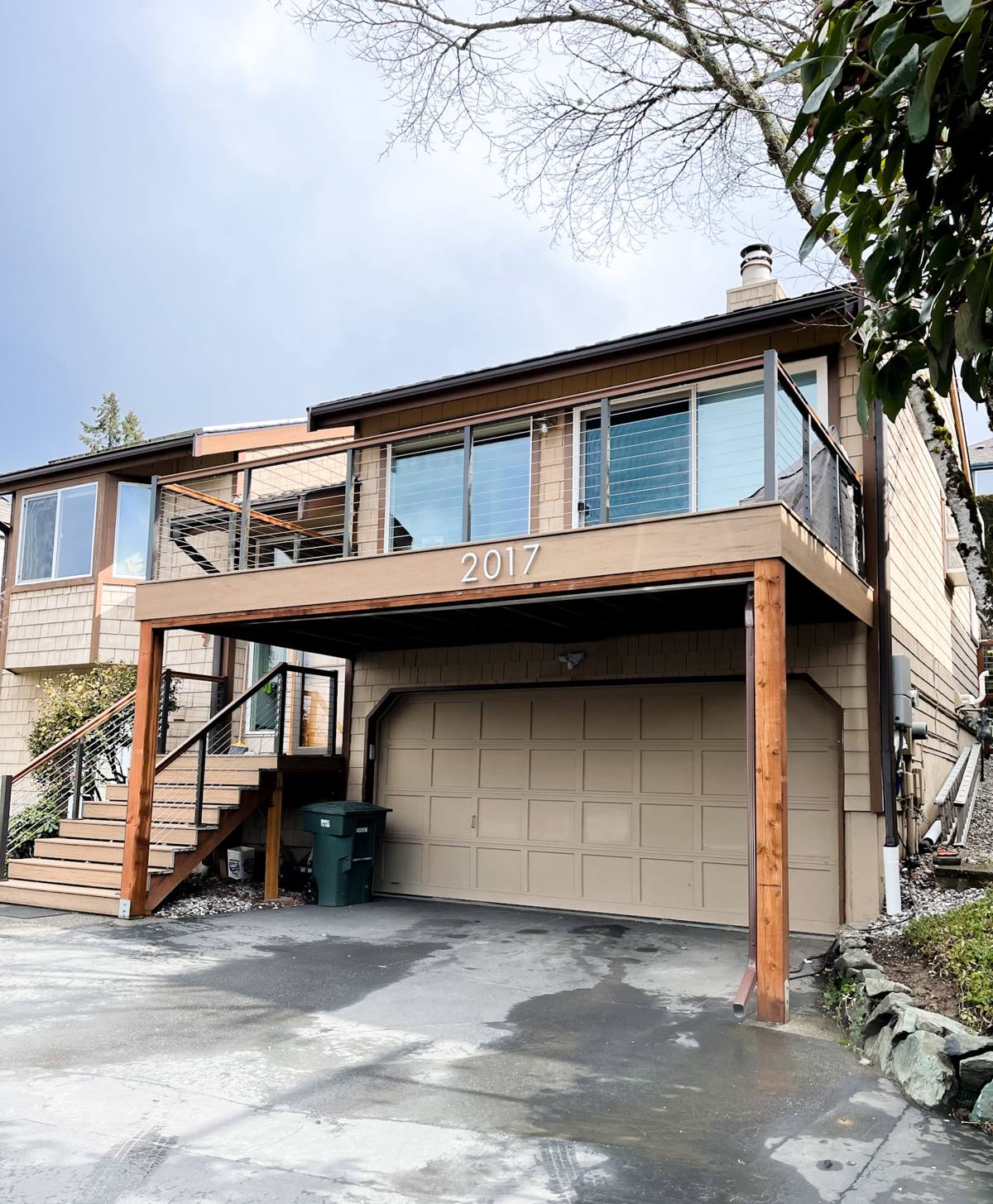
What Blaine's Climate Does to a Deck
Salt Air and Metal
Airborne salt accelerates corrosion on anything metal — fasteners, joist hangers, post bases, railing hardware. Standard galvanized coatings can start breaking down faster near the water than they would inland. Once a fastener starts to rust, it weakens, stains the wood around it, and eventually needs replacing — which usually means opening up decking that was otherwise fine.
Driving Rain
Blaine gets the same driving, wind-pushed rain that hits most of the Whatcom County coastline. Rain doesn't just fall straight down here — it gets pushed sideways into ledger connections, under railing posts, and into any gap where water can collect instead of shed. A deck that isn't detailed to shed water actively, not just passively, will hold moisture in exactly the spots where rot starts.
Moss and Algae Season
Whatcom County's moss season runs long — often eight months or more of conditions damp enough for moss and algae to establish. On a deck, that shows up as green film on shaded boards, slick spots near the house where sun rarely reaches, and gradual staining that's hard to remove once it sets into the wood grain. Composite and wood both grow moss under the right conditions; the difference is how much damage it does once it's there.
What a Correctly Built Deck Needs Here
- Fasteners and structural hardware rated for coastal/marine-grade corrosion resistance, not just standard exterior-grade galvanizing
- Proper ledger board flashing where the deck meets the house, so water is directed out and away instead of behind the siding
- Joist tape or comparable protection on top of every joist to stop water from sitting in end-grain and fastener holes
- Deck board spacing set for drainage and airflow underneath, not tight-packed for looks at the expense of drying time
- Post bases that hold posts above standing water and off direct soil contact
- A framing layout that avoids flat, low-airflow pockets where moss and standing water collect
- Railing and stair hardware matched in corrosion resistance to the rest of the structure — mismatched hardware just moves the failure point
None of this is exotic. It's standard good building practice applied consistently, with material choices upgraded to match Blaine's exposure instead of defaulted to whatever's cheapest at the yard.
Choosing Materials: What Actually Holds Up
There's no single right answer for every deck — budget, maintenance appetite, and how the space gets used all matter. What we won't do is recommend a material or detail we know will underperform in this location just because it's less expensive up front, without being honest about the trade-off.
| Material | How It Handles Salt Air & Moisture | Maintenance | Typical Lifespan |
|---|---|---|---|
| Pressure-treated wood | Resists rot when properly sealed and maintained; needs vigilant fastener protection near the coast | Annual cleaning, periodic re-staining or sealing | 15-20 years with upkeep |
| Cedar | Naturally rot- and insect-resistant; still needs sealing to resist moss and graying near salt air | Regular cleaning, sealing every 2-3 years | 20-25 years with upkeep |
| Composite decking | Doesn't absorb moisture like wood; surface can still support moss/algae growth in shaded, damp spots | Periodic washing, no staining/sealing needed | 25-30+ years, manufacturer-dependent |
| PVC/capped composite | Best moisture resistance of common decking options; least affected by salt exposure | Occasional washing | 30+ years, manufacturer-dependent |
Hardware and fasteners matter as much as the decking surface itself — a premium composite board fastened with undersized or poorly rated hardware will still fail early near the coast. We match fastener grade to the site, not just to the decking material.
Our Process for a Blaine Deck Build
1. On-Site Assessment
We walk the site to look at drainage, sun/shade exposure, proximity to the water, existing grade, and how the deck will tie into the house. A deck on a shaded, low-airflow lot needs different detailing than one in full sun, even within the same neighborhood.
2. Material and Layout Discussion
We go over decking material options, hardware grade, railing style, and layout with you directly, including honest trade-offs on cost, maintenance, and expected lifespan for each choice — no upselling toward whatever has the best margin.
3. Permitting
Deck projects in Whatcom County frequently require a permit depending on height, size, and attachment to the structure. We handle that process as part of the job so it isn't left on your plate.
4. Structural Build
Framing, ledger flashing, post footings, and joist protection go in first, built to the standard outlined above — this is the stage that determines whether the deck lasts 15 years or 30.
5. Decking, Railing, and Finish Work
Decking boards, railings, stairs, and any trim go on last, with fastener spacing and gapping set for proper drainage and airflow.
6. Walkthrough
We walk the finished deck with you, cover basic maintenance for the material you chose, and answer questions before we consider the job done.
Maintenance: What Keeps a Blaine Deck Lasting
- Sweep debris off the deck regularly — trapped leaves and needles hold moisture against the surface
- Wash down shaded or north-facing sections at least once a year to knock back early moss and algae growth
- Check railing posts and stair connections annually for movement or corrosion at fastener points
- Re-seal or re-stain wood decking on the schedule appropriate to the product — don't wait until it's visibly failing
- Keep gutters and downspouts near the deck clear so runoff isn't dumping extra water onto or under the structure
- Clear vegetation that's shading the deck and keeping it damp longer than necessary
A few hours of upkeep a year is far cheaper than replacing rotted framing five years early.
Common Problems We See on Older Blaine Decks
When we're called out to repair or replace an existing deck in Blaine, the failures usually trace back to the same handful of causes: missing or failed ledger flashing letting water into the house rim joist, standard hardware that's corroded well ahead of the wood around it, decking laid tight with no drainage gap, and post bases set directly in contact with wet soil or mulch. These aren't unusual mistakes — they're what happens when a deck gets built to a generic spec instead of one suited to a coastal Whatcom County site. Catching these issues early, before they spread into the framing, is almost always cheaper than waiting.
Why a Crew That Already Works Blaine Matters
Building decks in Blaine isn't fundamentally different from building them anywhere else in Western Washington — but the details that separate a deck that lasts 30 years from one that needs major repair at year 10 are exactly the details tied to local exposure: salt air, driving rain, and a long moss season. A crew that works this area regularly already knows which fastener grades hold up, which framing details actually shed water here, and where moss takes hold first. That's knowledge built from being on Blaine roofs and decks repeatedly, not from a manufacturer's install guide written for a national market.
We're a Lynden-based crew, and Blaine is part of the territory we work regularly — not a one-off trip. That means we're accountable to the same community we're building in, and we're around if something needs a look after the fact.
Get a Free Estimate
If you're planning a new deck in Blaine or need an existing one assessed, we're happy to take a look and give you a straightforward, no-pressure estimate. Use the form below to get started.