 Lynden Siding
 Board & Batten in a Place Where the Weather Doesn't Let Up
Custer sits close enough to the water and open farmland that homes here take weather most inland Whatcom County properties don't see the same way — salt-laden air rolling in off the Strait, wind-driven rain that doesn't fall straight down so much as get pushed sideways into wall assemblies, and a wet season that stretches long enough to give moss and algae a real foothold on north- and west-facing walls. Board and batten siding is a strong look for the farmhouses, shops, and newer builds in this area, but the vertical profile behaves differently than lap siding in weather like this, and it only holds up if it's built correctly for the conditions.
This page is about that one job — board and batten siding, installed right, on a Custer or greater Lynden property — not a general overview of siding options.
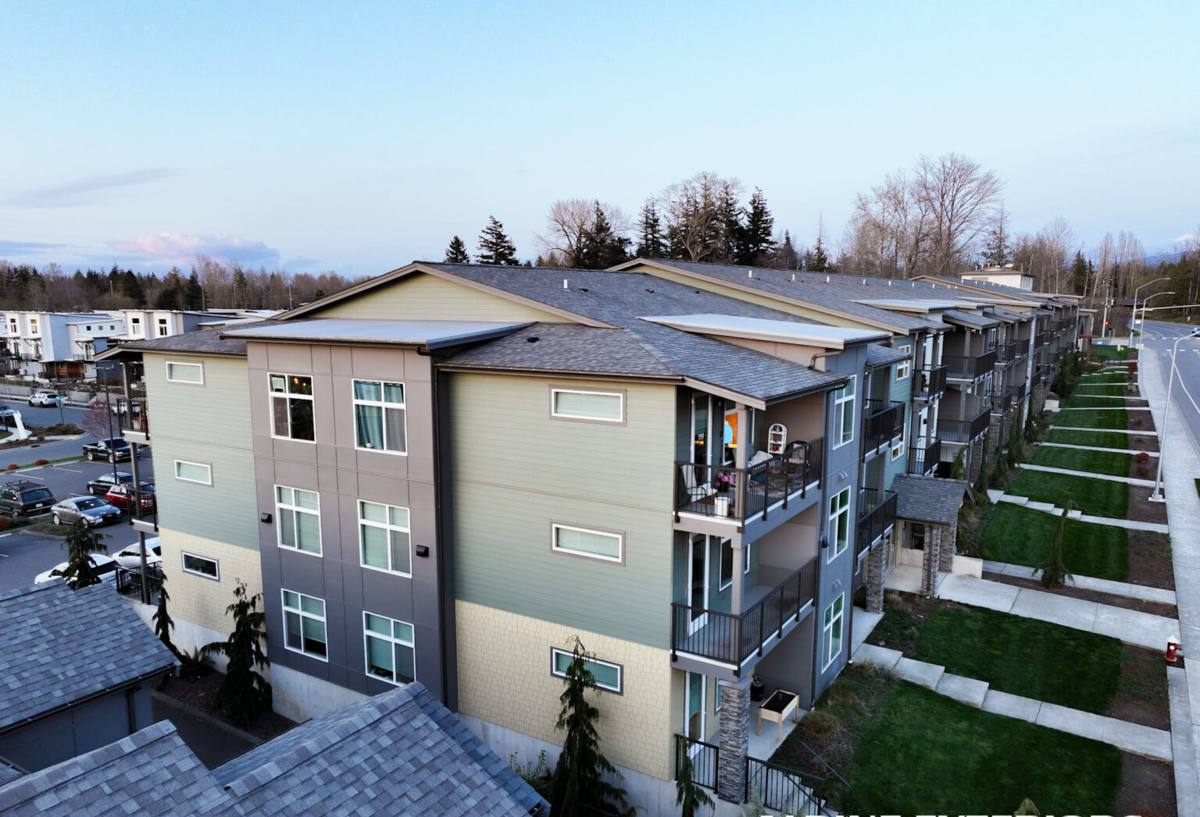
Why Vertical Profile Siding Needs to Be Built Differently Here
Board and batten relies on vertical seams and batten strips to shed water, instead of the overlapping horizontal courses of lap siding. That's part of its appeal — clean lines, strong shadow lines, a barn-and-farmhouse character that fits this part of Whatcom County. But it also means every seam, every batten-to-panel joint, and every point where the siding meets trim, windows, or the foundation is a place water can find its way behind the cladding if it's not detailed correctly.
In a climate with steady wind-driven rain, a board and batten wall depends on:
- A drainage plane and weather-resistive barrier behind the siding that actually drains, not just blocks — bulk water gets behind cladding eventually, and it needs somewhere to go.
- Correct batten spacing and fastening so panels aren't restrained in a way that causes cracking as the material expands and contracts with temperature and moisture swings.
- Proper flashing at every horizontal transition — window heads, water tables, roof-to-wall intersections — since board and batten's vertical lines make it easy to skip a detail that a lap siding installer would catch out of habit.
- Adequate clearance at the bottom of the wall so battens and panels aren't wicking moisture up from grade, splash-back, or standing snow and leaf debris against the foundation.
Skip any of these, and a board and batten wall in a salt-air, high-rainfall area will show problems — panel edge swelling, batten separation, moss and mildew staining, paint failure — years before it should.
Why We Install James Hardie for This Profile, Not the Alternatives
Fiber Cement That's Engineered for This Climate
James Hardie formulates its siding differently depending on the climate zone it's shipped to. Products bound for the Pacific Northwest are built for a wet, moderate-temperature climate — resistant to moisture-related damage without the extreme heat-cycling formulation used in southern zones. That matters directly for Custer, where the issue isn't heat, it's sustained moisture exposure and salt air working on the material year after year.
ColorPlus Finish vs. Field-Painted Boards
Board and batten siding lives or dies on its finish holding up at the seams and batten edges, where water sits longest. James Hardie's ColorPlus finish is baked on at the factory in multiple coats under controlled conditions — a more consistent, better-adhered finish than field-applied paint, which is especially exposed to failure at cut edges and joints on a vertical profile. That's a meaningful difference on a wall that's going to see driving rain and salt exposure for decades.
Why Not Vinyl, LP SmartSide, or Raw Wood Board and Batten
Vinyl board and batten is common because it's inexpensive, but it's a poor match for this climate — it moves more with temperature swings than fiber cement, the seams and battens are more prone to gapping over time, and it doesn't hold paint if a homeowner ever wants to change the color. Engineered wood products like LP SmartSide perform reasonably in dry climates but are wood-based at the core, meaning any breach in the finish or a joint that isn't perfectly sealed gives moisture a path into a material that can swell and deteriorate — a real risk in a climate this consistently wet. Traditional cedar or primed spruce board and batten can look excellent when new, but it demands a maintenance schedule — repainting, caulking, moisture monitoring — that most homeowners underestimate until moss and mildew set in on the north wall. We standardized on James Hardie fiber cement because it's non-combustible, dimensionally stable, and built to hold its finish through exactly the conditions Custer sees every winter.
What We Commonly Find on Older Board & Batten Homes in This Area
On repaint and re-side jobs around Lynden and the surrounding rural county, the pattern is consistent: moss and algae established on the shaded and northern elevations first, batten strips separating slightly from the panel behind them as fasteners work loose, and paint failure concentrated right at the batten edges and window trim — exactly where wind-driven rain gets forced against the wall hardest. None of that is a defect of board and batten as a style. It's what happens when the assembly behind the boards wasn't detailed for a climate that rarely gives a wall a long dry stretch to recover.
What a Correct Board & Batten Job Costs and Why
| Cost Factor | What Drives It | Why It Matters in Custer's Climate |
|---|---|---|
| Wall prep and drainage plane | Condition of existing sheathing, need for a new weather-resistive barrier | This is the layer that actually protects the wall — cutting it short is the most common source of later failure |
| Panel and batten material | HardiePanel vertical siding vs. Hardie Artisan, batten spacing chosen | Affects both appearance and how well the assembly sheds driving rain |
| Flashing detail work | Number of windows, roof-to-wall transitions, trim intersections | Every transition is a place water can get behind siding if flashed wrong |
| Building height and access | Two-story walls, tight lot lines, outbuildings | More scaffolding and staging time on larger farm-style properties common in this area |
| Color and finish | Factory ColorPlus vs. custom field-applied finish | Factory finish holds up longer against salt air and UV with less future maintenance |
We give real numbers during an on-site estimate rather than a phone quote, because wall condition and access vary enough on individual properties here that a ballpark isn't honest until we've seen the house.
How We Approach a Board & Batten Job
- Inspect the existing wall. We check sheathing condition, existing moisture damage, and how the current siding was detailed before we plan the new install.
- Install or verify the drainage plane. This is the layer doing the real work of keeping bulk water out of the wall assembly.
- Flash every transition first. Windows, doors, roof lines, and the water table get flashed before a single panel goes up.
- Set panels and battens to spec. Correct fastening pattern and expansion clearance so the assembly can move with temperature and moisture without cracking.
- Finish and detail. Caulking only where it belongs, never as a substitute for proper flashing, and a final check of every seam.
Before you sign a contract for board and batten work in this area, it's worth confirming a few things with any contractor:
- Will they show you the drainage plane and flashing details, not just the finished panel color?
- Do they have a written batten fastening spec, or are they eyeballing spacing?
- Is the siding factory-finished, and what's the actual warranty document — not just a verbal promise?
- Have they worked on homes in Custer, Lynden, or elsewhere in Whatcom County recently, or is this their first job in a climate like this?
- What's their plan for the north and west walls specifically, where moss and shade are worst?
Living With Board & Batten Once It's Up
Correctly installed James Hardie board and batten is low-maintenance compared to wood alternatives, but "low-maintenance" doesn't mean "no maintenance" in a climate that grows moss on nearly anything left damp and shaded long enough. A yearly rinse-down of north- and west-facing walls, keeping gutters clear so runoff isn't sheeting down the siding, and trimming back vegetation that holds moisture against the wall will keep the finish looking right for the long stretch of its service life. Because the color is baked into the panel at the factory, you're not on a repainting schedule the way you would be with field-finished wood — that's one of the practical reasons this system holds up better here than the alternatives.
Why It Matters That We Already Work This Area
Board and batten detailing that works in a drier inland climate doesn't automatically work in Custer. A crew that installs mostly in milder conditions may not think twice about batten spacing or drainage-plane choices that turn into real problems here after a few wet winters. We work Whatcom County regularly, which means we're not guessing at how much rain exposure a given wall orientation gets, or how fast moss establishes on a shaded elevation near the water — we've seen it, and we build for it up front instead of fixing it later.
If you're considering board and batten siding for a home in Custer or the surrounding Lynden area, we're glad to walk the property, look at what's there now, and give you a straightforward, no-pressure estimate for doing it right the first time. There's a short form below to get that started.