 Lynden Siding
 Board & Batten Siding in Laurel: A Style Rooted in the Land Around It
Board and batten is one of the oldest siding profiles used in this part of the Pacific Northwest, and there's a reason it hasn't gone out of style. Wide vertical panels, or individual boards, are set edge to edge and the seams are covered with narrow strips called battens. The result is a strong, clean vertical line and deep shadow reveals that read as substantial from the street. Around Laurel and the rest of the greater Lynden area, that look has real history behind it — it's the same silhouette you'll see on the barns, outbuildings, and older farmhouses scattered through Whatcom County's dairy and berry country. Homeowners choosing it today are usually after that same honest, working-farm character, whether on a full re-side or as an accent on gables and entries paired with lap siding.
But board and batten isn't just a look. It's a different wall assembly than horizontal lap siding, with different seams, different water paths, and different failure points if it's built wrong. On a house in Laurel, where the siding will sit through decades of Whatcom County winters, that distinction matters more than the trim profile does.
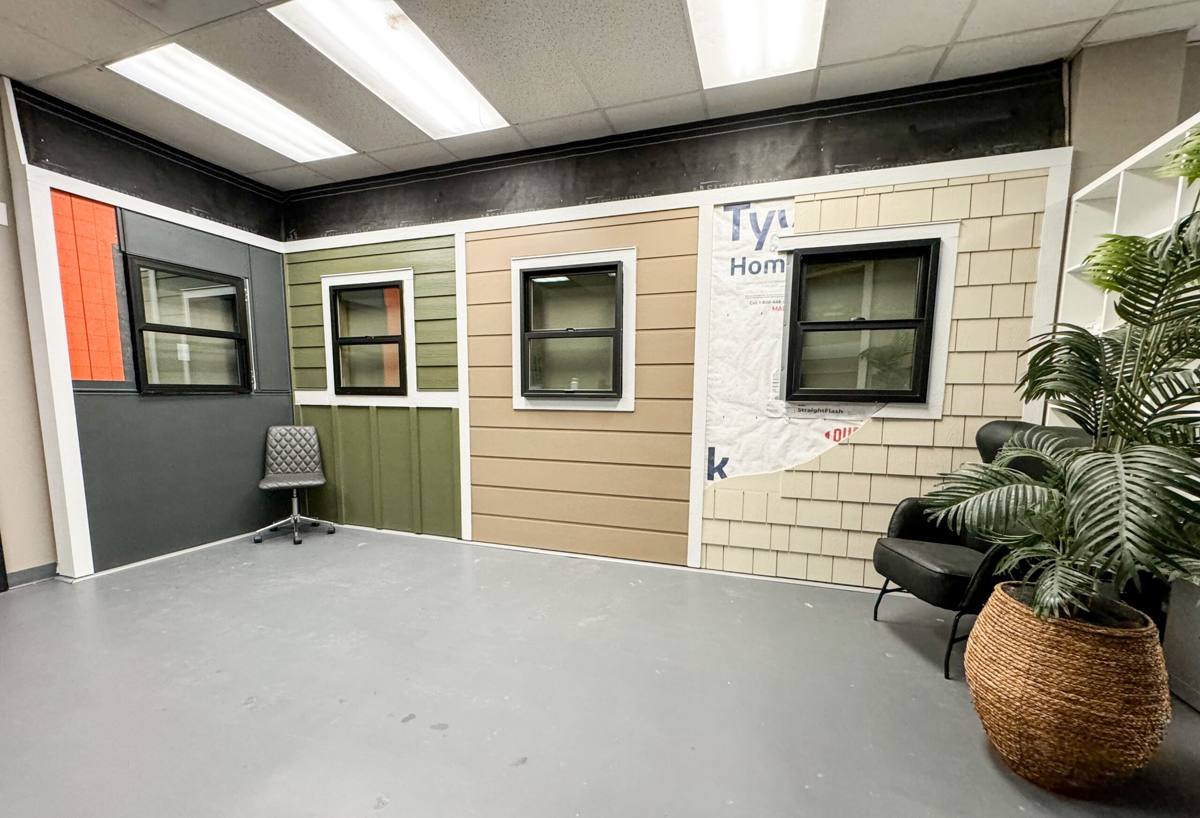
Why Local Climate Changes How Board & Batten Should Be Built
Three things about weather in this part of Whatcom County show up on siding faster than almost anywhere else: salt-laden marine air moving in off the water, sustained wind-driven rain through the fall and winter, and a moss season that runs the better part of eight months. None of that makes board and batten a bad choice for a home in Laurel — but it does mean the detailing has to be right, not just close.
Wind-driven rain and vertical seams
A board and batten wall has roughly twice the vertical seams of a lap-sided wall of the same width, because every batten covers a joint. Each seam is a place wind-driven rain can be forced upward and sideways instead of simply running down, especially during the sustained storms that move through this area. A wall built without a real drainage plan behind the battens is depending entirely on caulk and paint to keep water out — and caulk and paint are maintenance items, not waterproofing systems.
Salt air and hardware
Homes around Lynden sit close enough to the Salish Sea that marine air carries salt inland, and salt accelerates corrosion in exactly the hardware that holds board and batten siding together — fasteners, flashing, and any exposed metal trim. Standard interior-grade fasteners or mismatched flashing metal will show rust streaks bleeding down the face of the siding within a few years. It's one of the more common signs of a rushed or under-specified install we come across on older homes in this area.
The long moss season
Whatcom County's wet season stretches long, and moss and algae don't need much encouragement — just shade, moisture, and a surface they can grip. North-facing walls, elevations near mature trees, and any siding that stays damp longer than it should are all at risk. Wood-based sidings are especially vulnerable because the material itself absorbs moisture and gives moss something to root into, not just sit on top of.
What a Correct Board & Batten Installation Actually Involves
The batten pattern is the easy part to get right. What separates a board and batten wall that holds up in this climate from one that doesn't is almost entirely hidden once the job is finished.
A real drainage plane
Behind the siding, a weather-resistive barrier and a rainscreen gap give any water that does get past the battens somewhere to go, and give the wall assembly a way to dry out between storms. In a climate with this much sustained rainfall, skipping the rainscreen is the single biggest shortcut that shows up as trouble five or ten years later.
Flashing at every transition
Window heads, water tables, roof-to-wall intersections, and any point where vertical siding meets a horizontal surface need flashing detailed to shed water outward, not sealant relied on alone. Sealant fails eventually; flashing, installed correctly, doesn't depend on maintenance to keep working.
Battens fastened into framing
Battens should land over structural framing or blocking, not just be nailed into sheathing, and spacing needs to follow the manufacturer's engineering rather than whatever looks even by eye. This affects both how flat the wall stays over time and how well it resists wind load during storms.
Fasteners built for this exposure
Given the salt air in this part of Whatcom County, fastener selection isn't a place to use whatever happens to be on the truck. Corrosion-resistant fasteners, matched to the siding manufacturer's specification, are what keep the wall looking clean instead of streaked a few years in.
The Material We Build It With: James Hardie Vertical Siding
We install James Hardie fiber cement exclusively. For board and batten, that means HardiePanel vertical siding with HardieTrim battens, or the Artisan Collection for a more refined board profile. We don't offer board and batten in vinyl, LP SmartSide, or bare cedar, and that's a deliberate standard, not an oversight.
Fiber cement doesn't swell, cup, or rot at a cut batten end the way wood does, which matters because board and batten has far more cut edges exposed to weather than lap siding does. It's factory-finished with Hardie's ColorPlus coating, baked on before the material ever reaches the site, which holds color and resists moss and mildew far better than a field-applied paint job that starts weathering the day it's rolled on. Hardie's HZ10 product line is engineered specifically for wet, moderate Pacific Northwest climates like Whatcom County's, and the material carries a strong transferable warranty backed by a manufacturer with decades in fiber cement siding. For a wall system that has to live through this many wet seasons, that combination is why we standardized on it rather than offering alternatives.
How the Common Board & Batten Materials Compare
| Material | Moisture Behavior | Moss/Algae Resistance | Maintenance | Typical Cost Tier |
|---|---|---|---|---|
| James Hardie fiber cement | Dimensionally stable; doesn't swell or rot at cut edges | Dense, factory-finished surface resists growth | Occasional wash; no repainting on ColorPlus finish | Mid-to-upper |
| Cedar / primed wood | Absorbs moisture; prone to cupping and rot at joints | Porous surface is a common moss substrate | Repainting or re-staining on a recurring cycle | Upper |
| Vinyl vertical panel | Won't rot, but can warp and gap with heat and wind | Smooth surface, but seams and channels trap grime | Low, but panels aren't repairable in sections | Lower |
| LP SmartSide (engineered wood) | Better than raw wood but still wood-based; cut ends need sealing | Moderate; depends on ongoing finish upkeep | Field caulking and touch-up at seams over time | Mid |
The cost tiers above are relative, not fixed quotes — actual pricing depends on the home's size, tear-off scope, and detailing required. We can walk through real numbers for a specific Laurel property during an estimate.
Our Process for a Board & Batten Project in Laurel
- Site walk and exposure assessment. We look at sun and shade patterns, tree cover, wind exposure, and the condition of the existing wall before recommending anything.
- Tear-off and sheathing inspection. Old siding comes off and we check the sheathing underneath for rot or damage before anything new goes on — this is usually where problems from a previous install surface.
- Weather-resistive barrier and rainscreen. The drainage plane goes in first, sized and detailed for the wall's actual exposure.
- Flashing at every penetration and transition. Windows, doors, and horizontal breaks get flashed before the siding closes them in.
- Panel and batten installation. HardiePanel and HardieTrim go up to Hardie's fastening and spacing specification, not a generic approximation of it.
- Trim, caulking, and final detailing. The places where water is most likely to find a way in get the closest attention.
- Walkthrough. We go over the finished job with the homeowner before calling it done.
Why Hiring a Crew That Already Works in Laurel Matters
Board and batten detailing isn't generic — it has to answer to the specific way weather hits a specific wall. A crew that already does regular work around Laurel and greater Lynden has a working sense of which elevations in this area take the worst of the wind-driven rain, which lots hold onto moss longer because of tree cover or shade, and how salt air exposure plays out on homes at varying distances from the water. That kind of judgment comes from repetition in the same area, not from a generic specification sheet.
There's a practical side too. A local crew is easier to reach for a warranty question five years down the road, already understands Whatcom County permitting and inspection expectations, and isn't learning the area's quirks on your project for the first time.
Keeping Board & Batten Siding Right for the Long Haul
Correctly installed Hardie board and batten needs very little upkeep, but a little attention keeps it performing the way it's designed to for its full service life.
- Rinse the siding down once or twice a year, especially shaded and north-facing walls where moss gets a foothold first.
- Trim back tree limbs and shrubs that keep a wall shaded and damp longer than the rest of the house.
- Check caulking at trim, window, and door joints yearly, and have any cracked or missing sealant redone before wet season.
- Keep gutters and downspouts clear so roof runoff isn't dumping extra water down a wall section.
- Watch for rust streaking below fasteners or trim — it's an early sign hardware wasn't matched to the exposure, and it's worth addressing before it stains the finish.
If you're weighing board and batten for a home in Laurel or anywhere around Lynden, we're happy to take a look and give you a straight, no-pressure read on what your walls actually need. Use the form below to request a free estimate.