 Lynden Siding
 Decking Built for Acme's Corner of Whatcom County
Acme sits in the quieter, wooded stretch of Whatcom County east of Lynden, where the terrain climbs toward the foothills and tree cover runs heavier than it does closer to town. That setting is beautiful to live in and hard on an outdoor deck. Between the shade, the rainfall, and the organic debris that comes off surrounding trees, a deck out here works harder year-round than one on an open, sunny lot. Composite decking holds up well against that kind of pressure when it's installed correctly — but "correctly" matters more here than in drier parts of the state.
We build and replace decks for homeowners around Lynden and out toward Acme, and we treat this area's climate as a design input, not an afterthought. The framing, the ventilation underneath the boards, and the way the deck ties into the house all get decided with this specific climate in mind.
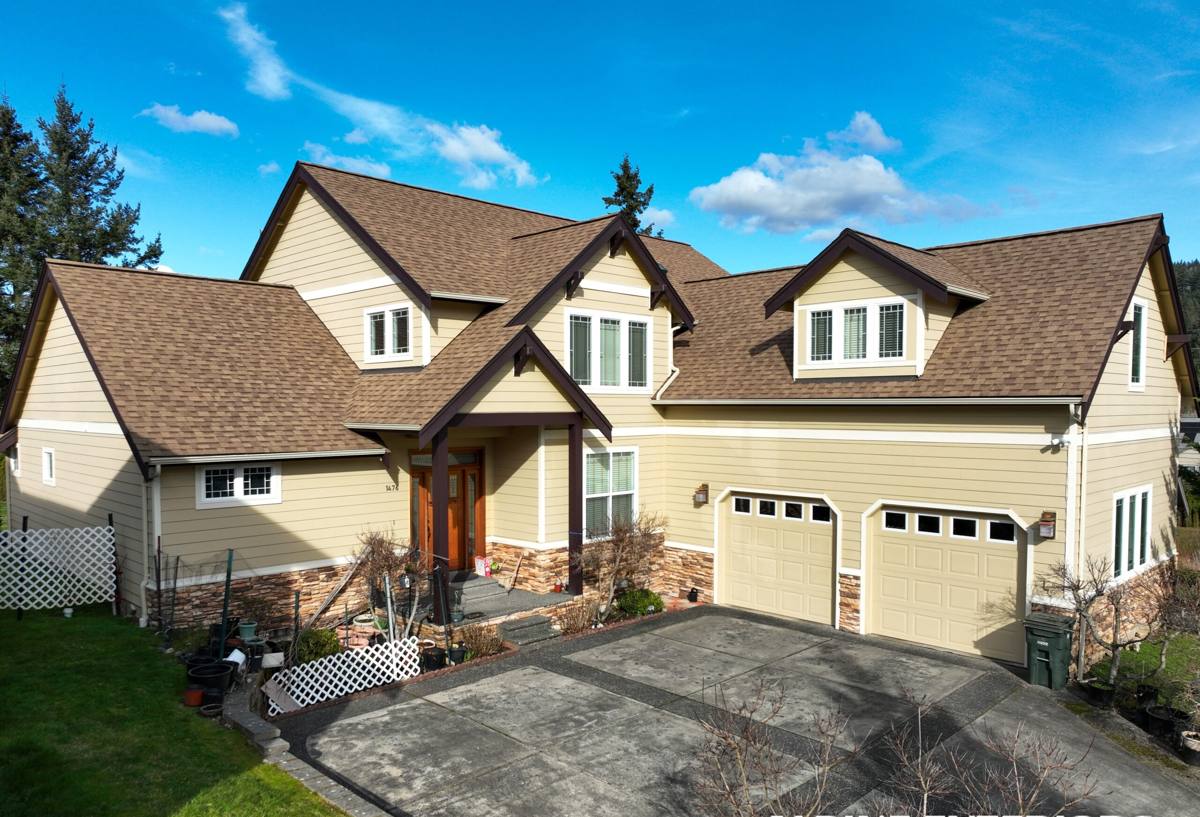
What Acme's Climate Does to a Deck
Heavy Shade and a Long Moss Season
Trees that shade a deck for most of the day keep the boards from ever fully drying out between rain events. That's the single biggest driver of moss and algae growth on decking in this part of Whatcom County. Shade also drops surface temperature, so any moisture that lands on the deck sits there longer instead of evaporating off.
Driving Rain and Standing Moisture
Whatcom County gets a long, wet season, and wind-driven rain doesn't just fall straight down — it gets pushed sideways into ledger connections, stair stringers, and any gap where water can collect. On a rural lot with mature trees, gutters and downspouts also have more debris to manage, which means more water finding its way onto or under the deck than the drainage was designed for.
Marine Air Reaches Inland Too
Even away from the immediate coastline, Whatcom County sees marine-influenced weather move through regularly, carrying salt-tinged moisture with it. It's a smaller factor for a wooded, inland community like Acme than it is right on the water, but it still plays a role in how fasteners, flashing, and metal hardware age over the years, so we don't ignore it when we spec materials.
Composite vs. Wood vs. PVC: What Actually Holds Up Here
All three materials can be built into a good deck. The honest differences show up in how each one behaves under Acme's specific mix of shade, rain, and moss pressure.
| Material | Moisture Behavior | Moss/Algae Resistance | Maintenance | Typical Lifespan |
|---|---|---|---|---|
| Pressure-treated wood | Absorbs and releases moisture with the seasons; prone to cupping and splitting under repeated wet-dry cycles | Low — textured grain gives moss and algae something to grip | Annual cleaning, periodic staining or sealing | 10–15 years before major repairs |
| Uncapped composite | Doesn't rot, but the surface can absorb moisture over time without a protective cap | Moderate — still needs regular cleaning in shaded spots | Occasional cleaning; no staining or sealing | 15–20+ years |
| Capped composite | Moisture-resistant shell keeps water out of the board core | Higher — smoother, sealed surface sheds spores and algae more easily | Periodic rinsing and sweeping | 20–25+ years |
| PVC decking | Fully synthetic; essentially impervious to moisture absorption | Highest — smooth, non-porous surface | Lowest of the group | 25+ years |
For a shaded, rural lot like the ones common around Acme, we usually steer homeowners toward capped composite or PVC. The upfront cost is higher than wood, but the maintenance burden in a heavy-moss environment is the real deciding factor for most people once they've owned a wood deck through a few wet Whatcom County winters.
What a Correct Composite Deck Installation Involves
Framing and Joist Protection
Composite boards don't rot, but the wood framing underneath them still can if it's not protected. We wrap or tape joists and beams to keep water from soaking into the structural lumber — a step that's easy to skip and one of the most common causes of a composite deck failing from the frame up, not the surface down.
Ledger Board and House Tie-In
The connection where a deck meets the house is the single most water-sensitive point on the whole structure, and it's exactly where our background in siding and exterior moisture management matters. Flashing at the ledger has to shed water away from the wall assembly, not into it. We treat that connection with the same standard we'd use flashing a wall for new siding, because a leak at the ledger doesn't just damage the deck — it can work its way into the house.
Fastening and Board Spacing
Hidden fastener systems keep the deck surface free of exposed screw heads, which also removes one more spot where moisture and debris can collect. Board spacing has to account for this area's rainfall and the organic litter that falls off nearby trees — gaps that are too tight trap wet leaves and needles; gaps that are too wide undermine the finished look and can catch heels and furniture legs.
Airflow Underneath
A shaded deck with poor airflow underneath stays damp longer than one that can breathe. Where the site allows it, we build in ventilation at the skirting and keep landscaping from crowding the underside of the deck, since dense shrubs against the framing are a common source of trapped moisture on rural lots.
Our Process for an Acme Deck Project
- On-site assessment — we look at sun/shade exposure, drainage, existing structure condition, and how the deck ties into the house.
- Structural evaluation — ledger connection, footings, and framing get checked before any decking material is discussed, since a new deck surface on a compromised frame is a waste of money.
- Material and layout selection — we walk through board tiers, colors, and railing options based on your budget and how much shade the deck actually gets.
- Permitting — larger or elevated decks typically require a permit through the county; we handle that coordination.
- Installation — framing protection, flashing at the house, hidden fastening, and proper spacing, done in that order.
- Final walkthrough — we go over the finished deck with you and cover basic care before we leave the site.
Picking Boards and Colors for a Shaded, Wet Lot
Color and finish aren't just aesthetic choices out here. Lighter, streak-resistant colors tend to show pollen, tannin staining from overhanging trees, and organic debris less than solid dark tones do. A textured, slip-resistant surface finish also matters more on a shaded deck that stays damp longer — it's a real safety consideration, not just a style preference. We'll talk through which board lines actually perform well in low-light, high-moisture settings versus which ones are better suited to open, sunny yards.
Cost Factors for Composite Decking in Acme
We don't quote pricing without seeing the site, since rural lots around Acme vary a lot in access, grade, and existing structure condition. These are the factors that move the number most:
| Factor | Why It Matters |
|---|---|
| Deck size and shape | More square footage and cut angles mean more material and labor |
| Height off grade | Elevated decks need more substantial framing, railing, and often stairs |
| Existing structure condition | Reusable framing lowers cost; rot or undersized footings add rebuild scope |
| Board tier | Uncapped composite, capped composite, and PVC sit at different price points |
| Site access | Tree cover, slope, and distance from the driveway affect how easily material and equipment reach the build site |
| Railing and stair complexity | Custom railing, multiple stair sets, or level changes add labor |
Maintenance Reality for Composite Decking
Composite decking cuts maintenance significantly compared to wood, but "low-maintenance" doesn't mean "no-maintenance," especially under tree cover. A short seasonal routine keeps a composite deck looking and performing the way it should:
- Sweep leaves, needles, and pollen off the surface regularly rather than letting them sit and hold moisture
- Rinse the deck a few times a year, and more often during heavy leaf-drop season
- Keep gutters and downspouts clear so water isn't dumping onto or near the deck
- Trim back branches and shrubs that keep the surface shaded and damp longer than necessary
- Check railing connections and fastener points once a year for movement
- Avoid high-pressure washing settings that can damage the board's cap or texture
Why Hire a Crew That Already Works Acme
Rural Whatcom County properties come with their own set of realities — septic and well setups instead of city utilities, longer driveways, tree cover that limits equipment access, and County permitting rather than city permitting. A crew that already builds decks out here isn't guessing at any of that. We know how to plan around tree roots near a footing location, how to flash a ledger correctly against Lynden-area rain patterns, and how to spec a board and finish that will actually shed moss instead of collecting it. That local familiarity shows up in fewer surprises during the build and a deck that's built for the conditions it will actually sit in, not a generic spec sheet.
If you're planning a new composite deck or replacing a tired wood one out in Acme, we're happy to take a look and walk the site with you. Fill out the form below for a free, no-pressure estimate.