 Lynden Siding
 Roofing in Custer Isn't the Same Job as Roofing Inland
Custer sits close enough to the water that homes here deal with a different mix of punishment than roofs even a few miles inland around Lynden. There's salt-laden air drifting off the Salish Sea, long stretches of driving rain pushed sideways by wind off the water, and a moss season that can run eight or nine months out of the year under the right combination of shade and moisture. None of that is dramatic on its own. What it does is add up, quietly, on details that a rushed or generic installation skips.
An asphalt shingle roof that's installed correctly for this stretch of Whatcom County should shrug off all three. One that's installed to a lowest-cost standard will show it within a few winters — usually as granule loss, curling at the edges, or moss finding a foothold in the shaded north-facing slopes so common on Custer lots.
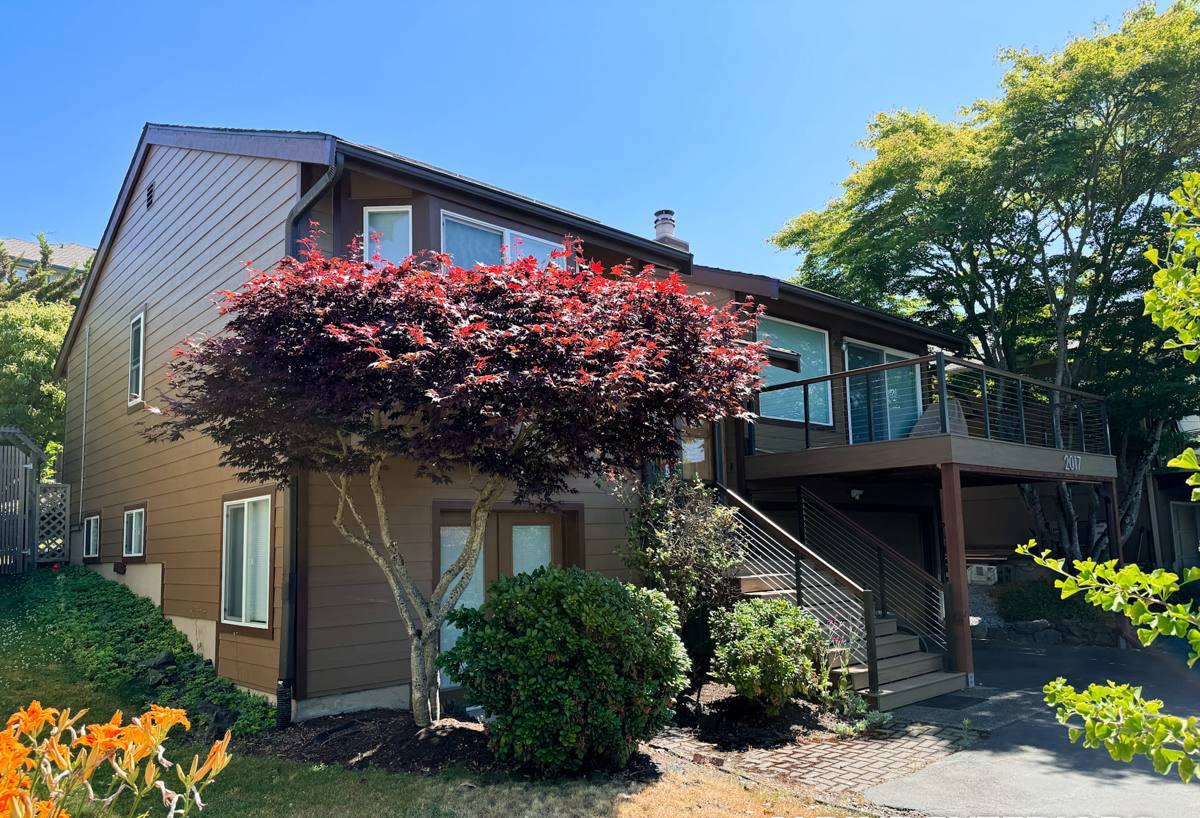
What Salt Air, Rain, and Moss Actually Do to a Roof
Salt Air
Airborne salt doesn't rot shingles the way it corrodes metal, but it does accelerate wear on exposed fasteners, flashing, and any galvanized components that aren't rated for coastal exposure. Over years, that shows up as rust streaking, loosened flashing at penetrations, and premature failure of cheaper hardware.
Driving Rain
Rain that comes in at an angle instead of straight down finds every shortcut in a roofing job. Underlayment laps that are too short, step flashing that's nailed instead of woven correctly, and valleys that weren't detailed properly all leak under driving rain even though they'd hold up fine in a calmer climate. This is the single biggest reason a roof built for a drier region doesn't perform the same way once it's on a Custer roofline.
Moss
Moss needs shade, moisture, and organic debris to get started, and Custer's tree cover combined with the region's damp stretches gives it all three. Moss holds moisture against the shingle surface, works its way under tabs, and lifts them over time — which is exactly how a slow, hidden leak starts. It's rarely the moss itself that causes the damage; it's what the trapped moisture does underneath it.
What a Correct Asphalt Shingle Installation Involves
A shingle roof is a system, not a single product. Every layer has a job, and skipping or shortcutting one layer undermines the rest — no matter how good the shingle itself is.
- Tear-off and deck inspection: Old layers come off so the decking underneath can actually be checked for soft spots, rot, or delamination — problems that get sealed in (and hidden) if a new layer is installed over an old one.
- Ice-and-water barrier at eaves and valleys: A self-adhering membrane at the vulnerable spots where water backs up or concentrates, not just a strip along the very edge.
- Synthetic underlayment across the field: The secondary water barrier that has to hold up if wind-driven rain ever gets under a shingle tab.
- Properly lapped, corrosion-resistant flashing: Step flashing at walls and chimneys, and continuous flashing in valleys, installed so water sheds over each layer instead of behind it.
- Correct nailing pattern: Manufacturer-specified nail count and placement, which is what the wind warranty is actually based on — not just "how it's always been done."
- Ridge and hip caps installed last, ventilated correctly: Finished caps that tie into a working ventilation path rather than sealing it off.
Choosing a Shingle That Makes Sense for This Location
Most manufacturers sell several tiers of asphalt shingle, and the differences matter more here than they would in a milder or drier climate. We generally steer Custer and Lynden-area homeowners toward mid- or upper-tier architectural shingles with algae-resistant granules, for reasons that come down to trade-offs rather than one product being "bad."
| Shingle Type | Typical Lifespan | Moss/Algae Resistance | Wind Rating | Best Fit |
|---|---|---|---|---|
| 3-tab (economy) | 15–20 years | Standard granules only | Lower | Budget projects, outbuildings |
| Architectural (standard) | 25–30 years | Often includes algae-resistant option | Moderate–high | Most Custer homes |
| Architectural (premium/impact) | 30+ years | Algae-resistant standard | High | Exposed sites, longer hold-time goals |
Algae-resistant granules contain a copper or zinc compound that slows the growth that leads to those dark streaks and eventually moss colonization. It's not a substitute for good ventilation and clean gutters, but on a shaded lot it buys real time between cleanings.
Color and Heat Considerations
Darker shingles hide streaking longer visually but can run slightly warmer in summer; lighter shingles show algae staining sooner but keep attics a bit cooler. Neither is wrong — it's a homeowner preference we walk through during the estimate, not something we decide for you.
Ventilation: The Part That Determines How Long Everything Else Lasts
A shingle roof fails early far more often because of trapped moisture underneath it than because of anything wrong with the shingle itself. Balanced intake (soffit vents) and exhaust (ridge vent) keeps the attic space close to outdoor temperature and humidity, which does three things: it protects the shingles from cooking themselves from underneath, it keeps condensation from forming on the underside of the decking, and it slows moss growth by not giving damp, stagnant air a place to sit right under the roof deck. On re-roofs, we check the existing ventilation path every time — plenty of older Custer homes have soffit vents that were painted over or insulation stuffed in front of them at some point, which quietly defeats the whole system.
Signs a Custer Roof Needs Attention
- Granules collecting in gutters or at downspout outlets
- Shingle tabs curling up at the corners, especially on south- or west-facing slopes
- Dark streaking or green-tinged moss patches on shaded, north-facing sections
- Soft spots or slight sagging when walked (or visibly, from the ground)
- Daylight visible through the roof deck from inside the attic
- Water stains on interior ceilings, especially near chimneys, skylights, or valleys
- Flashing that looks lifted, rusted, or separated from the wall or chimney
Any one of these on its own isn't necessarily an emergency, but a few of them together usually means the roof is past the point where patching makes sense.
How We Handle a Custer Re-Roof
- On-site inspection: We walk the roof (not just look from the ground) and check the attic from inside, since that tells us as much as the shingle surface does.
- Written estimate: Scope, shingle options, and pricing spelled out — no verbal-only quotes.
- Scheduling around weather: We plan tear-off days around dry windows, since an open roof deck and Whatcom County rain don't mix. Materials and tarps are staged to protect the house if weather turns mid-project.
- Tear-off and deck repair: Full removal, deck inspection, and replacement of any damaged sheathing before anything new goes down.
- Installation: Ice-and-water barrier, underlayment, flashing, shingles, and ridge caps installed to manufacturer spec.
- Cleanup and magnetic nail sweep: Job site cleared of debris and swept for stray fasteners before we consider it done.
- Final walkthrough: We go over the finished roof with you before we call it complete.
What Drives the Cost of a Shingle Roof Here
| Factor | Why It Matters in This Area |
|---|---|
| Roof pitch and complexity | Steeper pitches and multiple valleys take longer and need more flashing detail |
| Number of layers being removed | Tear-off of two old layers takes more labor than one |
| Decking condition | Rot or soft sheathing found under old shingles adds material and labor |
| Shingle tier selected | Algae-resistant and impact-rated products cost more per square but last longer here |
| Ventilation upgrades needed | Adding or correcting soffit/ridge vents pays off over the roof's life |
| Access and site conditions | Tree cover, tight lots, and driveway access affect staging and disposal |
We don't give ballpark numbers over the phone for this reason — two roofs that look similar from the street can price very differently once we're actually up on the deck.
Why Hiring a Crew That Already Works in Custer Matters
A roofing crew that only shows up in this area occasionally doesn't have the same feel for how fast weather can turn, which flashing details actually hold up against driving rain off the water, or which neighborhoods tend to have heavier moss pressure because of tree cover and shade patterns. We work throughout Lynden and the surrounding Whatcom County communities regularly, which means we're not guessing at scheduling around rain windows or treating algae resistance as an upsell instead of a practical necessity. It also means if something needs a warranty callback down the road, we're not driving in from out of the area to handle it.
If your roof is showing early wear, dealing with recurring moss, or you're just planning ahead for a replacement, we're glad to come take an honest look. There's no pressure and no obligation — just a straightforward inspection and a clear estimate you can use to make the decision on your own timeline.