 Lynden Siding
 Roof Replacement in Custer: What This Climate Actually Does to a Roof
Custer sits close enough to the water that salt air is a real factor in how roofing materials age here, not just a talking point. Add in Whatcom County's driving rain — the kind that comes in sideways off a west wind rather than falling straight down — and a long stretch of the year where roofs stay damp and shaded, and you've got three separate stresses working on the same roof at the same time. Most manufacturer warranties and installation specs are written for an "average" climate. Custer isn't average. It's wetter, greener, and saltier than most of the country, and a roof that's installed without accounting for that will show problems years before it should.
None of this means Custer homes need exotic materials or gimmicks. It means the ordinary parts of a roof replacement — underlayment, flashing, ventilation, fastening — have to be done correctly and matched to this environment, because there's very little margin for shortcuts here. A roof that would coast along fine in a dry inland climate can fail early in Custer if those details are skipped.
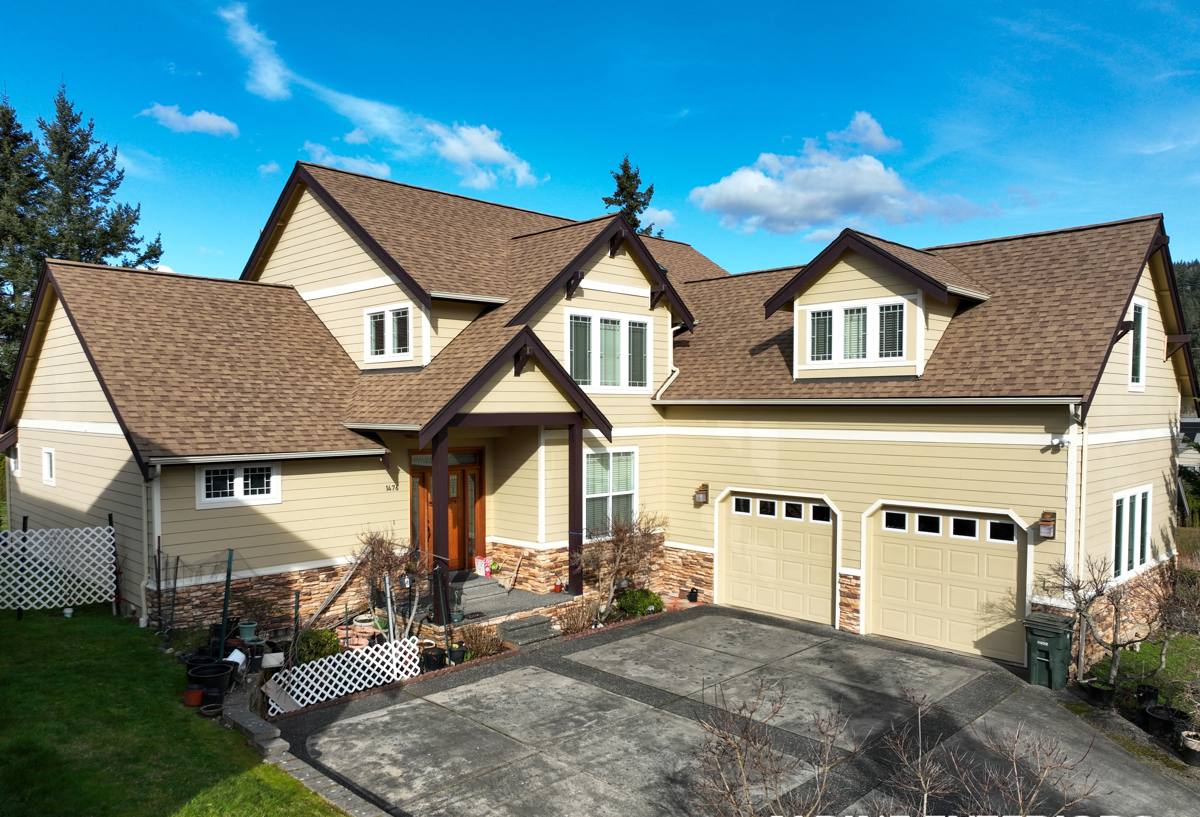
Signs a Custer Home Needs Replacement, Not Another Repair
Roofs in this area rarely fail all at once. They fail gradually, usually starting at the weak points — valleys, flashing, and north-facing slopes that never fully dry out. Knowing the difference between "this needs a patch" and "this needs a new roof" saves homeowners from throwing repair money at a roof that's already past the point of no return.
Age and material lifespan
Standard three-tab asphalt shingles rarely make it to their full rated lifespan in this climate — the constant moisture cycling and moss pressure shortens that. Architectural shingles do better, and metal roofing does better still, but every material has a point where repair stops being cost-effective and replacement takes over.
Visible wear signs worth acting on
- Granule loss showing up in gutters or at downspout outlets
- Shingles that are cupping, curling at the edges, or visibly brittle
- Moss or algae streaking that keeps coming back within months of cleaning
- Soft spots or sagging when walked on, especially near valleys
- Daylight visible through the attic decking, or damp insulation below the roof deck
- Flashing around chimneys, vents, or skylights that's lifted, rusted, or gapped
Any one of these on its own might just need attention. Two or three together, especially on a roof that's already 15-20+ years old, usually means it's time to talk replacement instead of another round of patching.
What a Correct Roof Replacement Involves Here
A full tear-off is the only way to actually see what's happening at the roof deck, and in a climate like this, that inspection matters. We've found soft or delaminated sheathing under roofs that looked fine from the ground — moisture had been working its way in slowly for years through failed flashing or worn underlayment. Any deck damage gets replaced before a single new shingle goes down, because covering rot with new roofing just hides the problem for another owner to find later.
Underlayment and water barrier
We use synthetic underlayment as standard, and ice-and-water shield at the eaves, valleys, and any roof-to-wall transitions — the spots where wind-driven rain is most likely to force its way under the shingles rather than run off the surface. This is one of the places where cutting corners doesn't show up right away, but it's exactly where driving rain finds a way in during Whatcom County's wetter months.
Flashing done right
Chimneys, skylights, vent pipes, and wall intersections are where roofs actually leak — plain field shingles almost never fail on their own. New step flashing, counter-flashing, and pipe boots go in with every replacement rather than reusing old flashing, because reused flashing is one of the most common causes of a "new" roof leaking within the first couple years.
Ventilation that matches the house
A roof needs balanced intake and exhaust ventilation to keep the attic dry and the shingles at a stable temperature. In a damp climate, poor ventilation traps moisture in the attic, which shortens the life of the decking from underneath — the same rot risk as a leak, just coming from the wrong direction. We check existing ventilation on every replacement and correct it when it's undersized or unbalanced, rather than just reinstalling whatever was there.
Material Options for a Custer Roof
There isn't one "right" material for every house — it depends on budget, roof pitch, tree cover, and how long the homeowner plans to stay in the house. Here's how the common options actually compare for this specific climate.
| Material | Moss & algae resistance | Wind/rain performance | Maintenance | Typical lifespan here |
|---|---|---|---|---|
| Standard 3-tab asphalt | Low — moss takes hold quickly in shaded areas | Adequate when properly fastened | Regular moss/debris cleaning needed | 12-18 years |
| Architectural (algae-resistant) shingle | Better — copper/zinc granules slow algae growth | Good; heavier and more wind-resistant | Occasional cleaning, less frequent | 20-25 years |
| Standing seam metal | High — little for moss to grip onto | Excellent in wind and heavy rain | Low; mainly gutter/debris checks | 40-50+ years |
| Cedar shake | Low unless treated; retains moisture | Moderate; needs correct spacing/ventilation | High — treatment and inspection required | Varies widely with upkeep |
For most Custer homes, we recommend algae-resistant architectural shingles as the practical middle ground — meaningfully better moss resistance than standard shingles without the upfront cost jump of metal. Metal earns its keep on homes with heavy tree cover, steep pitches, or owners planning to stay long enough to value the lower lifetime maintenance.
Our Roof Replacement Process
The process is straightforward, but we don't skip steps to move faster:
- On-site inspection of the current roof, attic, and ventilation — not just a look from the ground
- A written estimate that spells out material, underlayment, flashing, and ventilation work, so there are no surprises once tear-off starts
- Property protection — tarps and ground protection for landscaping, siding, and gutters before work begins
- Full tear-off and deck inspection, with any damaged sheathing replaced and documented
- Installation of underlayment, ice-and-water shield, new flashing, and the chosen roofing material
- Ventilation correction where needed
- Full cleanup, including a magnetic sweep for stray nails
- Final walkthrough with the homeowner before we consider the job done
We also stand behind the workmanship separately from the manufacturer's material warranty, so a homeowner knows exactly what's covered and by whom if a question comes up later.
Moss, Algae, and Ongoing Roof Care After Replacement
A new roof isn't maintenance-free in this climate — but it should require a lot less attention than the one it replaced. A few habits keep a Custer roof performing for its full expected life:
- Keep gutters clear so water isn't backing up under the shingle edge, especially heading into the wetter months
- Trim back overhanging branches to cut down on shade and debris buildup where moss gets its start
- Have moss growth treated early rather than letting it establish — it's far easier to prevent than remove
- Schedule a quick visual check after major windstorms to catch lifted shingles or flashing before they leak
None of this is heavy upkeep, but skipping it entirely is how a good roof ages faster than it should have.
Why a Crew That Already Works Custer Matters
A roofer who mainly works drier inland areas doesn't think about salt exposure, moss pressure, or wind-driven rain the same way a crew that works Whatcom County day in and day out does. We know which details actually matter here versus which ones are just upsells, because we've seen what happens to roofs in this area when those details get skipped. That shows up in small decisions — how much ice-and-water shield goes down, how flashing gets lapped, which shingle line actually holds up to the moss pressure here — that a generic installation approach won't catch.
It also matters for response time. When a windstorm off the water lifts shingles or a tree limb comes down during a heavy rain, a local crew can get out to look at it quickly instead of a homeowner waiting days for someone to make the drive out from farther away.
If your roof is showing wear, or you just want an honest read on whether it needs replacing or can hold on a bit longer, we're happy to take a look. Use the form below to request a free, no-pressure estimate for your Custer home.