 Lynden Siding
 Siding Built for Custer's Weather, Not Just Its Curb Appeal
Custer sits close enough to the water and open farmland that homes here take a different kind of beating than siding manufacturers assume when they write their install manuals. You've got salt-laden air moving in off the Strait, long stretches of driving rain that hit siding at an angle instead of falling straight down, and a wet season that runs long enough for moss and algae to get comfortable on anything that stays damp. None of that is exotic or rare — it's just the normal cost of living in this corner of Whatcom County. But it means a siding replacement done to a national-average spec, instead of a Custer spec, tends to show its age early: chalking finishes, swollen bottom edges, streaking under eaves, and moss creeping up from the ground line by year three or four.
We install James Hardie fiber cement siding exclusively, and we've done enough replacements in this immediate area to know which failure points actually matter here versus which ones are just marketing language on a spec sheet. This page walks through what a correctly done siding replacement looks like for a Custer or Lynden-area home, not a generic description that could apply anywhere in the Pacific Northwest.
Why Salt Air and Driving Rain Change the Job
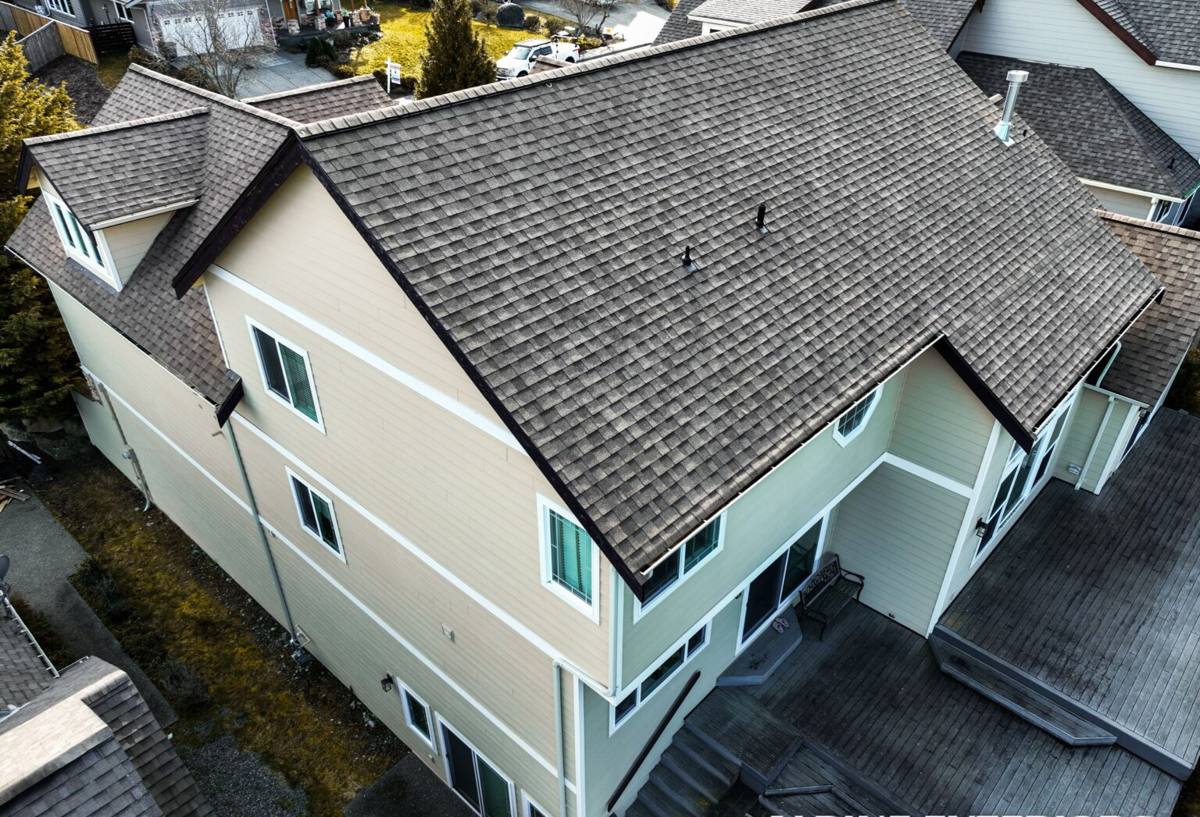
Custer isn't a coastal town in the postcard sense, but it's close enough to Georgia Strait and Semiahmoo Bay that airborne salt reaches homes here, especially on west- and northwest-facing walls. Salt air accelerates corrosion on fasteners, flashing, and trim hardware, and it degrades cheap paint finishes faster than inland exposure would. Combine that with wind-driven rain — which pushes water sideways into laps, seams, and butt joints instead of letting it run straight down — and you get a wall assembly that's under more moisture stress than the siding industry's baseline testing usually accounts for.
What This Means in Practice
- Fasteners and flashing need to be corrosion-resistant, not just code-minimum
- Butt joints and seams need real weather protection, not just caulk covering a gap
- Bottom starter courses need proper clearance and drainage, since wind-driven rain finds the lowest edge first
- Factory-cured, factory-finished panels hold up better than field-primed or field-painted material because the finish is baked on before the product ever sees a job site
Moss Season Is Longer Here Than People Expect
Whatcom County's wet season stretches from fall through spring, and shaded or north-facing walls near trees and fence lines can stay damp for weeks at a time. That's exactly the environment moss and algae need to establish. Once organic growth gets a foothold on a wood-based or wood-fiber siding product, it holds moisture against the surface, which speeds up rot underneath the growth — you're not just dealing with a cosmetic problem, you're feeding a moisture problem that's already hidden from view.
Fiber cement doesn't feed mold and mildew the way wood-based products can, because there's no wood fiber for organic growth to root into and break down. That doesn't mean a Custer home is immune to moss — anything can host surface growth if it stays wet and shaded long enough — but it removes the material itself as a food source, and a factory finish that's actually engineered for moisture cycling holds its color and sheds growth better than field-applied paint over years of exposure.
What a Correct Siding Replacement Involves
Siding replacement isn't just stripping old panels and nailing up new ones. The parts that actually determine how the job performs in five, ten, and twenty years happen underneath the visible surface.
Tear-Off and Substrate Inspection
Once the old siding comes off, we inspect the sheathing and framing underneath for rot, soft spots, and prior water damage — which is common on older Custer and Lynden homes where the original siding wasn't detailed for this climate. Any compromised sheathing gets replaced before anything new goes up. Covering rotten sheathing with new siding just hides a problem that gets more expensive to fix later.
Weather-Resistive Barrier and Flashing
A correctly installed weather-resistive barrier (house wrap) goes on with proper overlaps and taped seams, and flashing gets installed at every window, door, and roofline transition — the places water actually finds its way in. This step matters more in a wind-driven-rain climate than it does somewhere drier, because the barrier is the last line of defense if any water gets past the siding face.
Fastening and Clearances
James Hardie panels have specific fastener spacing, type, and embedment requirements, and those specs change slightly by product line and exposure. We follow Hardie's published installation instructions rather than shortcutting them, because doing so is also what keeps the manufacturer's warranty intact — a warranty that's void if the install doesn't match spec.
Caulking and Sealant Details
Butt joints, trim intersections, and penetrations get sealed with products rated for the exposure, not whatever caulk happens to be cheapest that week. In a salt-air, high-moisture environment, sealant quality and joint detailing show up as either a tight, dry wall or a streaked, stained one within a couple of wet seasons.
Product Line: What We Actually Recommend for Custer
James Hardie makes several siding lines engineered for different climate zones, and for Whatcom County's marine, wet-winter conditions, we typically steer homeowners toward Hardie's HZ5 climate-engineered products, which are formulated for wetter, colder regions. Within that, most Custer-area homes land on either HardiePlank lap siding for a traditional look or HardiePanel/Board-and-Batten for a more modern or farmhouse profile — both available in factory-applied ColorPlus finishes, which resist fading and chipping far better than field-applied paint.
| Factor | What to Look For in Custer/Lynden |
|---|---|
| Climate engineering | HZ5 formulation, built for wetter/colder marine climates |
| Finish | Factory-applied ColorPlus, not field-primed or field-painted |
| Fasteners/flashing | Corrosion-resistant grade, rated for salt-air exposure |
| Warranty | Manufacturer-backed, transferable, contingent on spec-correct install |
| Profile | Lap, panel, or board-and-batten based on home style and exposure |
Why We Only Install James Hardie
We get asked from time to time about vinyl siding, LP SmartSide, or other fiber-cement alternatives, and it's a fair question — those products are cheaper up front and widely available. Our answer is straightforward: in a climate that combines salt air, wind-driven rain, and a long wet season, the products that hold up best over decades are non-combustible fiber cement with a factory-cured finish, not wood-based composites or vinyl that can warp, fade, or take on moisture at the seams. James Hardie is the product line that consistently performs that way when installed correctly, and it comes with a strong transferable warranty backing that performance. We'd rather install one product exceptionally well and stand behind it than juggle multiple product lines and installation standards.
Cost Factors for a Custer Siding Replacement
Every home is different, but a few factors consistently move the price on jobs in this area more than homeowners expect.
| Factor | Why It Matters Here |
|---|---|
| Sheathing/framing condition | Older homes with wind-driven-rain exposure often need substrate repair before new siding goes on |
| Home size and wall complexity | Dormers, bump-outs, and multiple stories add labor and flashing detail |
| Siding profile chosen | Lap vs. panel vs. board-and-batten affects material and labor |
| Trim and accessory work | Corner boards, fascia, and soffit work often gets bundled in for a finished look |
| Access and site conditions | Rural lots, fencing, or landscaping near the home can affect staging and cleanup |
We don't quote broad numbers on a page like this because they'd be meaningless without seeing the actual home — but we'll walk your house with you and explain exactly where your estimate is coming from.
Why Hiring a Crew That Already Works This Area Matters
A crew that mainly installs siding in drier inland climates will often default to standard-exposure details because that's what they're used to — standard flashing, standard fastener grade, standard clearances. None of that is wrong in a drier climate, but it's undersized for what a Custer wall assembly actually faces. A crew that already works Whatcom County's coastal and near-coastal areas knows to plan for wind-driven rain angles, salt-air corrosion resistance, and moss-prone shaded walls as a matter of course, not as an afterthought.
Local, ongoing work in this area also means we're back in Custer and Lynden regularly — for warranty follow-ups, for neighboring jobs, for word-of-mouth referrals. That's a practical incentive to get the details right the first time, not just get off the roof and move to the next town.
What to Check Before You Hire Anyone for a Siding Job Here
- Do they install to the manufacturer's published spec, including fastener type and spacing?
- Do they inspect and repair sheathing before covering it, not just over it?
- Can they explain how they handle flashing at windows, doors, and roof transitions?
- Do they have experience with this specific coastal/marine climate, not just general PNW experience?
- Is the warranty manufacturer-backed and transferable, and is it contingent on correct installation?
Signs Your Custer Home May Already Need Siding Replacement
A few warning signs come up often enough in this area that they're worth watching for directly, rather than waiting for an obvious failure.
- Soft or spongy spots when you press on the siding, especially near the bottom courses
- Persistent moss or algae staining that comes back shortly after cleaning
- Paint that's chalking, peeling, or bubbling, particularly on west- and northwest-facing walls
- Visible gaps at butt joints or trim where caulking has failed or shrunk
- Interior signs like peeling paint or musty smells near exterior walls, which can point to moisture getting through from outside
None of these are emergencies on their own, but they're worth having looked at before they turn into sheathing repair rather than a straightforward siding replacement.
If your Custer or Lynden home is showing any of these signs, or you're just planning ahead, we're happy to walk the property, look at your specific exposure and wall conditions, and give you a straightforward, no-pressure estimate — fill out the form below to get started.