 Lynden Siding
 Building Decks That Hold Up in Acme's Climate
Homes in the Acme area sit close enough to the water and low enough in the valley that decks take a beating most homeowners underestimate until the wood starts to fail. Salt-laden air moving up from the Sound corrodes fasteners and hardware faster than inland Whatcom County properties see. Driving rain off the foothills soaks deck boards from the side, not just from above, which pushes moisture into end grain and joints that a lot of builders never seal properly. And the long moss season here — often six months or more of damp, shaded conditions — turns an unmaintained deck surface into a slick green hazard by the second winter.
A custom deck built for Acme isn't just a bigger version of what works in a dry climate. It's a structure engineered from the ground up to shed water, resist corrosion, and stay walkable through a Lynden winter. That's the standard we build to on every project in this neighborhood.
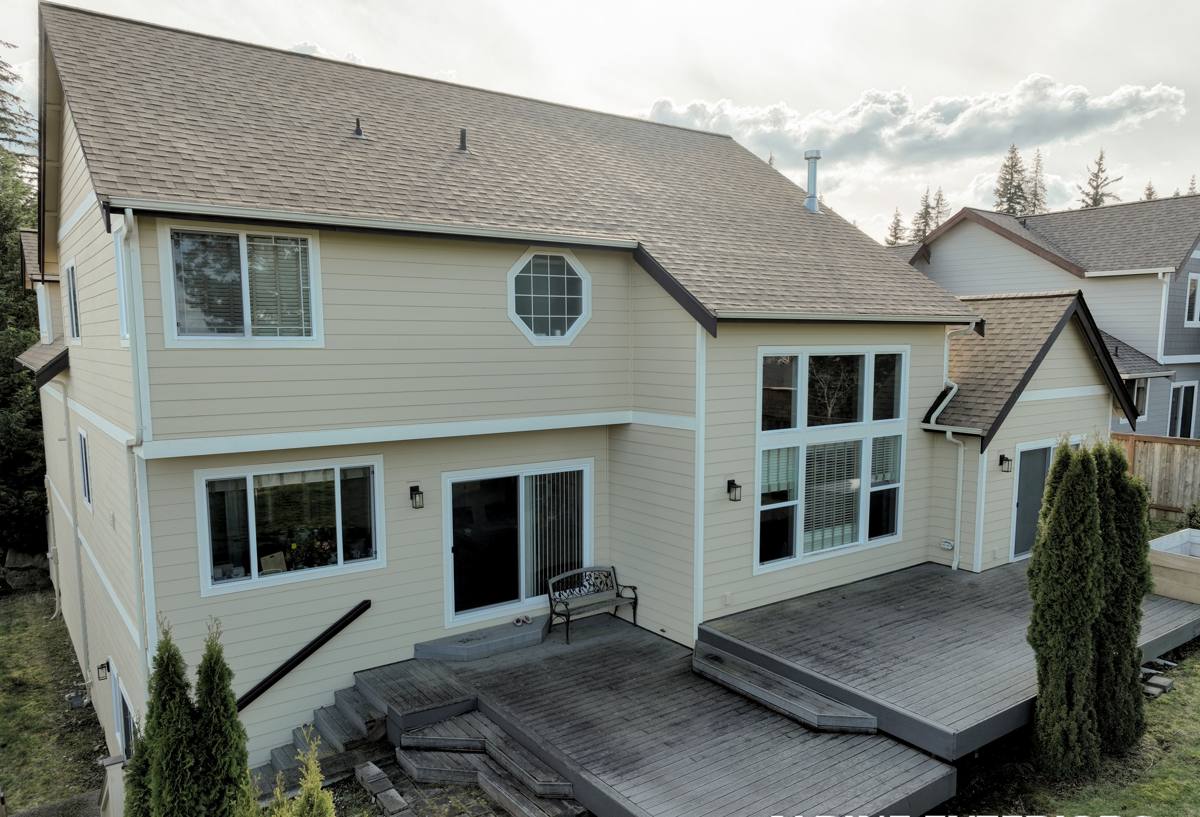
What Local Homes Actually Need From a Deck
Framing That Won't Rot From the Inside Out
Most deck failures we get called out to inspect start in the framing, not the decking boards on top. Ledger boards attached to the house without proper flashing let water track behind the siding and into the rim joist. Joists sitting directly on beams without a moisture break trap water at every contact point. In a climate as wet as ours, these small gaps compound over a handful of seasons into structural rot that's expensive to fix and sometimes invisible until a board gives way.
Fasteners and Hardware Rated for Salt Air
Standard hot-dip galvanized fasteners hold up fine in a lot of the country. Closer to the Sound, salt air accelerates corrosion on anything less than stainless steel or a heavier-coated exterior-rated fastener. We've seen decks built with the wrong hardware where the nails and joist hangers are visibly rusting within a few years while the wood itself is still sound — a maintenance headache and a safety issue that's entirely preventable at the framing stage.
Surfaces That Resist Moss and Stay Safe to Walk On
Moss doesn't just look bad — it holds moisture against the board surface and makes decking dangerously slick, especially on stairs. The material choice, board spacing, and even the compass orientation of a deck all affect how much moss pressure it faces. A deck tucked under trees on the shaded side of an Acme property needs a different approach than one out in open sun.
Decking Material Options — Honest Trade-Offs
There's no single "best" decking material for every home. What matters is matching the material to how the deck will be used, how much upkeep the homeowner wants to do, and how exposed the site is to rain and shade. Here's how the common options actually compare for a wet Whatcom County climate:
| Material | Moisture Behavior | Maintenance | Typical Lifespan Here |
|---|---|---|---|
| Pressure-treated fir/hem-fir | Absorbs water readily; needs sealing to control cupping and checking | Annual cleaning, re-seal every 1-2 years | 15-20 years with upkeep |
| Cedar | Naturally rot-resistant, still needs finish to prevent graying and moss growth | Cleaning and re-oiling every 1-2 years | 20-25 years with upkeep |
| Composite decking | Doesn't absorb water into the board, but surface can still grow moss film if not cleaned | Periodic washing, no sealing needed | 25-30+ years |
| PVC/capped polymer | Fully moisture-resistant board core | Occasional washing | 25-30+ years |
Composite and capped polymer boards tend to be the better fit for shaded, damp Acme lots because they don't wick moisture the way solid wood does — but they cost more up front, and a poorly built substructure underneath any decking material will fail regardless of what's on top. We'll walk through the real trade-offs for your specific site rather than push one product across every job.
What a Correct Deck-Building Job Actually Involves
Site and Drainage Assessment
Before any framing goes in, we look at how water moves across the yard and off the roofline near the deck location. A deck built over poor drainage will trap moisture underneath no matter how well the deck itself is built. We check grading, downspout discharge points, and existing moisture damage on the house before finalizing a plan.
Ledger Attachment and Flashing
Where the deck attaches to the house, correct flashing is non-negotiable in this climate. We install flashing that sheds water away from the ledger board and the house's wall assembly, not just a bead of caulk that will fail in a season or two.
Framing and Hardware Grade
We frame with lumber and hardware rated for exterior, wet-climate exposure, and we use corrosion-resistant fasteners throughout — not just at points that are easy to inspect later. Joist hangers, structural screws, and post bases are chosen for the coastal-influenced air quality Acme sees, not generic inland specs.
Decking Installation and Gapping
Board spacing is set to allow airflow and drainage underneath, which matters more here than in a dry climate because trapped moisture between boards is exactly what feeds moss and early rot. We also account for seasonal wood movement so boards don't buckle or gap unevenly as humidity swings through the year.
Railings, Stairs, and Code Compliance
Railings and stair stringers are built to current code height and spacing requirements, with the same corrosion-resistant hardware standard applied throughout. Stairs get extra attention on tread material and slope, since stairs are where moss-related slips are most likely.
Our Process for Acme Deck Projects
- On-site consultation — we walk the property, assess drainage, sun/shade exposure, and existing structure if this is a replacement.
- Design and material selection — we go over layout, decking material, railing style, and any add-ons like built-in seating or a covered section, with honest cost and maintenance trade-offs for each choice.
- Written estimate — a clear scope of work and price before anything is signed.
- Permitting — we handle the permit process with Whatcom County or the local jurisdiction as required for the project.
- Demolition (if replacing an existing deck) — old decking and framing removed, with an inspection of the ledger and any structural framing underneath before rebuilding.
- Framing and ledger flashing — built to the wet-climate standard described above.
- Decking, railing, and stair installation — finished to the agreed design.
- Final walkthrough — we go over the finished deck with you, including basic maintenance guidance specific to the material installed.
Replacing an Aging Deck vs. Building New
A lot of the calls we get from the Acme area aren't for brand-new decks — they're for decks that were built years ago and are now showing their age. Knowing when to repair versus fully replace saves homeowners money in the long run:
- Soft or spongy spots underfoot usually mean rot has reached the joists, not just the surface boards — this typically means a rebuild, not a patch.
- Rust streaks around fasteners are an early warning sign, even if the wood around them still looks fine.
- Persistent moss regrowth within weeks of cleaning often points to a drainage or airflow problem in the structure itself, not just a surface issue.
- Railings that flex or wobble are a safety issue and should never be left "for later," especially with kids or guests using the deck.
- A ledger board separating even slightly from the house siding is a sign water has been getting behind it — this needs inspection before it's ignored further.
- If the deck is over 20 years old and built with older fastening methods, a full rebuild often costs less over its lifetime than repeated patch repairs.
Sizing and Budgeting for a Custom Deck
Deck costs vary widely based on size, material, elevation (a deck on sloped ground requires more substructure than one at grade), and features like built-in benches, pergolas, or multi-level layouts. Rather than quote a number that doesn't apply to your property, we provide a written estimate after seeing the site — but broadly, expect composite and polymer decking to cost more upfront than pressure-treated lumber, with the difference offset over time by lower maintenance costs. Elevated decks, stairs, and custom railing details all add cost beyond a simple ground-level rectangle.
Why Hire a Crew That Already Works in Acme
Building codes, permitting requirements, and the practical realities of Whatcom County's climate are things a crew that works this area regularly already has dialed in. We're not guessing at how much moss pressure a north-facing deck will see, or which fastener grade holds up near the water — we've built and repaired decks under these exact conditions repeatedly. That local experience shows up in fewer callbacks, decks that drain and dry properly, and a build that's sized correctly for how Acme homeowners actually use their outdoor space through a long wet season and a short dry one.
If you're planning a new deck or need to replace one that's past its useful life, we'd be glad to take a look and put together a free, no-pressure estimate — just fill out the form below.