 Lynden Siding
 Windows Built for What Aldergrove Weather Actually Does to a House
Aldergrove sits in that stretch of the Fraser Valley where marine air off the Salish Sea meets inland weather patterns, and the result is a climate that's tougher on window assemblies than most homeowners realize. Salt-laden air works into aluminum hardware and steel fasteners over time. Driving rain, pushed sideways by wind rather than falling straight down, finds every gap in flashing and caulking that a calmer climate would never expose. And the long moss season — often eight months or more of the year with enough moisture and shade to keep growth active — means anything that traps water against wood trim or sill framing becomes a rot problem faster here than it would on the dry side of the mountains.
Custom windows done right in this area aren't just about picking a style you like. They're about frame material, glazing, and installation detail that account for constant humidity, wind-driven rain, and the freeze-thaw cycles that show up most winters. A window that's fine in a drier climate can fail here in five to eight years instead of twenty-five, not because the glass broke, but because water got behind the frame and nobody caught it until the trim was soft.
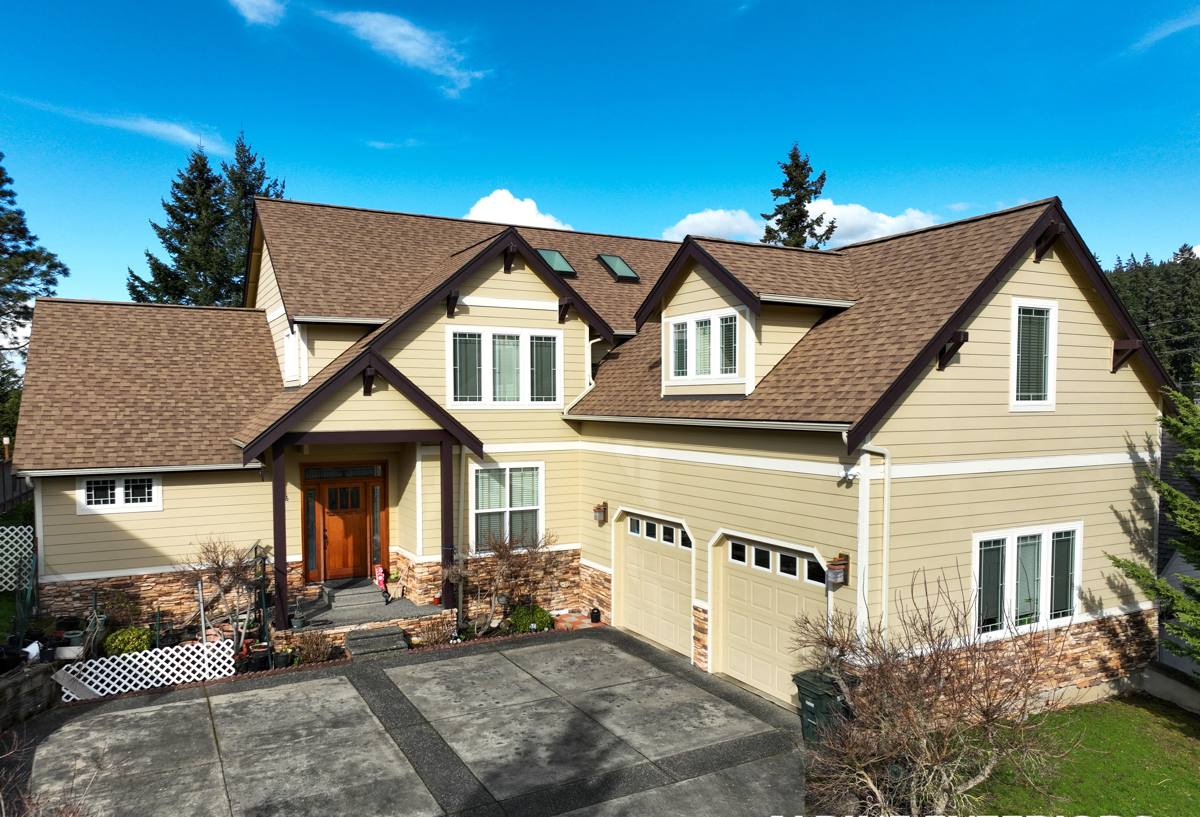
What "Custom" Should Actually Mean
"Custom" gets used loosely in this trade. For us it means the window is built and installed to match the actual opening, the actual wall assembly, and the actual exposure of that specific elevation of the house — not pulled off a shelf in a stock size and shimmed to fit.
Custom Sizing
Older Aldergrove homes, especially anything built before standardized window sizing became common, often have openings that don't match today's stock dimensions. Forcing a stock window into an odd-sized opening means extra shimming, extra caulk, and extra points where water can eventually get in. Custom sizing removes that guesswork.
Custom Shape and Configuration
Bay windows, angled gable openings, oversized picture windows paired with operable casements — these all need to be engineered as a unit, not assembled from mismatched parts. Structural support, drainage, and weight distribution all have to be worked out before the first piece goes in.
Custom Exposure Matching
A window facing the prevailing wind and rain direction needs different flashing detail and sometimes a different glazing spec than a sheltered window on the lee side of the same house. We look at each elevation separately rather than treating every window on a house identically.
Signs Your Current Windows Are Losing the Fight
Most homeowners don't call about windows until something is visibly wrong, but the early signs are easy to miss if you're not looking for them. Catching these early usually means a straightforward replacement instead of a repair that also involves wall or sill damage.
- Condensation building up between panes (a sign the seal has failed on double- or triple-pane glass)
- Soft or discolored wood trim at the bottom corners of the frame, often where moss or algae has taken hold
- Visible daylight or a noticeable draft along the frame edge when the window is closed
- Difficulty opening, closing, or locking a window that used to operate smoothly
- Paint or caulking that's cracked, peeling, or pulled away from the frame
- A musty smell near the window that doesn't go away with cleaning
- Noticeably higher heating bills in a room with older windows compared to similar rooms
Frame Material: What Holds Up Here and What Doesn't
Frame material is the single biggest factor in how a window performs over the long term in this climate. There's no single "best" material for every situation — it depends on the home, the budget, and how exposed the opening is — but here's how the common options actually behave once salt air and constant moisture get involved.
| Material | Moisture Behavior | Maintenance | Typical Lifespan Here |
|---|---|---|---|
| Vinyl | Doesn't rot or corrode; welded corners can be a weak point if not done well | Low — occasional cleaning | 20–30 years |
| Fiberglass | Excellent — dimensionally stable, resists swelling and warping | Low | 30–40+ years |
| Wood (clad exterior) | Good if the cladding is intact; interior wood still needs protection from condensation | Moderate — cladding needs inspection over time | 25–35 years with upkeep |
| Solid wood (unclad) | Poor without diligent upkeep — moss and rot risk is real in this climate | High — regular painting/sealing | Highly variable |
| Aluminum | Corrodes faster near salt air unless properly coated; conducts cold, more condensation risk | Moderate | 15–25 years |
We don't recommend unclad solid wood or bare aluminum for most exposed elevations in this area — not because the material is inherently bad, but because it demands a level of upkeep most homeowners don't want to keep up with year after year, and the failure mode when upkeep lapses is expensive to fix. Fiberglass and quality clad-wood or vinyl tend to be the better match for what this climate actually asks of a window.
Glazing and Weatherproofing Details That Matter Locally
The glass package matters as much as the frame. In a climate with this much sustained humidity and driving rain, we pay close attention to a few details that get skipped on cheaper jobs:
Glazing
Double-pane, low-E glass is the baseline for most replacement work here. Triple-pane adds meaningful performance on north- and west-facing walls that take the brunt of wind-driven rain and winter cold, at added cost — it's worth discussing per window rather than defaulting to it everywhere.
Flashing and Drainage
Every opening needs a drainage path so any water that does get past the exterior seal has somewhere to go besides the wall cavity. This is the detail that separates a window that lasts two decades from one that causes a rot problem in five years, and it's almost entirely invisible once the trim is back on — which is exactly why it's worth asking your contractor about directly.
Sealant Selection and Application
Not all exterior sealants hold up the same way to constant damp-dry cycling. We use products rated for sustained exterior moisture exposure, not general-purpose caulk, and we tool every joint rather than just running a bead and leaving it.
How We Approach a Custom Window Job
- On-site assessment. We look at each opening individually — exposure, existing damage, framing condition — before recommending anything.
- Honest scoping. If we find soft framing or water damage behind an existing window, we tell you before work starts, not after we've already opened up the wall.
- Precise measurement. Custom work only pays off if the measurements are exact. We measure multiple points on each opening since older framing is rarely perfectly square.
- Material and glazing selection. We walk through frame material, glazing, and hardware options against your budget and that specific window's exposure.
- Installation with proper flashing and drainage detail. This is where most of the long-term performance is decided, and it's not a step we shortcut to save time.
- Final weatherproofing and cleanup. Sealant, trim, and a check that everything operates smoothly before we consider the job done.
Working on Both Sides of the Lynden–Aldergrove Border
Aldergrove sits just across the border from Lynden, close enough that it's a normal service area for a crew already based on the Whatcom County side, but it does add a couple of practical wrinkles worth being upfront about. Building permits and code requirements in British Columbia are separate from Washington State's, so we confirm current local permitting and any applicable BC code requirements for the specific job before work begins rather than assuming Washington rules carry over. Materials and crew crossing the border also need to be planned for, which is simply part of scheduling a cross-border job correctly rather than an afterthought.
What doesn't change is the fact that Aldergrove homes face essentially the same climate pressures as homes on the Lynden side of the line — the same salt air, the same driving rain, the same long moss season. A contractor who's used to building for that climate on one side of the border doesn't need to relearn the basics to do the job right on the other side.
What Custom Windows Typically Cost
Pricing depends heavily on frame material, glazing, size, number of openings, and how much of the existing trim or framing needs repair — so any number given without a site visit is a guess. As a broad reference point, most custom window replacements in this region run somewhere in the range of roughly $600 to $1,800 or more per window installed, with larger or more complex openings like bays or oversized picture windows running higher. The only way to get an accurate number is to have the actual opening measured and assessed.
| Cost Factor | Why It Matters |
|---|---|
| Frame material | Fiberglass and quality clad-wood typically cost more upfront than vinyl but last longer with less upkeep |
| Glazing package | Triple-pane adds cost but pays off on exposed, weather-facing elevations |
| Size and shape | Custom-shaped or oversized openings cost more to engineer and install than standard rectangular windows |
| Existing damage | Rotted framing or sill damage found during removal adds repair work before the new window goes in |
| Access and site conditions | Second-story or hard-to-reach openings take more labor and equipment |
Why It Matters to Hire a Crew That Already Works This Area
Window work isn't just about the product — it's about whether the person installing it understands what this specific climate does to a house over time. A crew that primarily works drier inland climates may not think twice about a detail that's critical here, like drainage behind the flashing or the right sealant for constant damp-dry cycling. A crew that's used to Whatcom County and the neighboring Fraser Valley communities has already seen what happens when those details get skipped — the soft trim, the hidden rot, the mold behind a wall that looked fine from outside.
That familiarity also means fewer surprises during the job itself. We know generally what to expect when we open up an older wall in this area, which means fewer change orders and a more accurate estimate from the start.
If you're dealing with drafty, foggy, or hard-to-operate windows on an Aldergrove home, we're happy to take a look and give you a straightforward, no-pressure estimate. Use the form below to get started.