 Lynden Siding
 Deck Building in Kendall: Built for the Weather That's Actually Here
Kendall sits back from the coast in a wooded, river-influenced stretch of Whatcom County, and that setting shapes what a deck has to survive here. You get long stretches of tree cover that keep surfaces damp longer after a storm, driving rain that comes in sideways off Pacific systems, and a moss season that can run half the year on anything that doesn't drain and dry properly. Add in the salt-tinged air that moves through the county from Puget Sound and the Strait, and you have a combination that's harder on outdoor wood structures than most manufacturers' warranty language accounts for.
A deck that's framed and finished for a drier climate will show it here within a few seasons — cupping boards, soft spots near ledger connections, moss creeping into gaps, and rust bleeding from fasteners that weren't rated for the exposure. A deck built for Kendall's actual conditions is a different animal, and it starts with decisions made before the first board goes down.
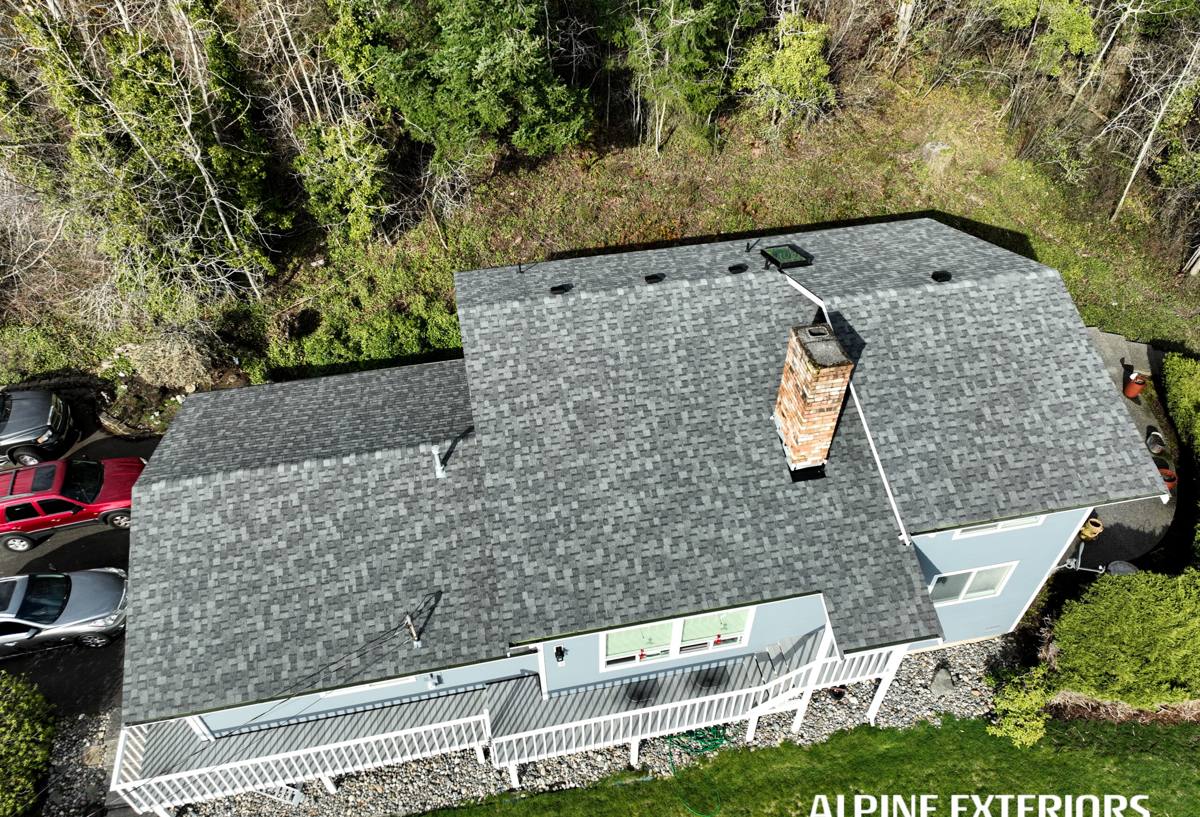
What Kendall Properties Need From a Deck
Most of the decks we look at in and around Kendall share a few site conditions worth planning around:
- Shade and moisture retention — mature trees are common on Kendall lots, and shaded decking stays wet longer after rain, which accelerates rot and moss growth if the wood or composite isn't suited for it.
- Ground contact and drainage — many properties have less slope or heavier soil than in-town lots, so poor grading under a deck can trap water against footings and framing.
- Distance from town for service — a deck built by a crew that doesn't regularly work this far out means longer waits for warranty callbacks or repairs. That matters more once a structure is a few years in.
- Longer moss season — anything with a rough or porous surface (untreated wood, some composite boards) will host moss and algae growth for a good portion of the year without regular attention.
None of this means a deck in Kendall has to be high-maintenance or short-lived — it means the framing, fasteners, decking material, and drainage details need to be chosen for this climate rather than a generic spec sheet.
What a Correctly Built Deck Actually Involves
The Structure Nobody Sees
The part of a deck that fails first in this climate is almost always underneath the decking boards — the framing, the ledger connection to the house, and the footings. A correct build means:
- Footings sized and set below frost depth per Whatcom County code, on undisturbed or properly compacted soil
- A ledger board flashed and fastened to keep water from tracking behind it into the house's rim joist — this is the single most common failure point on older decks we're asked to repair or replace
- Joists spaced correctly for the decking material chosen (composite and PVC often require tighter spacing than dimensional lumber)
- Corrosion-resistant, code-rated fasteners and connectors throughout — not just at points that are easy to see
Fasteners and Hardware Matter More Here
Given the moisture exposure and the salt content in the air across parts of the county, we use fasteners and structural connectors rated for exterior, corrosive-prone environments — hot-dip galvanized or stainless where it counts. Standard interior-grade or under-rated hardware will rust and stain the decking around it well before the structure itself is due for attention.
Drainage Underneath and Around
Water needs somewhere to go once it's off the deck surface. That means grading away from the house, and on lower or shaded decks, sometimes a below-deck drainage system so the space underneath isn't sitting damp all winter — a real consideration on tree-covered Kendall lots where the ground under a deck rarely gets direct sun.
Choosing the Right Decking Material for This Climate
There's no single "best" decking material — there's a best material for a given budget, look, and maintenance appetite, weighed against how this climate treats each option.
| Material | How It Handles Kendall's Climate | Maintenance | Typical Lifespan |
|---|---|---|---|
| Pressure-treated wood | Affordable, but absorbs moisture and needs consistent upkeep to resist rot and moss in shaded areas | Annual cleaning, periodic sealing/staining | 10–15 years with upkeep |
| Cedar | Naturally rot-resistant and handles moisture reasonably well, but still needs sealing to hold color and resist moss | Sealing every 1–2 years | 15–20 years with upkeep |
| Composite decking | Resists rot and doesn't need sealing; some lower-grade boards can still host surface algae/moss in deep shade | Occasional washing | 25–30 years, manufacturer-dependent |
| PVC/capped polymer | Fully sealed surface, best resistance to moisture and moss growth in shaded, damp spots | Occasional washing | 25–30+ years |
For heavily shaded Kendall lots specifically, we lean toward steering clients away from bare pressure-treated wood as a final surface unless they're committed to a real annual maintenance routine — not because the material is bad, but because the honest trade-off is more upkeep for a lower upfront cost. Composite and capped polymer boards cost more initially but ask far less of the homeowner in a climate that doesn't give wood much of a break.
Our Deck Building Process
1. On-Site Assessment
We look at the actual site — slope, shade, soil, sun exposure, and how the deck will tie into the house — before we talk materials or layout. On wooded or riverside Kendall lots, drainage and shade patterns often change the plan more than the homeowner expects.
2. Design and Material Selection
We walk through decking material trade-offs honestly, including where a cheaper option will cost more in upkeep over the years. Layout accounts for how water moves off the structure and away from the house.
3. Permitting
Deck construction in Whatcom County typically requires a permit depending on height, size, and attachment to the structure. We handle that process so the finished deck is inspected and code-compliant — not something that becomes a problem at resale.
4. Construction
Footings, framing, ledger flashing, and decking installation, all built to hold up specifically against driving rain and prolonged damp shade rather than a generic spec.
5. Final Walkthrough
We go over the finished deck with the homeowner, including what maintenance (if any) the chosen material needs and what to watch for as the seasons change.
Keeping a Deck Ahead of Moss and Moisture
Even a well-built deck needs some seasonal attention in this climate. A simple, honest checklist for Kendall homeowners:
- Sweep debris and fallen leaves off the deck surface regularly, especially under tree cover — trapped organic matter is what moss and algae feed on
- Check that gaps between boards stay clear so water drains through instead of pooling
- Inspect the ledger board connection and flashing once a year for any signs of water tracking behind it
- Wash composite or PVC decking with mild soap and water once or twice a year to prevent surface algae buildup in shaded spots
- Reseal wood decking on the schedule the material actually needs — skipping a cycle in this climate shows up fast
- Keep the area underneath the deck clear of standing water and debris
Why Hire a Crew That Already Works in Kendall
A deck built by a crew that only occasionally works this far out from Lynden or Bellingham is more likely to spec materials and details for a different climate zone, and slower to respond if something needs attention later. We work throughout Whatcom County, including Kendall, and build decks the same way we approach siding and other exterior work here — around what the driving rain, tree cover, and moss season actually do to a structure over time, not around a generic national spec sheet. That local familiarity shows up in the flashing details, the fastener choices, and the material recommendations we make before a single board is cut.
What Affects the Cost of a Deck in Kendall
| Factor | Why It Matters Here |
|---|---|
| Decking material | Ranges widely from pressure-treated wood to premium composite/PVC; shaded lots often justify the higher-cost, lower-maintenance materials |
| Deck size and height | Larger and taller decks need more footings, structural bracing, and often railing — and may trigger different permit requirements |
| Site access and grading | Wooded or sloped lots can add cost for footing placement and drainage work |
| Ledger/attachment condition | If the existing rim joist or siding needs repair before a ledger can be properly flashed, that's addressed before the deck goes up |
| Railing and finish details | Material and style choices for railings and stairs affect both cost and long-term maintenance |
We give straightforward numbers based on your specific lot and material choices rather than a one-size estimate — the honest range depends on decisions we walk through with you during the assessment.
If you're thinking about a new deck or replacing one that hasn't held up to Kendall's weather, we're happy to come take a look and talk through options. The estimate is free, there's no pressure, and you'll get a straight answer about what your specific lot and budget call for — just fill out the form below to get started.