 Lynden Siding
 Deck Repair in Kendall: Built for Whatcom County Weather
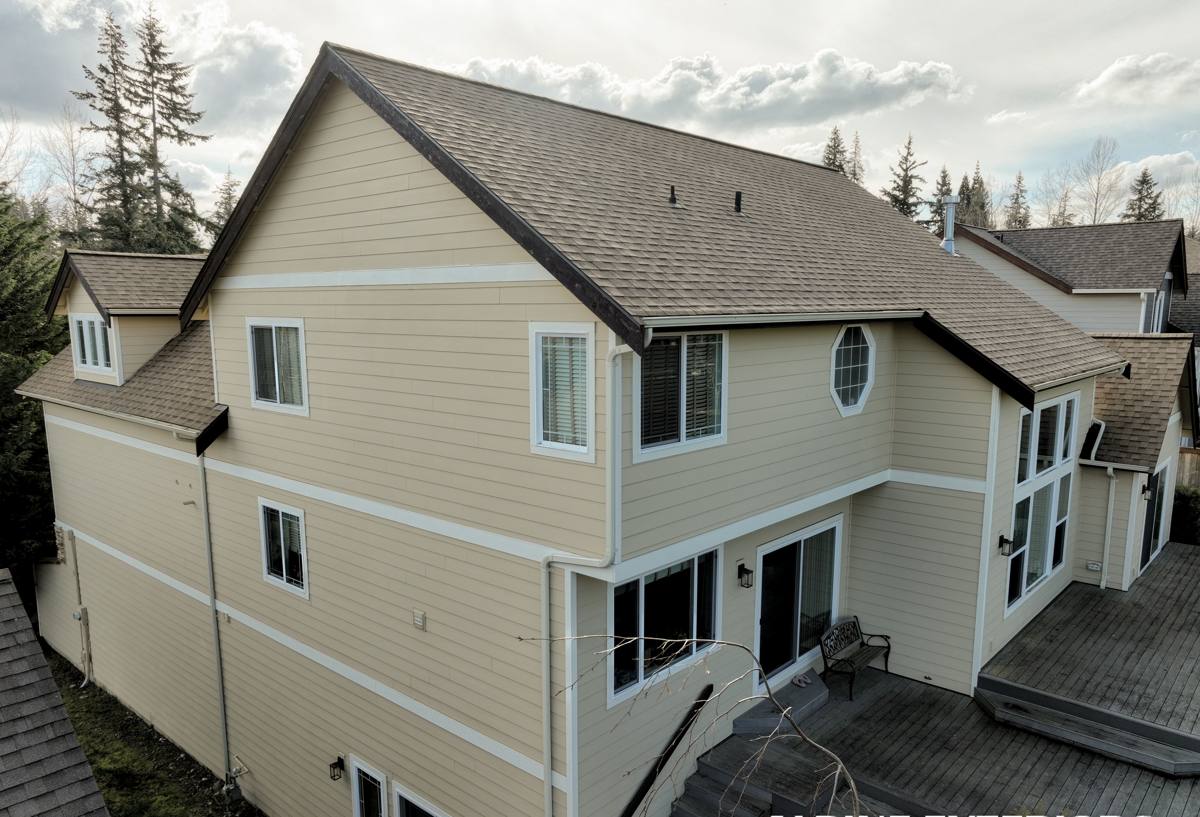
Kendall sits east of Lynden, closer to the foothills, which means decks out here take a slightly different beating than decks closer to town. You still get the long wet season and the moss that comes with it, but the tree cover and shade patterns in and around Kendall often keep decks damp longer after a storm than a more open lot would. Add in the driving rain that comes through Whatcom County in the fall and winter, and you've got a recipe for soft boards, rusted fasteners, and ledger connections that quietly lose integrity over the years. Most of the deck repair calls we run in Kendall trace back to one of those three things — moisture that never fully dries out, hardware that was never rated for this climate, or a repair that was done fast instead of right.
This page is about deck repair specifically — not new deck builds, and not siding, though we do both. If your deck is structurally sound but showing wear, or you're not sure whether it's a repair job or a replacement job, that's exactly what we sort out on a site visit.
What Kendall's Climate Actually Does to a Deck
Moss and Organic Growth
Moss doesn't just sit on top of a deck board looking bad — it holds moisture against the wood or composite surface for weeks at a time. On natural wood decking, that constant dampness is what starts rot, usually first at board edges and around fastener heads. On composite decking, moss buildup in the grooves and gaps traps grit that can wear down the surface finish faster than normal foot traffic would. A deck that's shaded for a good part of the day, which describes a lot of lots around Kendall, needs moss dealt with proactively, not just power-washed off once a year.
Driving Rain and Water Intrusion
Wind-driven rain finds its way into places a straight-down rain never would — under railing post bases, behind ledger boards where the deck ties into the house, and into any gap where flashing was skipped or installed wrong. We see this constantly: a deck that looks fine from ten feet away has a ledger board or a post base that's been wicking water for a couple of seasons.
Freeze-Thaw and Wood Movement
Whatcom County doesn't get brutal winters, but Kendall does see enough freeze-thaw cycling that fasteners work loose and wood fibers swell and shrink over time. That movement is what turns a tight deck into a squeaky, slightly springy one.
Signs Your Kendall Deck Needs Repair, Not Just Cleaning
- Soft or spongy spots when you walk across the deck, especially near the house or around post locations
- Boards that have visibly cupped, split, or pulled away from their fasteners
- Rust streaks running down from screw or nail heads
- A railing that flexes or wiggles more than it used to
- Gaps or dark staining where the deck meets the house siding or ledger board
- Persistent moss or algae that comes right back within weeks of cleaning
- Visible daylight or soft wood where support posts meet the ground or a concrete footing
Any one of these on its own might be minor. Two or three together usually means water has been getting into the structure for a while, and that's worth a real inspection before it turns into a safety issue.
What a Correct Deck Repair Actually Involves
A lot of deck "repairs" we get called out to fix were really just cosmetic patches — a new board dropped in without checking what's underneath it, or fresh screws driven into wood that was already too soft to hold them. That doesn't hold up in this climate. A repair done right starts with finding out why the damage happened, not just replacing what's visibly damaged.
Our process on a Kendall deck repair
- Inspect the structure first. We check ledger board attachment, post bases, joist condition, and flashing before we touch the decking surface. A new board over a rotting joist is a repair that fails again within a year or two.
- Identify the moisture source. If a section is failing, we want to know why — missing flashing, poor drainage, a gap that's trapping water — and fix that cause, not just the symptom.
- Remove and replace only what's compromised. We don't upsell replacing a whole deck when a targeted repair will hold. We also won't patch over rot and call it done.
- Match fasteners and hardware to the exposure. Coastal and high-moisture-adjacent hardware standards apply here — the wrong fastener is one of the most common reasons a "fixed" deck fails again.
- Address drainage and airflow underneath. A deck that can't dry out between rains will keep failing no matter how good the repair is on top.
- Final check on railings, stairs, and structural connections. Safety items get inspected even if that wasn't the original complaint.
Repair vs. Replacement: How We Help You Decide
| Factor | Points Toward Repair | Points Toward Replacement |
|---|---|---|
| Structural framing (joists, ledger, posts) | Solid, dry, properly fastened | Soft wood, rust-through, or rot at connections |
| Extent of damage | Isolated to a few boards or one section | Spread across most of the deck surface |
| Age of the deck | Under 10-15 years, decent original build quality | Original build already near end of service life |
| Fastener condition | Mostly sound, isolated rust | Widespread corrosion or wrong hardware used originally |
| Drainage underneath | Adequate slope and airflow | Standing water or no ventilation under the deck |
We'll tell you honestly which side of that table your deck falls on. Most decks we look at in Kendall are repairable if we catch the moisture problem before it reaches the framing — the framing is what determines whether a deck has years left or not.
Materials: What We Use and Why
For structural repairs — joists, posts, ledger reinforcement — we use pressure-treated lumber rated for ground contact or moisture exposure, matched to the original framing where possible. For decking surface repairs, we'll work with whatever material your deck already has, whether that's natural wood or composite, and we'll talk through the honest trade-offs of each if you're deciding what to replace damaged sections with.
Natural wood decking is more affordable up front and easier to spot-repair, but it needs regular sealing and cleaning to hold up against this region's wet season — skip that maintenance for a couple of years and moss and rot get a foothold fast. Composite decking costs more initially and resists rot at the board level, but the fasteners, framing, and flashing underneath still need to be done correctly, since composite doesn't fix a bad structural connection — it just hides it longer. We're not going to tell you one is universally better; we'll tell you what makes sense for your deck, your budget, and how much upkeep you actually want to do.
What we check before recommending any repair
- Whether the ledger board flashing is intact or was ever installed
- Post base condition where wood meets concrete or ground
- Joist spacing and condition relative to current code expectations
- Whether original fasteners are rated for exterior/coastal-adjacent exposure
- Drainage and grading underneath the deck
- Railing post attachment strength, since this is a common safety gap on older decks
Why a Crew That Already Works Kendall Matters
Kendall isn't downtown Lynden. Lot layouts, tree cover, drainage patterns, and how much shade a deck sits in day to day all vary block by block out here, and those details change how a deck ages. A crew that's already worked on homes in this area knows what to expect before we even get on the ladder — which board species tend to show up in older Kendall builds, where flashing was commonly skipped in past decades of construction, and how much moss pressure to plan for based on a given lot's tree line. That's not something you get from a crew that's never worked outside Bellingham or the I-5 corridor.
We're a Lynden-based crew, and Kendall is part of our regular service area — not a special trip. That matters for response time on an inspection, for follow-up if something needs a second look, and for the simple fact that we're not guessing at how Whatcom County's climate treats a deck. We've seen it.
Maintenance That Extends a Repair's Life
A good repair buys you years, but a little upkeep buys you more. In this climate, that means:
- Clearing debris and moss off the deck surface before it gets a chance to settle in, especially heading into fall
- Keeping gutters and downspouts clear so runoff isn't dumping extra water onto or near the deck
- Resealing or refinishing natural wood decking on the schedule the product actually calls for, not just when it looks bad
- Checking railing and post connections once a year for movement
- Making sure nothing is blocking airflow underneath the deck
None of this is complicated, but skipping it is exactly how a small, cheap repair today turns into a bigger one in three or four years.
Get a Straight Answer on Your Deck
If you're in Kendall and dealing with a soft board, a wobbly railing, or a deck that just doesn't feel right underfoot, we'll come take a look and tell you plainly what's going on — repair, replacement, or just a maintenance issue that hasn't cost you anything structural yet. No pressure, no inflated scope. Fill out the form below for a free estimate and we'll get back to you to schedule a visit.